Where to Place Bamboo Plant in Office Desk
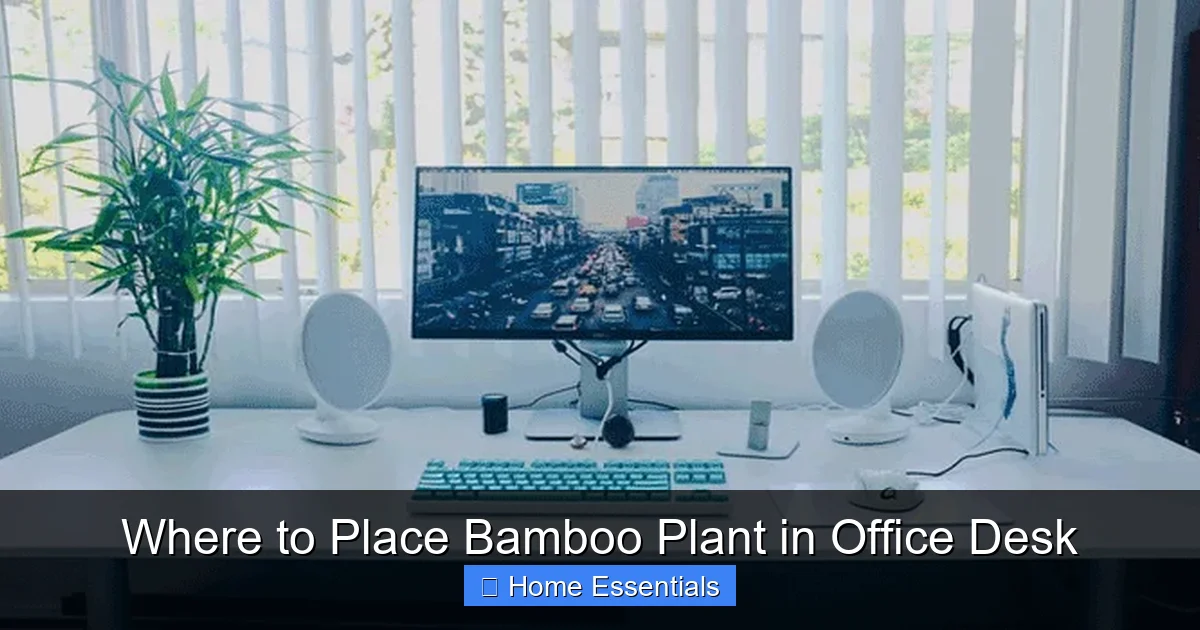
Placing a bamboo plant on your office desk isn’t just decorative; it’s a strategic move for better air and energy. The ideal spot balances bright, indirect light with stability, often in the east or southeast corner of your desk per Feng Shui. Remember, consistent watering with clean water and avoiding direct sun or vents are non-negotiable for its health and your productivity.
You’ve seen them everywhere—sleek, green, and serene bamboo plants sitting on executive desks and in cozy home office nooks. But it’s not just about picking a pretty spot. Where you place that lucky bamboo (Dracaena sanderiana) on your office desk can actually influence your focus, the plant’s health, and even the energy in your workspace. Think of it as a tiny, powerful teammate. Getting the placement right means you get all the benefits—cleaner air, a calming visual break, and that little spark of good fortune—without the stress of a struggling plant. Let’s dig into exactly where and how to position your desk buddy for success.
Key Takeaways
- East or Southeast is Best: Place your bamboo in the east (health) or southeast (wealth) corner of your desk for optimal Feng Shui energy flow.
- Indirect Light is Key: Bright, filtered light is perfect. Avoid harsh direct sun that scorches leaves and low light that weakens the plant.
- Stable, Warm Environment: Keep it away from drafts, AC vents, and heating sources. Consistent room temperature is crucial.
- Water with Care: Use clean, filtered or rainwater, changing it every 7-10 days. Never let the roots dry out completely.
- Style with Purpose: Use a clean, narrow vase. Pair it with a single meaningful object to avoid clutter and maintain focus.
- Dust Regularly for Health: Gently wipe leaves with a damp microfiber cloth for dusting to ensure it can purify your air effectively.
- Know It’s Lucky: A healthy, thriving bamboo plant is believed to attract positive chi, making its proper care an investment in your workspace harmony.
📑 Table of Contents
- The Feng Shui Blueprint: Energizing Your Desk
- Light, Light, Baby: The Non-Negotiable Factor
- Climate & Airflow: The Silent Killers
- Practical Placement: From Theory to Your Desk Layout
- Styling & Safety: Making it Work Seamlessly
- Ongoing Care: The Daily Ritual for a Thriving Plant
- When Things Go Wrong: Troubleshooting Common Issues
The Feng Shui Blueprint: Energizing Your Desk
Feng Shui, the ancient Chinese art of placement, gives us a fantastic starting point. It’s all about directing “chi,” or life energy, in a way that supports your goals. Your desk is your personal power zone, so the bamboo’s location matters.
The Commanding East for Health & Vitality
In Feng Shui, the east sector of any space governs health and family. Placing your bamboo plant in the eastern corner of your desk is like putting a little green guardian of your well-being right where you work. It’s believed to support your physical energy and resilience, helping you power through long workdays without burning out. This spot is especially powerful if your desk is against an east-facing wall.
The Prosperous Southeast for Wealth & Abundance
If your career goals are tied to growth, profit, or new opportunities, the southeast corner of your desk is your go-to. This area represents wealth and abundance in Feng Shui. A thriving bamboo here acts as a symbol of prosperity, reminding you of your capacity to grow and succeed. It’s not magic, but the positive psychological reinforcement of focusing on this area daily can be a powerful motivator.
The Center for Overall Balance
The center of your desk (and your room) represents overall balance and well-being in Feng Shui. A single, centered bamboo plant can act as an anchor, harmonizing the energy of all your work activities—from intense focus to collaborative calls. It prevents the desk from feeling lopsided energetically. Just ensure it’s not so large it dominates your workspace.
Pro Tip: Before you place it, clear the desk area completely. This isn’t just Feng Shui; it’s practical. A clutter-free base ensures the pot sits steadily and you’re not placing a plant on top of important documents.
Light, Light, Baby: The Non-Negotiable Factor
Forget Feng Shui for a second—this is biology. Bamboo is a tropical plant that thrives under a rainforest canopy, meaning it’s used to bright, dappled light, not harsh sunbeams. Getting the light wrong is the #1 reason office bamboo turns yellow or dies.
Finding the “Goldilocks Zone” of Bright, Indirect Light
The perfect spot is where the plant receives bright, filtered light for most of the day. Think:
- Near a window with a sheer curtain.
- On the side of your desk that gets morning sun (gentler than afternoon sun).
- A few feet away from a south or west-facing window, where the light is intense but not direct.
If your office has no windows, a smart plant pot with a built-in grow light can be a fantastic, tech-savvy solution, providing the precise spectrum and duration it needs.
The Dangers of Direct Sun & Low Light
Direct Sun: A few hours of harsh, direct sunlight through glass will essentially cook the leaves, causing them to yellow, brown, and crisp. It’s a sunburn for your plant.
Low Light: An interior corner of a deep office with no natural light will cause etiolation—the plant will stretch, become pale, weak, and eventually starve. It might survive for months, but it won’t thrive or purify air effectively.
The Simple Light Test
Do the “hand test.” Hold your hand over the spot where you want to put the bamboo. If you can clearly see the shadow of your hand on the desk, the light is too direct. If the area feels dim and you’d need a lamp to read, it’s too low. The sweet spot is where the shadow is soft and blurry.
Climate & Airflow: The Silent Killers
Your office’s HVAC system is a bamboo’s arch-nemesis if you’re not careful. Consistency is everything for this tropical guest.
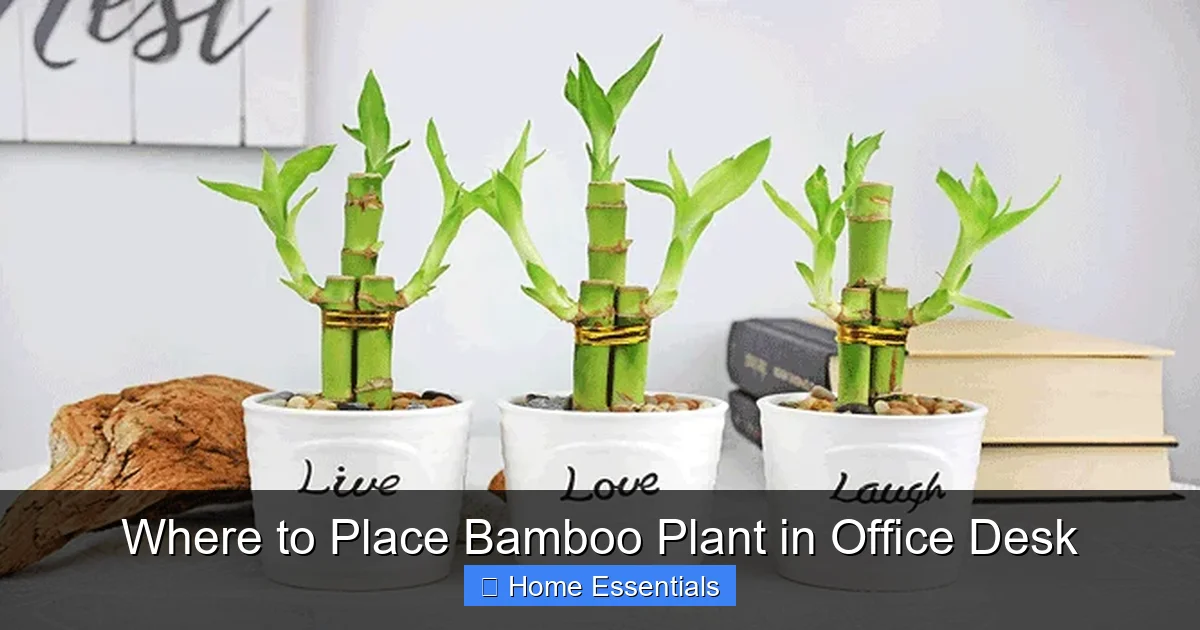
Visual guide about Where to Place Bamboo Plant in Office Desk
Image source: giftyourhome.com
Stay Away from Vents and Drafts
Never place your bamboo plant directly in the line of fire from an air conditioning vent, heating vent, or fan. The constant blast of dry, hot, or cold air will shock the plant, causing leaf tips to brown and dry out rapidly. It creates stress that invites pests and disease. Similarly, a draft from a frequently opened door or window can cause the same issue. Think of it as finding a calm, still corner of the room.
Humidity Matters (But You Don’t Need a Humidifier)
Bamboo loves humidity. Your office, with its recycled air, is often dry. While a full humidifier isn’t usually necessary, you can boost local humidity. Place the bamboo’s pot on a pebble tray filled with water (ensure the pot bottom doesn’t sit in water). As the water evaporates, it creates a micro-humid zone right around the plant. Grouping it with other plants also creates a shared humid microclimate.
Practical Placement: From Theory to Your Desk Layout
Let’s map the Feng Shui and light principles onto real desk shapes. The goal is always to secure a spot with good indirect light that aligns with your intention (health/wealth) while staying safe from hazards.
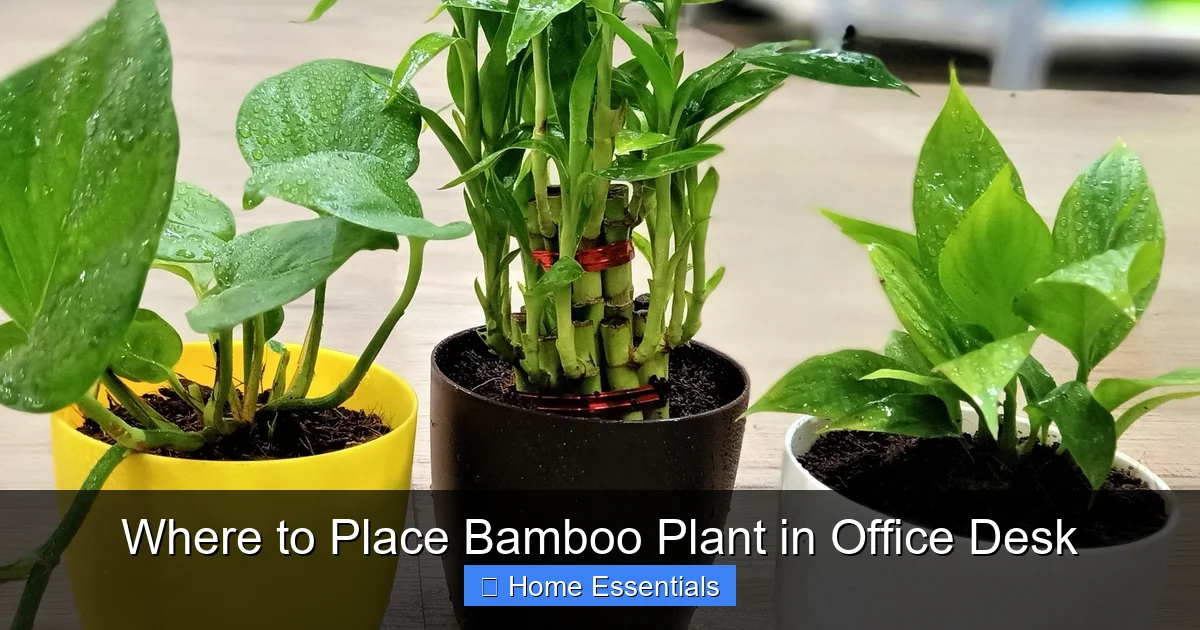
Visual guide about Where to Place Bamboo Plant in Office Desk
Image source: admin.thegreenyard.in
For the Standard Rectangular Desk (Facing a Wall)
This is the most common setup. Your desk has a primary “front” where you sit, and a back wall.
- Best Bet: The front-left corner (from your seated perspective). This is the southeast (wealth) corner. It usually gets some side light from a window and is far from wall vents.
- Great Alternative: The front-right corner. This is the east (health) corner. Often a bit shadier, which is fine if it’s not dark.
- Avoid: The very center of the desk (can be intrusive) and the back corners (you’ll forget about it, and it gets dusty).
For the L-Shaped or Corner Desk
You have more “sectors” to play with! This is a prime opportunity.
- Wealth Corner: The outer corner of the “L” that is to your right when seated (southeast). This is a powerful, prominent spot.
- Health Corner: The inner corner of the “L” that is to your left when seated (east). This can be a very stable, protected spot.
- Pro Tip: Use the longer section of the “L” for your main work tools and place the bamboo on the shorter wing to define a “break” or ” contemplation” zone.
For the Desk in the Middle of the Room (Island Style)
This is trickier for light, as there are no walls. Your orientation becomes key.
- Primary Spot: Place it on the side of the desk that faces the room’s main natural light source (a window). Ensure it’s not in the direct path of overhead lights, which can be harsh.
- Feng Shui Focus: Determine the true directions of your room with a compass app. The east and southeast sectors will be relative to the room’s center, not the desk’s. Place the bamboo accordingly on the corresponding side of your island desk.
Styling & Safety: Making it Work Seamlessly
It’s not just *where*, but *how*. A poorly styled plant can become a hazard or a distraction.
Vase Selection: Go Narrow and Stable
A wide, heavy vase is a tipping hazard on a desk that might get bumped. Opt for a tall, narrow vase made of glass, ceramic, or metal. This also looks more elegant and takes up less valuable desk real estate. Ensure it’s clean and filled with fresh water. You can add decorative pebbles or marbles for aesthetics, but leave room for the roots.
The “One Meaningful Object” Rule
Your desk should inspire focus. A bamboo plant is a fantastic anchor object. Pair it with one other small, meaningful item—a photo, a crystal, a small sculpture. This creates a intentional “wellness nook” on your desk. Avoid cluttering the area around it with pens, paperclips, and snacks. That zone should be for calm.
Pet & Child Safety Note
While lucky bamboo is not a true bamboo, it is mildly toxic to cats and dogs if ingested (causing drooling, vomiting). If you share your office with curious pets or small children, place the plant in a location they cannot reach. A high shelf on a bookcase behind your desk is a safer bet than the desk surface itself.
Ongoing Care: The Daily Ritual for a Thriving Plant
Placement is day one. Maintenance is every day. A neglected bamboo will fail, no matter how perfect its spot.
The Watering Ritual: Clean & Consistent
This is critical. Bamboo grows in water.
- Water Type: Use filtered, bottled, or rainwater. Tap water often contains chlorine and fluoride that cause brown leaf tips. If you must use tap, let it sit out for 24 hours to evaporate some chemicals.
- Frequency: Change the water every 7-10 days. Never just “top it up.” Stagnant water breeds algae and bacteria that rot the roots.
- Level: Keep the water level covering the roots by about 1-2 inches. Never submerge the entire stem.
Feeding & Cleaning: The Light Touch
Bamboo in water needs very little food. A single drop of liquid houseplant fertilizer in the vase every few months is plenty. Over-fertilizing kills it.
Dust is the silent productivity killer—for you and your plant. Dusty leaves can’t photosynthesize well and the plant can’t purify air. Once a week, gently wipe each leaf with a damp microfiber cloth. For a deeper clean, you can use a mixture of water and a tiny drop of dish soap. Remember to store your dedicated plant-cleaning microfiber cloths separately from your desk ones to avoid cross-contamination with desk germs.
Pruning for Shape & Health
If a stem gets too long or a leaf turns yellow, use clean, sharp scissors to trim it. Cut just above a node (the ring on the stem). This encourages bushier growth and keeps your plant looking neat and intentional on your desk.
When Things Go Wrong: Troubleshooting Common Issues
Even with perfect placement, issues can arise. Here’s your quick diagnosis guide.
Yellowing Leaves
Cause: Most often, too much direct sun or fluoride/chlorine in tap water. Can also be from over-fertilizing or cold temperatures.
Fix: Move to better indirect light. Switch to filtered water. Cut off the yellow leaves. Ensure it’s not near an AC vent.
Brown Leaf Tips
Cause: Low humidity, dry air from vents, or mineral salts in water.
Fix: Mist the leaves occasionally or use a pebble tray. Use filtered water. Check for vents.
Stunted Growth or Pale Color
Cause: Low light. The plant is starving for photosynthesis.
Fix: Relocate immediately to a brighter spot with indirect light. Consider a small grow light if no natural light is available.
Slimy or Smelly Roots/Water
Cause: Bacteria or algae from infrequent water changes.
Fix: Remove the plant. Take it out of the vase. Gently rinse the roots and vase thoroughly with clean water. Refill with fresh filtered water. Trim any mushy roots with sterilized scissors.
Ultimately, your bamboo plant on your office desk is more than decor. It’s a living barometer of your workspace environment. By choosing its home wisely—in that east or southeast corner, with gentle light, away from drafts—and caring for it consistently, you create a cycle of positive energy. You nurture the plant, and in turn, it nurtures you with cleaner air, a moment of mindful care in your day, and a tangible symbol of growth. That’s a productivity hack you can’t get from an app.
Frequently Asked Questions
Can I place a bamboo plant on a desk with no windows?
It’s challenging but possible with a dedicated grow light. A standard office lamp won’t suffice; you need a full-spectrum LED plant light placed 6-12 inches above the plant for 12-14 hours a day. Without a light source, the bamboo will gradually weaken and die.
How often should I change the water in my desk bamboo?
You should fully change the water every 7 to 10 days. Simply topping up the water leads to bacterial growth and mineral buildup. Always use clean, filtered, or rainwater, and wash the vase thoroughly during each change.
Is lucky bamboo toxic to cats or dogs?
Yes, lucky bamboo (Dracaena sanderiana) is mildly toxic to cats and dogs if ingested, causing gastrointestinal upset like vomiting and drooling. If you have pets, place the plant on a high, unstable-for-pets shelf or choose a different, fully pet-safe desk plant like a spider plant.
What does it mean if my bamboo plant turns yellow?
Yellowing leaves are usually a cry for help. The most common causes are too much direct sunlight (sunburn) or fluoride/chlorine sensitivity from tap water. Switch to filtered water and move the plant to an area with bright, indirect light only.
Can I use regular tap water for my bamboo plant?
You can, but it’s not ideal. Tap water contains chemicals like fluoride and chlorine that cause brown tips and yellowing. For the healthiest plant, use filtered, bottled, or rainwater. If using tap, let it sit out for 24 hours to allow some chlorine to evaporate before using it.
Does the number of stalks on my bamboo plant matter in Feng Shui?
Yes, traditionally the number of stalks holds meaning. Two for love, three for happiness/wealth/long life, five for balance, six for health, eight for growth, and nine for great fortune. For an office desk, a three-stalk or five-stalk arrangement is most commonly recommended for overall balance and prosperity.