Which Indoor Plant Is Good for Office Desk
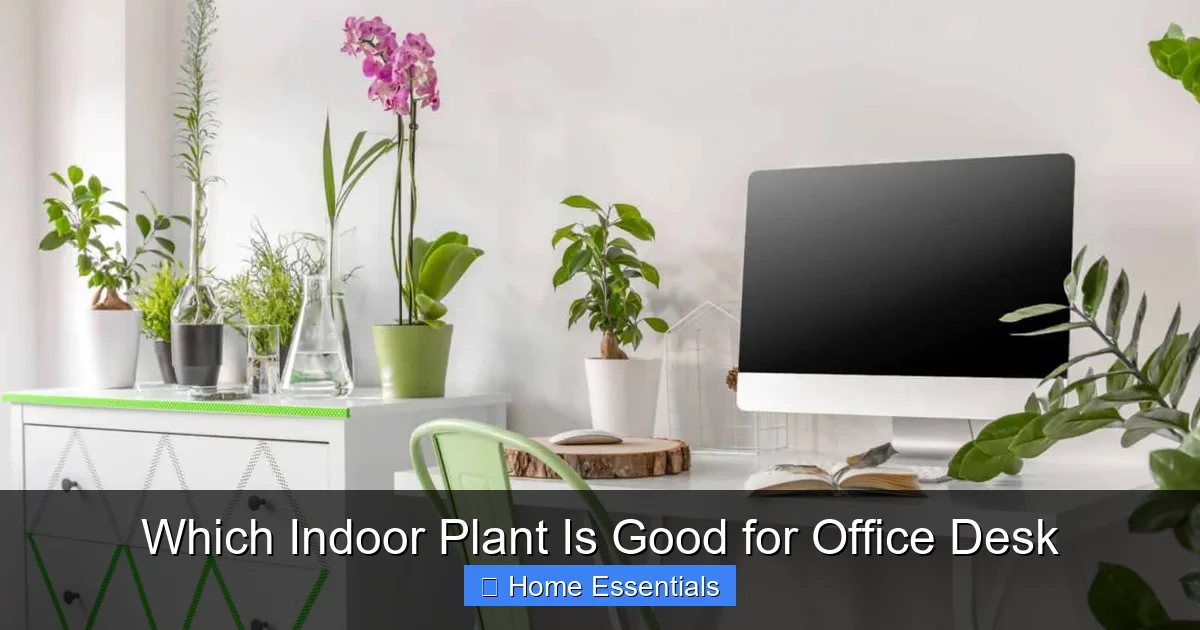
Choosing the right indoor plant for your office desk can dramatically improve your work environment. The ideal desk plant tolerates low light, requires minimal watering, and won’t outgrow its space. Plants like the resilient ZZ Plant, air-purifying Snake Plant, and trailing Pothos are top contenders for busy professionals. Integrating a small green companion reduces stress, enhances air quality, and can even boost creativity and focus.
Key Takeaways
- Low-Light Tolerance is Key: Most offices lack bright, direct sunlight. Choose plants like the ZZ Plant or Cast Iron Plant that thrive in artificial or low natural light.
- Prioritize Air Purification: Plants such as the Snake Plant and Peace Lily are proven by NASA studies to remove common office toxins like formaldehyde and benzene from the air.
- Minimal Watering is a Must: Overwatering is the #1 killer of office plants. Opt for drought-tolerant species (e.g., Jade Plant, Ponytail Palm) that prefer to dry out between waterings.
- Size Matters: Select plants that stay compact. A desk plant should complement your space, not overwhelm it. Consider mature height and spread before buying.
- Pet & Child Safety: If your office is a shared space with pets or children, avoid toxic plants like the Peace Lily or Pothos. Opt for safe varieties like the Spider Plant or Boston Fern.
- Low Maintenance is Non-Negotiable: Your desk plant should be a asset, not a chore. Choose forgiving plants that can handle occasional neglect during busy weeks or vacations.
- Consider a Smart Pot: For the ultimate in fuss-free care, explore a smart plant pot that monitors soil moisture and light, sending alerts to your phone to prevent over or under-care.
📑 Table of Contents
- Why Your Office Desk Needs a Green Companion
- The Golden Rules for Selecting a Desk Plant
- The Top 5 Champions: Best Indoor Plants for Your Desk
- Beyond Selection: Essential Care for Your Desk Plant
- Tech-Enhanced Plant Care: The Smart Solution
- Common Mistakes & How to Avoid Them
- Conclusion: Your Green Desk Awaits
Why Your Office Desk Needs a Green Companion
Think about your typical workday. You’re staring at a screen, surrounded by artificial light, plastic, and paperwork. It’s a sterile, often stressful environment. Now, imagine a small pocket of vibrant green life on your desk. A living thing that quietly grows, purifies the air you breathe, and requires just a glance of attention. This isn’t just decor; it’s a simple, powerful tool for well-being. Bringing an indoor plant for your office desk is one of the easiest, most cost-effective upgrades you can make to your personal workspace. It bridges the gap between the natural world and our digital lives, offering tangible benefits that go far beyond aesthetics.
The science is clear. Studies from institutions like NASA and the Journal of Environmental Psychology show that indoor plants reduce stress, lower blood pressure, and improve cognitive function. In an office setting, this translates to better concentration, increased creativity, and a more pleasant atmosphere. But not all plants are created equal for the desk environment. The fluorescent lights, inconsistent heating, and your unpredictable schedule create a unique set of challenges. The wrong plant will quickly become a brown, crispy reminder of good intentions. The right one will thrive with minimal effort, becoming a silent partner in your daily productivity. This guide cuts through the noise to find the absolute best indoor plants for your office desk, focusing on resilience, size, and benefit.
The Golden Rules for Selecting a Desk Plant
Before we dive into specific species, you need a checklist. Shopping for a desk plant isn’t like shopping for a floor plant. The constraints are real and critical. A plant that loves a sunny windowsill will fade and die under the glow of an LED desk lamp. A thirstier plant will rot in soggy soil if you only remember to water it once a month. Keep these three non-negotiable rules front-of-mind.
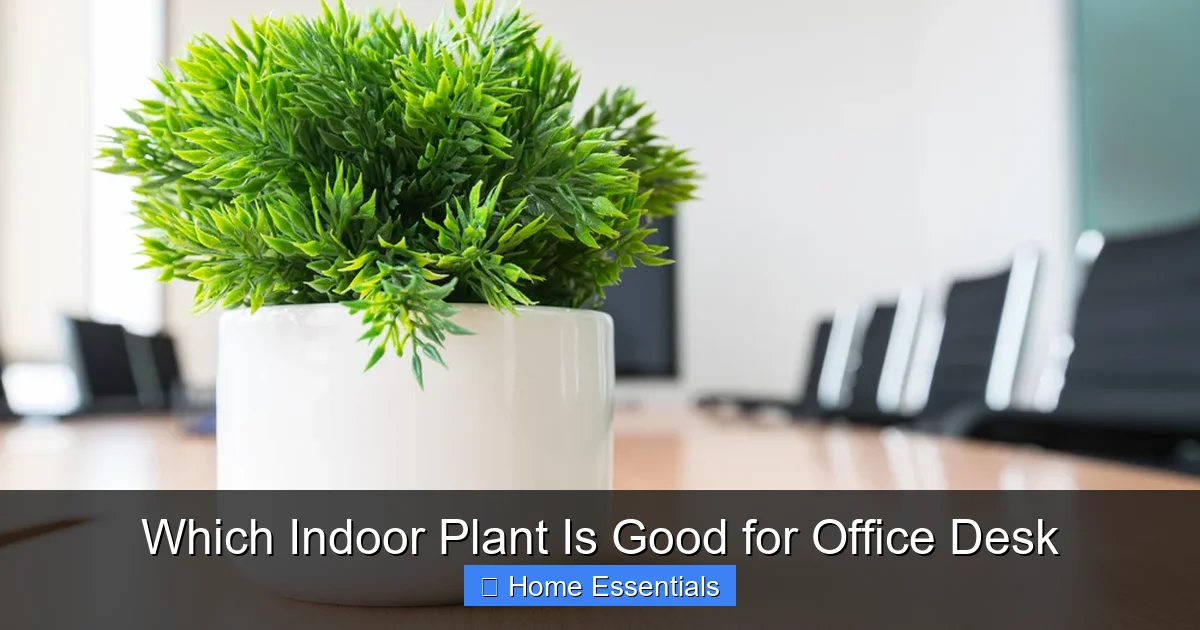
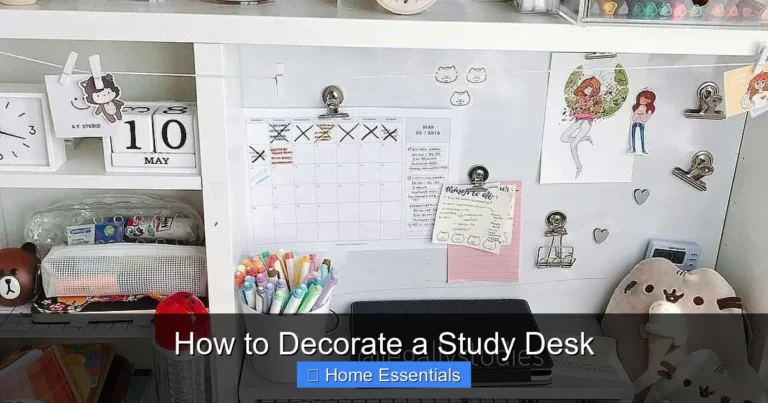
Visual guide about Which Indoor Plant Is Good for Office Desk
Image source: smallbiztrends.com
Rule #1: Embrace Low Light, It’s Your Friend
Unless your desk is pressed against a south-facing window, you are in a low-light zone. Office lighting is designed for reading documents, not for photosynthesis. Your plant’s light requirement is the single most important filter. Look for terms like “low light tolerant,” “indirect light,” or “tolerates fluorescent light.” Plants that require “bright, direct light” are instant fails for most desk scenarios. They will become leggy, pale, and weak as they stretch desperately for a light source that isn’t there.
Rule #2: Master the Art of Under-Watering
The cardinal sin of office plant ownership is overwatering. You feel guilty that the plant is “alone” all day, so you give it a drink. Then you do it again a few days later, just to be safe. The soil stays perpetually damp, the roots suffocate and rot, and the plant yellow and collapses. Your desk plant must be a camel, not a camel. It should be able to go at least 2-3 weeks, often longer, between thorough waterings. Succulents and plants with thick, waxy leaves (like the ZZ Plant) are masters of water storage. When in doubt, wait another week to water.
Rule #3: Size and Growth Habit Are Everything
Your desk is not a jungle. A sprawling vine or a rapidly growing palm will quickly take over your keyboard and mouse. You need a plant with a naturally compact growth habit or one that grows very slowly. Consider the plant’s eventual height and width. A plant that stays under 12-18 inches tall is usually ideal. Also, think about its shape. A upright, clumping plant (like a Snake Plant) takes up a small footprint. A trailing plant (like Pothos) can be placed on a high shelf or in a hanging pot to cascade down, saving precious desk surface area.
The Top 5 Champions: Best Indoor Plants for Your Desk
Armed with the rules, let’s meet the champions. These plants have earned their place through legendary resilience, perfect size, and undeniable charm. They are the most forgiving, rewarding choices for the office environment.
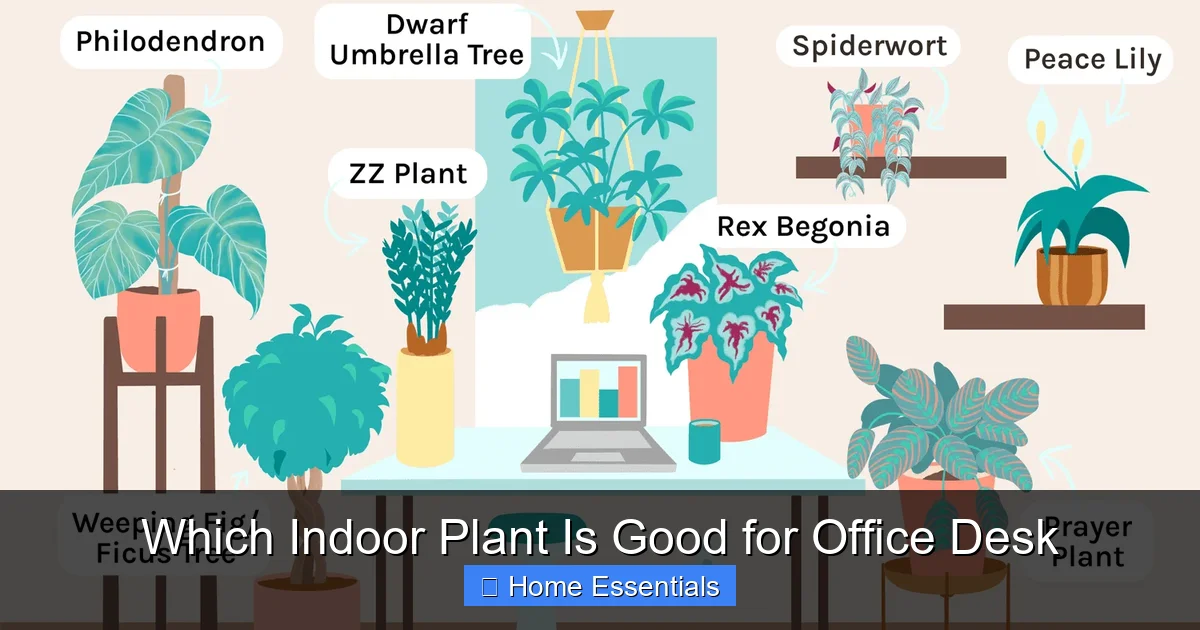
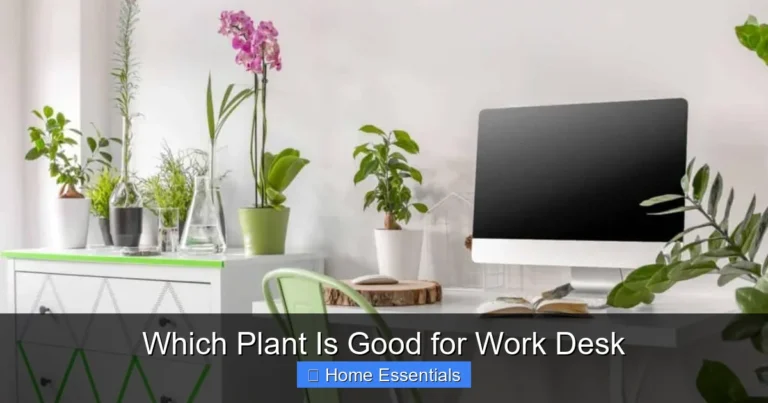
Visual guide about Which Indoor Plant Is Good for Office Desk
Image source: thespruce.com
1. The ZZ Plant (Zamioculcas zamiifolia): The Unkillable Wonder
If there were a plant that could survive a nuclear winter, it’s the ZZ Plant. This is the ultimate set-it-and-forget-it desk companion. Its dark green, glossy, oval-shaped leaflets grow in pairs along elegant, arching stems. It grows very slowly, so you won’t need to repot it for years. It thrives in the lowest of low light conditions and can easily go a month without water. In fact, overwatering is its only kryptonite. The ZZ Plant is a master of survival, storing water in its potato-like rhizomes underground. It’s also a known air purifier. For the person who travels often, has a windowless cubicle, or simply forgets they own a plant, the ZZ is perfection. Just place it anywhere on your desk and forget it exists. It will quietly persist, looking glossy and healthy.
2. Snake Plant (Sansevieria): The Architectural Air-Purifier
Formerly known as Sansevieria and now reclassified as Dracaena, the Snake Plant is another titan of resilience. Its tall, stiff, sword-like leaves stand upright in a dramatic rosette. Varieties like ‘Laurentii’ have striking yellow edges, while ‘Moonshine’ boasts pale, silvery-green leaves. Like the ZZ, it tolerates extremely low light and prolonged drought. Its real superpower, however, is its exceptional air-purifying ability. According to the NASA Clean Air Study, Snake Plants are exceptionally good at removing toxins like formaldehyde, benzene, xylene, and trichloroethylene from the air. They also have a unique habit: they absorb carbon dioxide and release oxygen at night, making them fantastic for improving air quality in a sealed office after hours. Place a small Snake Plant in the corner of your desk for a touch of modern sculpture and cleaner air.
3. Pothos (Epipremnum aureum): The Effortless Trailblazer
Also called Devil’s Ivy (for its near-impossibility to kill), Pothos is the classic vining plant. Its heart-shaped, waxy leaves come in solid green or stunning variegated patterns like ‘Golden Pothos’ (yellow marbling) or ‘Marble Queen’ (white and green). Pothos is incredibly adaptable. It thrives in low light but will also appreciate brighter conditions. It tells you exactly when it needs water—the leaves will visibly droop. This dramatic thirst signal makes it foolproof. Its trailing habit is perfect for offices. You can keep it compact by pinching back the vines, or you can place it on a high shelf and let the long, elegant trails cascade down beside your monitor, adding a dynamic, soft element to a rigid desk setup. It’s also a potent air purifier. A single cutting in a small glass of water can start a whole new plant, making it easily shareable with coworkers.
4. Cast Iron Plant (Aspidistra elatior): The True Low-Light Warrior
The name says it all. The Cast Iron Plant was a Victorian-era houseplant famous for surviving the soot and gloom of gas-lit homes. It is arguably the most tolerant of deep shade and irregular watering of any common houseplant. It produces long, slender, dark green leaves that arch gracefully from the soil. It grows slowly and steadily, never demanding attention. It’s not flashy, but it is profoundly reliable. If your desk is in a windowless interior office or a space with only artificial light, the Cast Iron Plant is your go-to. It asks for nothing but to be left alone in the dark. Water it deeply only when the soil is completely dry. This plant is the definition of understated, enduring elegance.
5. Spider Plant (Chlorophytum comosum): The prolific & Safe Choice
The Spider Plant is a cheerful, grassy-looking plant with long, narrow leaves that arch outward. It’s famously easy to care for and is completely non-toxic to pets and humans, making it a safe choice for any shared office space. Its most fun feature is its prolific production of “babies”—tiny plantlets on long stems that dangle from the mother plant. These can be rooted in water or soil to create new plants instantly. Spider Plants prefer bright, indirect light but will tolerate lower light, though their striping may fade. They like to dry out between waterings. Their rapid growth and habit of producing offshoots make them incredibly rewarding. Place one in a hanging pot on a bookshelf near your desk, and let its babies dangle down. It’s a symbol of vitality and propagation, a constant reminder of growth.
Beyond Selection: Essential Care for Your Desk Plant
Choosing the right plant is 80% of the battle. The other 20% is basic, mindful care. These simple practices will keep your chosen champion thriving for years.
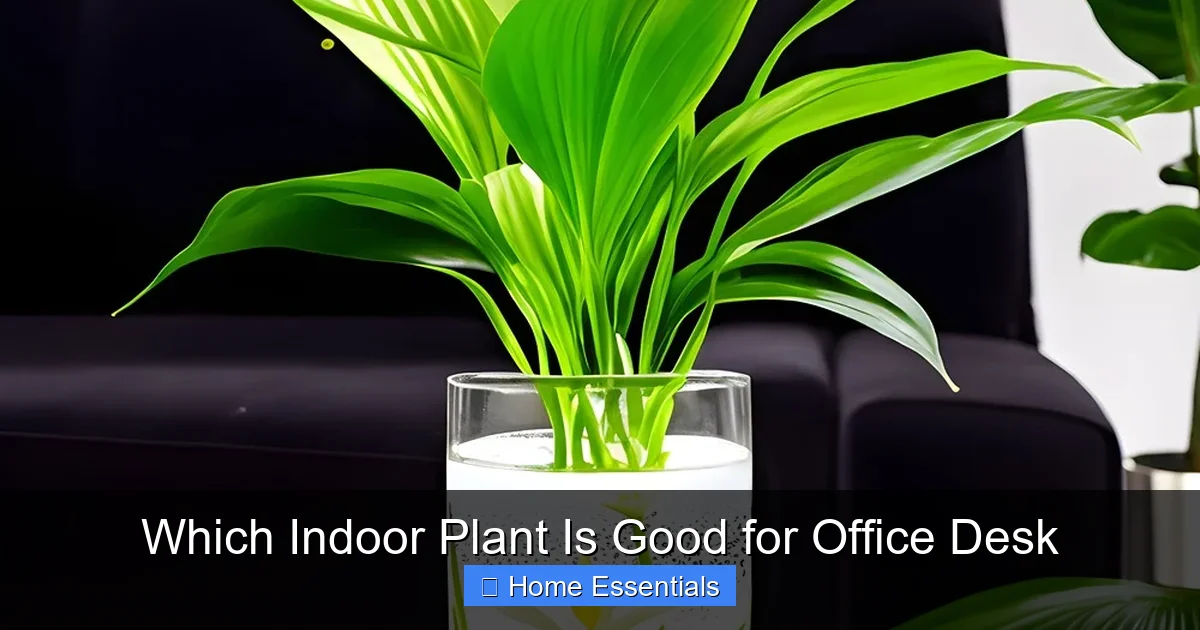
Visual guide about Which Indoor Plant Is Good for Office Desk
Image source: 99acres.com
The “Finger Test” for Watering
Forget schedules. Forget calendar reminders. The only reliable way to know when to water is to check the soil. Insert your index finger into the soil up to the first or second knuckle. If it feels completely dry, it’s time to water. If it feels cool and moist, wait. When you do water, do it thoroughly. Water until it runs out the drainage holes, ensuring the entire root ball is saturated. Then, immediately empty the saucer or cache pot underneath. Never let the pot sit in standing water. This cycle of soak and dry-out mimics natural rainfall and is crucial for root health.
Feeding: Less is More
Office plants in pots have finite soil resources. They need a tiny bit of food during their active growing season (typically spring and summer). Use a balanced, water-soluble houseplant fertilizer, but dilute it to half or even a quarter of the recommended strength. You only need to fertilize once a month, at most, during the growing season. Do not fertilize in the fall and winter when growth slows. Over-fertilizing burns roots and creates salt buildup in the soil, which is more harmful than under-fertilizing. When in doubt, skip it.
Cleaning and Grooming
Dust settles on everything in an office, including your plant’s leaves. A layer of dust blocks sunlight and hampers the plant’s ability to breathe. Once a month, take your plant to the sink and gently wipe each leaf with a damp microfiber cloth. For plants with small, sturdy leaves like the ZZ or Snake Plant, you can even give them a quick shower in the sink with lukewarm water. This also helps dislodge any tiny pests. While you’re at it, remove any dead, yellow, or brown leaves at their base with clean scissors. This keeps the plant looking neat and directs its energy to healthy growth.
Tech-Enhanced Plant Care: The Smart Solution
What if you could eliminate the guesswork entirely? For the truly forgetful or the tech-enthusiast, modern solutions exist. Smart plant pots are revolutionizing indoor gardening for busy professionals. These aren’t just fancy containers. They are equipped with sensors that continuously monitor critical metrics like soil moisture, nutrient levels, light intensity, and ambient temperature. This data is sent via Bluetooth or Wi-Fi to a companion app on your phone.
The app analyzes the data and sends you precise, timely alerts. It will tell you, “Your ZZ Plant is dry and needs water today,” or “Your Pothos is getting too much light.” Some advanced models even have built-in watering systems or can adjust their own color to indicate status. For someone who travels for work, worries about killing plants, or simply loves data, a smart pot is the ultimate safety net. It turns plant care from a guessing game into a simple, notified task. It ensures your office plant investment thrives by providing science-backed care instructions tailored to its exact needs and your specific office environment.
Common Mistakes & How to Avoid Them
Even with the hardiest plants, pitfalls exist. Here are the most common office plant mistakes and their simple fixes.
Mistake 1: The “Desk Pot Without Drainage” Trap
Many decorative pots sold for desks have no drainage hole. This is a disaster waiting to happen. Without an exit for excess water, it pools at the bottom, causing root rot. Solution: Always use a pot with a drainage hole. If you fall in love with a hole-less pot, use it as a cache pot. Plant your plant in a simple plastic nursery pot with drainage, then place that pot inside the decorative one. Empty the cache pot after watering.
Mistake 2: The “One-Size-Fits-All” Watering Schedule
Watering every Sunday is a recipe for disaster. Seasonal changes, office temperature fluctuations, and pot size all affect how quickly soil dries. Solution: Ditch the schedule. Use the finger test religiously. In winter, when offices are often heated and light is lower, your plant may need water half as often as in summer.
Mistake 3: Ignoring the “Turn”
Plants grow toward light. If your desk plant is always facing the same window, it will become lopsided and leggy on one side. Solution: Give your plant a quarter turn every time you water it. This ensures even, symmetrical growth and prevents it from becoming a leaning tower.
Mistake 4: Forgetting About Repotting
Plants eventually outgrow their pots. Signs include roots circling the bottom, water rushing straight through the pot (indicating no soil left to hold moisture), or stalled growth. Solution: Every 2-3 years, in spring, gently repot your plant into a container that is only 1-2 inches wider in diameter. Use fresh, well-draining potting mix (not garden soil). This gives the roots room to expand and replenishes nutrients.
Conclusion: Your Green Desk Awaits
Transforming your office desk from a sterile workstation into a personal sanctuary starts with a single, smart choice of plant. You don’t need a green thumb, a sunny window, or hours of spare time. By selecting a resilient, low-light, slow-growing species like the ZZ Plant, Snake Plant, or Pothos, and following the simple care principles of deep-but-infrequent watering and occasional cleaning, you set yourself up for years of success. The benefits—improved air quality, reduced stress, enhanced focus, and the simple joy of nurturing life—are immense. Your desk plant becomes a silent partner in your workday, a small but significant investment in your health and happiness. So, choose your champion, find a pot with drainage, and welcome a little piece of the natural world into your professional life. Your future, more relaxed and productive self will thank you.
Frequently Asked Questions
What is the absolute easiest indoor plant for an office desk with no windows?
The ZZ Plant (Zamioculcas zamiifolia) is the undisputed champion for zero-light, low-water office environments. It thrives on neglect and can survive with only fluorescent lighting for months.
How often should I really water my desk plant?
Forget fixed schedules. Always check the soil first. Insert your finger into the soil up to your first knuckle. If it feels completely dry, water thoroughly until it runs out the drainage holes. For most drought-tolerant desk plants, this is typically every 2-3 weeks, but it varies by season and light.
Are office plants safe for cats or dogs that might visit?
Many common desk plants are toxic to pets if ingested, including the Snake Plant, Pothos, and ZZ Plant. If pets have access, choose non-toxic options like the Spider Plant, Boston Fern, or African Violet. Always check the ASPCA toxic plant list for safety.
Can desk plants really purify the air in my office?
Yes, but with context. NASA studies show certain plants (Snake Plant, Peace Lily, Spider Plant) can remove volatile organic compounds (VOCs). However, you would need a large number of plants per square foot to have a significant impact. The benefit is real but more about incremental improvement and psychological well-being than replacing an air purifier.
My office is very dry from air conditioning. Will that hurt my plant?
Most low-light desk plants (ZZ, Snake Plant, Pothos) are tolerant of dry air. The bigger issue is dry soil. You may need to water slightly more frequently. For plants that prefer humidity (like some ferns), you can mist the leaves occasionally or place the pot on a pebble tray with water to increase local humidity.
Should I use fertilizer on my office plant?
Yes, but sparingly. Use a balanced liquid fertilizer at half-strength. Apply only during the active growing season (spring and summer) and no more than once a month. Never fertilize in fall and winter when the plant is dormant. Under-fertilizing is far safer than over-fertilizing.