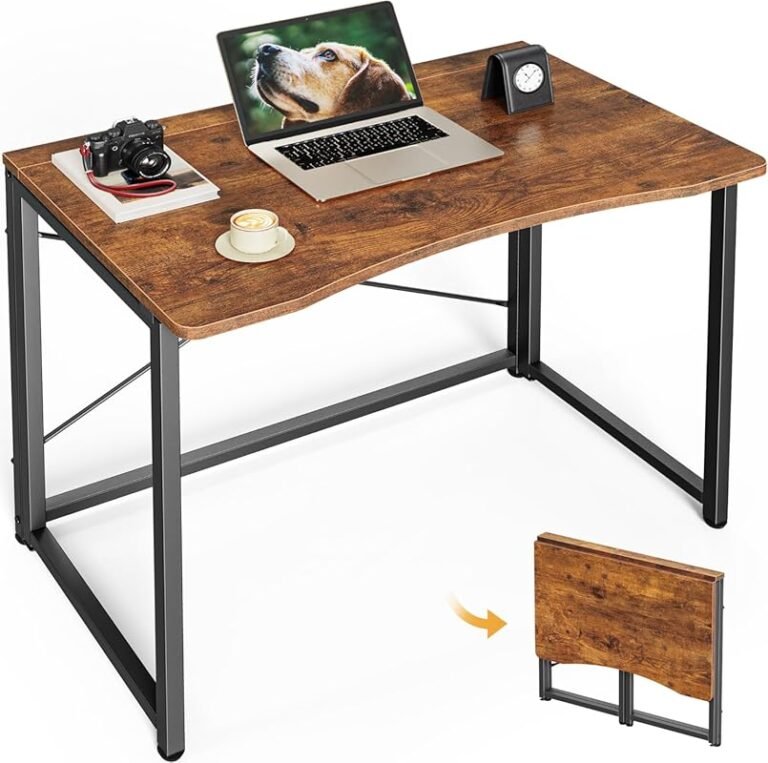
Why Is a Desk Important for Studying
A desk is vital for studying because it creates a physical boundary between work and leisure, supports ergonomic health, and keeps you organized. This dedicated space signals your brain to focus, boosting productivity and learning efficiency.
You’ve probably been there: books spread across your bed, laptop balanced on your knees, phone buzzing beside you. It’s a common scene for students, but it’s also a recipe for distraction and discomfort. While it might seem like any surface will do, having a dedicated desk for studying is a game-changer. It’s not just about having a place to put your things; it’s about creating an environment that actively supports learning, focus, and well-being. In this guide, we’ll explore why a desk is so important for studying, breaking down the science, the practical benefits, and how to set up your own powerhouse workspace.
Key Takeaways
- Physical Separation: A desk creates a clear boundary between study and relaxation, helping your brain switch into focus mode.
- Ergonomic Health: Proper desk setup prevents back pain, eye strain, and poor posture, keeping you comfortable during long study sessions.
- Enhanced Organization: With everything in its place, you save time and reduce stress, allowing full concentration on your work.
- Psychological Cue: Consistently using the same desk trains your mind to enter study mode automatically, improving discipline.
- Customizable Environment: You can tailor lighting, storage, and layout to your personal needs, optimizing comfort and efficiency.
- Long-Term Benefits: Good desk habits build skills like time management and organization that extend beyond academics.
📑 Table of Contents
- Creating a Physical Boundary for Productive Study
- The Ergonomic Edge: How a Proper Desk Protects Your Health
- Organization and Focus: The Desk as Command Central
- The Psychological Power of a Consistent Study Space
- Customizing Your Desk for Optimal Performance
- Beyond the Basics: Long-Term Benefits for Academic and Professional Life
- Conclusion
Creating a Physical Boundary for Productive Study
Our brains are pattern-recognition machines. They associate environments with specific activities. When you study on your bed, your brain gets mixed signals: is this place for sleeping or for working? This confusion can lead to restlessness, procrastination, and even sleep issues. A dedicated desk creates a crisp, clear boundary. It tells your mind, “This is the spot for focused work.”
The Science of Context-Dependent Memory
Research in psychology shows that context-dependent memory works both ways. You recall information better when you’re in the same environment where you learned it. By consistently studying at your desk, you’re building a strong mental link between that physical space and the act of learning. When exam time comes, sitting at your desk can help trigger recall more effectively than trying to study in a new, unfamiliar place.
Practical Tip: Reserve your desk solely for studying and productive tasks. Avoid watching movies, eating meals, or scrolling social media there. This strengthens the mental association and makes it easier to dive into work the moment you sit down.
The Ergonomic Edge: How a Proper Desk Protects Your Health
Studying for hours on a couch or bed might feel cozy at first, but it’s a fast track to aches and pains. A proper desk, paired with an ergonomic chair, supports your body in a neutral position. This means your spine is aligned, your wrists are straight, and your neck isn’t craned. Over time, this prevents chronic back pain, neck strain, and repetitive stress injuries like carpal tunnel syndrome.

Visual guide about Why Is a Desk Important for Studying
Image source: chrysaliskids.com
Getting the Setup Right
The ideal desk height allows your elbows to rest at a 90-degree angle when typing or writing, with your feet flat on the floor (or on a footrest). Your computer monitor should be at or just below eye level, about an arm’s length away. If your desk is too high or too low, you’ll subconsciously hunch or raise your shoulders, creating muscle tension.
Lighting is another critical ergonomic factor. Poor lighting causes eye strain, headaches, and fatigue. Natural light is best, but if that’s not possible, invest in a good task lamp. For ultimate control over your lighting environment, consider smart bulbs that let you adjust brightness and color temperature. Warmer tones in the evening help with relaxation, while cooler, brighter light during the day can boost alertness and focus.
Practical Tip: Do a quick posture check every 30 minutes. Are your shoulders relaxed? Is your back supported? Set a timer on your phone to remind you to stand, stretch, and reset your position.
Organization and Focus: The Desk as Command Central
A cluttered desk equals a cluttered mind. When your study materials are scattered—pens here, notes there, a half-empty water cup—your brain wastes precious energy on visual noise and decision-making (“Where’s my highlighter?”). A well-organized desk acts as your command center. Everything has a home, so you can access what you need in seconds and stay in the flow state.

Visual guide about Why Is a Desk Important for Studying
Image source: narayanaschools.in
Systems for Success
Start with the essentials: a good desk pad to protect the surface, a pen/pencil holder, a letter tray for active papers, and a few drawers or file organizers for archived notes. Use a simple system like “inbox” (new tasks), “working” (current projects), and “done” (completed work). This prevents important items from getting lost under a pile.
Regular maintenance is key. At the end of each study session, spend 5 minutes resetting your desk. File away loose papers, toss trash, and wipe the surface clean. To keep dust at bay, use a microfiber cloth—it’s highly effective at trapping dust without scratching your desk finish.
Practical Tip: Go digital where possible. Use cloud storage and note-taking apps to reduce physical paper clutter. If you must keep physical books, use a vertical file sorter to keep them upright and accessible without taking over your workspace.
The Psychological Power of a Consistent Study Space
Beyond the physical benefits, your desk serves as a powerful psychological tool. It becomes a ritual. The simple act of walking to your desk, turning on your lamp, and opening your notebook signals to your brain that it’s time to shift gears. This ritual reduces the mental friction of starting a study session, which is often the hardest part.

Visual guide about Why Is a Desk Important for Studying
Image source: myassignmentservices.com
Building Discipline Through Routine
When you always study in the same place, you build a habit loop: cue (sitting at desk) → routine (studying) → reward (progress, good grades). Over time, the cue alone becomes enough to trigger focus. This is incredibly valuable for combatting procrastination. You don’t have to decide whether to study; you just execute the routine.
Your desk space also influences your mindset. A clean, intentional desk feels professional and respectful of your time. It subconsciously tells you that your education is important. Surround yourself with minimal, positive items—a plant for life, a motivational quote, a photo of a goal—but keep distractions like phones or game controllers out of sight.
Practical Tip: Create a “start-up” ritual. This could be pouring a glass of water, clearing the surface, and writing a top-priority task for the session. It primes your brain for focused work.
Customizing Your Desk for Optimal Performance
No two students are identical. The beauty of having your own desk is that you can tailor it to your unique learning style and needs. Whether you’re a visual thinker who needs wall space for mind maps, a tech-heavy user with multiple monitors, or someone who thrives with minimalism, your desk can be adapted.
Lighting, Storage, and Flexibility
Lighting customization is huge. As mentioned, smart bulbs compatible with dimmer switches offer unparalleled flexibility. Dim the lights for a cozy reading nook feel, or brighten them for intense problem-solving sessions. Consider an adjustable desk (sit-stand) if you alternate between sitting and standing to combat sedentary habits.
Storage solutions should match your workflow. If you use lots of paper, invest in a filing cabinet or wall shelves nearby. If you’re all digital, ensure your desk has built-in cable management to avoid a tangled mess underfoot. The goal is to create a space where everything you need is within arm’s reach, but not so crowded it feels chaotic.
Practical Tip: Before buying accessories, spend a week using your desk bare. Note where you naturally reach for things, what clutters the space, and what you wish you had. Then, add items purposefully to solve those specific problems.
Beyond the Basics: Long-Term Benefits for Academic and Professional Life
The habits you build at your study desk don’t vanish when you graduate. They translate directly to the professional world. A well-organized, ergonomic workspace is a standard in offices for a reason—it promotes productivity, health, and clarity. By mastering your study environment now, you’re practicing skills that will make you a more effective employee or entrepreneur later.
Furthermore, the discipline of maintaining a dedicated workspace teaches time management and boundary-setting. You learn to start work promptly, protect your focus time, and separate work from personal life—a crucial skill in the age of remote work and digital distraction. Your desk becomes a sanctuary for deep work, a place where you can tackle complex problems without interruption.
Practical Tip: Periodically evaluate your desk setup. As your studies evolve—from high school to college to grad school—your needs will change. Don’t be afraid to rearrange, replace, or upgrade components to keep your space serving your current goals.
Conclusion
In the quest for better grades and less stress, we often overlook the simplest tools. A desk isn’t just furniture; it’s an investment in your academic success and personal well-being. It provides the physical separation your brain craves, the ergonomic support your body needs, and the organizational framework that turns chaos into clarity. By intentionally designing and using a dedicated study desk, you’re not just making a place to do homework—you’re building a powerful ritual that enhances focus, reduces fatigue, and cultivates lifelong productive habits. So, clear off that bed, set up your desk with care, and watch your study sessions transform.
Frequently Asked Questions
Is a desk really necessary for studying, or can I use any surface?
While you can study on various surfaces, a dedicated desk offers ergonomic benefits, organization, and psychological separation that other surfaces lack. It’s designed for prolonged use, supporting posture and focus.
What if I have limited space in my room?
Consider compact or wall-mounted desks that save floor space. Even a small, dedicated area can provide the mental boundary and organization benefits of a full-sized desk.
How do I choose the right desk size for my needs?
Measure your space and consider your study materials. A desk should comfortably fit your computer, books, and writing space without feeling cramped. Allow enough room for your legs and chair movement.
Can I use a dining table or kitchen counter instead of a desk?
These can work temporarily, but they lack dedicated storage and may encourage multitasking or interruptions. A desk signals a sole purpose for studying, which shared spaces don’t.
How often should I clean and organize my desk?
Daily quick tidy-ups prevent clutter buildup. Do a deeper clean weekly, using a microfiber cloth to dust surfaces and reorganize materials to maintain an efficient workspace.
What desk accessories enhance studying the most?
Prioritize a good chair, proper lighting, cable organizers, and storage solutions like trays or drawers. These items support comfort and reduce distractions, making study sessions more productive.