Can I Use Desk Lamp to Grow Plants
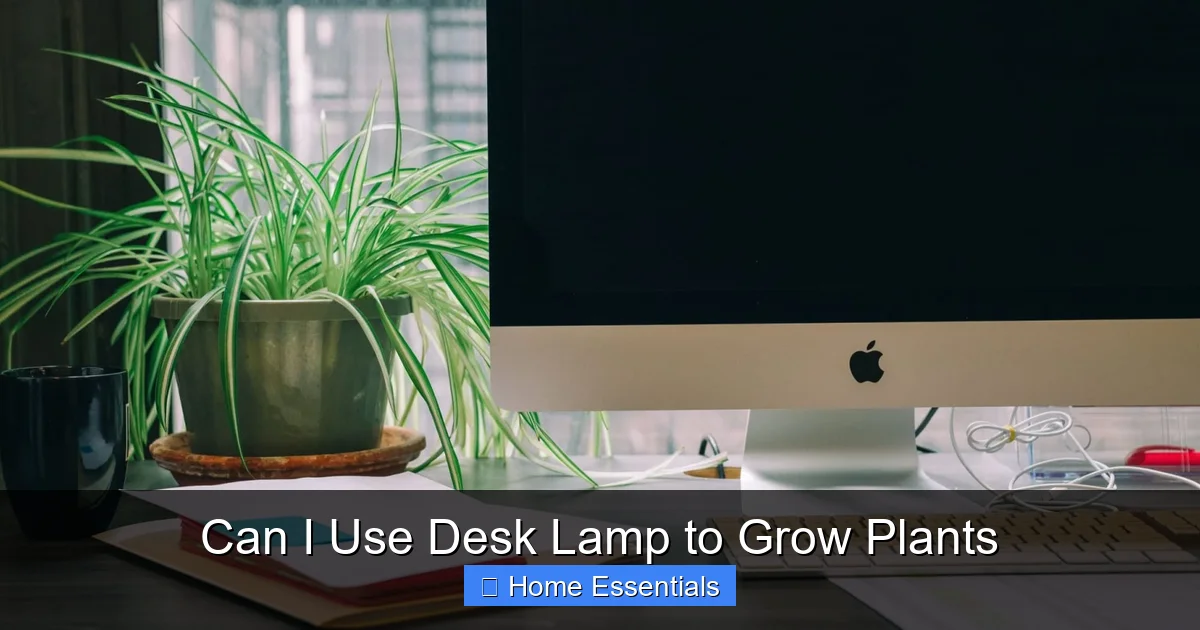
Yes, you can use a desk lamp to grow plants, but with major caveats. It only works with specific, modern LED bulbs that provide a full-spectrum light, placed very close to small, low-light plants for many hours daily. Standard desk lamps with incandescent or basic LED bulbs are ineffective and can even harm plants. For anything beyond a few herb seedlings, dedicated grow lights are a far better investment.
Key Takeaways
- Bulb Type is Everything: Only full-spectrum LED bulbs in a desk lamp have a chance of working. Incandescent and standard fluorescent bulbs lack the necessary blue and red spectrum and waste energy as heat.
- Light Intensity & Distance are Critical: Desk lamp light is weak and diffuse. The bulb must be mere inches from the plant’s leaves for sufficient intensity, which limits the size and number of plants you can grow.
- It’s for Very Specific Plants Only: This method is suitable only for germination, seedlings, and very low-light tolerant herbs (like mint or parsley) in their early stages. It cannot support fruiting or flowering plants.
- Duration Must Be Long: Plants need 12-18 hours of light. You’ll need a reliable timer, as a desk lamp left on all day is impractical and a fire hazard if unattended.
- Heat Can Be a Problem: Even low-wattage LEDs can generate heat when run constantly. Ensure the lamp has adequate ventilation and never touch foliage to prevent heat stress or burns.
- It’s a Temporary, Niche Solution: Think of a desk lamp as a temporary nursery for a few starts. For sustainable indoor gardening, a proper full-spectrum LED grow panel is more efficient and effective.
- Smart Bulbs Offer an Edge: Some modern smart LED bulbs can be set to full brightness and custom schedules, making them a slightly better, though still limited, option for this hack.
📑 Table of Contents
- Can I Use a Desk Lamp to Grow Plants? The Honest Answer
- Understanding What Plants Really Need From Light
- Desk Lamp Types & Their Suitability for Plants
- How to Set Up Your Desk Lamp for Plants: A Step-by-Step Guide
- Significant Limitations and Common Pitfalls
- When to Upgrade to a Dedicated Grow Light
- Conclusion: A Fun Experiment, Not a Sustainable System
Can I Use a Desk Lamp to Grow Plants? The Honest Answer
So, you’ve got a sunny windowsill that’s suddenly empty, or maybe you’re dreaming of fresh basil for your pasta but have zero garage space for a giant grow tent. Your eyes drift to your trusty old desk lamp. It’s got a plug, a bulb, and an adjustable neck. Could this be the secret weapon for your indoor gardening dreams? The question “Can I use a desk lamp to grow plants?” is a classic DIY gardening query. The short, frustratingly vague answer is: sometimes, for some plants, under very specific conditions.
Let’s unpack that. Plants don’t just need “light.” They need specific wavelengths of light (colors) in specific intensities for specific processes. A typical desk lamp is designed for human vision—to illuminate a workspace comfortably. It is not engineered for photosynthesis. Using it as a grow light is a compromise, a hack that sits at the very furthest edge of what’s possible. It’s the gardening equivalent of using a butter knife as a screwdriver. It might turn a screw once or twice, but you’ll likely strip the head and damage the knife. Before you plug in that lamp, you need to understand the science of plant light and see exactly how your desk lamp measures up.
Understanding What Plants Really Need From Light
To know if your desk lamp can cut it, you first need to speak the language of plants. Plants absorb light through pigments, primarily chlorophyll, which drives photosynthesis. But chlorophyll isn’t picky—it mostly absorbs blue and red light, reflecting green (which is why plants look green). The light spectrum is measured in nanometers (nm). Here’s the simple breakdown:
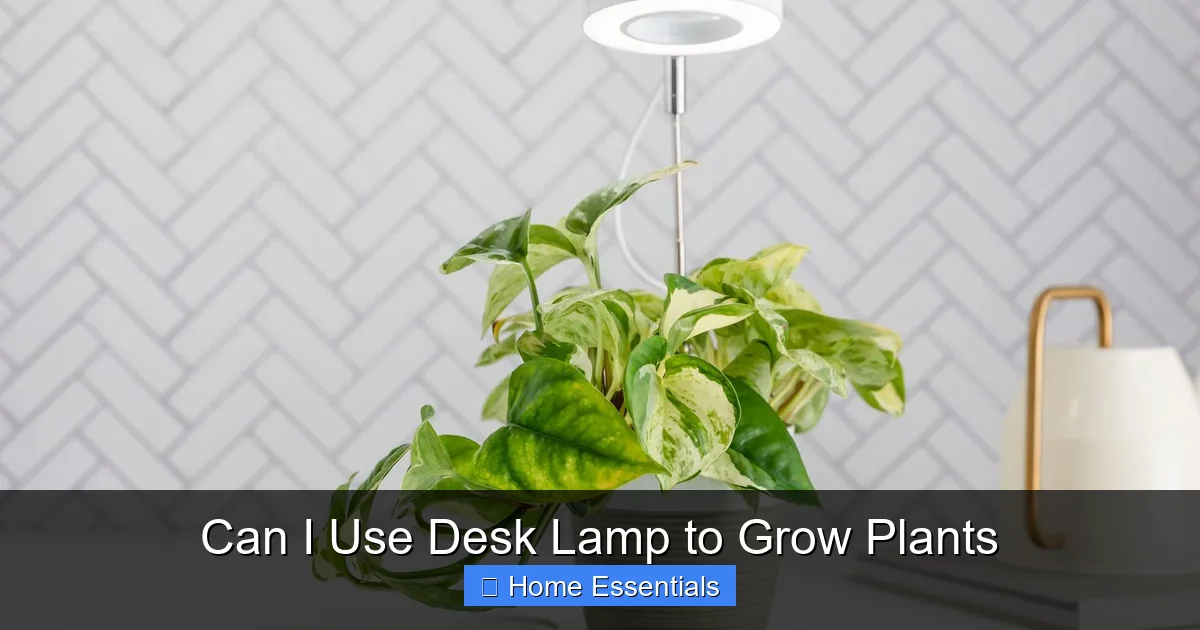
Visual guide about Can I Use Desk Lamp to Grow Plants
Image source: thespruce.com
- Blue Light (400-500 nm): Think of this as the “foliage” light. It promotes strong, compact vegetative growth, healthy leaf development, and robust stems. It’s crucial for seedlings and leafy greens.
- Red Light (600-700 nm): This is the “flowering and fruiting” light. It signals plants to bloom, set fruit, and can also influence stem elongation. It’s essential for tomatoes, peppers, and flowering houseplants.
- Full Spectrum: This term means the light source emits a balanced mix of blue, red, and all the other wavelengths in between, mimicking natural sunlight. A good full-spectrum light will look bright white to our eyes, not the sickly purple of cheap, single-spectrum LEDs.
Beyond color, two other factors are non-negotiable: intensity (how many photons hit the leaf surface, measured as PPFD or Photosynthetic Photon Flux Density) and duration (photoperiod). A weak light, no matter how “full spectrum,” is useless if it doesn’t deliver enough energy. And plants need their darkness too—most vegetative growth plants need 16-18 hours of light, while flowering plants often need 12 hours to trigger blooming.
The Problem with Standard Desk Lamp Bulbs
Now, let’s match the plant’s needs to your lamp’s output:
- Incandescent Bulbs: These are the worst. They emit mostly yellow/green light and a huge amount of infrared (heat) radiation. They are incredibly inefficient, burning most energy as heat, not useful light. They can scorch plant leaves if placed close enough to provide any meaningful intensity.
- Standard LED Bulbs (Non-Full Spectrum): The common “soft white” or “daylight” LED bulbs found in most desk lamps are designed for human comfort. Their spectrum is skewed towards the green-yellow part of the spectrum that plants are poor at using. They might keep a low-light tolerant plant alive near a window, but they won’t drive robust growth.
- Fluorescent Tubes/Bulbs: Older T5 or T8 fluorescents can be closer, as some are made in “full spectrum” or “grow light” versions. However, a standard desk lamp that accepts a compact fluorescent (CFL) usually won’t provide enough intensity for more than a few inches of coverage.
Desk Lamp Types & Their Suitability for Plants
Not all desk lamps are created equal. Your success hinges entirely on the bulb you screw into it and the lamp’s design.
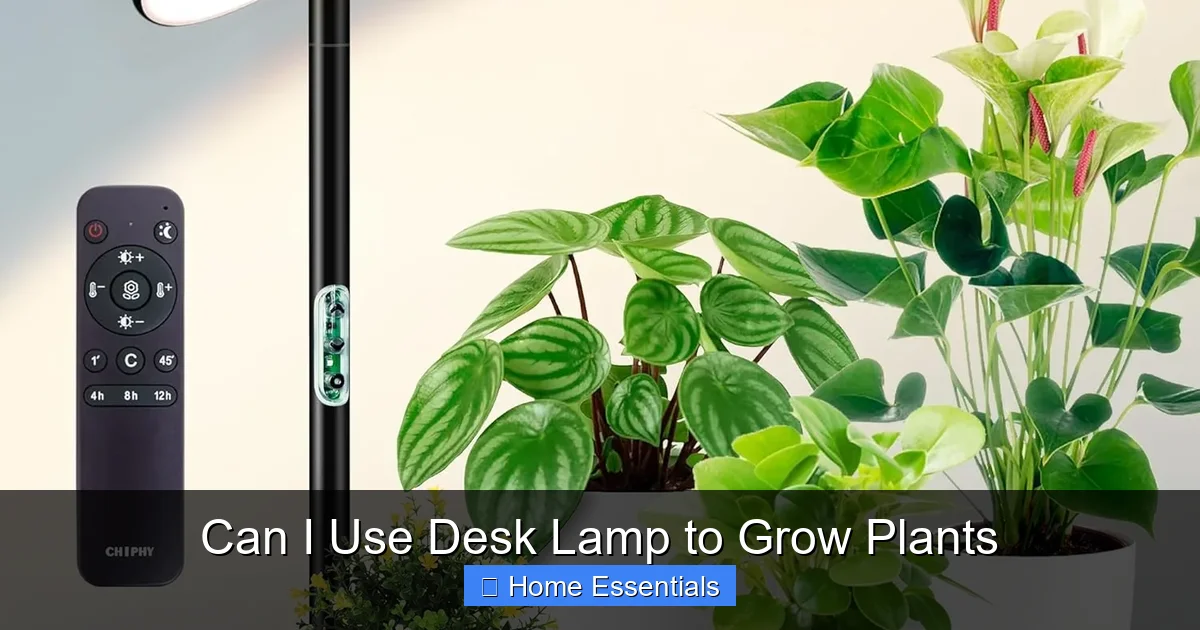
Visual guide about Can I Use Desk Lamp to Grow Plants
Image source: chiphylighting.com
The Only Viable Candidate: Full-Spectrum LED Bulbs
If you’re serious about trying this, you must replace your lamp’s bulb with a dedicated full-spectrum LED grow bulb. These are specifically engineered for plant growth, with a balanced spectrum rich in blue and red. They are cool to the touch and energy-efficient. You can often find them in standard Edison (E26/E27) bases that fit most desk lamps. Look for bulbs labeled “full spectrum,” “vegetative,” or “bloom” (or a combo). Brands like GE’s “LED Grow Light” series or similar from horticultural suppliers are a starting point.
Even with the right bulb, the lamp’s physical design matters. A lamp with a reflective shade or a focused beam (like a gooseneck with a small shade) is better than an open, shaded lamp that scatters light in all directions. You need to concentrate what little light you have onto the plant.
The Role of Smart Bulbs
Here’s where modern tech offers a slight advantage. Some smart LED bulbs can be set to 100% brightness (many default to a lower, comfortable level) and scheduled via an app or timer. This solves the “duration” problem elegantly. You could set a schedule for 16 hours on, 8 hours off. However, most consumer smart bulbs are still optimized for human vision, not plant growth. You must verify the manufacturer’s specs—does it claim a full or broad spectrum? Many do not. A smart bulb that is truly full-spectrum is a rare and excellent find for this project. For more on the capabilities and limitations of smart bulbs in unconventional roles, you can read our deep dive on whether smart bulbs can be used as grow lights.
How to Set Up Your Desk Lamp for Plants: A Step-by-Step Guide
Assuming you have a suitable lamp (a simple, adjustable arm is best) and a proper full-spectrum LED bulb, here is the precise setup protocol.
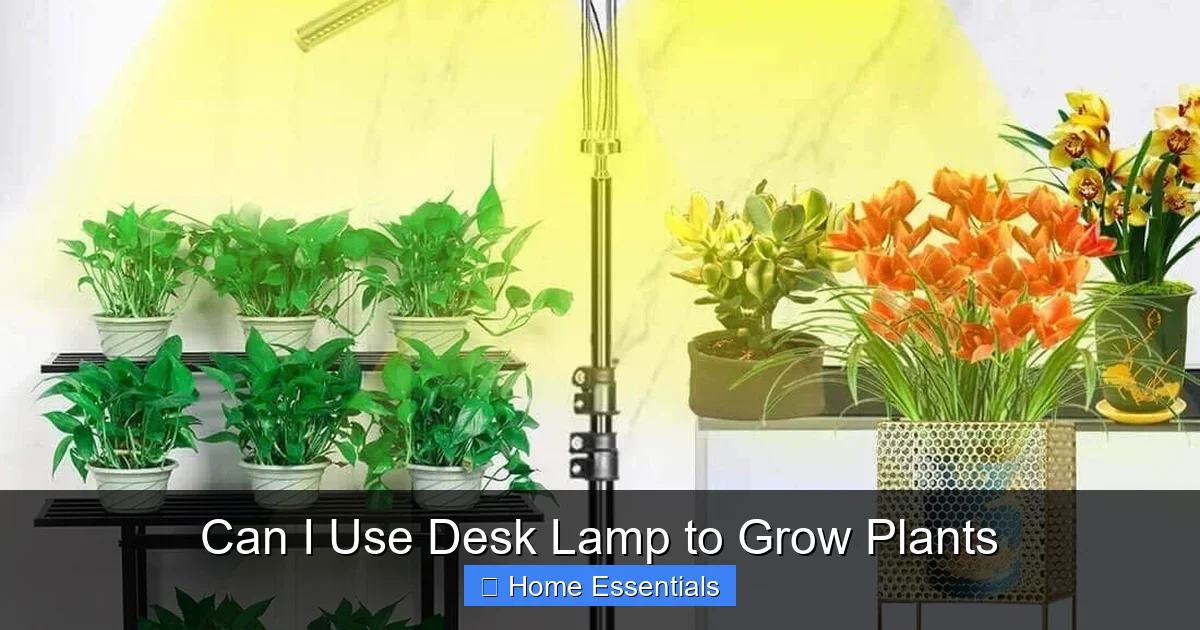
Visual guide about Can I Use Desk Lamp to Grow Plants
Image source: m.media-amazon.com
1. Choose the Right Plant
Forget about tomatoes or peppers. Your candidates are:
- Seedlings: Starting lettuce, herbs, or flowers from seed.
- Leafy Greens: Lettuce, spinach, kale, Swiss chard in their early, compact stages.
- Low-Light Herbs: Mint, parsley, cilantro (though they’ll grow leggy).
- Propagations: Cuttings of pothos, philodendron, or rosemary rooting in water or soil.
These plants have relatively low light demands compared to fruiting plants.
2. Position for Maximum Intensity
This is the most important rule. The closer the light, the higher the intensity. With a desk lamp, you must place the bulb 2-6 inches above the plant’s crown. For very young seedlings, it can be as close as 2 inches. Use a lamp with a flexible gooseneck to achieve this without the bulb touching the plant. As the plant grows, you must raise the lamp to maintain that 2-6 inch distance. If the light is too far, the plant will become leggy (stretched, weak stems) as it searches for light.
3. Master the Timer
Plants need consistency. Use a simple plug-in mechanical timer or a smart outlet (if using a smart bulb, use its app). Set it for 16 hours on, 8 hours off for vegetative growth (lettuce, herbs). Do not run it 24/7—plants need a dark period for respiration and growth regulation. A timer is non-negotiable for success and safety.
4. Monitor and Adjust Relentlessly
Check your plants daily. If leaves are curling upward or developing brown, dry tips, the light is too close or too intense (less likely with LEDs). If stems are long, thin, and pale, the light is too far away or not intense enough. Be prepared to move the lamp daily as seedlings grow.
Significant Limitations and Common Pitfalls
Why is this method so tricky? Because you’re fighting against the fundamental design of a desk lamp.
Limited Coverage and “Footprint”
A single desk lamp bulb, even a good LED, has a tiny effective coverage area—maybe a 12-inch diameter circle at best. You cannot grow a tray of seedlings evenly under it; the plants at the edge will be light-starved. You are restricted to 1-3 small pots in a tight cluster directly under the lamp.
Inefficiency and Poor Penration
Dedicated grow lights use multiple high-output diodes engineered for deep canopy penetration. A desk lamp bulb’s light is soft and diffuse. It won’t penetrate past the first few sets of leaves on a bushy plant. The lower leaves will yellow and die from lack of light.
Heat and Fire Risk
While LEDs run cooler than incandescents, running any electrical device for 16+ hours a day, especially an older lamp not designed for continuous use, poses a fire risk. Ensure the lamp is in good condition, the shade is not flammable, and there is clear air circulation around the bulb and lamp head. Never leave it unattended for days without checking.
It’s More Expensive Per Plant Than You Think
When you factor in the cost of a full-spectrum LED bulb ($15-$30), a timer ($10-$20), and the electricity to run a 10-15W bulb for 16 hours a day (still a few cents a day), you’re investing in a system that will only support a couple of herb plants. For the same money, you could buy a small, purpose-built 10-20W LED grow panel that offers better spectrum, coverage, and cooling.
When to Upgrade to a Dedicated Grow Light
So, when should you abandon the desk lamp hack? The moment you hit any of these walls:
- You want to grow more than a handful of tiny plants.
- You want to grow anything that will flower or fruit (peppers, tomatoes, strawberries).
- Your seedlings are getting leggy no matter how close you move the lamp.
- You want a set-and-forget system without daily adjustments.
- The lamp gets warm to the touch after an hour of use.
Dedicated full-spectrum LED grow lights are now very affordable. A 20-45W panel from a reputable brand will provide a uniform, high-intensity light over a 2×2 or 3×3 foot area. They are built to run 18 hours a day, have proper heat sinks, and offer the correct spectrum ratios for both vegetative and flowering stages. The investment is modest compared to the frustration and failed harvests from an underpowered desk lamp setup.
Conclusion: A Fun Experiment, Not a Sustainable System
Using a desk lamp to grow plants is a fascinating experiment in resourcefulness. It teaches you about light intensity, spectrum, and plant photoperiods in a hands-on way. For a child’s science project or to sprout a few pea shoots on your kitchen counter, it’s a perfectly valid hack. You’ll need the right full-spectrum LED bulb, a timer, and a very short distance between light and leaf. But you must manage your expectations fiercely. This is not a solution for serious indoor food production or healthy, robust houseplants. It is, at best, a temporary nursery. For a reliable, efficient, and scalable indoor garden, the humble desk lamp must be retired in favor of technology built for the job. Your plants will thank you for the upgrade.
Frequently Asked Questions
Can any desk lamp be used to grow plants?
No. Only desk lamps that accept a screw-in bulb (Edison base) can be modified. Lamps with built-in, non-replaceable LEDs cannot be upgraded and are unsuitable. Even with a replaceable bulb, the lamp must have an adjustable arm to get the light close enough to the plants.
How far should a desk lamp be from plants?
Extremely close. With a full-spectrum LED bulb, start with the bulb 3-4 inches above the plant’s highest leaves. For very delicate seedlings, it can be as close as 2 inches. As the plant grows, you must regularly raise the lamp to maintain this short distance. If the light is too far, growth will be weak and leggy.
How long should I leave the desk lamp on?
Plants need 12-18 hours of light daily, depending on the species. For leafy greens and herbs, aim for 16-18 hours on. You must use a timer; leaving it on manually is unreliable and unsafe. Ensure the lamp has at least 6-8 hours of complete darkness each cycle.
Will a regular LED bulb from my desk lamp work?
Almost certainly not. A standard “soft white” or “daylight” LED bulb is designed for human vision and lacks the balanced blue and red spectrum plants need. You must specifically purchase a full-spectrum LED grow bulb that is marketed for plant growth.
Is it safe to leave a desk lamp on for 16 hours a day?
It can be, but with precautions. Use a modern, undamaged lamp with an LED bulb (which runs cool). Place it on a non-flammable surface, ensure the shade is secure and not touching anything, and do not use an old, frayed cord. A timer is safer than manual operation. However, lamps are not designed for 24/7 operation, so monitor for any overheating.
What is the best plant to grow under a desk lamp?
The best candidates are plants with low light requirements and small, compact growth. Excellent choices are: lettuce and other microgreens, basil and mint seedlings, and cuttings for propagation (like pothos or philodendron). Avoid any plants that will flower, fruit, or grow large leaves.