Desk Lamp for Painting Miniatures
Precise lighting is non-negotiable for miniature painting, and the right desk lamp eliminates shadows and reveals fine details. Look for models with adjustable brightness and color temperature to match your paint layers and reduce eye strain. This investment directly translates to cleaner brushwork, better color matching, and more enjoyable, strain-free sessions.
Key Takeaways
- Prioritize adjustable brightness and color temperature for precise detail work.
- Choose a lamp with a flexible gooseneck or articulated arm for perfect angles.
- Eliminate glare and harsh shadows with a diffused, shadow-free light source.
- Opt for LED lamps for energy efficiency and low heat during long sessions.
- Ensure a stable, weighted base to prevent accidental bumps and tipping.
- Balance your budget with needed features for a practical, effective setup.
📑 Table of Contents
- Why a Desk Lamp for Painting Miniatures is Your Most Important Tool
- Decoding the Specs: What Makes a Lamp Great for Miniatures?
- Lamp Styles Face-Off: Finding Your Perfect Match
- Crafting the Perfect Painting Environment
- Top Picks: Desk Lamps for Painting Miniatures of All Budgets
- Protecting Your Investment: Care and Longevity Tips
- Final Brushstrokes: Why This Investment Pays Off
Why a Desk Lamp for Painting Miniatures is Your Most Important Tool
Let me take you back to my first serious attempt at painting a Warhammer Space Marine. I was perched at my kitchen table, using a cheap clip-on lamp from the hardware store. The paint colors looked okay… until I brought the figure under my main ceiling light. The vibrant blue I’d mixed for his armor was suddenly a dull, muddy grey. The fine details on his purity seal? Barely visible. I’d spent two hours on what looked like a mess. That frustration, that feeling of your hard work being undermined by something as simple as light, is what every miniature painter eventually faces. It’s the moment you realize your brushes, paints, and skills are only half the equation. The other half is the light you paint under.
A dedicated desk lamp for painting miniatures isn’t a luxury; it’s the unsung hero of your craft. It’s the difference between seeing the true, vibrant red of a Blood Angel’s armor and a frustrating, inconsistent wash that pools in the wrong places. It’s about protecting your eyes during those marathon painting sessions and ensuring that the masterpiece you finish under your lamp is the same masterpiece you display on the shelf. In this guide, we’ll shed light on everything you need to know—no fluff, just practical advice from someone who’s learned the hard way.
Decoding the Specs: What Makes a Lamp Great for Miniatures?
Walking into a lighting aisle or scrolling online can be overwhelming. Lumens, kelvin, CRI… what does it all mean for your tiny figures? Let’s break it down into plain English. These specs aren’t marketing jargon; they’re the blueprint for a lamp that will actually help you paint.
Visual guide about Desk Lamp for Painting Miniatures
Image source: i.redd.it
Brightness (Lumens) – Seeing the Tiniest Details
Brightness is measured in lumens. For miniature painting, you need enough light to illuminate your work without creating harsh glare. Too dim, and you’ll squint, miss details, and overwork your brush. Too bright, and it’s blinding. A good range is between 300 and 600 lumens for the primary light source on your brush hand. This is equivalent to a standard 40-60 watt incandescent bulb but delivered in a focused, adjustable beam. You want to light up the miniature and your palette, not the entire room.
Color Temperature (Kelvin) – The “Warmth” of Your Light
Color temperature, measured in Kelvin (K), describes the hue of white light. Lower numbers (2700K-3000K) are warm, yellowish light—like a sunset or old incandescent bulbs. Higher numbers (5000K-6500K) are cool, bluish daylight. For accurate color matching, a neutral to cool white light between 5000K and 6500K is ideal. Why? Because most miniature paints are formulated to be viewed under daylight conditions. Painting under a warm bulb will make your reds look orange and your blues look green. You’ll mix the wrong colors, only to be horrified when you see your work under natural light. A 5500K lamp mimics bright, overcast daylight—the gold standard for artists.
Color Rendering Index (CRI) – The Most Important Number You’re Ignoring
CRI is a score from 0 to 100 that tells you how accurately a light source reveals the true colors of objects compared to natural light. A CRI of 100 is perfect. For miniature painting, you want a CRI of 90 or higher. A lamp with a low CRI (even if it’s the right color temperature) will distort your paint colors. That vibrant “Citadel Red” might look brownish, or that metallic silver might lose its sparkle. High CRI is non-negotiable for serious painters. It’s the spec that separates a great lamp from a frustrating one.
Adjustability – Taming Shadows and Glare
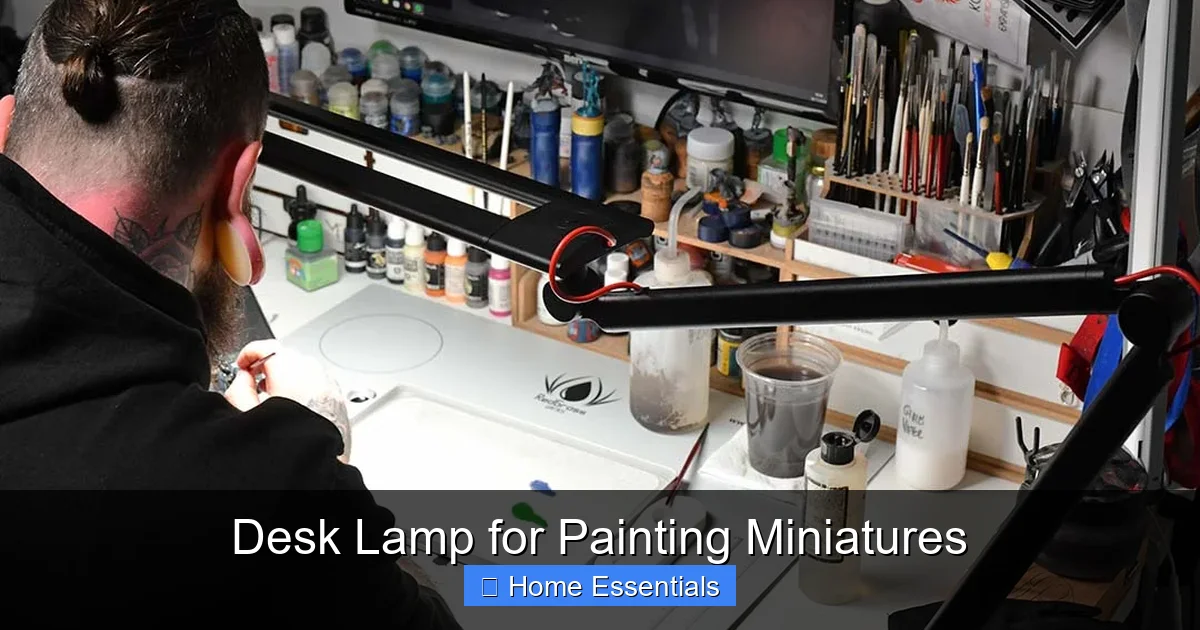
Your miniature is a three-dimensional object. A fixed light will cast shadows from the brush, your hand, or the figure itself, hiding details exactly where you need to see them. Look for a lamp with a highly flexible arm—gooseneck, double or triple pivots—that lets you position the light source directly over your brush tip. The goal is to have the light come from the same direction as your brush, eliminating shadows on the area you’re painting. A lamp that can also dim is a huge plus for reducing eye strain during long sessions.
Lamp Styles Face-Off: Finding Your Perfect Match
Not all lamps are created equal. The physical design impacts your workspace efficiency and comfort. Here’s how the main styles stack up for miniature painting.
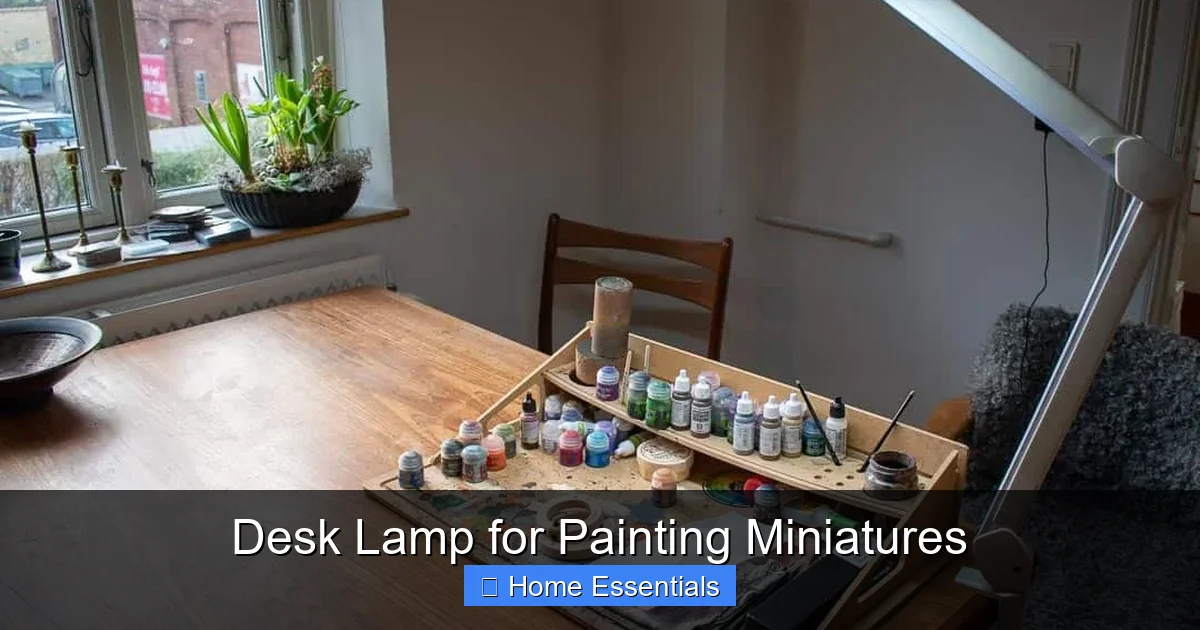
Visual guide about Desk Lamp for Painting Miniatures
Image source: ageofminiatures.com
LED vs. Traditional Bulbs: It’s Not Even a Contest
If you’re buying a new lamp today, it should be LED. LEDs are vastly more energy-efficient, generate almost no heat (crucial for not drying your paints on the brush), and last for tens of thousands of hours. More importantly, modern high-CRI LEDs can achieve the perfect 5000K+ color temperature and 90+ CRI that traditional incandescent or halogen bulbs struggle with. Some older or very cheap LEDs can have a spiky spectral output that still distorts colors, so always check the specs for CRI and color temperature, not just the fact it’s an LED.
Clamp-On vs. Stand Lamps: Space vs. Stability
Clamp-on lamps are fantastic for small spaces. They attach to the edge of your desk, saving precious surface area. However, the clamp must be very secure; a wobbly clamp means a wobbly light, which is a disaster for precision work. Ensure the clamp has a good range and protective pads to avoid scratching your table.
Stand lamps (with a weighted base) offer ultimate stability. You can position them anywhere, and they’re less likely to be knocked over by an errant elbow. They take up floor or desk space, but for a dedicated painting station, a stable base is often worth it. Some models combine both with a heavy base and a clamp option.
Smart Features: Convenience or Distraction?
Wi-Fi connectivity, app control, and voice commands are neat, but ask yourself: do you need them? For a painting lamp, simplicity is king. You want a physical switch or dial that you can find and operate without looking away from your work. Smart bulbs, in particular, can have variable color temperatures and brightness, but their CRI is often unlisted and mediocre. If you do want smart capabilities, prioritize a lamp with a high-CRI LED built-in, rather than one that relies on you buying a separate smart bulb. Concerns about smart bulb safety and blue light emission are also worth considering, as discussed in our analysis of are smart bulbs bad for you.
Crafting the Perfect Painting Environment
The lamp is the star, but the stage matters too. Where and how you position your lamp, and what’s around it, makes a huge difference.
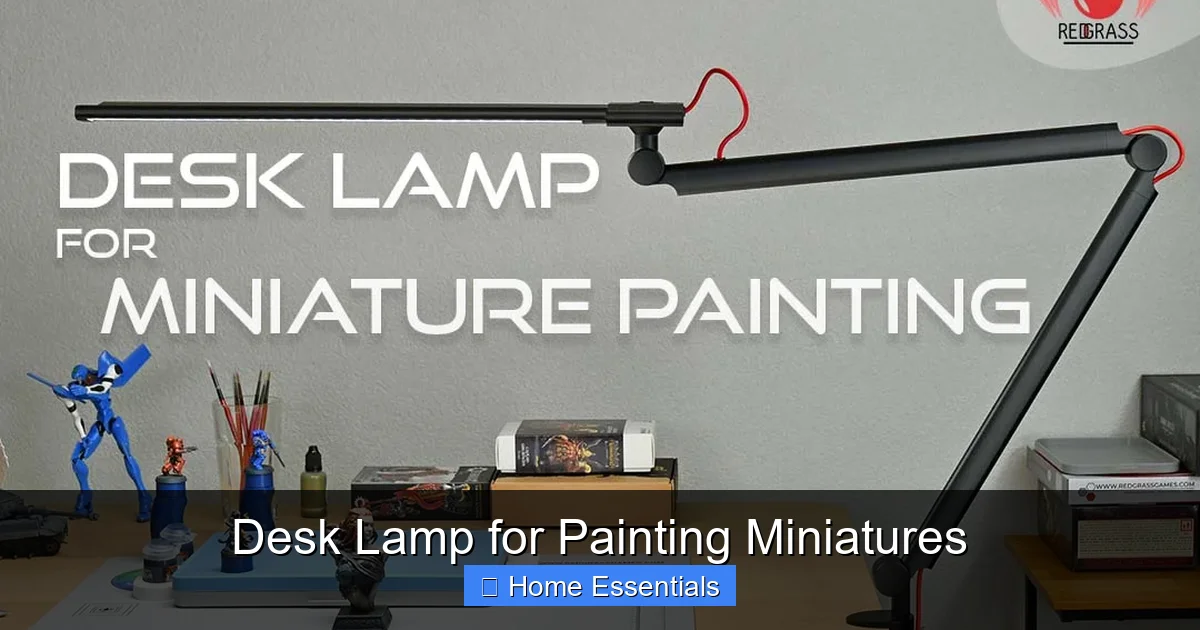
Visual guide about Desk Lamp for Painting Miniatures
Image source: redgrasscreative.com
Ergonomic Positioning – Protect Your Neck and Eyes
Your lamp should allow you to sit in a comfortable, neutral posture. The light source should be slightly in front of you and to the side (usually the side of your dominant hand), positioned so the light falls over your shoulder onto the miniature. The lamp head should be about 12-18 inches from your work surface. Never position a lamp so you’re looking directly into the bulb—this causes glare and eye strain. Use the flexibility of the arm to get the light where it needs to be without you having to contort.
The Role of Ambient Light – Don’t Ignore the Room
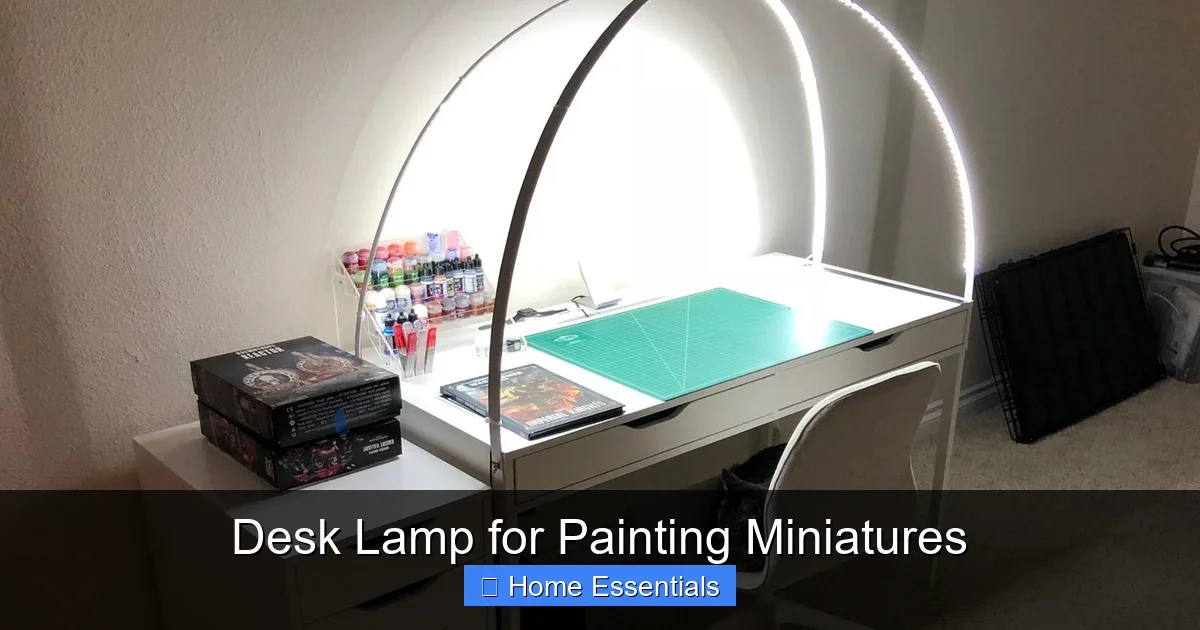
Your desk lamp is your primary tool, but it shouldn’t be your only light source. Painting in a completely dark room creates high contrast and pupil strain. A soft, general room light (with a warm color temperature) in the background helps reduce overall eye fatigue. However, ensure this ambient light doesn’t compete with or reflect off your work. The key is that your desk lamp for painting miniatures provides the definitive, color-accurate light for judging paint colors and details.
Essential Accessories – The Little Things Matter
A good mat or sheet of neutral grey paper under your miniature prevents color reflections from a bright desk surface. A magnifying visor or lamp with a built-in magnifier can help with the finest details, but they often reduce your field of view and working distance—use them sparingly. Finally, keep your lighting equipment dust-free. Dust on the lamp shade or lens scatters light and reduces efficiency. Use a soft microfiber duster designed for electronics to gently clean the lamp’s surfaces without scratching. For broader dusting around your station, a dedicated microfiber duster for blinds can be a versatile tool for keeping the entire workspace pristine, preventing particles from settling on wet paint.
Top Picks: Desk Lamps for Painting Miniatures of All Budgets
After testing and researching, here are my top recommendations across different price points. All meet the core criteria: high CRI (90+), adjustable 5000K-6500K light, and solid build quality.
| Lamp Model | Key Features | Best For | Approx. Price |
|---|---|---|---|
| BenQ e-Reading LED Desk Lamp | Excellent 95+ CRI, 2700K-5700K adjustable, auto-dimming, flexible arm, clamp-on | The serious professional who wants the absolute best color accuracy and smart features | $150 – $200 |
| TaoTronics LED Desk Lamp (Model TT-DL13) | 90+ CRI, 5 color temps + brightness levels, USB charging port, sturdy base, very affordable | The hobbyist on a budget who won’t compromise on core specs | $35 – $50 |
| Luxpad LED Desk Lamp | 92 CRI, 4000K-6000K, minimalist design, excellent build, no-frills focus on lighting quality | Someone wanting a simple, high-performance lamp without extra gadgets | $60 – $80 |
| Neewer 660 LED Studio Light (with Diffusion) | Extremely bright, 95+ CRI, 5600K, uses AC power, requires separate stand/ clamp | The ultimate solution for a permanent, high-end painting station with multiple figures | $80 – $120 (plus stand) |
Note: Prices vary. Always verify current CRI and color temperature specs before purchasing, as models can change.
Protecting Your Investment: Care and Longevity Tips
A good lamp should last for years, but it needs a little care. Dust accumulation on the LED array or diffuser reduces light output over time. As mentioned, clean it regularly with a dry or slightly damp microfiber cloth. Avoid harsh chemicals. Check the adjustable joints periodically to ensure they remain tight—a loose arm will drive you crazy. If your lamp has a USB port for charging, don’t overload it. Finally, when not in use for extended periods, simply switch it off at the power source to minimize any negligible standby drain and protect the circuitry.
Final Brushstrokes: Why This Investment Pays Off
I won’t pretend a desk lamp will make you a better painter overnight. Your technique, brush control, and practice are still king. But what it will do is remove a massive, invisible barrier. It eliminates the guesswork, the color mismatches, and the eye strain. It means the mini you finish on Tuesday is the same mini you’re proud to show on Saturday. You’ll spend less time fighting your environment and more time enjoying the flow of painting. In the grand scheme of hobby costs—paints, brushes, kits—a quality desk lamp for painting miniatures is one of the highest-ROI purchases you can make. It’s the foundation of a workspace that fuels creativity rather than hindering it.
Think of it this way: just as you’d invest in a reliable home immersion blender for everyday use to make kitchen tasks effortless, a dedicated painting lamp removes friction from your creative process. It’s a tool that pays for itself in saved paint, reduced frustration, and more enjoyable hours at the desk. So, take a look at your current setup. Is your light helping you, or holding you back? The right lamp might just be the final piece of the puzzle.
Frequently Asked Questions
What is the best desk lamp for painting miniatures?
The best desk lamp for painting miniatures offers high Color Rendering Index (CRI) lighting, typically above 90, to accurately reveal colors and details. Look for models with adjustable brightness and color temperature (from warm to cool white) to suit different painting stages and personal preference.
Why is color temperature important in a lamp for miniature painting?
Color temperature, measured in Kelvin (K), affects how you perceive paint colors. A cooler light (5000K-6500K) mimics daylight and is ideal for true color accuracy, while warmer light (2700K-3000K) is easier on the eyes for long sessions. A lamp with adjustable temperature lets you switch between them for optimal results.
How can I avoid shadows while painting miniatures?
To minimize shadows, use a lamp with a flexible arm that you can position close to your work and from multiple angles. A lamp with a large, diffused shade or a secondary light source on the opposite side will further fill in shadows and provide even illumination across your tiny model.
Should I choose an LED desk lamp for painting miniatures?
Yes, LED lamps are highly recommended for miniature painting due to their energy efficiency, low heat output (which prevents paint from drying too fast or warping plastic), and long lifespan. They also provide consistent, bright light without the flicker that can cause eye strain during detailed work.
Are clamp lamps or weighted base lamps better for a painting desk?
Both have advantages. Clamp lamps are excellent for saving desk space and can be attached to the edge of your table, positioning the light exactly where needed. Weighted base lamps offer more stability and are easily moved around the desk. The best choice depends on your specific workspace layout and how much mobility you require.
What key features should I look for in a desk lamp for miniatures?
Prioritize a high CRI (90+), adjustable brightness levels, and variable color temperature. A long, flexible gooseneck or articulated arm is crucial for precise positioning. Additionally, a large enough shade to cover your work area and a sturdy, non-slip base or clamp will ensure the lamp stays put while you paint.