Can a Desk Lamp Help Plants Grow
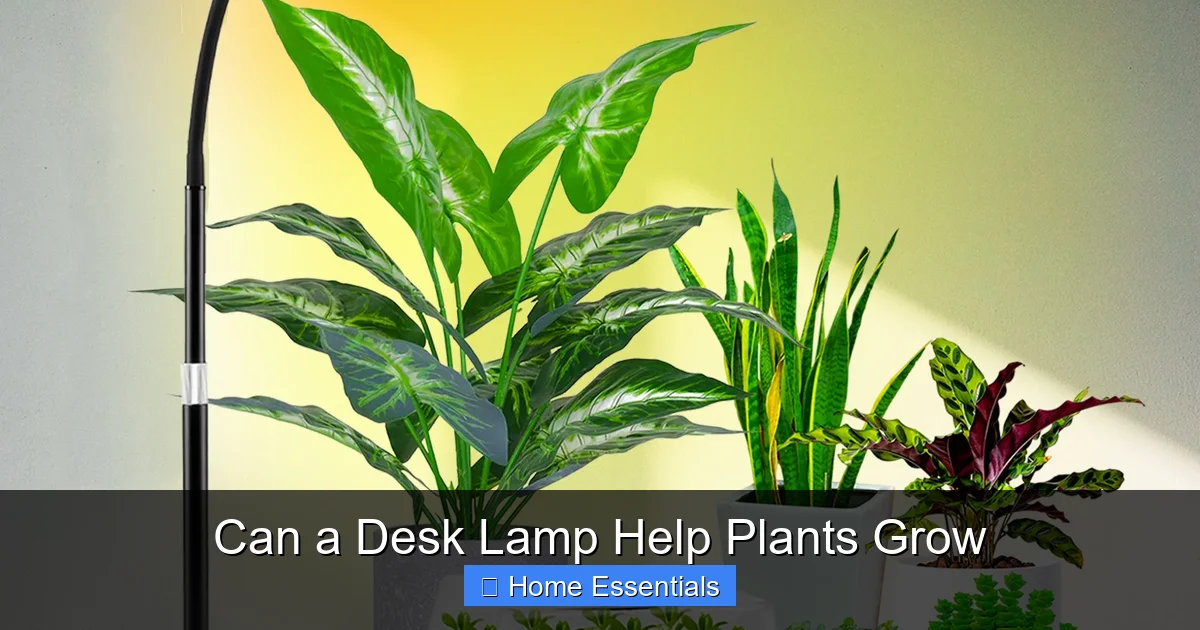
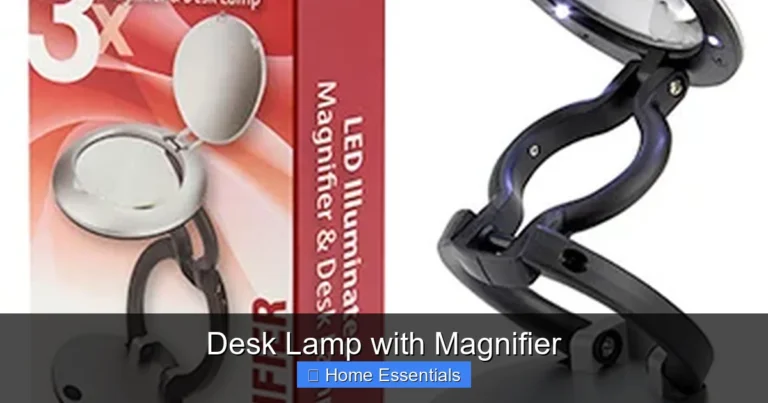
Yes, a desk lamp can technically help some plants grow, but with major caveats. Its effectiveness depends entirely on the bulb’s light spectrum and intensity, which most standard desk lamps lack. While it might sustain low-light tolerant plants like pothos, it’s insufficient for flowering, fruiting, or sun-loving varieties. For robust growth, proper horticultural grow lights are almost always necessary.
You’ve got a favorite snake plant on your dimly lit home office desk. You’ve heard plants need light, and you have a perfectly good desk lamp right there. It seems like the perfect, low-cost solution, right? The question “Can a desk lamp help plants grow?” is a very common one for indoor gardeners looking to save a few dollars or repurpose what they already own. The honest answer is a nuanced yes, but…. While the warm glow of your desk lamp might be enough to keep a truly resilient plant from dying, it is almost never enough to help it genuinely thrive. Let’s break down the science, the realities, and the exact scenarios where a desk lamp might just barely cut it.
Key Takeaways
- Light Spectrum is Crucial: Plants primarily need blue and red wavelengths for photosynthesis. Most desk lamp bulbs are optimized for human vision, not plant growth.
- Intensity Matters More Than You Think: Desk lamps provide focused, low-intensity light. Plants need a certain level of photon flux (PPFD) over a broad area to thrive.
- Distance and Duration are Key Variables: A desk lamp must be placed very close (6-12 inches) and run for 12-18 hours daily to have any meaningful effect, which often creates heat issues.
- Plant Choice is Everything: Only the most shade-tolerant, low-light plants (e.g., snake plant, ZZ plant) might survive with a desk lamp. Herbs, vegetables, and flowering plants will struggle.
- Heat Can Be a Hidden Hazard: Incandescent and halogen bulbs generate significant heat that can scorch leaves or dry soil, while LEDs are safer but often lack the necessary spectrum.
- It’s a Temporary Fix, Not a Solution: Using a desk lamp is a stopgap for seedling starting or sustaining a single hardy plant in a dark corner. For serious indoor gardening, invest in purpose-built LED grow lights.
- Bulb Technology is Part of the Answer: If you must use a desk lamp, a full-spectrum LED bulb designed for plants is your best bet. You can even find smart bulbs with adjustable spectra, though their intensity may still be limiting.
📑 Table of Contents
- The Science of Light and Plant Growth
- How Desk Lamps Measure Up: The Reality Check
- Which Plants Might Survive (And Which Will Fail)
- Optimizing a Desk Lamp for Plants: If You Must
- The Fundamental Limitations of Desk Lamps
- Choosing the Right Light for Your Plants: When to Upgrade
- Conclusion: A Desk Lamp is a Band-Aid, Not a Cure
The Science of Light and Plant Growth
To understand if a desk lamp works, we need to first understand what plants actually need from light. It’s not just about brightness as our eyes perceive it. The process is photosynthesis, where plants convert light energy into chemical energy (food). This process is driven by specific wavelengths, or colors, of light.
Red and Blue Light: The Plant’s Favorite Colors
Chlorophyll, the green pigment in plants, absorbs light most efficiently in the blue (400-500 nm) and red (600-700 nm) parts of the visible spectrum. Blue light promotes strong, leafy vegetative growth. Red light is crucial for flowering, fruiting, and seed germination. A light source that provides a balance of these is often called “full-spectrum.” Standard white LED or incandescent bulbs are engineered to produce a spectrum that looks pleasant and bright to human eyes, not necessarily optimal for chlorophyll absorption. They are often deficient in the critical red and blue wavelengths plants crave.
Understanding Light Intensity and Duration
Two other critical factors are intensity and photoperiod (daily duration). Intensity for plants is measured in PPFD (Photosynthetic Photon Flux Density), in units of micromoles per square meter per second (μmol/m²/s). A low-light plant might need 50-100 μmol/m²/s, while a high-light vegetable might need 400-600+ μmol/m²/s. A typical desk lamp, even with a bright LED bulb, might deliver 20-50 μmol/m²/s at the plant’s surface—barely enough for a low-light survivor. Duration is simpler: most plants need 12-18 hours of this light per day to simulate a long growing season.
How Desk Lamps Measure Up: The Reality Check
Now, let’s take your average desk lamp and measure it against plant needs. We’ll look at the three pillars: spectrum, intensity, and heat.
The Spectrum Problem: It’s All Wrong (For Plants)
This is the biggest hurdle. A standard “daylight” or “soft white” bulb is designed for color rendering and human comfort. Its spectrum curve peaks in the green-yellow range (which plants reflect, making them look green) and is often weak in the vital blue and red bands. You can find full-spectrum LED bulbs that are marketed for plants, and these are a significant improvement. However, the label “full-spectrum” is not regulated, so quality varies wildly. Some smart bulbs even offer adjustable color temperatures, which can slightly shift the spectrum, but they are not designed with plant photosynthesis as the primary goal. For a deep dive into bulb technology and spectra, the article How Does a Smart Bulb Work explains the underlying tech, though it focuses on human-centric use.
Intensity and Coverage: A Tiny, Weak Spot
A desk lamp has a small, directional beam. Even at close range, the area of effective light (the footprint) is tiny—maybe covering a 6-inch diameter circle directly under the bulb. A real plant with a spread of leaves needs light across its entire surface. As the light travels just a few inches away from the center point, intensity drops off dramatically due to the inverse square law. So, only a small part of your plant is getting usable light, while the outer leaves are in near darkness. This leads to leggy, uneven growth as the plant strains toward the light source.
Heat Considerations: A Silent Killer
This is a critical safety and plant-health issue. Traditional incandescent and halogen desk lamps convert much of their energy into heat. Placing one 6 inches from a plant can easily raise the leaf temperature to damaging levels, causing crispy brown edges, wilting, and soil drying out overnight. Modern LED desk lamps run much cooler, making them safer for proximity. However, you must still monitor for any signs of heat stress. If you’re using a smart bulb that can be dimmed, running it at high output for 18 hours might still generate noticeable warmth. The safety aspects of bulb technology are covered in articles like Are Smart Bulbs a Fire Hazard, which discusses thermal management in modern LEDs.
Which Plants Might Survive (And Which Will Fail)
Given these limitations, we can now categorize plants by their likelihood of success under a desk lamp.
The Champions of Low Light: Your Best Bet
These plants are evolutionarily adapted to the forest floor, receiving only filtered, dappled sunlight. They have low light compensation points and can photosynthesize at very low intensities. They are your only realistic candidates for desk lamp survival. Examples include:
- Snake Plant (Sansevieria): Almost indestructible. Can survive in very low, indirect light for years, though growth will be extremely slow.
- ZZ Plant (Zamioculcas zamiifolia): Another tank. Thrives in low light and is drought-tolerant, so the uneven lighting and potential soil dry-out are less critical.
- Pothos/Devil’s Ivy: Very adaptable. It will survive in low light but will lose its variegation and grow slowly. It’s a good test subject.
- Cast Iron Plant (Aspidistra): Literally named for its resilience. It tolerates deep shade and irregular care.
For these plants, a desk lamp with a decent full-spectrum LED bulb, placed 6-12 inches away and set on a 14-16 hour timer, might prevent decline and offer minimal new growth.
Herbs and Leafy Greens: The Borderline Cases
This is where the desk lamp starts to fail. Culinary herbs (basil, mint, thyme) and salad greens (lettuce, spinach) are “medium-light” plants. They need more intensity and a better spectrum to produce flavorful, healthy leaves without becoming leggy and weak. A desk lamp might keep a mint plant alive, but it will be spindly, pale, and flavorless. You might get a few sad lettuce leaves. It’s not a viable growing method.
The Plants That Will Absolutely Fail
Any plant that requires “bright, direct light” will fail miserably. This category includes:
- Flowering Plants: African Violets, Orchids, Kalanchoe. They need specific light triggers and intensity to bloom.
- Fruiting Vegetables: Tomatoes, peppers, strawberries. They are heavy feeders and high-light plants; without sufficient photons, they won’t set flowers or fruit.
- Succulents & Cacti: These desert plants need intense, direct sun. A desk lamp is like trying to survive on a drizzle in a Sahara summer.
- Most Tropical Foliage Plants: Monsteras, Fiddle Leaf Figs, Philodendrons want bright, filtered light. They will become etiolated (stretched) and sad.
Optimizing a Desk Lamp for Plants: If You Must
So, you have a hardy snake plant and want to give it the best possible chance with your existing desk lamp. Here’s how to maximize its (limited) potential.
Choosing the Right Bulb: This is Non-Negotiable
Do not use a standard incandescent or cheap LED bulb. You need a bulb designed for plant growth. Look for:
- Full-Spectrum LED Grow Bulbs: These are specifically engineered to have peaks in the blue and red wavelengths. Brands like GE’s “Lightable” line or other horticultural bulbs are a start. They are available in standard Edison screw bases (E26/E27) that fit most desk lamps.
- High Lumen Output: Look for bulbs with at least 1000-1500 lumens for a decent intensity. More lumens generally mean more usable photons.
- Consider Smart Bulbs: Some smart bulbs allow you to adjust the color temperature. Setting it to a cooler, bluer temperature (5000K-6500K) is better for vegetative growth than a warm white (2700K). You can also set automated schedules. The article Can Smart Bulbs Be Used As Grow Lights explores this option in detail, concluding they are a marginal improvement for very low-light plants but not a replacement for true grow lights.
Positioning and Duration: The Fine-Tuning
- Distance: Start with the lamp 12 inches from the top of the plant. If the plant shows no new growth after a few weeks, slowly lower it to 8-6 inches. Monitor for any signs of heat stress (leaf curl, browning tips).
- Duration: Use a simple plug-in timer. Set it for 14-16 hours “on” and 8-10 hours “off.” Consistency is more important than a perfect schedule.
- Reflection: Place a piece of white cardboard or a reflective surface behind the plant to bounce light back onto the leaves, increasing the effective intensity slightly.
Remember, this is a delicate balancing act. Too close/too long with a hot bulb = damage. Too far/too short = no effect.
The Fundamental Limitations of Desk Lamps
Why, even with optimization, is a desk lamp a poor long-term solution? The drawbacks are systemic.
It’s a Point Source, Not a Canopy Source
Professional grow lights (panels, bars) are designed to distribute light evenly across a wide area, mimicking the sun’s even coverage. A desk lamp is a single, intense point. This creates a harsh gradient: the top leaves get blasted (and may bleach), while lower and side leaves get almost nothing. This results in unnatural, lopsided growth.
Lack of Penetration and Energy Efficiency
The light from a desk lamp lacks the power to penetrate dense foliage. For a bushy plant, only the outermost tips receive usable light. Furthermore, while LED bulbs are efficient, a desk lamp’s form factor is inefficient for plant growth. You’re using a fixture designed for a human task (illuminating a keyboard) for a biological process. The energy you consume is not being converted into plant-usable photons as effectively as it could be with a purpose-built fixture.
No Control Over Light Recipes
Advanced horticultural lighting allows you to dial in specific ratios of red to blue light for different growth stages (vegetative vs. flowering). A desk lamp offers one fixed spectrum. You cannot optimize it for your plant’s changing needs.
Choosing the Right Light for Your Plants: When to Upgrade
Knowing when to move on from the desk lamp experiment is key. Here’s a simple decision flowchart:
- If your goal is to keep a single, low-light plant (snake plant, ZZ) alive in a dark corner: A well-optimized desk lamp with a full-spectrum LED bulb is a perfectly acceptable, low-cost solution.
- If you want to propagate seedlings, grow herbs on a kitchen windowsill, or cultivate any leafy greens: Invest in a small, dedicated LED grow light panel or bar. For $30-$60, you can get a 10-20 watt full-spectrum panel that will outperform any desk lamp setup by a massive margin. It provides even coverage, proper spectrum, and cool operation.
- If you want to grow tomatoes, peppers, flowering houseplants, or any high-light crop: You need a serious grow light. Look for higher-wattage full-spectrum panels with good coverage. The initial cost is higher, but the results are incomparable.
The market for affordable, efficient LED grow lights has exploded. The leap in performance from a repurposed desk lamp to a $50 dedicated grow panel is enormous. You are no longer fighting against the lamp’s design limitations.
Conclusion: A Desk Lamp is a Band-Aid, Not a Cure
So, can a desk lamp help plants grow? The technical answer is yes, it can provide some photons for photosynthesis. The practical, gardening answer is: it’s a very limited and often frustrating tool. It might be the difference between life and slow death for a cast-iron plant in a windowless room, but it will not give you healthy herbs, vibrant blooms, or robust vegetables. The core issue is a mismatch of design intent: desk lamps are for human vision and task lighting, not for optimizing the complex biological process of plant growth. If you’re serious about indoor gardening, even on a small scale, a dedicated LED grow light is one of the best investments you can make. It’s the difference between keeping a plant on life support and giving it a thriving, healthy environment.
Frequently Asked Questions
Can any desk lamp be used for plants?
No. The lamp’s suitability depends almost entirely on the bulb you use. A standard incandescent or soft-white LED bulb will be ineffective. You need a full-spectrum LED bulb designed for plants to have any chance of success.
What type of bulb is best for a desk lamp used on plants?
A dedicated full-spectrum LED grow bulb is the best choice. Look for bulbs with high lumen output (1000+ lumens) and a color temperature in the 5000K-6500K (cool white) range, which is rich in blue light beneficial for vegetative growth.
How far should the desk lamp be from my plant?
Start with the lamp 12 inches from the top of the plant. If using an LED bulb, you can slowly lower it to 6-8 inches to increase intensity, but always monitor for signs of heat stress or leaf bleaching. Incandescent/halogen bulbs must be kept much farther away due to heat.
How many hours per day should I leave the desk lamp on?
For most plants, aim for 14-16 hours of light per day. Use a simple plug-in timer to ensure consistency. Plants need a dark period for respiration, so do not leave the light on 24/7.
Will a desk lamp generate too much heat for my plants?
It depends on the bulb type. Incandescent and halogen bulbs generate significant heat and can easily scorch leaves if placed too close. LED bulbs run much cooler and are safe for closer placement, but high-intensity LEDs can still warm the immediate area over long periods. Always check leaf and soil temperature.
When should I invest in a proper grow light instead of using a desk lamp?
You should upgrade to a proper grow light if you want to grow herbs, vegetables, flowering plants, or any plant beyond the most shade-tolerant varieties. A proper grow light provides even coverage, the correct spectrum, and higher intensity, leading to healthy, robust growth that a desk lamp cannot achieve.