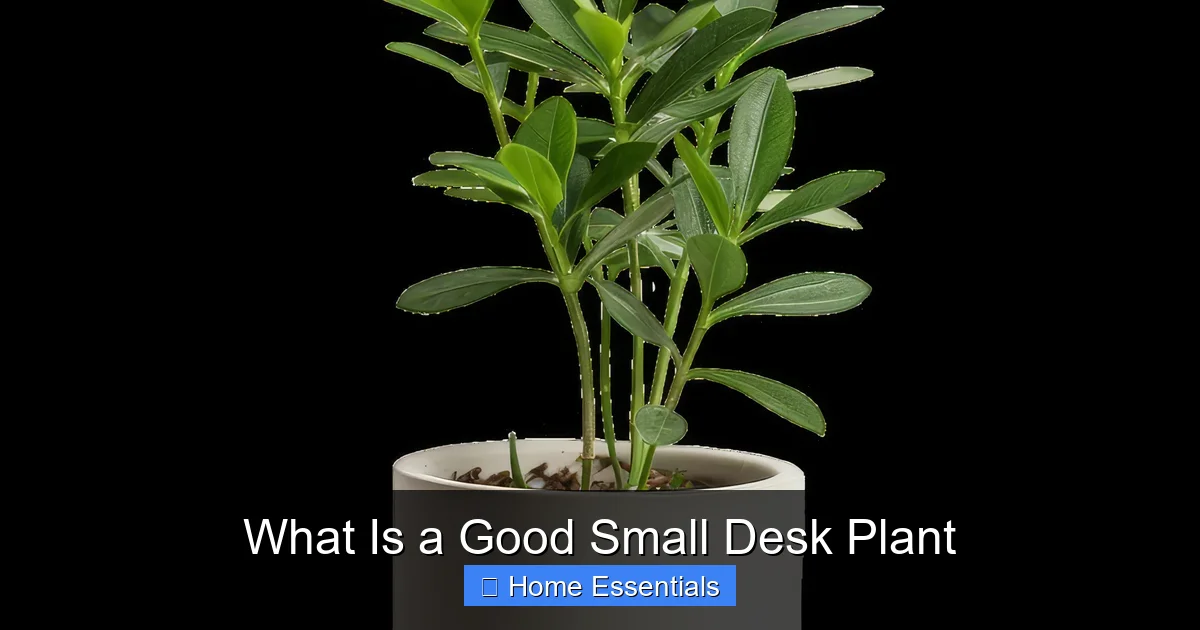
What Is a Good Small Desk Plant
A good small desk plant is one that thrives in typical office conditions—low light, stable temperatures, and infrequent watering. Top contenders include the nearly indestructible Snake Plant, the air-purifying ZZ Plant, and the trailing Pothos. These plants improve air quality, reduce stress, and require minimal care, making them perfect for busy professionals. The key is matching a plant’s needs to your desk’s specific environment, like light availability and your watering schedule.
Have you ever looked at your sterile, beige cubicle or bare home office desk and thought, “This space needs life”? You’re not alone. Adding a touch of greenery is one of the simplest and most effective ways to transform your workspace from a purely functional zone into a place that feels inspiring and calming. But here’s the thing: not all plants are created equal when it comes to thriving on your desk. A “good small desk plant” isn’t just about being tiny; it’s about being a resilient, low-maintenance partner that can handle the unique micro-climate of your workstation—think fluctuating light from a single lamp, the dry air from heating or AC vents, and the occasional forgetful weekend.
This guide is your friendly, no-nonsense roadmap to finding that perfect plant. We’ll cut through the confusion and dive deep into what truly makes a plant suited for desk duty. We’ll explore the top-tier champions that practically thrive on neglect, decode their specific care needs in simple terms, and give you practical tips to keep them happy for years. By the end, you’ll know exactly which leafy (or spiky) friend to bring home to give your desk the upgrade it deserves.
Key Takeaways
- Low-Light Tolerance is Key: The best desk plants survive with minimal natural light, making them ideal for offices or rooms without windows.
- Minimal Watering Needs: Overwatering is the #1 killer of desk plants. Choose varieties that prefer to dry out between waterings.
- Air Purification Matters: Many small desk plants, like the Snake Plant and Peace Lily, are proven by NASA studies to filter common indoor toxins.
- Consider Pet & Child Safety: If you have pets or small children, opt for non-toxic varieties like Spider Plants or Parlor Palms.
- Size & Growth Habit: Select plants that stay compact or have a trailing/vining habit that can be easily managed on a desk surface.
- Ease of Care is Non-Negotiable: Your desk plant should be a stress-reducer, not a chore. Prioritize “set it and forget it” species.
📑 Table of Contents
- Why Your Desk Deserves a Plant: More Than Just Decor
- The Essential Criteria: What *Actually* Makes a “Good” Desk Plant?
- The Top Contenders: 6 Best Small Desk Plants for Every Workspace
- Lighting & Placement: Setting Your Desk Plant Up for Success
- Watering, Feeding & Cleaning: The Simple Care Routine
- Smart Solutions: Elevating Your Desk Plant Game
- Common Mistakes (And How to Avoid Them)
- Conclusion: Your Perfect Desk Companion Awaits
Why Your Desk Deserves a Plant: More Than Just Decor
Before we talk about *which* plant, let’s get clear on *why* you should have one. The benefits are backed by science and felt by anyone who’s ever nurtured a bit of nature on their workspace.
The Science-Backed Perks of a Desk Buddy
Studies in environmental psychology consistently show that interacting with plants reduces physiological stress. A plant on your desk can lower your heart rate and blood pressure simply by being present. In a high-pressure work environment, that tiny green oasis is a mental reset button. Furthermore, plants naturally humidify the air through a process called transpiration, which can help combat the dry, itchy skin and throats often caused by office air conditioning and heating systems.
Perhaps the most cited benefit is air purification. A famous NASA study from 1989 investigated ways to clean air in sealed space stations. They found that common indoor plants can remove volatile organic compounds (VOCs) like formaldehyde, benzene, and trichloroethylene from the air. These toxins come from furniture, cleaning supplies, and electronics. Having a plant on your desk means you’re breathing cleaner air in your immediate vicinity, which can lead to fewer headaches, less fatigue, and improved overall well-being.
The Productivity & Creativity Boost
Beyond health, plants can make you better at your job. Research from the University of Exeter found that employees were 15% more productive when their previously barren workspace was enhanced with plants. The theory is that plants improve concentration and memory retention by creating a more restorative and engaging environment. A splash of nature also sparks creativity, providing a subtle visual break that lets your brain make new connections. So, that desk plant isn’t a distraction; it’s a tool.
The Essential Criteria: What *Actually* Makes a “Good” Desk Plant?
So, what are we looking for? We need to define the non-negotiable traits for a plant to earn the title “good small desk plant.” Forget about what’s trendy on Instagram; we’re talking practical survival skills.
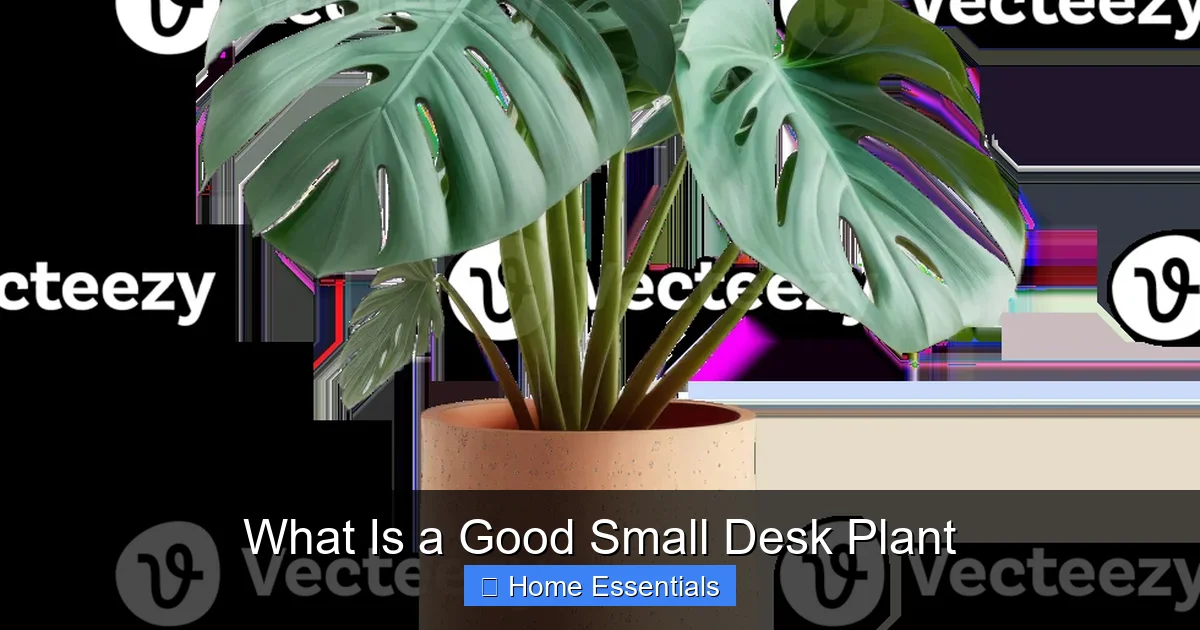
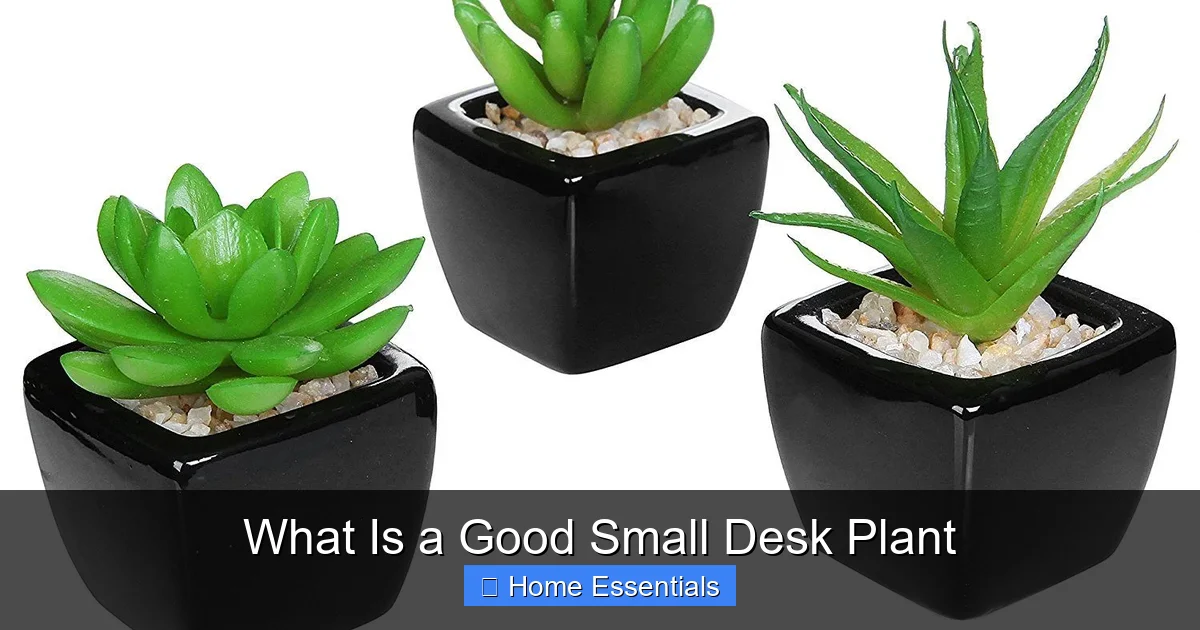
Visual guide about What Is a Good Small Desk Plant
Image source: static.vecteezy.com
Trait #1: Low Light Champion
Most desks are not bathed in bright, direct sunlight. They’re situated away from windows, under fluorescent lights, or in rooms with only artificial illumination. A good desk plant must be able to photosynthesize and grow in what we call “low to medium indirect light.” It should not become leggy (stretching weakly toward light) or lose its color in these conditions. Plants that demand full sun are instant failures in the desk environment.
Trait #2: Drought Tolerant & Forgiving
Your desk is not a tropical rainforest. It’s a place where you might forget to water for a week while on a business trip or during a particularly busy project. The ideal desk plant stores water in its leaves, roots, or stems and prefers to dry out completely between waterings. It should show clear signs when it needs water (like slight drooping or wrinkled leaves) but not keel over dead after a single missed watering. This trait is the #1 defense against the most common desk plant killer: overwatering out of guilt.
Trait #3: Compact & Controllable Growth
We need a plant that respects its boundaries. While some vining plants are excellent, we want ones that can be trained or trimmed easily without taking over your keyboard. A good desk plant either grows slowly, stays naturally small (dwarf varieties), or has a growth habit that can be managed with occasional pruning. You don’t want a plant that will require repotting into a container larger than your desk can accommodate within a year.
Trait #4: Pest-Resistant & Robust
Desk plants should be independent. They shouldn’t be prone to spider mites, mealybugs, or other nuisances that can spread to other plants or become a nuisance. A robust plant with thick, waxy, or leathery leaves is often more resistant to pests and the dry air of an office. You want a plant that shrugs off minor neglect, not one that wilts at the first sign of trouble.
The Top Contenders: 6 Best Small Desk Plants for Every Workspace
Armed with our criteria, let’s meet the champions. These plants are the veterans of the desk world, proven performers that combine aesthetics with sheer toughness.
Visual guide about What Is a Good Small Desk Plant
Image source: planetnatural.com
1. The Snake Plant (Sansevieria trifasciata)
If there were a hall of fame for indestructible houseplants, the Snake Plant would be its first inductee. Its stiff, upright, sword-like leaves (often variegated with shades of green, yellow, or silver) make a striking architectural statement. This is the ultimate “set it and forget it” plant.
- Why It’s Perfect: It tolerates incredibly low light (though brighter light encourages faster growth) and can go for weeks without water. It’s a known air-purifying powerhouse, especially at night, releasing oxygen while you sleep—a bonus if your desk is in a home office that doubles as a guest room.
- Key Care Tip: Water only when the soil is 100% dry. In winter, you might only need to water once a month. Its biggest enemy is overwatering, which leads to root rot. Ensure your pot has a drainage hole.
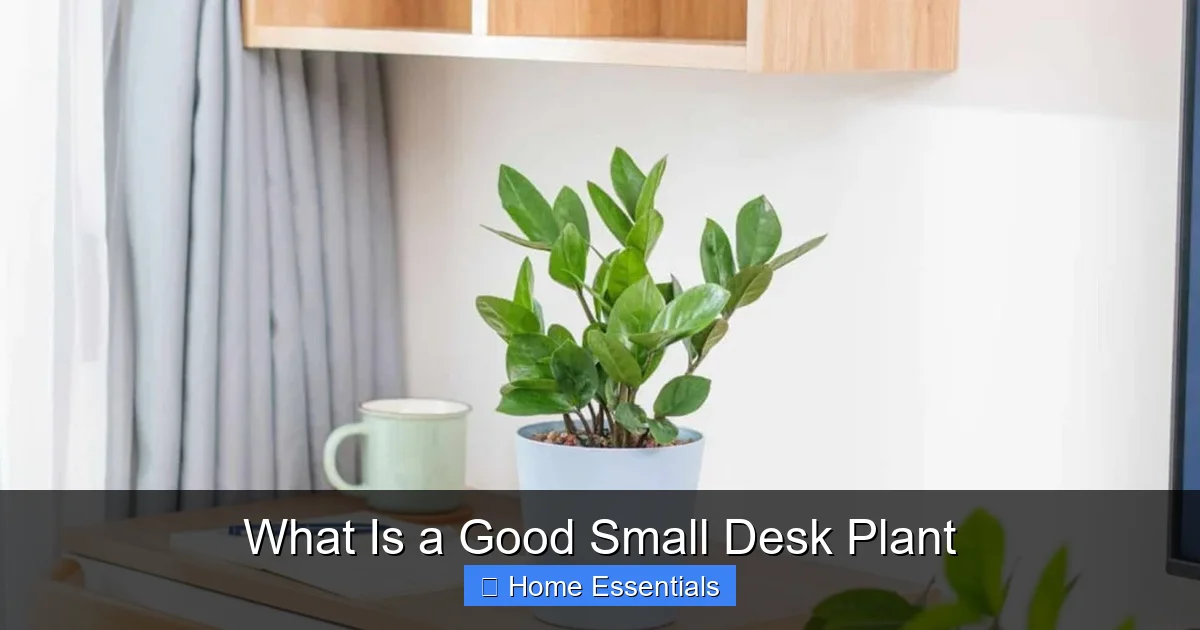
2. The ZZ Plant (Zamioculcas zamiifolia)
The ZZ Plant is the dark horse champion. With its glossy, dark green, oval-shaped leaves on graceful, arching stems, it looks delicate but is built like a tank. It’s become hugely popular for one reason: it survives in the dimmest corners with the most erratic care.
- Why It’s Perfect: It has potato-like rhizomes underground that store water, making it extremely drought-tolerant. It thrives in low light and grows very slowly, meaning you won’t need to repot or prune it often. It’s also non-toxic to pets, a major plus for home offices.
- Key Care Tip: Let it dry out completely between waterings. Its leaves will tell you if it’s thirsty by becoming slightly wrinkled. Ignore the temptation to give it a sip just because.
3. Pothos (Epipremnum aureum)
The classic, the workhorse, the people’s champion. Pothos is probably the most common vining houseplant for a reason. Its heart-shaped leaves, often marbled with gold, white, or lime green, cascade beautifully. It’s incredibly adaptable and fast-growing, giving you a sense of accomplishment.
- Why It’s Perfect: It grows in low light, medium light, or bright indirect light. It tells you exactly when it’s thirsty (leaves droop slightly), and it bounces back quickly after watering. You can train it to climb a small trellis on your desk or let it trail elegantly off the side.
- Key Care Tip: Prune the long vines to keep it bushy and compact on your desk. You can root the cuttings in water to propagate new plants for other desks! Be aware it is toxic to pets if ingested.
4. Cast Iron Plant (Aspidistra elatior)
Living up to its name, the Cast Iron Plant is famously resilient. It produces long, dark green, strappy leaves from the soil. It’s not a flashy plant, but its quiet, steady presence is perfect for a serious workspace where you need a no-fuss companion.
- Why It’s Perfect: It tolerates deep shade, irregular watering, and temperature fluctuations better than almost anything. It’s slow-growing and rarely bothered by pests. It’s the plant you buy when you have a north-facing desk or a room with no windows at all.
- Key Care Tip: Water deeply but infrequently, allowing the top inch of soil to dry out. It dislikes being root-bound but also hates soggy soil, so a well-draining pot is essential. Wipe its broad leaves occasionally to keep them free of dust.
5. Spider Plant (Chlorophytum comosum)
The Spider Plant is the cheerful, prolific friend of the plant world. Its slender, arching leaves are often green with a white stripe, and it constantly produces “babies” or plantlets on long stems that you can snip off and pot. It’s energetic yet incredibly easygoing.
It prefers bright indirect light but tolerates lower light. It’s not a fan of soggy soil, making it forgiving of underwatering. It’s also one of the best non-toxic options for homes with cats or dogs. Its air-purifying qualities are top-notch. - Key Care Tip: Keep it away from the direct, harsh rays of a south-facing window, which can scorch the leaves. Brown leaf tips are often caused by fluoride in tap water; try using filtered or rainwater. Let the soil dry out between waterings.
6. Ponytail Palm (Beaucarnea recurvata)
Despite the name, this isn’t a palm but a succulent. Its most distinctive feature is its thick, bulbous trunk (caudex) that stores water, topped with a fountain of long, curly, grass-like leaves. It has a quirky, sculptural look that adds serious personality to a desk.
- Why It’s Perfect: It’s a desert survivor. It needs bright light but is extremely drought-tolerant due to its water-storing trunk. It grows very slowly and has a unique form that doesn’t spread.
- Key Care Tip: Provide the brightest light you can—a south or west window is ideal. Water very sparingly, especially in winter. Think “months” between waterings, not weeks. The soil must dry out completely, and the pot must have excellent drainage.
Lighting & Placement: Setting Your Desk Plant Up for Success
You’ve picked your plant. Now, where do you put it? Placement is half the battle.
Visual guide about What Is a Good Small Desk Plant
Image source: i.pinimg.com
Decoding Light: Bright Indirect vs. Low Light
“Bright indirect light” means a spot where the plant is near a window but not in the direct path of the sun’s rays. Think an east-facing window or a few feet away from a south/west window. “Low light” means a spot several feet from any window or in a room with small, high windows. It’s not darkness; it’s a dim, ambient light where you can still comfortably read. Match your plant’s needs to this spectrum. A Snake Plant or ZZ Plant can handle low light. A Ponytail Palm will become leggy and sad in low light and needs that bright spot.
For offices with *no* natural light, all is not lost. You can use a small, dedicated grow light. When choosing a bulb, look for one labeled “full spectrum” that mimics sunlight. Some modern smart light bulbs even have adjustable color temperatures and timers, allowing you to set a daily “sunrise” for your plant. You can find guides on what smart bulbs work with Alexa to easily integrate this into your smart home setup, scheduling light for your plants just as you would for yourself.
Desk Real Estate: Avoiding Common Hazards
Your desk has dangers a plant doesn’t face on a shelf. First, avoid placing plants directly in the path of air conditioning or heating vents. The blasts of hot or cold dry air will shock and desiccate them. Second, keep them away from the heat emitted by computers, monitors, or lamps. A little warmth is fine, but a radiator-effect will dry them out fast. Finally, consider your own habits. Don’t put a plant where you’ll constantly knock it over or where it will obstruct your work. A corner or the back of the desk, behind your monitor, is often a safe bet.
Watering, Feeding & Cleaning: The Simple Care Routine
Care for a desk plant is famously simple, but the simplicity is what trips people up. You can’t just water on a schedule. You have to *observe*.
The “Touch Test” & Other Watering Wisdom
Forget the calendar. The only reliable way to know when to water is to check the soil. Insert your finger about an inch into the soil. If it feels dry, it’s time. If it’s moist, wait. For Snake Plants, ZZ Plants, and Ponytail Palms, you should wait until the soil is *completely* dry, all the way down the pot. For Pothos and Spider Plants, water when the top inch is dry. When you do water, do it thoroughly: pour water over the soil until it runs out the drainage hole. Then, empty the saucer (or use a cachepot without a hole) so the roots don’t sit in water. This is the single most important skill for keeping a desk plant alive.
Feeding: Less is More
Desk plants are in a state of slow growth. They don’t need heavy feeding. During the spring and summer (their active growing season), you can use a balanced, water-soluble houseplant fertilizer at *half the recommended strength* once a month. In the fall and winter, stop fertilizing entirely. Over-fertilizing burns roots and causes salt buildup in the soil, which is worse than under-feeding.
Cleaning: The Often-Forgotten Step
Dust builds up on leaves, especially in an office, and blocks the plant’s ability to absorb light. Once a month, give your plant a bath. Take it to the sink and gently wipe each leaf with a damp microfiber cloth. Microfiber is ideal because it’s soft, highly absorbent, and won’t leave lint. You can learn more about how to use a microfiber cloth for delicate surfaces like plant leaves. For smaller plants, you can place them in the shower for a gentle lukewarm rinse. This simple act keeps your plant looking vibrant and functioning at its best.
Smart Solutions: Elevating Your Desk Plant Game
If you want to take your desk greening to the next level with a touch of technology, there are gadgets that can help—without overcomplicating things.
Self-Watering Pots & Sensors
For the truly forgetful or frequent traveler, self-watering pots are a game-changer. These pots have a reservoir at the bottom and a wicking system that draws water up to the roots as needed. Brands like smart plant pots go a step further, often including sensors that monitor soil moisture and send alerts to your phone when the reservoir is empty. This takes all the guesswork out of watering and is perfect for a desk plant that you might overlook during a busy week.
Automated Lighting
As mentioned, if your desk has no natural light, a timed grow light is essential. You can use a simple plug-in timer with any standard grow bulb, or integrate a smart bulb into your ecosystem. Setting a smart bulb to turn on for 12-14 hours a day provides consistent, reliable light without you having to remember to flip a switch.
Common Mistakes (And How to Avoid Them)
Let’s troubleshoot. Here’s what to watch out for.
- Mistake: Watering on a fixed schedule. Solution: Always check soil moisture first.
- Mistake: Using a pot without a drainage hole. Solution: Always use pots with holes, or use the pot-in-pot (cachepot) method and empty the outer pot after watering.
- Mistake: Moving plants constantly. Solution: Find a good spot and leave it. Plants acclimate to their light conditions.
- Mistake: Ignoring pests. Solution: Inspect new plants before bringing them to your desk. Isolate them for a week. If you see tiny webs (spider mites) or white cottony fluff (mealybugs), wipe leaves with an alcohol-dipped cotton swab or use insecticidal soap.
- Mistake: Thinking more fertilizer is better. Solution: Less is more. Half-strength, seasonally.
Conclusion: Your Perfect Desk Companion Awaits
Choosing a good small desk plant doesn’t have to be intimidating. It boils down to this: be honest about your desk’s light conditions and your own tendency to remember (or forget) watering. For a dark, north-facing desk? Reach for a Snake Plant or ZZ Plant. For a spot with some morning sun and a desire for a trailing look? A Pothos is your best friend. For a quirky, sculptural addition in a bright spot? The Ponytail Palm is unforgettable.
Start with one of the resilient champions we’ve covered. Get a pot with drainage, use the finger test for water, and give its leaves an occasional wipe with a damp cloth. You’re not just adding decor; you’re adding a living, breathing partner that will quietly improve your air, your focus, and your day, one leaf at a time. Your more productive, peaceful, and green desk starts with that single, smart choice.
Frequently Asked Questions
Can I put a desk plant in a room with no windows?
Yes, but you will need a dedicated grow light. Plants like Snake Plants and ZZ Plants can survive in very low light for a while, but they will become weak and leggy without any light source. A small, timed LED grow bulb placed a foot or two away will provide the necessary light spectrum for them to photosynthesize and stay healthy.
Are desk plants safe for cats and dogs?
Some are, some are not. It’s crucial to check toxicity. Spider Plants, Parlor Palms, and African Violets are generally considered non-toxic to pets. Snake Plants, ZZ Plants, and Pothos are toxic if ingested, causing irritation and digestive issues. If you have pets that might nibble, opt for the safe varieties or place the plant completely out of reach.
How often should I really water my desk plant?
There is no set schedule. The rule is: check the soil. For Snake Plants, ZZ Plants, and Ponytail Palms, water only when the soil is completely dry, which could be every 3-6 weeks. For Pothos and Spider Plants, water when the top inch of soil feels dry, typically every 1-2 weeks. Always adjust for your specific home’s temperature and humidity.
Why are the tips of my plant’s leaves turning brown?
Brown leaf tips are usually caused by one of two things. The most common is inconsistent watering (letting it get too dry, then overwatering). The second is sensitivity to minerals in tap water, like fluoride. Try using filtered or rainwater, and ensure you’re watering thoroughly and consistently.
My desk plant isn’t growing. Is it dead?
Not necessarily. Many of our top picks, like the Snake Plant and ZZ Plant, are extremely slow growers, especially in low light. Lack of growth is often just a sign that conditions are stable but not optimal for rapid expansion. If the leaves are firm and green, it’s alive and just living a slow, sustainable life. If leaves are mushy, yellow, or falling off, you likely have a watering issue.
Do I need to repot my desk plant?
Only when it becomes severely root-bound, which for slow-growing desk plants can take 3-5 years or more. Signs include roots growing out of the drainage hole, soil drying out extremely quickly after watering, or the plant becoming top-heavy and tipping over. When you do repot, choose a pot only 1-2 inches larger in diameter to avoid excess soil that holds too much moisture.