How to Take Care of Desk Plant
Desk plants transform your workspace with cleaner air and better focus, but they need the right care to thrive. This guide cuts through the confusion, giving you simple, actionable steps for watering, lighting, and soil. Follow these core principles to keep your green companion healthy and vibrant, turning your desk into a productive oasis.
There’s something magical about a splash of green on your desk. It’s not just decor; it’s a living, breathing partner in your workspace. That little desk plant can quietly boost your mood, sharpen your focus, and even purify the air you breathe. But let’s be honest—how many of us have watched a once-vibrant office companion slowly wilt, unsure of what we did wrong? The secret isn’t a mysterious green thumb; it’s understanding a few simple, consistent principles. This guide is your friendly, no-stress manual to becoming a confident desk plant parent. We’ll break down everything from picking the perfect plant to solving common problems, so you can enjoy the benefits of your green friend for years to come.
Key Takeaways
- Pick the Right Plant: Choose low-light, low-maintenance varieties like Snake Plants, ZZ Plants, or Pothos for beginner success.
- Water Deeply, But Infrequently: Always check soil moisture first. Water thoroughly until it drains, then let the top inch dry out completely before watering again.
- Light is Non-Negotiable: Match your plant’s light needs to your desk’s sun exposure. Rotate pots weekly for even growth.
- Soil & Feeding Matter: Use fast-draining potting mix. Fertilize sparingly, only during the growing season (spring/summer).
- Inspect Weekly for Pests: Look under leaves and on stems for tiny bugs, webbing, or sticky residue. Treat infestations immediately.
- Prune & Repot Purposefully: Remove dead leaves to direct energy. Repot only when root-bound, typically every 1-2 years.
- Clean Leaves Regularly: Gently wipe leaves with a damp microfiber cloth to remove dust and maximize photosynthesis.
📑 Table of Contents
- 1. Choosing the Right Desk Plant: Your First Step to Success
- 2. Watering Wisdom: The #1 Killer (and How to Master It)
- 3. Lighting Essentials: Getting the Brightness Just Right
- 4. Soil, Fertilizing, and the Right Pot
- 5. Pest Prevention, Identification, and Treatment
- 6. Pruning, Cleaning, and Repotting for Longevity
- 7. Troubleshooting Common Desk Plant Problems
1. Choosing the Right Desk Plant: Your First Step to Success
Before you buy, pause. The single biggest factor in your desk plant’s survival is choosing a species that matches your specific environment. A beautiful, sun-loving Ficus will sulk in a dark cubicle, while a delicate fern will scorch in a south-facing window. Your goal is to find a plant that is naturally adapted to your desk’s conditions—primarily light availability and your own watering habits.
Assess Your Desk’s Light Situation
Light is plant food. Without the right amount, no amount of watering will help. Be honest about your workspace:
- Low Light (No direct sun, 5+ feet from window): Think north-facing windows or interior offices. Champions here are the indestructible Snake Plant (Sansevieria), the glossy ZZ Plant (Zamioculcas), and the tolerant Pothos (Epipremnum aureum). These plants photosynthesize efficiently even in dim conditions.
- Medium/Bright Indirect Light (Near an east or west window, or filtered south light): This is the sweet spot for most common desk plants. A Peace Lily (Spathiphyllum) will reward you with elegant blooms, a Rubber Plant (Ficus elastica) will grow sturdy and tall, and a Spider Plant (Chlorophytum) will send out cheerful pups.
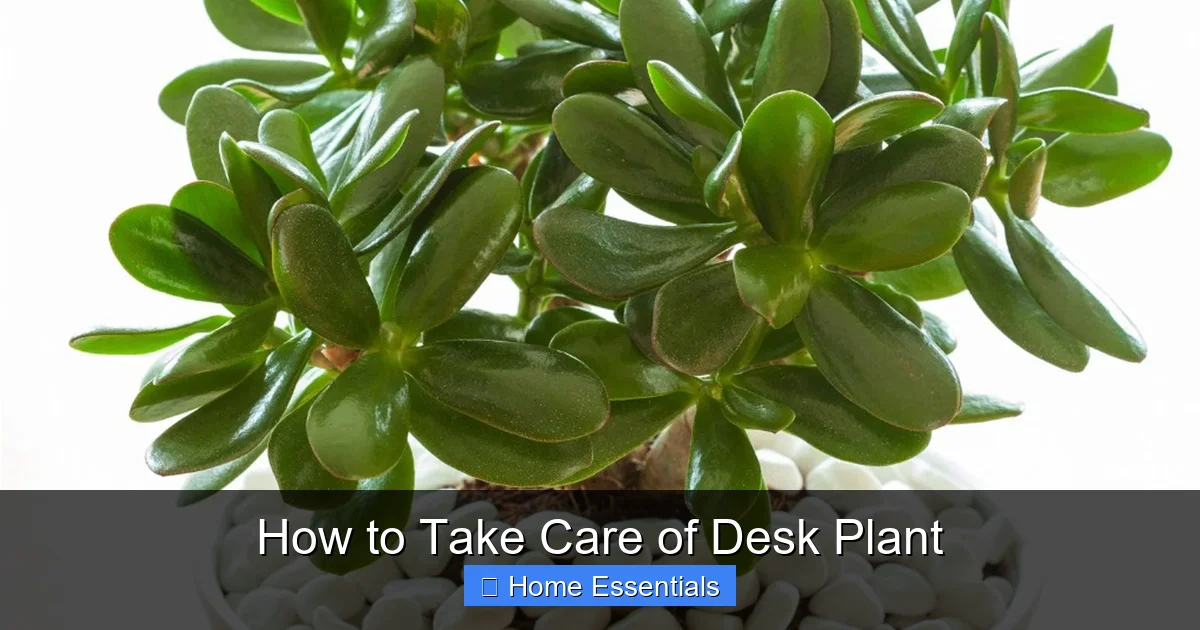
- Direct Light (On a sunny south-facing windowsill): Only choose plants that love full sun, like a Jade Plant (Crassula ovata) or an Aloe Vera. Most common desk plants will burn in direct, harsh afternoon sun.
Pro tip: Do the “read a book” test. If you can comfortably read a book at your desk without turning on a lamp, you have medium light. If you need a light, you’re in low-light territory.
Top 5 Foolproof Desk Plants for Beginners
- Snake Plant: Thrives on neglect. Can go weeks without water. Perfect for forgetful waterers.
- ZZ Plant: Glossy, dark green leaves. Stores water in potato-like rhizomes, making it extremely drought-tolerant.
- Golden Pothos: Fast-growing vine that trails beautifully. Tolerates a wide range of light and watering inconsistencies.
- Spider Plant: Produces “babies” you can propagate. Loves bright indirect light but is adaptable. Non-toxic, making it pet-safe.
- Peace Lily: The great communicator. It visibly droops when thirsty, making it perfect for learning watering cues. Also helps filter air pollutants.
When shopping, also check for overall health. Avoid plants with yellowing leaves, mushy stems, or visible pests. A healthy plant has firm, vibrant foliage and stands upright.
2. Watering Wisdom: The #1 Killer (and How to Master It)
Overwatering is the undisputed champion of desk plant deaths. It’s not giving too much water; it’s giving water too often, which leads to root rot—a fatal condition where roots suffocate and decay in soggy soil. The golden rule is: water the soil, not on a schedule.
Visual guide about How to Take Care of Desk Plant
Image source: static.vecteezy.com
The Finger Test: Your Most Important Tool
Forget the calendar. Your finger is your best diagnostic tool. Insert your index finger into the soil up to the first knuckle (about 1-2 inches deep).
- If the soil feels moist or cool: Do not water. Wait.
- If the soil feels dry: It’s time to water.
For smaller pots, you can also lift them. A well-watered pot feels noticeably heavier than a dry one. With practice, you’ll develop a feel for it.
The Proper Watering Technique
When you do water, do it thoroughly. Place your plant in a sink or use a watering can with a long spout. Slowly pour water over the soil until it flows freely out of the drainage holes at the bottom. This “flush” does three critical things:
- It ensures the entire root ball is hydrated.
- It washes out any accumulated salts from fertilizer.
- It forces oxygen into the soil, which roots need to breathe.
Never let your plant sit in a saucer full of water for more than 30 minutes. Always dump out the excess. A pot sitting in water is a direct ticket to root rot.
Adjusting for Seasons and Environment
Your plant’s water needs change. In the brighter, warmer months of spring and summer, it will grow actively and use more water. In the darker, cooler months of fall and winter, its growth slows or stops, and it needs much less frequent watering. Air conditioning and heating also dry out soil faster. Always revert to the finger test, not the calendar, to decide.
3. Lighting Essentials: Getting the Brightness Just Right
Light dictates a plant’s energy production (photosynthesis). Too little, and it becomes weak, leggy, and pale. Too much direct sun, and its leaves scorch and brown. Getting this right is half the battle.
Visual guide about How to Take Care of Desk Plant
Image source: img.roomeon.com
Understanding Light Types
- Direct Light: Sunlight that shines directly on the leaves, casting a sharp shadow. This is intense and can burn most common desk plants’ leaves.
- Bright Indirect Light: The ideal zone for most. The light is strong, but the sun’s rays are diffused—think near an east or west window, or behind a sheer curtain on a south window. The plant is in the light but not in the direct beam.
- Low Light: A room with a window but no direct sun reaching the plant. The plant can still photosynthesize, just slowly. North-facing rooms or desks far from windows fall here.
Signs of Light Stress
Your plant will tell you if it’s unhappy with its light.
- Too Little Light: New growth becomes elongated, thin, and pale (leggy). Leaves may lose their variegation (color patterns). The plant may lean dramatically toward the light source.
- Too Much Direct Light: Leaves develop dry, brown, crispy patches or edges (sunburn). Yellowing leaves can also occur. The soil may dry out extremely fast.
Solution: Move the plant. If low light is the issue, get a small desk grow light. If sunburn is the issue, move it back from the window or add a sheer curtain.
Rotate for Symmetry
Plants naturally grow toward their light source. Once a week, give your pot a quarter turn. This prevents lopsided, uneven growth and keeps your plant looking balanced and full on all sides. It’s a simple habit that makes a huge aesthetic difference.
4. Soil, Fertilizing, and the Right Pot
What’s under the surface is just as important as what’s above. The right medium and container create a healthy root environment.
Visual guide about How to Take Care of Desk Plant
Image source: gardeningknowhow.com
Potting Mix is NOT Dirt
Never use garden soil or dense topsoil from your yard. It’s too heavy, compacts in pots, and can harbor pests and diseases. Always use a high-quality, fast-draining potting mix. These are specially formulated with components like peat, perlite, and bark to hold some moisture but also allow excess water to drain quickly. For extra drainage in a pot without many holes, you can mix in 10-20% additional perlite or orchid bark.
Fertilize Like a Snack, Not a Meal
Potting mix nutrients are finite. Fertilizing replenishes them. But more is not better. Over-fertilizing causes fertilizer burn—salts that damage roots and leaf tips.
- When: Only during the active growing season (typically March through September). Do not fertilize in fall and winter.
- What: Use a balanced, water-soluble houseplant fertilizer (e.g., 10-10-10 or 20-20-20).
- How Much: Always dilute to half or a quarter of the strength recommended on the bottle. For a 250ml bottle of water, use just a tiny pinch of fertilizer granules or a few drops of liquid.
- How Often: Every 4-6 weeks during the growing season is plenty for most desk plants.
Pro tip: Always water your plant thoroughly before applying fertilizer. Never fertilize a dry plant, as it can shock the roots.
Pot Choice: Drainage is King
The single most important feature of a pot is a drainage hole. Without it, excess water has nowhere to go, guaranteeing soggy soil. If you have a decorative pot without a hole, use it as a “cachepot.” Plant your desk plant in a plastic nursery pot with holes, then place that pot inside the decorative one. Just remember to empty any water that collects in the decorative outer pot after watering.
Terracotta (clay) pots are porous and wick away moisture, making them great for people who tend to overwater. Plastic and glazed ceramic pots retain moisture longer, good for those who forget to water. Size up only 1-2 inches in diameter when repotting; a pot that’s too big holds too much soil and stays wet too long.
5. Pest Prevention, Identification, and Treatment
Even the healthiest desk plant can occasionally attract pests. The key is early detection and consistent treatment. Common indoor pests are usually tiny and can be managed without harsh chemicals.
Weekly Inspection Routine
Make it a habit. Once a week, when you’re checking soil moisture, give your plant a full visual check:
- Flip over leaves and look at the undersides and stems.
- Check new growth first, as it’s most vulnerable.
- Look for: tiny moving dots (spider mites), small cottony masses (mealybugs), brown oval bumps (scale), or sticky “honeydew” residue (aphids, scale).
Common Culprits & Organic Solutions
- Spider Mites: Thrive in dry, dusty conditions. Signs include fine webbing and speckled yellow leaves. Solution: Wipe leaves with a damp cloth. Increase humidity by grouping plants or using a pebble tray. For severe cases, spray with a mild solution of water and a few drops of dish soap or neem oil.
- Mealybugs: White, fluffy cottony spots. Solution: Dab them off with a cotton swab dipped in rubbing alcohol (isopropyl alcohol). Repeat every few days.
- Fungus Gnats: Tiny flying mosquitoes around the soil. Caused by consistently soggy topsoil. Solution: Let the top 2 inches of soil dry out completely between waterings. You can also place yellow sticky traps near the pot to catch adults.
Important: Isolate any infested plant immediately to prevent pests from jumping to your other desk plants.
6. Pruning, Cleaning, and Repotting for Longevity
Care isn’t just about water and light; it’s also about proactive maintenance to keep your plant looking its best and growing healthily.
Pruning for Health and Shape
Use clean, sharp scissors or pruning shears. Remove:
- Dead, yellow, or brown leaves at the base.
- Leggy, weak stems to encourage bushier growth.
- Any diseased or damaged parts immediately to prevent spread.
Pruning is not cruel; it’s like a haircut. It redirects the plant’s energy to new, healthy growth. For vining plants like Pothos, you can prune back long vines to encourage branching, making a fuller plant.
Leaf Cleaning: A Simple Boost
Dust buildup on leaves blocks light and hampers photosynthesis. Your plant literally can’t “breathe” properly. Every month or so, gently wipe each leaf with a soft, damp microfiber cloth. For a deeper clean, you can use a solution of water and a tiny drop of gentle dish soap. Avoid commercial leaf shines—they can clog leaf pores (stomata). A simple water wipe is perfectly effective. When cleaning, support the leaf from underneath with your hand to avoid tearing. You can learn more about the gentle effectiveness of a microfiber cloth for delicate surfaces, a technique that applies beautifully to plant leaves.
When and How to Repot
Repotting is often feared, but it’s straightforward. You only need to do it every 1-2 years, or when you see these signs:
- Roots growing out of the drainage holes.
- Water runs straight through the pot without being absorbed (root-bound).
- Growth has significantly slowed despite good care.
Steps: Choose a pot 1-2 inches wider in diameter. Gently remove the plant, loosen the root ball slightly, and place it in the new pot with fresh potting mix. Water thoroughly and return to its spot. The best time to repot is in spring at the start of the growing season.
7. Troubleshooting Common Desk Plant Problems
Even with the best care, issues arise. Here’s a quick diagnostic guide:
- Yellowing Leaves: Most often from overwatering. Check soil moisture immediately. Could also be from underwatering (if leaves are crispy and yellow) or lack of nutrients (older leaves turning yellow first).
- Brown, Crispy Leaf Tips: Usually low humidity or underwatering. Increase humidity by placing pots on a pebble tray with water or grouping plants together. Ensure you’re watering deeply enough.
- Leggy, Stretchy Growth: The plant is reaching for light. Move it to a brighter location immediately.
- Drooping/Wilting: Can be from both overwatering (mushy stems) and underwatering (dry soil, crispy leaves). Check soil moisture to diagnose.
- Pests: As detailed above, identify and treat immediately with isolation and organic methods.
Frequently Asked Questions
How often should I water my desk plant?
There is no set schedule. Always check the soil first with your finger. Water only when the top 1-2 inches of soil are completely dry. This could be weekly in summer and every 2-3 weeks in winter.
What is the absolute best desk plant for a low-light office?
The Snake Plant and ZZ Plant are the undisputed champions for low-light, low-maintenance care. They can survive with minimal light and tolerate infrequent watering, making them perfect for windowless or north-facing desks.
My plant’s leaves are turning yellow. What should I do?
Yellow leaves are most commonly a sign of overwatering. Check the soil moisture immediately. If it’s soggy, let it dry out completely and adjust your watering routine. If the soil is dry, you may be underwatering or the plant could be lacking nutrients.
Do I need to fertilize my desk plant?
Yes, but sparingly. Use a diluted, balanced liquid fertilizer only during the spring and summer months, every 4-6 weeks. Do not fertilize in fall and winter when growth slows. Over-fertilizing is more harmful than under-fertilizing.
How do I get rid of tiny flies around my plant?
You likely have fungus gnats, which are attracted to consistently moist topsoil. Let the top 2 inches of soil dry out completely between waterings. Place yellow sticky traps near the pot to catch the adult flies. Reducing moisture is the key to breaking their life cycle.
When should I repot my desk plant?
Repot when you see roots poking out of the drainage holes, water runs straight through the pot, or growth has stalled. Do this in spring, moving to a pot only 1-2 inches larger in diameter. Use fresh, fast-draining potting mix.