How Tall Should a Desk Lamp Be
The right desk lamp height is crucial for preventing eye strain and maintaining good posture. There’s no universal standard—it depends on your desk setup, tasks, and personal height. Measure carefully and choose an adjustable lamp to customize your lighting for both health and productivity.
Have you ever finished a long work session only to feel a crick in your neck or a pounding headache? You might quickly blame your chair or your screen, but the culprit could be sitting right on your desk: your lamp. The height of your desk lamp isn’t just about style or how much light it throws. It’s a critical piece of your ergonomic puzzle, directly impacting your comfort, posture, and eye health. Getting it wrong is a fast track to fatigue. Getting it right, however, can transform your workspace into a haven of focus and well-being. So, how tall should a desk lamp be? Let’s shed some light on this essential, yet often overlooked, home office fundamental.
First, let’s banish the myth of a single “correct” height. There is no magic number that works for everyone, every desk, and every task. Your ideal lamp height is a personal equation, calculated from your own body, your furniture, and what you actually do at that desk. Are you a writer poring over manuscripts? A graphic designer matching colors on a screen? A student taking online notes? Each scenario calls for a different light placement. This guide will walk you through the factors that matter, give you practical measurement techniques, and help you choose a lamp that lights up your work without dimming your comfort.
Key Takeaways
- Ergonomics First: Incorrect lamp height causes neck strain, headaches, and eye fatigue by forcing awkward postures.
- Measure from Desk to Eye: Your ideal height is the distance from your desk surface to your eyes when sitting upright, typically 16-24 inches.
- Task Dictates Height: Detailed work needs light close to the surface (shorter), while ambient lighting for a large desk benefits from a taller lamp.
- Adjustability is Key: Look for lamps with swing arms, telescoping poles, or adjustable heads to adapt to different tasks and users.
- Bulb Choice Matters: The bulb type (LED, smart bulb) affects heat and light quality; ensure your lamp’s socket and shade accommodate your preferred bulb.
- Clean Regularly: Dust and grime on the shade and bulb reduce light output. Use a soft microfiber cloth for safe, effective cleaning.
- Style Serves Function: While aesthetics are important, never sacrifice proper illumination and adjustability for looks alone.
📑 Table of Contents
- Why Desk Lamp Height Isn’t a trivial Detail
- Decoding the “Standard” Height: Ranges and Realities
- How to Calculate Your Perfect Lamp Height: A Practical Guide
- Task-Based Adjustments: One Lamp, Many Jobs
- Ergonomics Beyond Height: The Holistic Workspace
- Style, Material, and Modern Features: The Fun Part
- Caring for Your Lamp: Keeping the Light Bright
- Conclusion: Light Up Your Work, Not Your Worries
Why Desk Lamp Height Isn’t a trivial Detail
Before we dive into measurements, it’s vital to understand why this matters so much. Light is not just about visibility; it’s about how your body interacts with your workspace. A poorly positioned lamp forces your body into compensations that add up over hours.
The Eye Strain & Posture Connection
Imagine your lamp is too short. To see your work clearly, you likely hunch forward, bringing your eyes closer to the surface. This craning posture strains your neck and upper back muscles. Conversely, a lamp that’s too tall might cast shadows or cause glare on your screen, making your eyes work harder to filter the excessive or poorly directed light. Your eyes have tiny muscles that constantly adjust focus. When light is too dim, too bright, or coming from the wrong angle, these muscles tire quickly, leading to that familiar burning sensation and headaches. Proper lamp height ensures light falls directly on your task without you having to contort your body to see it.
Shadow Play: The Hidden Disruptor
Have you ever written with your hand and suddenly your own shadow blocks the light? That’s a shadow issue, often caused by a lamp that’s not tall or positioned correctly. For tasks involving your hands (writing, sketching, crafting), the light source needs to be high enough and angled so your working hand does not cast a shadow over your work area. This is where adjustable arms and heads become pure gold.
Decoding the “Standard” Height: Ranges and Realities
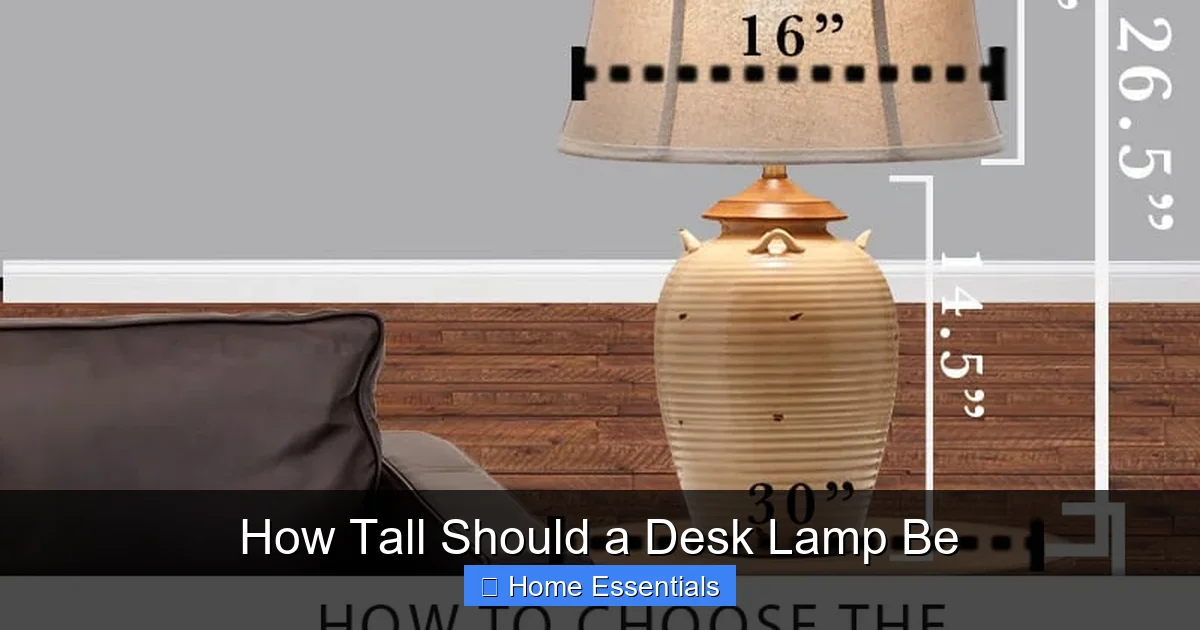
You’ll see ranges tossed around: “Most desk lamps are 16-24 inches tall.” This is a starting point, not a rule. This measurement refers to the height of the lamp itself—from the base to the top of the shade or bulb. The critical measurement, however, is the light source height—the distance from your desk surface to the actual bulb or LED array. This is what determines your light angle.
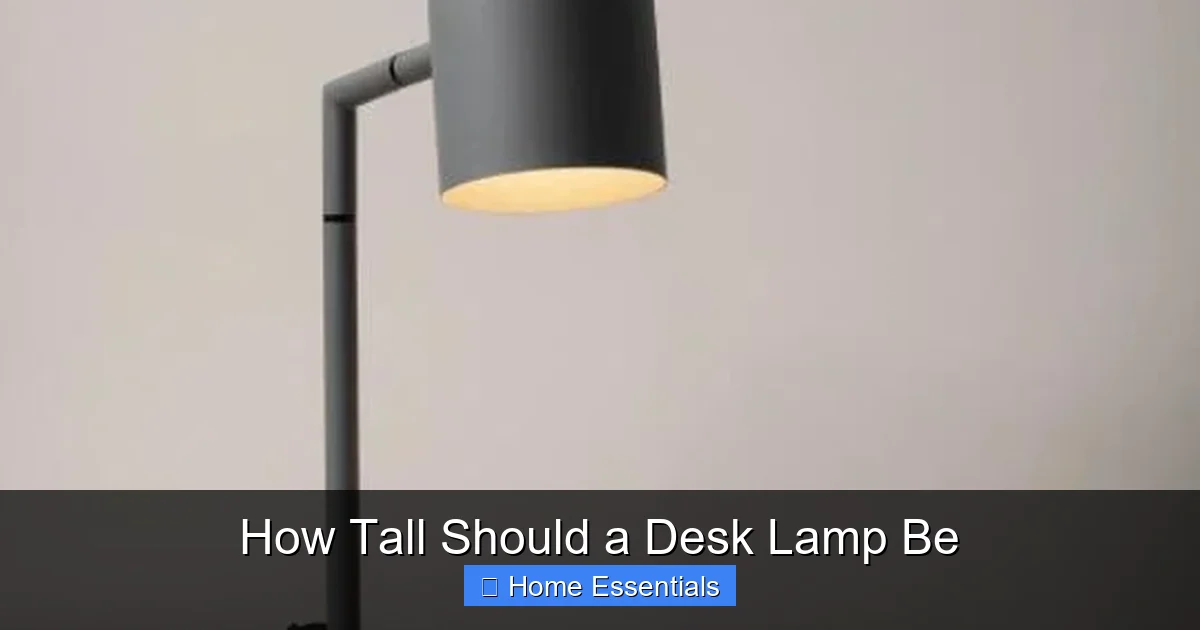
Visual guide about How Tall Should a Desk Lamp Be
Image source: oillampman.com
The Common Range and Its Purpose
For a standard writing or computer desk (29-30 inches high), a lamp with a total height of 16-20 inches is very common. This typically places the bulb about 18-22 inches above the desk when the lamp is placed on the surface. This range works well for:
- General tasks: Reading, browsing, light writing.
- Laptop work: When the screen is close, light from this height usually avoids glare on the display.
Lamps taller than 24 inches are often used for larger executive desks or when the lamp needs to cast light over a wider area. They place the bulb higher, which can be good for illuminating a broad workspace but may cause more glare on screens if not carefully directed.
The Pitfall of Assumed Heights
Here’s the catch: your desk height might not be standard. Standing desks, drafting tables, and antique desks can vary wildly. A lamp that’s perfect on a 30-inch desk might be useless on a 36-inch standing desk. Never buy a lamp based solely on its listed height. You must consider the height of your specific desk surface and your own seated or standing eye level.
How to Calculate Your Perfect Lamp Height: A Practical Guide
Time for some DIY ergonomics. Finding your ideal light source height is simple and takes two minutes.
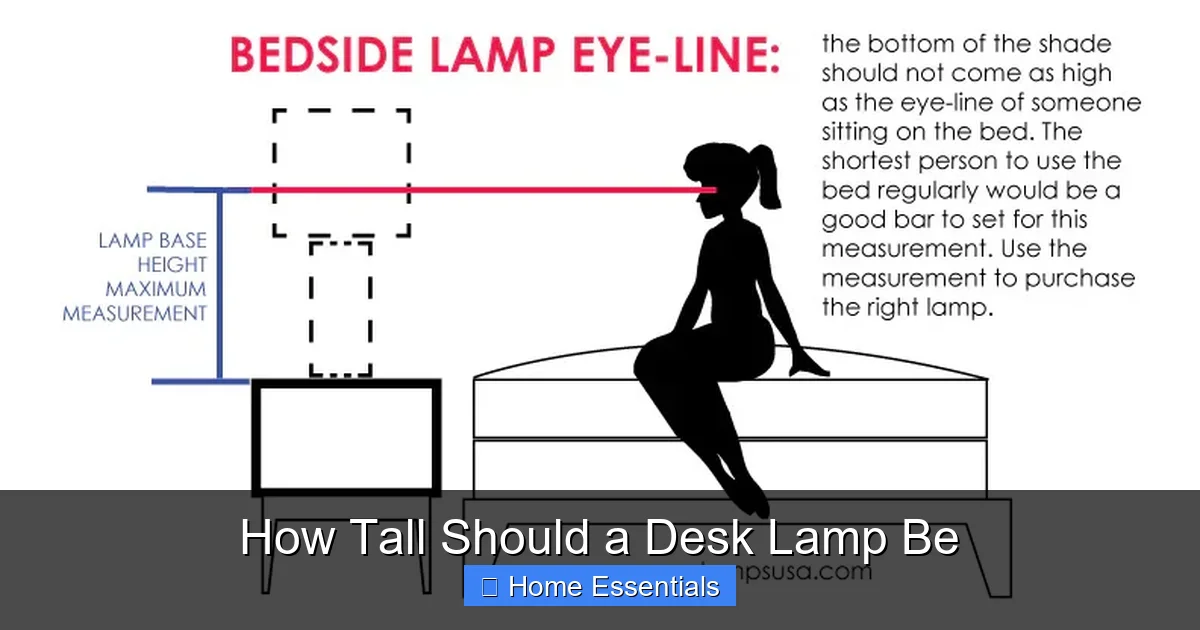
Visual guide about How Tall Should a Desk Lamp Be
Image source: cdn.shopify.com
The 20-Degree Rule & The Elbow Test
Sit at your desk in your usual working posture. Keep your back straight, feet flat, and look ahead at your monitor or primary work area. Now, bring your elbows up to rest on your desk surface, keeping your forearms parallel to the floor. The ideal light source should be positioned just in front of your elbows, at a height that is roughly level with the top of your forearms or slightly higher. This creates an angle of about 20-30 degrees downward, allowing light to wash over your work without you looking directly into the bulb. This angle minimizes glare and shadows from your hands.
Measure Twice, Buy Once
- Find Your Desk-to-Eye Distance: While seated, have someone measure the vertical distance from your desk surface to your eyes. This is your baseline. Your light source should be at or slightly above this line when directed downward.
- Consider Task Proximity: If your work involves fine details (jewelry making, engraving), you may want the light source lower and closer to the work to increase intensity and reduce shadows from tools. For reading large-format documents or spreadsheets, a slightly higher, broader light might be better.
- Factor in Your Lamp Base: Remember, the lamp’s height is base-to-bulb. If you buy a 20-inch lamp, but it has a bulky 3-inch base, your effective height is 17 inches. Account for the base in your mental math.
Pro Tip: If you use a standing desk, you need a lamp with a much taller reach or an articulated arm that can extend upward. A standard 18-inch lamp will be useless when you’re standing at a 42-inch desk. Look for lamps with a minimum height of 24+ inches or, better yet, a clamp-on or arm-style lamp that can be mounted higher.
Task-Based Adjustments: One Lamp, Many Jobs
Your workday probably involves more than one activity. The beauty of an adjustable lamp is its ability to morph with you.
Visual guide about How Tall Should a Desk Lamp Be
Image source: content.upstartcommerce.com
For Computer Work (The Glare Battle)
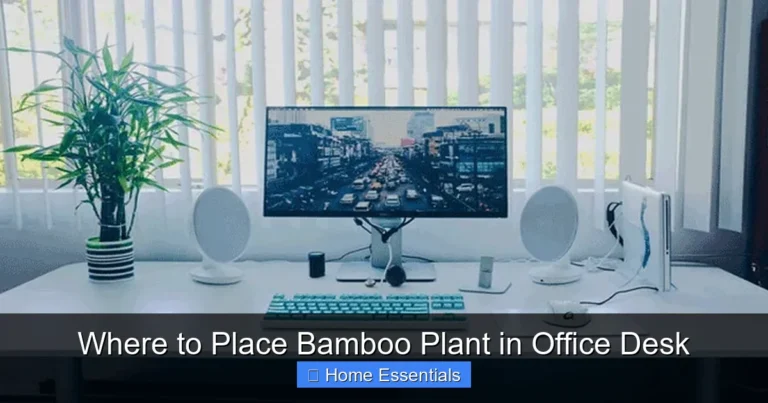
This is the most common modern challenge. The light must illuminate your keyboard and desk without reflecting off your screen into your eyes. Here, height is everything. The bulb should be positioned at least as high as the top of your monitor and placed to the side (left for right-handed writers, right for left-handed, or slightly in front). The light should hit the desk at an angle, not bounce off the screen. A lamp with a long, horizontal arm that can swing over the desk without sitting directly behind your monitor is ideal. If you use a smart bulb, you can also fine-tune brightness to match ambient room light, reducing the contrast that causes glare. Understanding how smart bulbs can be dimmed is a huge advantage here.
For Writing & Detailed Handwork
Here, the goal is to eliminate the shadow your hand and pen/pencil cast. You need a light source that is in front of your working hand and high enough that your hand doesn’t block it. An articulated lamp with a gooseneck or multiple pivot points is perfect. You can position the bulb directly over your paper, slightly to the side of your writing hand, at a height of 12-16 inches above the work surface for intense, shadow-free illumination. A lamp with a focused, narrow beam spread (like a spotlight) is often better than a wide, diffuse one for this task.
For Ambient/Desk Ambiance
Sometimes, you just want a soft glow to fill the corner of the room while you read a novel or think. For this, a taller lamp with a wide, fabric shade that diffuses light beautifully is great. The bulb sits higher (20-26 inches), casting light upward and outward to create a warm, enveloping atmosphere rather than a direct task beam. This style often sacrifices precision for mood.
Ergonomics Beyond Height: The Holistic Workspace
Desk lamp height doesn’t exist in a vacuum. It’s part of a system.
The Chair-Desk-Lamp Triad
Your chair height determines your seated eye level. Your desk height is fixed. Your lamp must bridge the gap. If you have an ergonomic chair with height adjustment, you have more flexibility. But if your chair is fixed, your lamp height becomes even more critical. Ensure that when you sit upright, your gaze falls naturally on the top third of your monitor. Your lamp should complement this line of sight, not fight it.
Monitor Height & The Glare Zone
Many people use monitor risers to bring their screen to eye level. This changes the vertical landscape. A lamp that was perfect before might now be too low, causing its shade to block light or create a glare hotspot on the lower part of the screen. Always assess your lighting after your monitor is at its final, ergonomic height.
Style, Material, and Modern Features: The Fun Part
Now we get to the aesthetics. Once you know your functional height range (e.g., “I need a bulb 18-22 inches above my desk”), the style world opens up.
Lamp Types & Their Typical Heights
- Traditional Architect Lamps: The classic green-shaded, spring-balanced arm. Very adjustable. Base height varies, but the arm extends, so the bulb position is highly customizable. Perfect for precision work.
- Swing-Arm Lamps: A weighted base, a vertical pole, and one or two hinged arms. Very common. Heights range from 18-30 inches. Look for a long arm reach if you need light over a wide desk.
- Gooseneck Lamps: Flexible, bendable necks. Height is often fixed (16-20 inches), but the neck directs light anywhere. Great for targeted tasks.
- Tripod/Balance Arm Lamps: Modern, sculptural. Often have a wide height range via a counterweight system. Fantastic for standing desks or creating a statement.
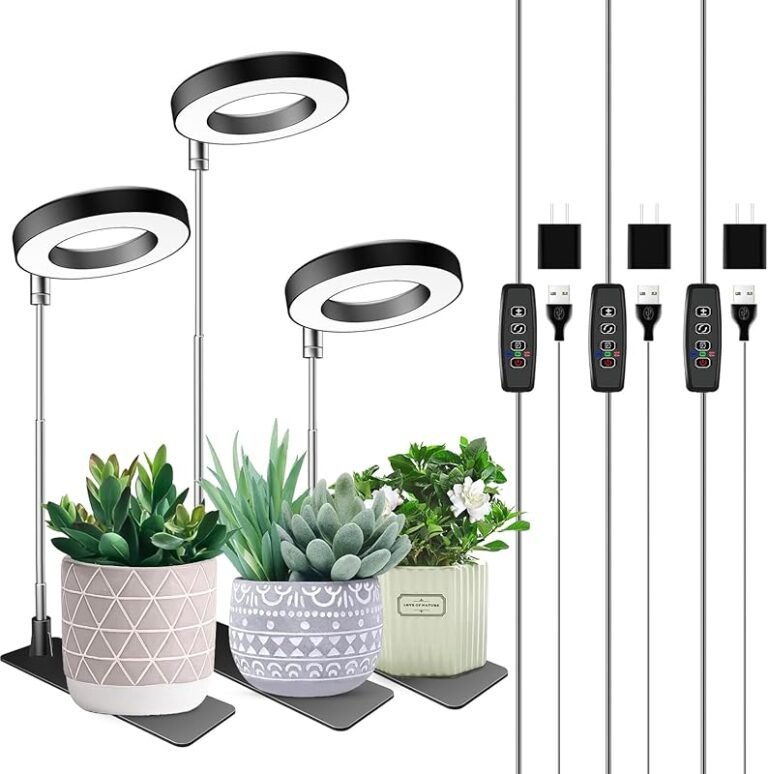
- Desk Fans/Clamp Lamps: These clamp to the edge of your desk, eliminating base footprint. Their height is determined by the arm length. They can be positioned at any point along the desk edge, which is a huge advantage for shadow control.
Bulb Compatibility: A Critical Check
This is where many get tripped up. Your lamp’s height and shade design dictate what bulb you can use. A tall, open lamp might accommodate a standard A19 bulb. A small, enclosed ceramic lamp might require a narrower candelabra (E12) base. If you love smart bulbs for their scheduling and color tuning, you must ensure the lamp’s socket matches. Before falling in love with a design, check its socket type. You can learn more about what makes a smart bulb “smart” to see if it fits your lamp. Also, consider heat: some enclosed fixtures aren’t rated for LED bulbs, which can affect their lifespan and safety. Always check the lamp’s maximum wattage rating, even for LEDs.
Caring for Your Lamp: Keeping the Light Bright
A clean lamp is an effective lamp. Dust on the shade and bulb can block up to 30% of light output. Regular maintenance is simple.
Dusting and Deep Cleaning
Unplug the lamp. Use a soft, dry microfiber cloth to gently wipe down the base, arm, and shade. For fabric or parchment shades, a gentle lint roller works wonders. For glass or metal, a slightly damp microfiber cloth is fine, followed immediately by a dry one. Never spray cleaner directly onto the lamp; spray it onto the cloth first. The microfiber cloth’s unique fibers grab dust without scratching surfaces. For grimy interiors or sticky residues, consult the manufacturer’s instructions.
Bulb Replacement and Upgrades
When changing a bulb, let the old one cool completely. Match the bulb’s base (E26, E12, etc.) and shape (A19, BR30, globe) exactly. If you’re upgrading to a smart bulb, ensure your lamp’s socket is compatible and that the bulb’s physical size fits within the shade. A bulb that’s too large can cause overheating or simply look awkward. Remember, while smart bulbs are efficient, they still generate some heat, so proper ventilation in the fixture is important.
Conclusion: Light Up Your Work, Not Your Worries
Choosing the right desk lamp height is a small investment with a massive return. It’s the difference between a workspace that drains you and one that energizes you. By measuring your personal desk-to-eye distance, considering your primary tasks, and prioritizing adjustability, you can select a lamp that becomes an invisible partner in your productivity and comfort. Don’t just buy a lamp that fits your decor; buy one that fits you. Test angles in the store if you can, or read reviews that mention adjustability. When your light is positioned perfectly, you won’t notice it—you’ll just notice how much better you feel at the end of the day. That, ultimately, is the brightest idea of all.
Frequently Asked Questions
What is the average or standard height for a desk lamp?
For a standard 30-inch desk, the lamp itself is often 16-24 inches tall, placing the bulb 18-22 inches above the work surface. However, this is only a general range. Your ideal height depends entirely on your desk height, your eye level when seated, and your specific tasks.
How high should a desk lamp be for a computer to avoid glare?
To avoid screen glare, the lamp’s bulb should be positioned at least as high as the top of your monitor and placed to the side (left or right) of your screen, not directly behind it. The light should angle downwards onto the desk at about a 20-degree angle. An adjustable arm lamp is best for fine-tuning this position.
Can I use a very tall lamp on a small desk?
You can, but it’s often impractical. A very tall lamp on a small desk can look disproportionate and may not position the light where you need it without a very long, flexible arm. The base may also dominate your limited desk space. It’s usually better to match lamp scale to desk size and use adjustability for reach, not just height.
What’s more important: lamp height or adjustability?
Adjustability is more important. A fixed-height lamp, even if it’s in the “average” range, will not suit every task or user. An adjustable lamp (with a swing arm, gooseneck, or telescoping pole) allows you to set the perfect height for writing, computing, or reading, making it a far smarter long-term investment.
How do I know if my lamp is too short?
Signs your lamp is too short include: you consistently hunch forward to see your work, your hand casts a large shadow over your writing area, or you find yourself squinting because the light isn’t reaching the center of your desk. If you need to lean in to see clearly, your light source is likely too low.
Does the type of bulb affect the ideal lamp height?
Indirectly, yes. A bulb with a narrow, focused beam (like a spotlight) might need to be positioned slightly differently than a bulb with a wide, diffuse spread to achieve even illumination. More importantly, bulb size and heat output must match your lamp’s shade and socket. Always check your lamp’s maximum wattage and socket type before buying a new bulb, whether it’s a standard or smart bulb.