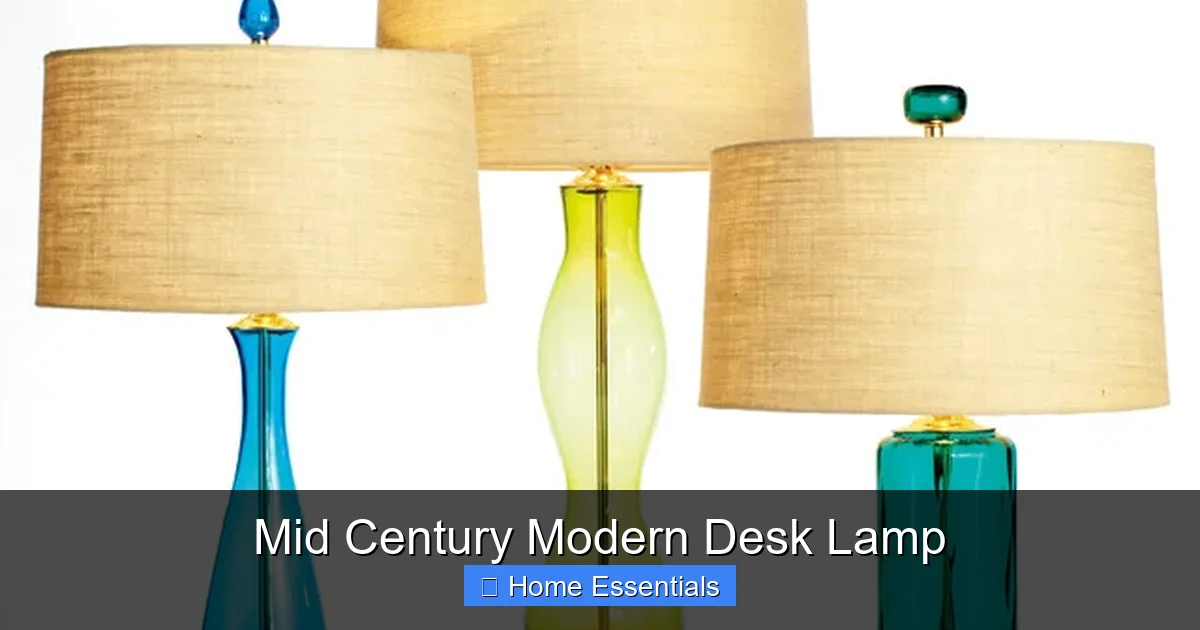
Mid Century Modern Desk Lamp
A Mid Century Modern Desk Lamp is more than just a light source; it’s a sculptural piece of functional art that brings the iconic, clean-lined aesthetic of the 1940s-1960s into your contemporary workspace. These lamps prioritize organic forms, innovative materials like brass and molded plastic, and focused task lighting, creating a serene and stylish environment. Investing in one means choosing a durable, design-forward piece that elevates any desk or side table while providing excellent, glare-free illumination for reading, writing, or computing.
Key Takeaways
- Design Philosophy: These lamps embody the “form follows function” mantra, featuring organic curves, tapered legs, and minimal ornamentation that create a sense of lightness and airiness.
- Material Mastery: Authentic pieces and quality reproductions use durable, period-appropriate materials like solid brass, walnut, steel, and opulent glass or acrylic, ensuring longevity and tactile appeal.
- Task-Oriented Lighting: They are engineered for precision, often with adjustable arms, swivel heads, and directional shades to provide focused, shadow-minimizing light exactly where you need it.
- Versatile Styling: Their timeless aesthetic pairs effortlessly with myriad decor styles—from minimalist and Scandinavian to industrial and eclectic—making them incredibly versatile design anchors.
- Investment in Quality: A well-made mid century modern desk lamp is an heirloom-quality purchase. Its classic design transcends trends, offering lasting value and becoming a cherished fixture.
- Smart Buying Guide: Look for reputable brands or licensed reproductions, check for solid construction and smooth adjustment mechanisms, and ensure the bulb type (often E26/E27) and wattage meet your task lighting needs.
[FEATURED_IMAGE_PLACEHOLDER]
📑 Table of Contents
- The Enduring Allure of a Mid Century Modern Desk Lamp
- Decoding the Design DNA: What Truly Makes it “Mid Century Modern”
- Materials & Craftsmanship: The Tangible Soul of the Lamp
- Lighting Technology: More Than Just a Bulb
- Styling Your Space: Integrating the Lamp with Confidence
- The Buying Guide: How to Choose Your Perfect Lamp
- Conclusion: More Than a Lamp, a Legacy
The Enduring Allure of a Mid Century Modern Desk Lamp
Close your eyes and picture the perfect workspace. It’s not just about organization or ergonomics; it’s about feeling. The gentle hum of focus. The clarity of thought. The subtle beauty that inspires you every time you sit down. This is the magic a single, well-chosen object can weave: the mid century modern desk lamp. It’s a quiet powerhouse, a fusion of history, art, and engineering that has captivated generation after generation. Unlike fleeting trends, its appeal is rooted in a post-war design revolution that championed optimism, accessibility, and a bold new way of living. Bringing this iconic piece onto your desk isn’t merely a decor choice—it’s an embrace of a philosophy that good design should be beautiful, useful, and democratic.
What makes this particular lamp so special? It’s the harmony. The way a sleek, tapered brass arm seems to float, supporting a shade that looks both delicate and substantial. The satisfying *click* of an adjustment mechanism perfected decades ago. The warm, ambient glow that feels both retro and utterly current. In a world of disposable everything, this lamp stands as a testament to enduring craftsmanship. It whispers stories of Mad Men-era offices, of pioneering designers like George Nelson, Arne Jacobsen, and the legendary duo Charles and Ray Eames, who believed that everyday objects could elevate the human spirit. When you switch it on, you’re not just illuminating a page or a screen; you’re connecting to that legacy of thoughtful, human-centered design.
Decoding the Design DNA: What Truly Makes it “Mid Century Modern”
To truly appreciate a mid century modern desk lamp, you need to learn to read its design language. It’s a vocabulary spoken in curves, angles, and materials. The era, roughly spanning 1945 to 1969, was a reaction against the heavy, ornate styles of the past. Designers were inspired by new technologies, the space age, and a desire for a more informal, open way of living. This philosophy is crystallized in every successful lamp from the period.
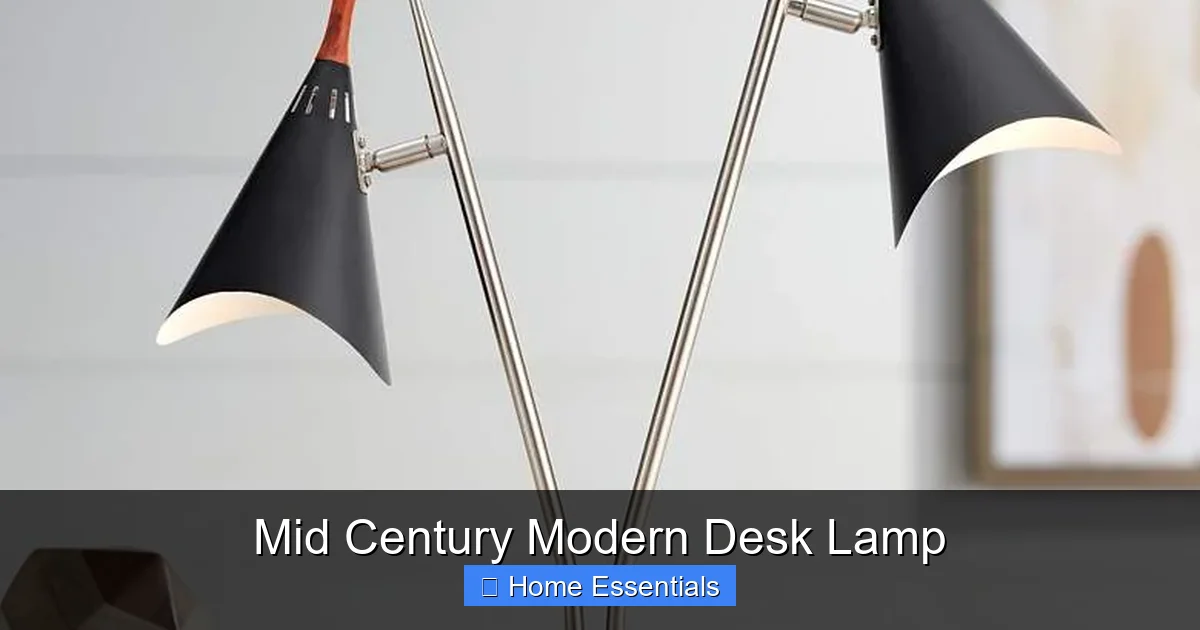
Visual guide about Mid Century Modern Desk Lamp
Image source: image.lampsplus.com
Organic Forms and Geometric Purity
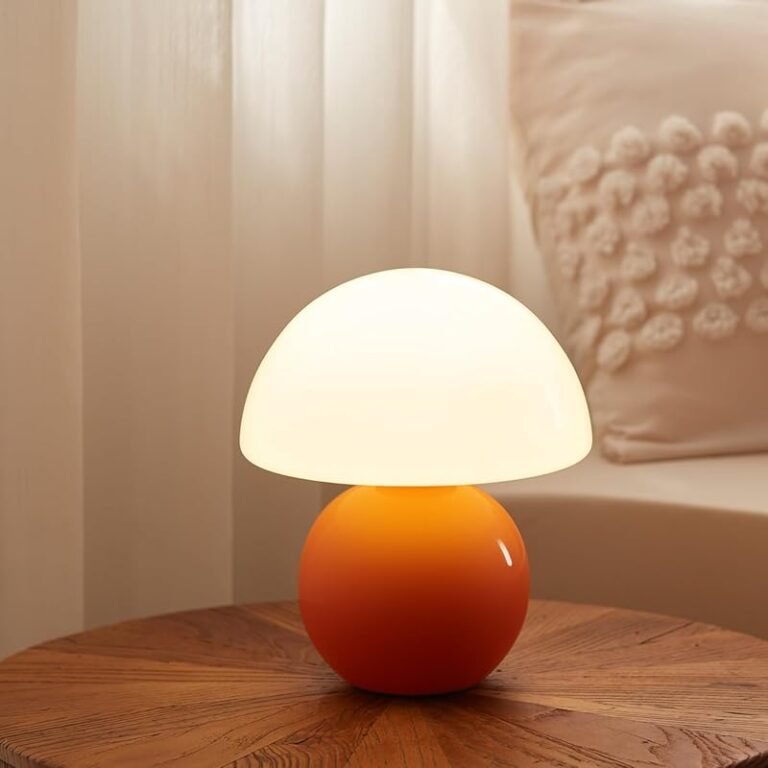
Gone were the fussy details. Instead, designers looked to nature for inspiration—the gentle arc of a bird’s wing, the smooth slope of a hill, the clean segment of an orange. You’ll see this in the iconic Arco lamp’s sweeping, arching stem or the Nelson Bubble Lamp’s soft, spherical shade. Simultaneously, there was a love for pure geometry: circles, squares, and triangles rendered with precision. A classic Kashimir lamp might feature a perfect spherical base and a conical shade, connected by a simple, straight rod. The magic happens where these organic and geometric elements meet, creating dynamic yet balanced silhouettes that feel alive and intentional.
The Tapered Leg and “Floating” Illusion
Perhaps the most recognizable signature is the tapered leg. Whether on a chair, a table, or a lamp base, legs that narrow toward the floor create a sense of lightness, as if the piece is barely touching the ground. On a desk lamp, this translates to bases and stems that elegantly taper, often splaying out slightly for stability. This design trick visually lifts the entire piece, making it feel less bulky and more integrated into the clean lines of a mid century modern desk. It’s an optical illusion that contributes massively to the airy, uncluttered aesthetic we crave today.
Minimal Ornamentation, Maximum Expression
You won’t find carved flowers or intricate scrollwork here. Any decoration is inherent to the structure itself. The beauty is in the joinery, the play of materials, and the pure form. A lamp’s “ornament” might be the beautiful, exposed weld on a steel arm or the rich grain of a walnut base. The focus is on honest construction. This minimalist approach means the lamp doesn’t compete with other objects on your desk; it complements them. It provides visual calm, allowing your work to take center stage while the lamp itself remains a subtle, sophisticated backdrop.
Materials & Craftsmanship: The Tangible Soul of the Lamp
The soul of a mid century modern desk lamp is in its materials. This was an era of exciting new industrial processes and a love for natural, honest substances. The tactile experience—the cool weight of brass, the smooth warmth of wood, the satisfying heft of a cast iron base—is a huge part of the appeal. Understanding these materials helps you discern quality and choose a lamp that will last.
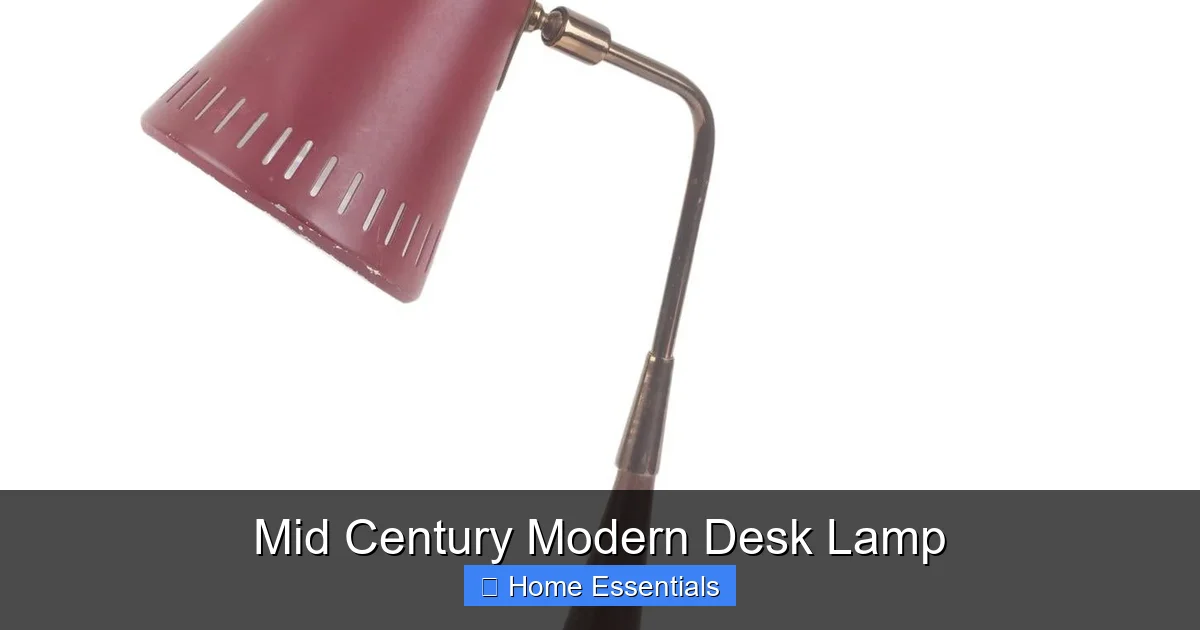
Visual guide about Mid Century Modern Desk Lamp
Image source: a.1stdibscdn.com
Brass, Steel, and Aluminum: The Metallic Backbone
Brass is the undisputed king of mid century lighting. Its warm, golden tone adds a touch of luxury without being ostentatious. High-quality brass lamps are solid, not hollow, and often have a brushed or satin finish that shows fingerprints less than polished chrome. Look for pieces that feel substantial; a flimsy, lightweight brass lamp is likely a poor reproduction. Steel, often powder-coated in matte black, white, or olive green, provides striking contrast and industrial strength. Aluminum, used by designers like Giotto Stoppino for the iconic Atollo lamp, allows for sleek, seamless forms that feel both lightweight and incredibly sturdy. When examining a lamp, check the metal joints. They should be cleanly welded or expertly threaded, with no rough edges or wobble.
Wood: The Warm, Organic Counterpoint
Walnut is the quintessential wood of the era, prized for its rich, chocolatey grain and durability. Oak and teak were also common. A genuine mid century lamp will use solid wood for its base or accents, not veneer over particleboard. Run your hand over it. It should feel smooth and solid, with a natural oiled or lacquered finish that enhances the grain. The wood provides a beautiful, organic warmth that balances the coolness of metal, grounding the lamp’s form in nature. This combination of metal and wood is a hallmark of the style.
Shades: Glass, Acrylic, and Fabric
The shade is the lamp’s voice—it diffuses the light and defines its character. Original period lamps often used opal glass, which creates a soft, even glow without glare. Thick, molded acrylic (a new material at the time) allowed for innovative shapes like the Nelson Bubble. Fabric shades, usually in neutral tones like white, off-white, or grey, add a softer, more residential feel. For a desk lamp, you want a shade that directs light downward efficiently. A good rule is that the shade should be roughly the same width as the lamp’s base for visual balance. Avoid shades that are cracked, yellowed, or made from thin, flimsy materials.
Lighting Technology: More Than Just a Bulb
While the form is iconic, the function is what you interact with daily. Mid century designers were obsessed with task lighting—creating focused, adjustable light for reading, writing, and detailed work. Their solutions were ingeniously simple and remarkably effective, and modern reproductions often improve upon them with LED technology.
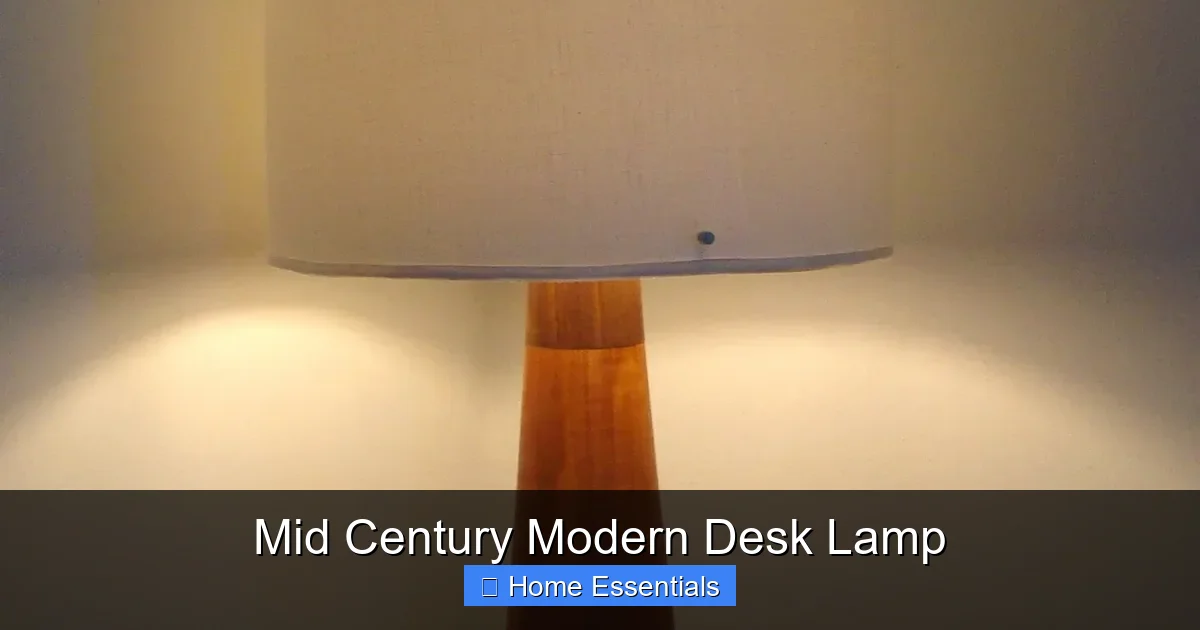
Visual guide about Mid Century Modern Desk Lamp
Image source: images.custommade.com
Adjustability: The Heart of the Design
A great mid century desk lamp isn’t a static sculpture; it’s a dynamic tool. Look for multiple pivot points. A classic design might have a weighted base, a rotating arm, and a tilting shade. This allows you to position the light source exactly where you need it, reducing eye strain and shadows. Test the mechanism (if possible). It should move smoothly, with a bit of tension to hold its position firmly. A wobbly or loose arm is a deal-breaker. The best designs make adjustment intuitive and effortless, almost an extension of your own hand.
Bulb Type and Light Quality
Vintage lamps were designed for incandescent bulbs, which produce a warm, broad-spectrum light. However, they are inefficient. The modern solution is an LED conversion. Many high-quality reproductions now come with integrated, non-replaceable LED modules that are perfectly calibrated to the shade’s shape, providing optimal, energy-efficient light. If buying a vintage or simple reproduction, check the socket type (usually E26 or E27). You can use a warm white (2700K-3000K) LED bulb to mimic the cozy incandescent feel. Avoid very cool white (5000K+) bulbs, as they will clash with the lamp’s warm aesthetic and feel harsh. Dimmability is a huge plus for setting the mood; ensure the lamp and bulb are compatible with a dimmer switch if that’s important to you.
Task vs. Ambient Light
Understand the lamp’s primary role. A classic mid century desk lamp is a task light. Its shade is designed to direct a focused beam downwards onto your work surface, minimizing glare and light spill. It’s not meant to brightly illuminate an entire room. For ambient light, you’d pair it with a ceiling fixture or a floor lamp. This focused nature is part of its efficiency and charm. When choosing, consider your desk’s size and your primary tasks. A larger, more powerful lamp is good for a big desk with multiple monitors; a smaller, more delicate one suits a writing desk or bedside table.
Styling Your Space: Integrating the Lamp with Confidence
You’ve fallen in love with a lamp, but how do you make it feel at home? The beauty of mid century modern design is its incredible flexibility. Its clean lines and organic forms act as a neutral canvas, complementing a huge range of styles. The key is intentionality and balance.
The Classic Pairing: Wood, Metal, and Neutrals
The most harmonious setting is a direct echo of the era: a walnut or teak desk (like a classic Eames or Danish design), a neutral backdrop (white, cream, or light grey walls), and upholstery in muted tones or textured fabrics like bouclé or wool. The lamp becomes a jewel on this serene stage. A brass lamp adds warmth and a touch of glamour to this palette. A black or olive green steel lamp provides a stronger graphic contrast. This combination is foolproof and eternally chic.
Mixing with Contemporary and Industrial Styles
Don’t be afraid to mix! A mid century lamp looks fantastic on a modern, minimalist white desk made of laminate or acrylic. Its organic shape softens the stark lines. It also adds a touch of humanism to an industrial space with concrete floors and metal shelving. The brass or walnut brings in the warmth that raw materials often lack. In a Scandinavian-inspired room with light woods and cozy textiles, a mid century lamp adds a touch of international flair and mid-century optimism.
Eclectic and Maximalist Blends
Even in a more collected, eclectic space, the lamp holds its own. Its strong, simple forms can anchor a shelf filled with books, ceramics, and travel mementos. Because it’s not overly decorative, it won’t fight with other patterns and textures. Place it on a side table next to a bold, patterned chair, or use it as the sole mid century element in a room dominated by rustic farmhouse or boho styles. Its design DNA is so strong that it acts as an anchor point, providing a sense of cohesion amidst diversity.
Practical Placement Tips
For right-handed writers, place the lamp on the left side of the desk to avoid casting a shadow from your hand. The ideal height sees the bottom of the shade just at or slightly below eye level when you’re seated. The light should hit your work surface at about a 45-degree angle to minimize glare on screens and paper. If your lamp has a long arm, ensure the base is heavy enough to prevent tipping when fully extended. These small adjustments make a world of difference in comfort and effectiveness.
The Buying Guide: How to Choose Your Perfect Lamp
Navigating the market for mid century modern desk lamps can be a minefield. You have original vintage pieces, high-end authorized reproductions, affordable mass-market versions, and everything in between. Here’s how to separate the heirlooms from the headaches.
Vintage vs. Reproduction: Weighing the Options
Original Vintage (Pre-1970s): The holy grail for purists. You get authentic history, often impeccable materials (solid brass, real walnut), and patina that tells a story. However, it comes with challenges: wiring may need updating for safety, finishes can be worn, and prices for iconic models (like an original Arco or Kashimir) can be astronomical. Buy from reputable dealers who can attest to the lamp’s condition and safety. High-End Licensed Reproductions: Brands like Menu, &Tradition, and Hive Studio produce authorized versions of classic designs. You pay a premium for exacting detail, modern safety certifications, updated materials (like better LED integration), and warranty support. This is the safest bet for getting the “real deal” without restoration worries. Affordable Reproductions & Inspired Designs: The vast middle ground. Many companies create lamps that are “inspired by” mid century style. These can be excellent value, offering good design and function at a lower price. Scrutinize the materials (is it solid metal or thin sheet metal? real wood or veneer?) and the construction. Read reviews specifically about sturdiness and adjustment smoothness.
Key Quality Indicators to Inspect
Whether shopping online or in person, look for these hallmarks of quality:
- Base Weight: A good lamp has a heavy, stable base—often cast iron, stone, or thick metal. It should not tip easily.
- Adjustment Mechanism: Move all the joints. They should be smooth, with a slight, consistent resistance that holds position firmly. No squeaking, grinding, or sagging.
- Material Integrity: Tap the metal. It should sound solid, not hollow or tinny. Examine the wood grain; is it a real veneer with a repeating pattern, or solid? Check welds for neatness.
- Finish Consistency: The paint or plating should be even, without runs, bubbles, or rough spots. A brushed metal finish should have consistent lines.
- Socket and Switch: The socket should feel secure. The pull-chain or push-button switch should feel solid, not flimsy. For vintage, ask if the cord is new and grounded.
Budgeting and Brand Awareness
Set a realistic budget. You can find decent “inspired” lamps for $50-$150. For a high-quality reproduction of an iconic design from a reputable brand, expect $300-$800+. True vintage icons start at $1,000 and soar into the tens of thousands. Know the iconic names to watch for: Arco (Flos), Nelson Bubble Lamp (Herman Miller/Vitra), Kashimir (Artemide), AJ (Louis Poulsen), Atollo (Artemide), Luceplan models. If you see a lamp marketed as a “George Nelson” or “Arne Jacobsen” design for $99, it is 100% an unlicensed knockoff. That’s not necessarily bad if the quality is good, but be aware of what you’re buying. Research the specific model you’re interested in—see original photos, read about its history. Knowledge is your best defense against poor quality.
Conclusion: More Than a Lamp, a Legacy
The search for the perfect mid century modern desk lamp is more than a shopping trip; it’s a journey into a golden age of design thinking. It’s about finding an object that respects your intelligence, serves your needs with quiet efficiency, and delights your senses every single day. In an era of digital overload and visual noise, this lamp offers something profound: simplicity. It strips away the unnecessary, leaving only what is essential—beautiful form, purposeful function, and a warm, focused light. It’s a daily reminder that the objects we surround ourselves with should enhance our lives, not complicate them. Whether you choose a meticulously restored vintage gem or a thoughtfully crafted modern reproduction, you are bringing a piece of design history into your home. You are investing in a tool for productivity and a sculpture for contemplation. You are choosing to work and live by a softer, more elegant light. That is the enduring, luminous power of the mid century modern desk lamp.
Frequently Asked Questions
Is a Mid Century Modern Desk Lamp durable enough for daily use?
Absolutely. Authentic and high-quality reproductions are built to last, often using solid brass, steel, and hardwood. The adjustment mechanisms are engineered for frequent use. With proper care—avoiding harsh chemical cleaners and ensuring bulbs don’t exceed wattage ratings—a well-made lamp can easily last for decades, becoming an heirloom.
What type of bulb should I use in my Mid Century Modern Desk Lamp?
For vintage lamps with standard E26/E27 sockets, use a warm white LED bulb (2700K-3000K color temperature) with a wattage equivalent to 40-60 watts for a classic incandescent-like glow. If the lamp has an integrated LED module, it’s designed to last for years—simply replace the entire fixture when it dims. Always check the manufacturer’s maximum wattage recommendation to prevent overheating.
How do I choose the right size lamp for my desk?
The lamp should be proportional to your desk. As a rule, the base diameter should be no wider than about one-third of your desk’s depth. The shade width should roughly match the desk’s width for balance. For a standard 30-inch deep desk, look for a base around 6-8 inches wide and a shade 10-14 inches wide. Ensure the arm has enough reach to position the light over your work without the base getting in the way of your keyboard or papers.
Should I buy an original vintage lamp or a modern reproduction?
It depends on your priorities and budget. Vintage offers history and often superior materials but may require rewiring for safety and comes at a high cost. Modern reproductions from licensed brands guarantee safety, often incorporate better LED technology, and are covered by warranties. Affordable reproductions can offer great style and function on a budget, but scrutinize material quality and construction. For most people, a high-quality reproduction offers the best balance of authenticity, safety, and value.
Can I use a Mid Century Modern Desk Lamp with a dimmer switch?
Yes, but with caveats. If the lamp uses a standard incandescent or compatible LED bulb in a socket, and the dimmer switch is rated for LED bulbs, it will work beautifully. However, many integrated LED models are not dimmable. Many vintage lamps with original rotary switches are also not designed for dimming. Always check the product specifications or consult the manufacturer before connecting to a dimmer to avoid buzzing or damage.
How do I clean and maintain my brass or metal lamp?
For routine dusting, use a soft, dry microfiber cloth. For brass that has developed a patina (which many find desirable), simply clean with warm, soapy water and a soft cloth, then dry immediately. To restore high shine, use a dedicated brass polish sparingly. For painted or powder-coated finishes, avoid abrasive cleaners; stick to a damp cloth. Never submerge the lamp or use harsh chemicals like acetone, which can damage finishes and wiring. Tighten any loose screws gently during cleaning.