Study Desk Vastu Direction
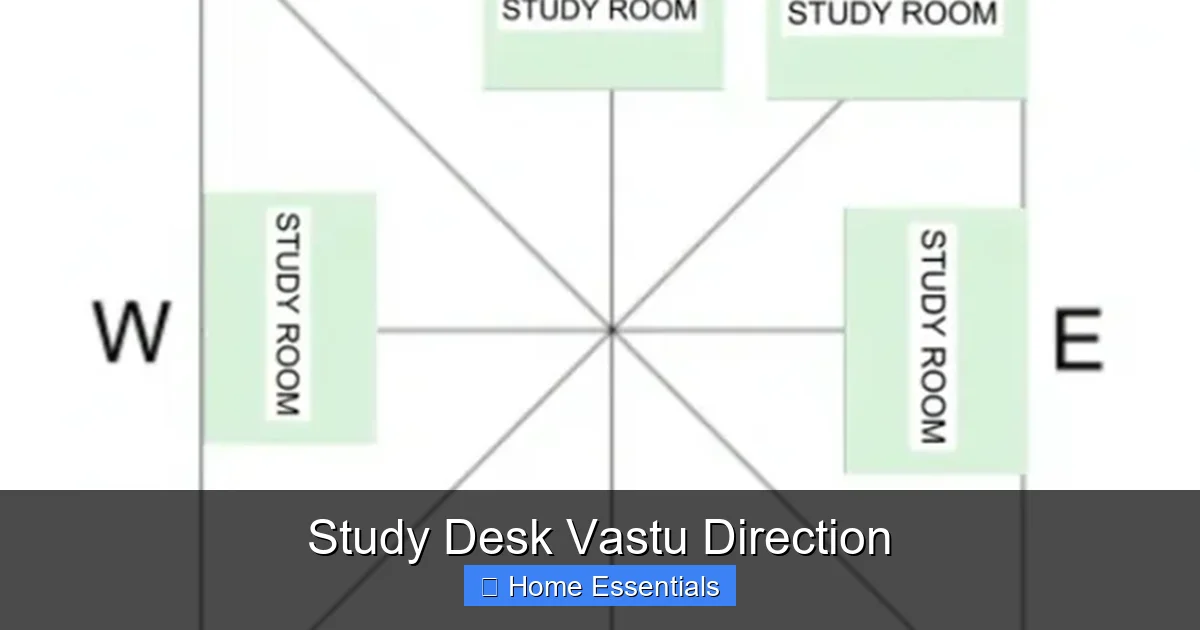
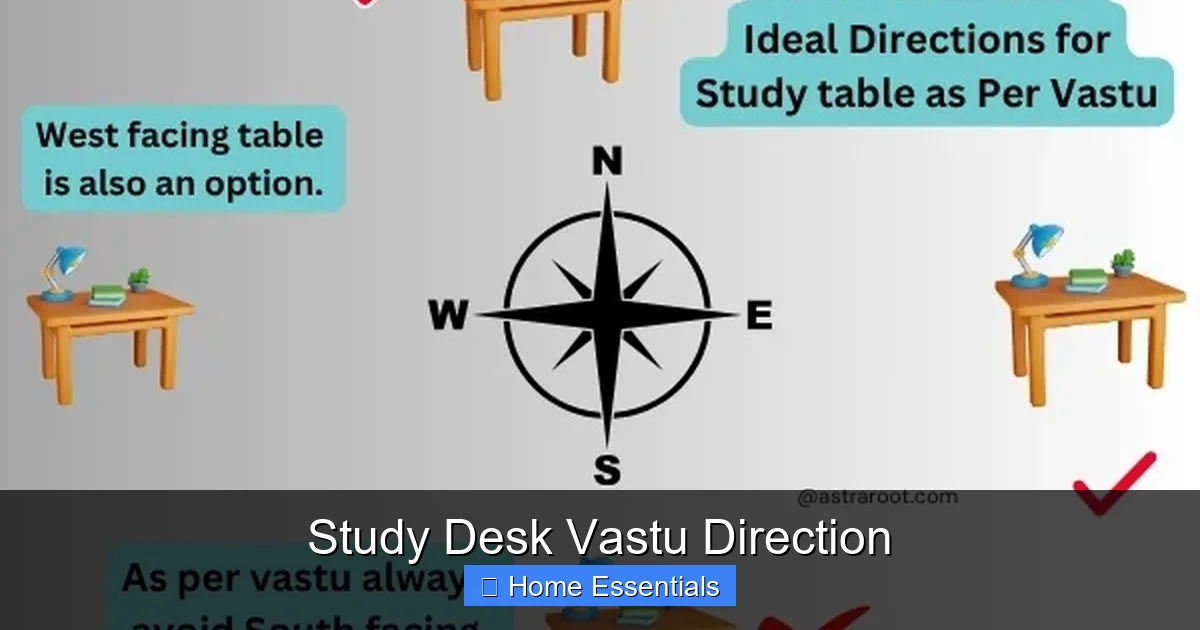
Placing your study desk in the correct Vastu direction is a simple yet powerful way to enhance concentration, memory, and academic performance. The most auspicious directions are North or East, facing these directions while studying. It is crucial to avoid placing your desk in the South or West, as these are considered inauspicious for learning. Ensure the area around your desk is clutter-free, well-lit, and has a solid wall behind you for support. Applying these Vastu principles can create a harmonious and energizing study environment that promotes clarity and success.
Have you ever sat down to study, only to find your mind wandering, your notes confusing, and your focus completely shattered? You’ve tried different techniques, changed your schedule, but the struggle remains. What if the answer wasn’t just in your study method, but in the very direction you face while you learn? This is the profound wisdom of Vastu Shastra, the ancient Indian science of architecture and design. It teaches us that the energies surrounding us profoundly impact our minds and actions. And when it comes to carving out a space for learning—a sanctuary for your books, laptop, and thoughts—the study desk Vastu direction becomes a critical factor. It’s not about superstition; it’s about aligning yourself with the beneficial energies of the universe to create an environment where clarity, memory, and success can naturally flourish. Forget expensive tutors or drastic changes; sometimes, simply turning your desk a few degrees can unlock a new level of productivity and peace.
Key Takeaways
- Best Directions: The North (Zone of Kubera/Wealth & Clarity) and East (Zone of Health & New Beginnings) are the most Vastu-compliant directions for your study desk.
- Facing Direction: You should ideally face North or East while studying. If that’s not possible, facing West is acceptable, but South-facing is strictly discouraged.
- Solid Support: Have a solid, sturdy wall behind your chair. This represents stability, support, and helps you feel secure, improving focus.
- Avoid Clutter & Obstructions: Keep the desk surface and the floor around it clean and organized. Do not place the desk under a beam, in a corner, or directly in line with the door.
- Shape & Material: Prefer rectangular or square desks. Wood is the best material. Avoid irregular shapes, glass tops, or metal desks if possible.
- Lighting & Colors: Use soft, natural light from the left (if facing East) or front. Avoid harsh shadows. Use light, calming colors like white, cream, light green, or blue for walls and desk.
- Personalize Positively: Place a healthy plant (like a snake plant) or a small, inspiring idol/object in the North-East corner of your desk. Avoid sharp objects, mirrors, or chaotic art.
📑 Table of Contents
- Why Vastu for Your Study Desk Matters
- The Golden Rules: Ideal Study Desk Vastu Direction
- Supporting Elements: What’s Behind and Around You
- Desk Aesthetics: Shape, Material, and Organization
- Enhancing the Energy: Colors, Light, and Decor
- Room-Level Vastu: The Bigger Picture
- Practical Examples and Common Mistakes
Why Vastu for Your Study Desk Matters
Before we dive into specific directions, let’s understand the core philosophy. Vastu posits that each cardinal direction emits a unique type of energy, governed by specific deities and elements. These energies influence different aspects of our lives. The act of studying requires a specific set of mental qualities: sharp intellect (buddhi), steady concentration (dharana), good memory (smriti), and clarity of thought (viveka). The directions associated with these qualities are therefore ideal for your study space.
The Science of Subtle Energies
Think of it like this: you wouldn’t try to grow a sun-loving plant in a dark closet, nor would you place a loudspeaker next to your bed for peaceful sleep. Similarly, your mind has its own “energy requirements.” The North and East directions are considered sources of positive, life-affirming, and intellectual energy in Vastu. The North is ruled by Kubera (god of wealth) and is associated with the element of water, symbolizing flow, adaptability, and clarity. The East is ruled by Indra (king of gods) and is associated with the element of air, symbolizing new beginnings, health, and vigor. Facing these directions while studying allows your mind to absorb these supportive vibrations.
Beyond Direction: The Holistic Study Space
Vastu for a study desk isn’t just about the compass point. It’s a holistic system. The direction you face, what’s behind you, what’s in front of you, the clutter around you, the colors you see, and even the material of your desk—all these elements create a cumulative energetic signature. A cluttered desk with a computer tower humming behind your head, facing a blank wall in the South, creates a very different (and likely more stressful) energetic environment than a clean, organized desk against a solid wall in the North, with a window looking out onto greenery in the East. We will unpack all these layers.
The Golden Rules: Ideal Study Desk Vastu Direction
Now, to the heart of the matter. If you can implement only one or two changes, make it these. They form the foundation of a Vastu-compliant study setup.

Visual guide about Study Desk Vastu Direction
Image source: i.ytimg.com
Facing North (The Top Choice)
Facing North while studying is considered the most beneficial. The North is the direction of Kuvera, the god of wealth and prosperity, but more importantly for students, it is the zone of clarity, logic, and rational thinking. The subtle energies from this direction are believed to enhance your ability to understand complex concepts, retain information, and think analytically. It’s like having a direct line to your intellectual prowess. Practical Tip: If your room’s main door or window is in the North, this is doubly auspicious. Ensure your desk is placed so you face this North direction, with the door/window ideally behind you or to your side, not directly in front.
Facing East (The Excellent Alternative)
East is the direction of Indra, the king of gods, and signifies new beginnings, growth, and vitality. Facing East while studying infuses you with fresh energy, enthusiasm, and a positive outlook. It is particularly beneficial for young students, those starting a new course, or anyone feeling mentally fatigued. The morning sun’s energy from the East is pure and invigorating. Practical Tip: An East-facing study desk is perfect if your room gets beautiful morning light. Use this to your advantage! However, ensure the light doesn’t glare directly on your screen or book. Use sheer curtains.
The Acceptable Middle Ground: Facing West
West is ruled by Varuna (god of water and rain) and is associated with the element of water. It is a direction of completion, satisfaction, and business acumen. While not as intellectually stimulating as North or East, facing West is acceptable and can bring stability and a methodical approach to studies. It’s a good compromise if your room layout strictly prevents North or East-facing. Caution: Some Vastu experts suggest West can bring more inertia. Counter this by ensuring your study space is very bright, clutter-free, and has motivating elements like a vision board or inspiring quotes on the wall in front of you.
The Absolute No-No: Facing South
This is the cardinal sin of study desk Vastu direction. South is ruled by Yama (god of death and change) and is a direction of fire and heat. It is considered highly inauspicious for activities requiring mental calm, clarity, and growth. Facing South while studying is believed to increase aggression, anxiety, frustration, and memory lapses. It can create a subconscious feeling of pressure and opposition. Urgent Fix: If your desk currently faces South, the first and most important step is to rotate it to face any other direction. If the room layout makes this impossible, you must use very strong countermeasures: a large, solid mirror on the wall in front of you to *reflect* the South energy back, and placing very strong, heavy objects (like a solid bookshelf) on the South side of the desk to absorb and weigh down the energy. But ideally, reconfigure the room.
Supporting Elements: What’s Behind and Around You
Your facing direction is only half the equation. The energy *behind* you and the environment *around* your desk are equally crucial in Vastu.
Visual guide about Study Desk Vastu Direction
Image source: astraroot.com
The Solid Wall Behind: Your Unseen Backbone
This is non-negotiable. You must have a solid, sturdy, complete wall immediately behind your chair. This represents support, stability, and security. It signifies that you have a strong foundation—be it family support, institutional backing, or your own inner confidence. Sitting with your back to a window, a door, or an open space creates a feeling of vulnerability and distraction. Your subconscious mind remains in a state of alert, unable to fully relax and focus. Pro Tip: If your room layout forces you to have a window or door behind you, you can create a “virtual wall” by placing a tall, solid bookshelf or a heavy, opaque room divider between you and the opening. The key is that you should *feel* backed by something solid.
Avoiding Negative Energies: Beams, Doors, and Toilets
Certain placements create what Vastu calls “Visha Ganya” or negative energy points. Never place your study desk:
- Under a Beam: The downward pressure of a beam overhead is believed to create mental pressure, headaches, and a constant sense of burden. If unavoidable, use a false ceiling to completely hide the beam.
- Directly in Line with the Main Door: Having the door directly in front of your desk (or behind you) creates a “Rakshasa Ganya” or demon mouth, where energy enters and exits too quickly, preventing accumulation and focus. The door should be to your side, not in your direct line of sight.
- In a Corner or Against a Partition: Corners have stagnant, trapped energy ( congested). Your desk should be placed at least a few feet away from the corner of two walls. Similarly, avoid lightweight room dividers as the primary “wall” behind you.
- In a Toilet or Adjacent to One: The energy of a toilet is considered impure and draining. Never have your study desk in a converted toilet space. If your desk is on the other side of a shared wall from a toilet, ensure that wall is very well-insulated and perhaps lined with books or a heavy cabinet to block the negative energy.
Desk Aesthetics: Shape, Material, and Organization
The physical object you study on also carries an energetic signature. Choosing the right shape and material, and keeping it impeccably organized, is a key part of study desk Vastu direction practice.
Visual guide about Study Desk Vastu Direction
Image source: images.woodenstreet.de
Shape and Form: Stability is Key
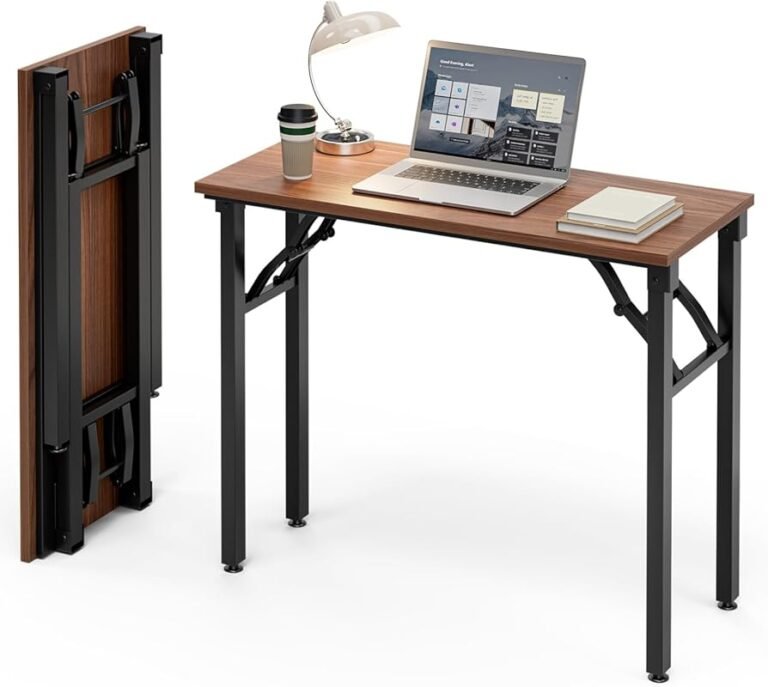
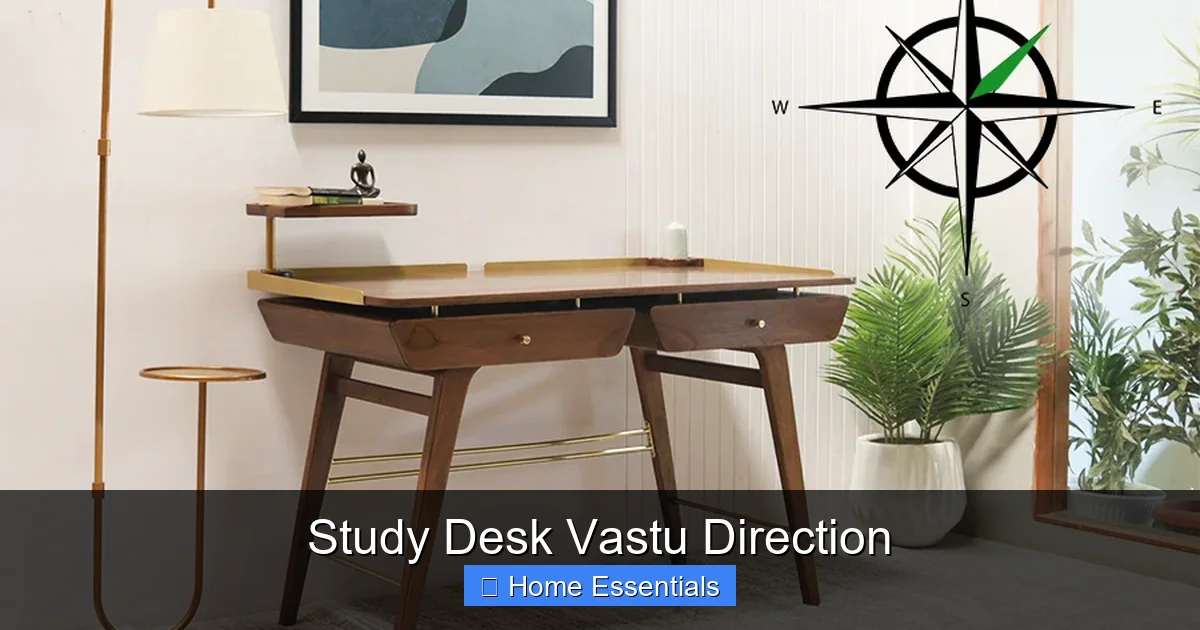
Opt for desks with a rectangular or square shape. These shapes represent stability, order, and the earth element (Prithvi). They provide a solid, predictable surface for your mind to anchor onto. Avoid desks with:
- Irregular shapes: Circular, oval, or free-form desks with many curves can scatter energy and make the mind restless.
- Sharp corners or angles: Especially if they point towards you while you sit. These create “Vedic arrows” of negative energy. If your desk has sharp corners, ensure you are not sitting in their direct line of fire.
- Wedge-shaped or triangular desks: These are highly unstable and aggressive in energy, completely unsuitable for study.
Material Matters: Wood is Best
The material of your desk connects you to an element.
- Wood (Best): Represents the earth and wood elements. It is warm, natural, grounding, and promotes steady growth and learning. Solid wood desks are ideal.
- MDF/Engineered Wood (Good): Acceptable if it’s of good quality and has a natural wood finish. Avoid overly glossy, synthetic-looking laminates.
- Glass (Use with Caution): Glass represents the water element but in a rigid, cold form. It can create mental instability, lack of focus, and “slippery” thinking. If you must use glass, have a solid, opaque mat or runner on top of it to create a grounding layer.
- Metal (Avoid): Metal represents the air and ether elements—cold, sharp, and conductive. A metal desk can make the mind restless, anxious, and prone to over-thinking. It’s the least recommended material for a study desk.
Clutter is the Enemy: The Art of Organization
A cluttered desk is the single biggest Vastu defect you can have, regardless of its direction. Clutter blocks the flow of positive energy (Prana) and represents a cluttered, confused mind. Your desk surface should have only the items you need for your immediate study session.
- Keep it Minimal: Laptop/notebook, pen/pencil, a glass of water, and maybe one small plant or inspirational item. Everything else—old papers, snacks, cosmetics, random gadgets—belongs in drawers or another room.
- Drawer Organization: Keep drawers tidy. Use organizers. A messy drawer creates subtle, underlying mental chaos.
- Wire Management: Tangled wires create “energy knots.” Use cable ties and organizers to keep all cords neat and hidden.
- Daily Reset: Make it a habit to clear your desk completely at the end of each study session. Wipe it down. This ritual signals to your brain that study time is over and prepares a clean slate for next time.
Enhancing the Energy: Colors, Light, and Decor
Once your desk is in the right place and shape, you can amplify its positive effects with thoughtful choices in color, lighting, and decorative items.
Color Therapy for the Mind
Wall colors and desk accessories influence mood. For a study space, choose:
- Light, soothing colors: White, cream, off-white, very light shades of yellow (knowledge), green (growth, harmony), and blue (calm, focus). These colors reflect light, create a sense of space, and are mentally calming.
- Avoid Dark & Aggressive Colors: Deep reds, oranges, blacks, and dark browns are too stimulating, heavy, or aggressive for a study environment. They can increase irritability and fatigue.
- Accent Colors: If you want a pop of color, use it sparingly on a single wall (the wall in front of you is best) or in small décor items. A light yellow or green is ideal.
Illuminating the Intellect
Light is the food for the mind. Poor lighting causes eye strain and mental fatigue.
- Natural Light is King: The best light source is a window (preferably in the North or East) to your left if you face North or East. This provides soft, even, non-glaring light.
- Artificial Light: Use a combination of ambient (ceiling) light and a focused task light (desk lamp). The desk lamp should be placed on the *left side* of your desk if you are right-handed, and on the *right* if you are left-handed, to avoid casting shadows on your work.
- Avoid: Harsh, fluorescent tube lights directly overhead. They flicker and create a stressful, artificial environment. Also, avoid having a bright light source directly behind you, which will cast your shadow onto your work.
Strategic Décor: What to Place on Your Desk
Small items on your desk act as constant energy inputs.
- The North-East Corner: This is the zone of knowledge and spirituality. Place a small, healthy, low-maintenance plant here (like a snake plant,ZZ plant, or a small money plant). You can also place a small, serene idol of Lord Ganesha (remover of obstacles) or Goddess Saraswati (goddess of knowledge). Keep this corner clean and uncluttered.
- The Center: Keep this open and clear. This is the zone of the fire element and health. Do not pile books or objects here.
- What to AVOID on the Desk: Sharp objects (like letter openers, excessive scissors), broken items, dusty idols, mirrors (they reflect and scatter energy), images of violence or sadness, and too many electronic gadgets.
Room-Level Vastu: The Bigger Picture
Your desk doesn’t exist in a vacuum. The Vastu of the entire room, and indeed the whole house, supports or detracts from your study energy.
Ideal Room Location
If you have a choice of rooms for your study, prioritize:
- North-West Room: Excellent for focus, air element, and intellectual pursuits. Supports clear communication and thinking.
- North-East Room: The most sacred zone, excellent for deep study, meditation, and spiritual knowledge. Very positive.
- East Room: Full of vibrant, new-energy, perfect for students.
Avoid using the South-West room as a primary study room, as it is heavy, stable, and associated with earth and fire in a dense form—better for master bedrooms or storage, not active learning.
The Door and Window Balance
A room should have more windows/doors in the North and East to invite positive energy. Heavy windows in the South or West can bring in too much aggressive heat (symbolic or real). Ensure the main door of the study room does not open directly onto the study desk. There should be a buffer zone.
The Power of the Wall You Face
The wall directly in front of your study desk is the “screen” upon which your mind projects. What you see while thinking deeply matters immensely.
- Best: A clean, light-colored wall. This is a blank canvas for your mind. You can hang a single, large, inspiring poster or a vision board here.
- Good: A bookshelf filled with your textbooks and reference books. This subconsciously reinforces the subject matter.
- Avoid: A blank, dark wall (can feel oppressive), a wall with a toilet on the other side, a wall with a large, busy, or chaotic painting, or a wall with a large mirror reflecting clutter back at you.
Practical Examples and Common Mistakes
Let’s translate theory into your specific situation.
Example 1: The Small Apartment Bedroom
Situation: Your bedroom doubles as your study room. The only free wall is the South wall. The East wall has a large window and your bed.
Vastu Solution: This is a challenging layout. You cannot face South. Your best bet is to place your desk against the West wall and face East towards the window. This uses the positive East energy. Ensure the bed is not directly behind your chair (solid wall is still needed). If the West wall is too short, place the desk in the middle of the North wall (facing South is bad, but if you *must* face South due to extreme space constraints, use the mirror and heavy object countermeasures mentioned earlier, and try to have your back to the North wall—a solid wall—instead of a window). Prioritize a solid wall behind you over a perfect facing direction if you must choose.
Example 2: The Dedicated Home Office
Situation: You have a rectangular room with a window on the long North wall and a door on the short East wall.
Vastu Solution: This is ideal! Place your desk on the South wall. This way, you sit with a solid South wall behind you and face North towards the window. You get the brilliant North-facing energy and the solid support. If the South wall is too cluttered, use the East wall: place desk on East wall, face West. Or, place desk on West wall, face East. Any of these three setups (South wall facing North, East wall facing West, West wall facing East) are excellent. Just avoid North wall facing South, and East wall facing West is less ideal than the other options.
Example 3: The College Dorm Room
Situation: You have no control over the room’s orientation. Your bed, desk, and closet are fixed.
Vastu Solution: You must work with what you have. First, identify the compass directions in your room (use a phone compass). Then, rotate your chair on its casters so that when you sit at your desk, your body is oriented to face as close to North or East as possible, even if the desk itself is against the “wrong” wall. Your *facing direction* is more important than the wall the desk is against. Second, create a solid backing. If your back is to a window or door, hang a thick tapestry, blanket, or large poster to create a visual and symbolic solid wall. Third, rigorously apply the clutter-free rule. In a small space, Vastu is all about intentionality and clearing chaos.
The Top 5 Common Mistakes to Avoid
- Mistake 1: Facing South. (Fix: Rotate desk/chair to any other direction).
- Mistake 2: Having an open window, door, or bookshelf behind your chair. (Fix: Create a solid wall barrier).
- Mistake 3: A desk piled high with books, snacks, and random items. (Fix: Clear everything except immediate study tools).
- Mistake 4: Studying under a low-hanging beam or in a sharp corner. (Fix: Move desk away from corner, use false ceiling for beam).
- Mistake 5: Using a glass or metal desk. (Fix: If possible, invest in a simple wooden desk. At minimum, use a large wooden desk pad to cover the surface).
Conclusion
Vastu is not a rigid set of rules, but a flexible guide to harmonizing your personal space with natural energies. The principles of study desk Vastu direction are profoundly logical when you think about them: face a direction that feels open and hopeful (North/East), have a solid support behind you, eliminate visual and physical chaos, and use natural, grounding materials. These changes cost little to nothing but can dramatically alter the feel and function of your study nook. Start with the most critical fix—your facing direction and a solid wall behind you. Then, gradually implement the other tips. Observe the change in your mental state. You might just find that the key to unlocking that A+ or mastering that difficult subject was, quite literally, the direction you were facing all along. Create your space with intention, and let the energy of the North and East fuel your journey of learning.
Frequently Asked Questions
What is the best direction for a study desk according to Vastu?
The most auspicious directions are North and East. Facing North enhances clarity and logical thinking, while facing East brings vitality and new-energy. These directions are believed to support intellectual growth and concentration.
Is it okay if my study desk faces West?
Yes, facing West is considered an acceptable and stable direction for studying. It promotes a methodical and completion-oriented mindset. However, it is not as energetically supportive for learning as North or East.
Why is facing South while studying discouraged?
South is ruled by Yama and is associated with fire and heat. Vastu considers it inauspicious for mental activities as it is believed to increase aggression, anxiety, frustration, and hinder memory and clarity. It is strongly advised to avoid this direction.
What should be behind my study chair?
You should have a solid, sturdy wall immediately behind your chair. This represents stability, support, and security, helping your mind relax and focus. Avoid having a window, door, open space, or bookshelf behind you.
My room layout forces my desk to face South. What can I do?
If you cannot reorient the desk, place a large, solid mirror on the wall in front of you to reflect the South energy back. Also, place heavy, solid objects (like a tall bookshelf) on the South side of the desk to absorb and weigh down the negative energy. However, reconfiguring the setup is the best long-term solution.
Does the shape and material of my study desk matter in Vastu?
Yes. Prefer rectangular or square desks made of wood, as these shapes and materials represent stability, order, and grounding. Avoid irregular shapes, sharp corners pointing at you, glass tops (can cause mental instability), and metal desks (can create restlessness).