Desk Lamp for Home Office
Choosing the right desk lamp for your home office is crucial for comfort and efficiency. The ideal lamp provides adjustable, glare-free lighting that matches your tasks and circadian rhythm. From basic models to smart, integrated designs, understanding key features like brightness, color temperature, and adjustability will help you create a workspace that supports long-term eye health and productivity.
Key Takeaways
- Proper lighting prevents eye strain: A dedicated desk lamp for home office provides focused task lighting, reducing glare and shadows that cause fatigue during long work hours.
- Color temperature matters: Adjustable color temperature (from warm 2700K to cool 6500K) allows you to match light to the time of day, supporting your natural sleep-wake cycle.
- Adjustability is non-negotiable: Look for lamps with flexible arms, heads, and bases to position light exactly where you need it without causing screen glare.
- Brightness should be measured in lumens: For detailed tasks, aim for 450-750 lumens. Dimmable options offer versatility for different activities.
- Smart features add convenience: Voice control, app scheduling, and integration with smart home devices allow for effortless, personalized lighting scenes.
- Consider your desk setup: Ensure the lamp’s footprint and cable management fit your specific desk size and layout to maintain a clean, organized workspace.
- Energy efficiency saves costs: LED lamps use significantly less power and last years longer than traditional bulbs, making them a cost-effective long-term investment.
📑 Table of Contents
- Why Your Home Office Needs a Dedicated Desk Lamp
- Types of Desk Lamps: Finding Your Perfect Match
- Key Features to Look For: Beyond Just “It Lights Up”
- How to Choose the Right Lamp for Your Specific Needs
- Setup & Ergonomics: Getting the Most From Your Lamp
- Advanced Features & The Smart Home Connection
- Maintenance and Long-Term Care
- Conclusion: Light the Way to Better Work
Why Your Home Office Needs a Dedicated Desk Lamp
Let’s be honest: the overhead light in your living room or a single window isn’t enough for a productive home office. When you’re spending hours staring at a screen, reading documents, or doing detailed work, poor lighting is a silent productivity killer. It leads to eye strain, headaches, fatigue, and even long-term vision issues. A proper desk lamp for home office isn’t a luxury; it’s an essential tool for your health and work output.
General room lighting often creates shadows on your desk and causes glare on your computer screen. This forces your eyes to constantly work harder to adjust between different light sources and intensities. Task lighting from a dedicated lamp solves this by providing a direct, controllable beam of light exactly where you need it—on your keyboard, notebook, or project—without flooding the entire room or reflecting off your monitor.
Think of it this way: your eyes are the most important tool you have for work. You wouldn’t use a dull, rusty hammer to build a house. So why use inadequate light for your brain’s primary input? Investing in a good desk lamp is an investment in your comfort, your focus, and your long-term well-being.
The Science of Light and Productivity
Our brains are deeply connected to light. The quality and color of light we’re exposed to directly impact our alertness, mood, and circadian rhythm. In the morning, bright, cool-toned light (like daylight) signals our body to be awake and focused. In the evening, warmer, dimmer light tells us to wind down. A static overhead light can’t adapt to these natural needs. A great desk lamp for home office with adjustable color temperature and brightness mimics this natural progression, helping you stay sharp during work hours and relax after you log off.
Studies in environmental design and ergonomics consistently show that customizable task lighting reduces the number of errors, increases work speed, and dramatically decreases reports of eye discomfort. It’s not just about seeing better; it’s about feeling better and working smarter.
Types of Desk Lamps: Finding Your Perfect Match
The world of desk lamps is vast, but they generally fall into a few key categories. Understanding these types is the first step to finding your ideal match. Your choice will depend on your desk style, primary tasks, and desired tech features.
Visual guide about Desk Lamp for Home Office
Image source: m.media-amazon.com
Traditional Swing-Arm Lamps
This is the classic, industrial-style lamp you might picture in an architect’s studio. It features a heavy base and one or more articulated arms that swing and pivot in multiple directions. The beauty of a swing-arm lamp is its sheer adjustability. You can position the light head high, low, or to the side with precision. They are incredibly durable and offer a timeless aesthetic, often with a single, high-quality bulb. If you need maximum flexibility for a large or cluttered desk, this is a top contender.
LED Panel & Bar Lamps
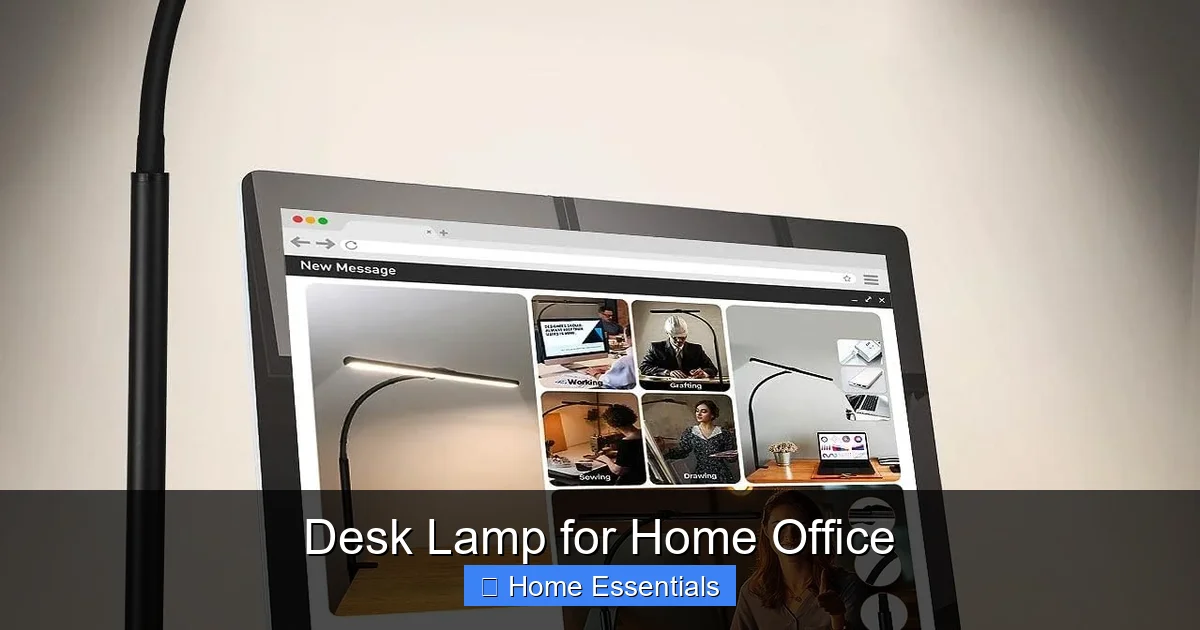
Modern and minimalist, LED panel lamps use a long, rectangular light source instead of a traditional bulb. They provide an even, broad spread of light that minimizes shadows. Many offer touch controls for brightness and color temperature directly on the base or stem. Their sleek design takes up minimal desk space and often looks very clean and contemporary. They are excellent for general desk work, writing, and providing uniform illumination across a wide area.
Clip-On & Task Lamps
For those with extremely limited desk space, a clip-on lamp is a genius solution. These small, lightweight lamps clamp onto the edge of your desk or even the top of your monitor. They are perfect for laptops on small tables or for adding supplementary light to a specific spot without a bulky base. Their light output is usually lower and less adjustable than full-sized lamps, so they serve best as a secondary light source or for very compact setups.
Smart & App-Controlled Lamps
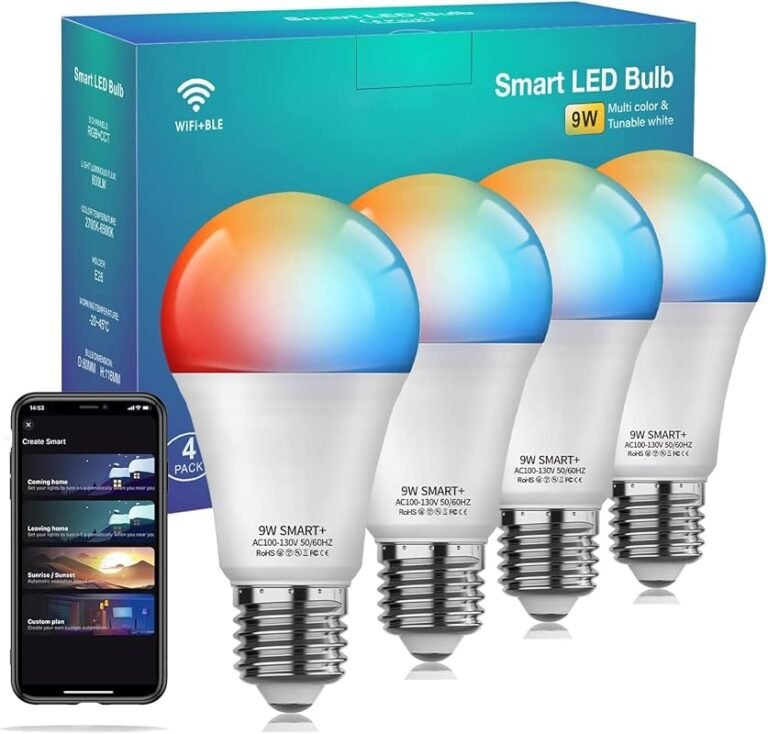
This is where technology meets illumination. Smart desk lamps connect via Wi-Fi or Bluetooth to your phone or Apple Home/Google Assistant ecosystems. You can control brightness, color temperature, and even set schedules or scenes from an app. Some respond to voice commands. Imagine telling your lamp to switch to “focus mode” with cool, bright light in the morning and “evening wind-down” with a warm glow at 7 PM. They represent the pinnacle of personalized lighting.
Key Features to Look For: Beyond Just “It Lights Up”
Not all desk lamps are created equal. To avoid buyer’s remorse, you need to evaluate these critical features. A cheap lamp that flickers or can’t be aimed properly will cause more harm than good.
Visual guide about Desk Lamp for Home Office
Image source: m.media-amazon.com
Brightness (Lumens) and Dimmability
Forget watts; lumens are the measure of actual light output. For detailed work like drafting, reading small print, or intricate crafts, you’ll want a lamp that can put out at least 450-750 lumens. More is not always better; it should be sufficient and controllable. Dimmability is a must-have feature. The ability to fine-tune intensity prevents glare and allows you to match ambient light levels. A lamp that’s too bright in a dark room is just as jarring as one that’s too dim.
Color Temperature (Kelvin Scale)
This describes the “warmth” or “coolness” of white light, measured in Kelvins (K). 2700K-3000K is warm, yellowish light (like a traditional incandescent bulb)—cozy but potentially sleepy for work. 4000K-5000K is neutral, daylight-like white—ideal for most office tasks, promoting alertness without being harsh. 6500K+ is cool, bluish light—excellent for high-focus work but can feel clinical. The gold standard is an adjustable color temperature lamp, letting you shift from a warm 2700K in the late afternoon to a crisp 5000K for morning report writing.
Adjustability and Range of Motion
Look at the lamp’s joints. How far can the head tilt, swivel, and extend? A good desk lamp for home office should have multiple pivot points. You should be able to aim the light downward onto your work without the light source itself reflecting in your computer screen. A common mistake is placing a lamp that can’t be raised high enough, causing you to look up at the bulb, creating glare. Test the motion in your mind: can you get the light head over your left shoulder if you’re right-handed? Can you swing it completely out of the way?
Light Distribution and Glare Control
Where does the light go? A focused, narrow beam is great for a single spot (like a manuscript). A broad, diffuse spread is better for illuminating an entire desk surface. Look for lamps with a diffuser or a specially designed lens that softens the light and reduces harsh shadows. Some have a “hood” or shade that blocks light from shining directly into your eyes or bouncing off your screen. This is crucial for comfort.
Cable Management and Base Design
A rat’s nest of cords on your desk is stressful. Some lamps come with channels or clips to route the power cord neatly along the arm or base. A heavy, stable base is essential for a lamp with a long arm—you don’t want it tipping over when you adjust it. Consider the lamp’s footprint. Does it fit comfortably on your desk without taking up precious real estate needed for your keyboard, notebook, or coffee mug?
How to Choose the Right Lamp for Your Specific Needs
Now that you know the features, let’s match them to real-world scenarios. Your perfect lamp depends entirely on what you actually do at your desk.
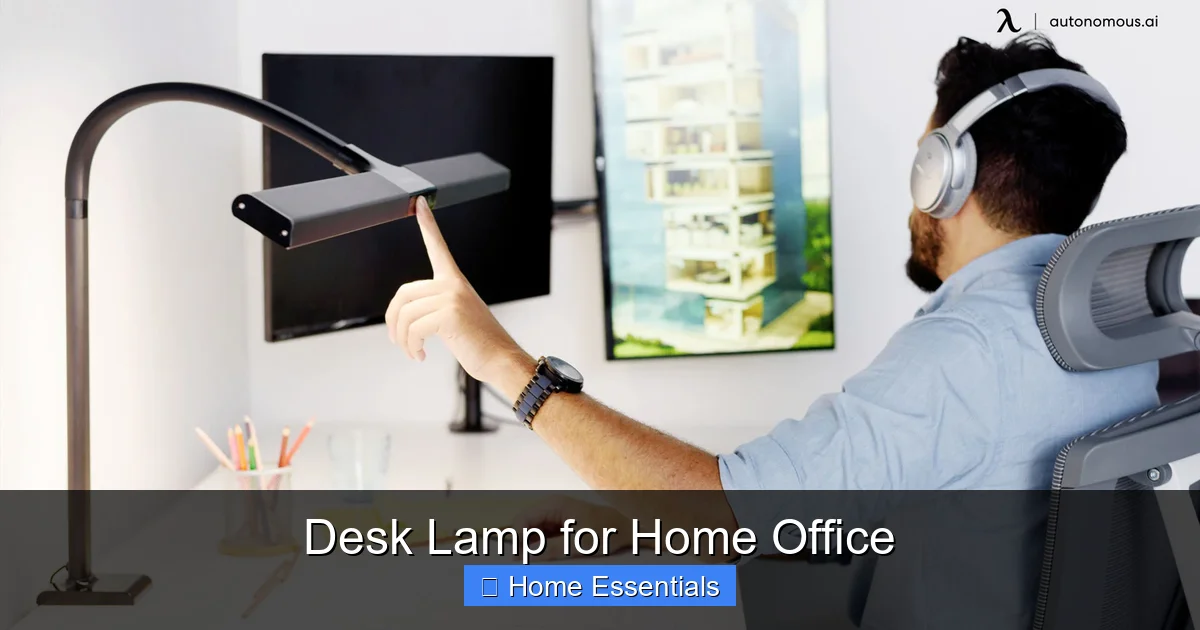
Visual guide about Desk Lamp for Home Office
Image source: cdn.autonomous.ai
For the Digital Creator & Coder
You live in spreadsheets, code editors, and design software. You need high-contrast, shadow-minimizing light that reduces eye fatigue during marathon screen sessions. Prioritize: Adjustable color temperature (4000K-5000K for day, 3000K for evening), high lumens (600+), and excellent glare control. An LED panel lamp or a high-quality swing-arm with a large fabric shade is ideal. Smart features are a huge plus for syncing light with your work schedule.
For the Reader, Writer, or Crafter
Your work involves physical materials: books, paper, fabric, or small components. You need a lamp that can be positioned very close to your work surface without obstruction. Prioritize: Extreme adjustability (long reach arm), a focused beam option, and a high Color Rendering Index (CRI). CRI (a scale of 0-100) measures how accurately a light source reveals colors. For art, sewing, or color-critical work, a CRI of 90+ is essential. A traditional swing-arm with a halogen or high-CRI LED bulb is often perfect.
For the Video Conferencer & Multi-Tasker
Your desk is a command center: laptop for calls, notebook for notes, maybe a tablet. You need light that looks good on camera and doesn’t create distracting reflections. Prioritize: Soft, diffuse light (a panel lamp is great), adjustable brightness to avoid being “blown out” on camera, and a sleek, non-distracting design. Position the lamp slightly in front of you and to the side, not directly above or behind you, for the most flattering on-camera lighting.
For the Minimalist with a Small Desk
Every square inch counts. You need light without the bulk. Prioritize: Small footprint, minimalist design, and possibly a clip-on or monitor-mounted option. A low-profile LED bar lamp or a small clamp lamp that attaches to your desk edge can free up valuable surface space. Ensure any clamp has a protective pad to avoid scratching your furniture.
Setup & Ergonomics: Getting the Most From Your Lamp
Buying the lamp is only half the battle. Placement is everything. A $200 lamp set up incorrectly will be less effective than a $50 one placed perfectly.
The Golden Rules of Positioning
First, identify your dominant hand. If you’re right-handed, place the lamp on the left side of your desk. This prevents your hand from casting a shadow on your work as you write or type. For lefties, it’s the opposite. Second, the light source should be in front of you or slightly to the side, never directly behind you (which puts your head in shadow) or directly above (which causes glare down on your screen). The ideal angle is from the side and slightly in front, pointing down at your workspace at about a 30-degree angle.
Managing Screen Glare
Glare is your enemy. To combat it, ensure the lamp’s light never shines directly onto the screen surface. The lamp head should be positioned so the light hits your desk, not your monitor. If you have a glossy screen, this is even more critical. A lampshade with a dark interior or a hooded design can help direct light downward and prevent upward spill. You can also adjust your screen’s tilt slightly backward to reflect light away from your eyes.
Creating a Balanced Light Environment
Your desk lamp should complement, not replace, your room’s overall lighting. In a very dark room, a single bright lamp will create a harsh contrast between the lit desk and dark surroundings, causing pupil strain. Use your overhead light or a corner floor lamp at a low setting to provide a soft, general wash of light in the room. This “fill light” reduces the contrast and makes the transition from your screen to the rest of the room easier on your eyes. Aim for a layered lighting approach: ambient (room), task (desk lamp), and accent (if desired).
Advanced Features & The Smart Home Connection
The latest generation of desk lamps is borrowing tech from the broader smart home revolution. These features go beyond simple on/off switches.
Voice and App Control
Imagine saying, “Hey Google, set my desk lamp to 50% brightness,” as you’re settling in. Smart lamps connect to platforms like Google Home, Amazon Alexa, or Apple HomeKit. You control them via voice, a smartphone app, or even automation. You can set routines: the lamp gradually brightens to simulate sunrise at 7 AM, shifts to cool white for your 9 AM deep work session, and warms up at 6 PM. This is the ultimate in personalized, hands-free convenience.
Circadian Rhythm Scheduling
Some advanced lamps have built-in circadian rhythm programs. They automatically adjust color temperature and brightness throughout the day to align with natural sunlight patterns. This is a powerful tool for maintaining healthy sleep hygiene and energy levels, especially for night owls or those in regions with little natural light. It’s like having a personal lighting biologist on your desk.
Integration with Other Smart Home Devices
Your lamp doesn’t have to work in isolation. Within a smart home ecosystem, you can create “scenes” that trigger multiple devices at once. A “Good Morning” scene could turn on your smart lamp, raise the blinds, and start your coffee maker. A “Focus” scene might dim other lights in the room and set your desk lamp to a cool, bright intensity. This holistic automation removes friction from your routine, helping you transition into work mode effortlessly.
Maintenance and Long-Term Care
A desk lamp is a long-term companion. With proper care, a good one can last a decade or more.
Cleaning: Dust the base and arm regularly with a soft, dry microfiber cloth. For the shade, follow the manufacturer’s instructions. Fabric shades can often be gently vacuumed with a brush attachment. Plastic or metal shades can be wiped with a damp cloth. Always unplug the lamp before cleaning. Avoid harsh chemicals that could damage finishes or diffusers.
Bulb Replacement: If your lamp uses a standard bulb socket (less common now with integrated LEDs), always replace it with a bulb of the same wattage and type. For integrated LED modules, they are designed to last 25,000-50,000 hours. If an LED fails (rare), the entire module may need replacing, which is often a simple plug-in component. Check the warranty.
Mechanical Care: Periodically check the screws and joints on swing-arm lamps. Tighten them gently if they become loose. Avoid forcing adjustments beyond the lamp’s designed range of motion. A little maintenance keeps your lamp operating smoothly for years.
Conclusion: Light the Way to Better Work
The search for the perfect desk lamp for home office ends with a clear understanding of your needs. It’s not about finding the most expensive or feature-packed model. It’s about finding the tool that seamlessly integrates into your workflow, protects your most valuable asset—your eyes—and adapts to your daily rhythm. Whether you choose a classic adjustable arm, a sleek modern panel, or a cutting-edge smart lamp, prioritize adjustability, proper brightness, and glare control. Your future self, free from headaches and eye fatigue, will thank you for the thoughtful investment in your workspace illumination.
Frequently Asked Questions
How bright should a desk lamp be for a home office?
For most detailed tasks, a lamp with an output of 450-750 lumens is sufficient. Ensure it is dimmable so you can lower the intensity to avoid glare, especially when working in a room with other light sources.
What color temperature is best for a home office desk lamp?
An adjustable color temperature between 4000K (neutral white) and 5000K (cool daylight) is ideal for daytime work, as it promotes alertness. Having the option to shift to warmer 2700K-3000K in the evening helps signal your body to wind down.
Should I get a smart desk lamp or a traditional one?
Choose a smart lamp if you value convenience, automation, and voice control, and want to integrate lighting with your smart home setup. A traditional lamp with a simple switch or dial is perfectly reliable, often more affordable, and has no connectivity dependencies.
How do I position my desk lamp to avoid screen glare?
Place the lamp on the side opposite your dominant hand (right-handed = left side of desk). Angle the light head so it points down at your work surface, not at your screen. The light should come from in front of you or slightly to the side, never from behind or directly above.
Are LED desk lamps better than halogen or incandescent?
Yes, LED lamps are vastly superior. They use a fraction of the energy, produce very little heat, last for tens of thousands of hours, and offer excellent, consistent light quality without the risk of burning out unexpectedly.
What is CRI and why does it matter for a desk lamp?
CRI (Color Rendering Index) measures how accurately a light source reveals colors. A CRI of 90+ is excellent and crucial for tasks where color accuracy is vital, such as graphic design, art, sewing, or makeup application. For general office work, a CRI of 80+ is acceptable.