Do Desk Lamps Help Plants
No, standard desk lamps are generally not effective for helping plants grow. They typically lack the full light spectrum and sufficient intensity (PPFD) that plants need for photosynthesis. While a bright LED desk lamp might keep a low-light, tolerant plant alive temporarily, it won’t support healthy, sustained growth. For serious indoor gardening, dedicated plant grow lights are necessary. However, some modern smart bulbs designed for full-spectrum lighting can be a suitable, space-saving alternative when used correctly with timers.
Key Takeaways
- Spectrum is Key: Plants primarily use blue and red light wavelengths (the PAR spectrum) for growth. Most desk lamps emit light optimized for human vision (warm white/yellow), not plant photosynthesis.
- Intensity Matters (PPFD): Plant growth requires a specific light intensity measured in PPFD (Photosynthetic Photon Flux Density). Desk lamps provide lux for humans, which is a poor metric for plants and is usually far too low.
- Distance and Duration: Even a “bright” desk lamp would need to be impossibly close to a plant for hours to deliver minimal PPFD, risking heat damage and uneven lighting.
- Not All “Grow Lights” Are Equal: Dedicated LED grow lights are engineered for the correct spectrum and intensity. Some high-quality full-spectrum smart bulbs can work for small, low-light plants on desks.
- Heat is a Factor: Traditional incandescent or halogen desk lamps produce excessive heat that can scorch plant leaves, while LEDs are cooler but still often lack the right spectrum.
- Purpose-Built vs. Multi-Use: Using a tool for its intended purpose yields the best results. A desk lamp is for illuminating tasks; a grow light is for fueling plant biology.
- Smart Bulbs Offer a Compromise: Full-spectrum smart bulbs, especially those with adjustable color temperature, can serve a dual purpose for both human workspace lighting and supplementing light for a few hardy plants.
📑 Table of Contents
- Can Your Desk Lamp Really Be a Plant Light? The Short Answer
- The Science of Light for Plants: It’s Not About Brightness to Our Eyes
- Analyzing Common Desk Lamp Technologies for Plant Use
- Critical Factors: Why Even a “Grow” Bulb Might Fail in a Desk Lamp
- Practical Scenarios: When a Desk Lamp *Might* Work (And When It Won’t)
- The Smart Compromise: Leveraging Smart Home Tech for Your Desktop Jungle
- Conclusion: Be Honest About Your Goals
Can Your Desk Lamp Really Be a Plant Light? The Short Answer
You’ve got a lovely pothos or snake plant on your home office desk. It’s sitting there, looking a bit sad, stretching toward the window. Your trusty desk lamp with its bright, focused beam seems like the perfect solution. Just point it at the plant, right? Unfortunately, in most cases, this well-intentioned idea sets you up for disappointment. The fundamental truth is that the light requirements for human vision and plant photosynthesis are completely different. Your desk lamp is meticulously engineered to help you see your keyboard, spreadsheet, or novel with clarity and comfort. Plants, however, don’t care about visual clarity. They care about absorbing specific photons of light to convert carbon dioxide and water into sugars—a process called photosynthesis.
This mismatch in purpose is why the vast majority of standard desk lamps fail as plant grow lights. They emit a spectrum of light that is inefficient for plants and at an intensity that is far too weak to drive meaningful growth. Before you point that lamp, let’s break down the science of light for plants and see exactly what makes a light effective—or ineffective—for your leafy friends.
The Science of Light for Plants: It’s Not About Brightness to Our Eyes
Understanding the Photosynthetic Active Radiation (PAR) Spectrum
When we look at a light bulb, we judge its “brightness” based on lumens or lux. These measurements are weighted toward the sensitivity of the human eye, which peaks in the green-yellow part of the spectrum (around 555 nanometers). Plants, however, have two primary pigment complexes: chlorophyll a and chlorophyll b. These pigments absorb light most efficiently in the blue (400-500 nm) and red (600-700 nm) wavelengths. The green light (500-600 nm) is mostly reflected, which is why plants look green to us. The range of light that plants can use for photosynthesis is called Photosynthetically Active Radiation, or PAR.
Visual guide about Do Desk Lamps Help Plants
Image source: shuncy.com
A light source’s effectiveness for plants isn’t about its total lumens; it’s about how many usable PAR photons it emits per second. This is measured as PPFD (Photosynthetic Photon Flux Density), in units of micromoles per square meter per second (µmol/m²/s). A good desk lamp for reading might provide 300-500 lux at your desk. A low-light plant like a snake plant might be happy with a PPFD of 50-100 µmol/m²/s. But here’s the catch: to achieve that PPFD at the plant’s leaves, you need a light source that emits a high number of PAR photons, not just high lux. A warm white LED desk lamp (2700K-3000K) has a very low ratio of PAR photons to total lumens. You could have a lamp that feels brilliantly bright to you but is practically useless to a plant.
Why Warm White Desk Lamps Are Particularly Ineffective
The color temperature of light, measured in Kelvin (K), is a huge clue. “Warm white” light (2700K-3000K) is rich in red and yellow wavelengths but very poor in the crucial blue spectrum. It’s designed to be cozy and easy on the eyes in the evening. Plants need a balance. Blue light (400-500nm) is absolutely critical for vegetative growth—it promotes strong stems, healthy leaf development, and compact morphology. Without sufficient blue light, plants become leggy, weak, and pale (etiolated), as they desperately stretch toward any source of usable light. A standard warm white desk lamp provides almost none of this vital blue spectrum, guaranteeing weak, stretched growth even if the intensity were somehow sufficient.
Analyzing Common Desk Lamp Technologies for Plant Use
Incandescent & Halogen Bulbs: The Worst Choice
If your desk lamp uses an old-school incandescent or halogen bulb, it’s essentially a tiny, inefficient heater that also gives off some light. These bulbs produce a spectrum that is very red/yellow heavy, with minimal blue output. Over 90% of their energy is wasted as heat, not light. The small amount of light they do produce has a terrible PAR rating. Placing one near a plant will likely cook it before it provides any meaningful photosynthetic benefit. They are a definite no-go for plant lighting.
Visual guide about Do Desk Lamps Help Plants
Image source: files.autoblogging.ai
Standard “Cool White” LED Desk Lamps: A Slight Improvement, But Still Lacking
Modern LED desk lamps are more energy-efficient and run cooler. A “cool white” LED (5000K-6500K) has a much better spectrum for plants because it contains more blue light. This is a significant step up from warm white. However, most LED desk lamps are still designed for task lighting, not plant growth. Their primary goals are high luminous efficacy (lumens per watt) for human brightness and a high Color Rendering Index (CRI) to make colors look natural. They are not engineered to maximize the output of specific red and blue PAR wavelengths. Their total PPF (Photosynthetic Photon Flux, the total PAR output) is usually very low because the LED array is small and not optimized for the plant spectrum. You might keep a very tolerant, low-light plant from dying in a bright spot right under a cool white LED lamp, but you will not see vigorous growth.
Full-Spectrum “Grow Light” LED Bulbs: The Viable Desk Lamp Solution
Here’s where the lines blur. The market is now flooded with LED bulbs explicitly marketed as “full-spectrum” or “grow lights” that fit standard desk lamp sockets (E26/E27). These bulbs are a different beast. They use a mix of LED chips—often including dedicated blue and red chips—to create a spectrum that much more closely mimics sunlight and targets the PAR curve. Brands like GE’s “A19 Grow Light” or similar products from other manufacturers are designed to support plant growth.
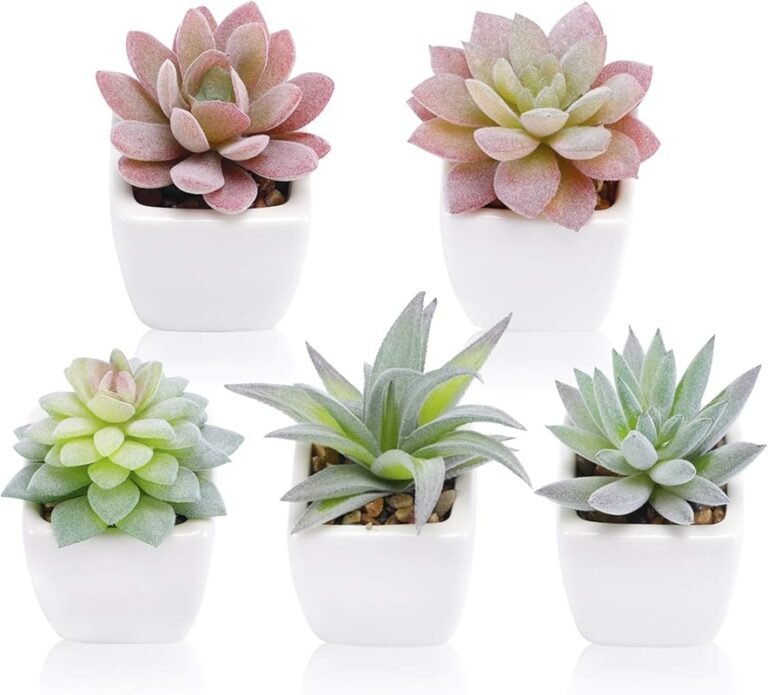
Can you use one of these in your desk lamp? Yes, and it’s one of the few scenarios where a desk lamp can help plants. For a small desk plant like a seedling, a succulent, or a small herb, a 10-20W full-spectrum LED bulb in a flexible gooseneck desk lamp can provide adequate supplemental light, if you manage the distance and duration correctly. The lamp must be placed very close (3-6 inches) above the plant’s foliage and left on for 12-18 hours a day. This setup essentially turns your desk lamp into a miniature, targeted grow light. It’s not ideal for large or multiple plants, but for a single desk companion, it can work.
Critical Factors: Why Even a “Grow” Bulb Might Fail in a Desk Lamp
1. The Intensity (PPFD) and Distance Problem
Light intensity falls off exponentially with distance from the source (the inverse square law). A full-spectrum bulb may claim a certain PPFD at 6 inches, but at 12 inches, that value could be 1/4 of the original. Desk lamps are often positioned to the side or above a human workspace, not directly over a plant canopy. If your lamp’s shade or design diffuses the light widely, the intensity hitting any single plant leaf is drastically reduced. To get enough PPFD, the lamp would need to be perilously close to the plant, which brings us to the next issue.
Visual guide about Do Desk Lamps Help Plants
Image source: files.autoblogging.ai
2. Heat and Physical Space Constraints
Even efficient LEDs produce some heat. A 15W full-spectrum bulb in a small, enclosed desk lamp fixture can build up heat. If you place that lamp mere inches from a plant’s leaves, you risk causing heat stress, leaf scorch, or desiccation. Furthermore, the physical design of most desk lamps—with their adjustable arms and shades—isn’t meant to suspend a light source directly over a plant pot. You’ll struggle to get the optimal, even coverage without casting harsh shadows or having the lamp tip over.
3. Coverage Area and Plant Size
A single desk lamp bulb has a very small effective coverage area. It’s a point source. The light will be intense directly underneath it but will fall off sharply at the edges. This is fine for a single small seedling or a single-leaf cutting. It is completely inadequate for a bushy plant, a cluster of seedlings, or any plant with a wider footprint than the lamp’s shade. Plants on the periphery will receive almost no usable light, leading to uneven, lopsided growth.
Practical Scenarios: When a Desk Lamp *Might* Work (And When It Won’t)
The “Good” Scenario: A Single, Hardy, Low-Light Plant
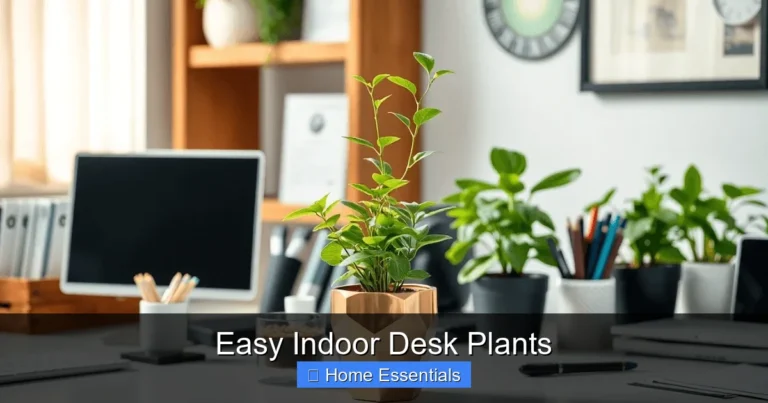
You have a resilient ZZ Plant, a Snake Plant, or a single Pothos cutting in a small pot on your desk. You purchase a reputable 10-15W full-spectrum LED bulb (check for PPFD specs if available) and install it in a flexible, gooseneck LED desk lamp. You position the lamp so the bulb is 4-6 inches directly above the plant’s leaves. You plug the lamp into a smart plug or use a lamp with a built-in timer to provide 14-16 hours of light per day. In this controlled, targeted setup, you can absolutely keep a low-light plant alive and possibly even encourage slow, steady growth. The lamp is essentially a dedicated, miniature grow light for that one spot.
The “Bad” Scenario: Trying to Grow Food or Blooming Plants
You want to grow basil, lettuce, or a cherry tomato plant on your desk. You have a standard 800-lumen LED desk lamp with a “cool white” setting. This will fail. Culinary herbs and leafy greens require much higher light intensities (200-400+ µmol/m²/s PPFD) to produce flavorful, abundant leaves. Blooming plants like African Violets or orchids have specific photoperiod and spectrum needs. A standard desk lamp, no matter how “bright” it seems, cannot deliver the photon density required. Your basil will become leggy, bitter, and stunted. Your tomato will barely grow and will never flower or fruit.
The “Okay, But Not Ideal” Scenario: Using a Smart Bulb for Dual Purpose
You have a Philips Hue or similar smart bulb in your desk lamp. You set it to a high-intensity “cool white” or “daylight” scene (5000K+) for your workday. When you leave the office, you switch it to a lower intensity or a warmer tone. Could this help a plant? Marginally. The spectrum of most high-quality smart bulbs is decent for human-centric lighting but still not optimized for the peak red and blue PAR wavelengths of a true grow light. It’s a supplement, not a primary source. If your desk is already near a bright east or south window, this supplemental light from your task lamp might help balance the light. If your desk is in a dark corner, it won’t be enough. The key is that the bulb must be capable of high brightness at a full-spectrum (5000K+) setting, and you must use a timer to give the plant a consistent photoperiod.
The Smart Compromise: Leveraging Smart Home Tech for Your Desktop Jungle
If you’re committed to keeping plants on your desk, you don’t necessarily need an ugly, industrial-looking clip-on grow light. There is a modern, integrated approach using the very technology that makes your desk lamp “smart.” The evolution of smart lighting technology has inadvertently created a new category of plant lighting.
Look for smart bulbs that explicitly mention “full-spectrum” for plants or have a high Kelvin (5000K-6500K) setting with high lumen output (800+ lumens). Brands like GE, Sylvania, and others offer these. Pair this bulb with a simple, flexible desk lamp that can position it close to the plant. Then, use the bulb’s companion app to create a schedule: turn the light on at 6 AM, off at 10 PM. You can even set it to gradually brighten and dim to simulate sunrise and sunset, which some plants appreciate. This system provides the precise spectrum (if you chose the right bulb), the automation (via the app or a smart plug if the bulb itself isn’t smart), and the aesthetic integration that a standard desk lamp user wants. It’s a perfect example of repurposing consumer tech for a specific, niche need. Just remember, this works for a few small, low-to-medium light plants. For a serious indoor garden, you’ll still need dedicated, high-PPFD grow panels.
Conclusion: Be Honest About Your Goals
So, do desk lamps help plants? The nuanced answer is: only very specific desk lamps, used in very specific ways, for very specific plants. The average desk lamp with a standard warm white bulb is useless and potentially harmful. A cool white LED lamp is a tiny bit better but still inadequate. The only truly viable path is using a dedicated full-spectrum “grow” LED bulb in a flexible desk lamp fixture, positioned very close to a small, tolerant plant, and run on a strict timer for long hours.
For anyone looking to grow herbs, vegetables, or flowering plants indoors, investing in proper grow lights is non-negotiable. They are designed to deliver the correct spectrum and intensity efficiently. However, for the desk-dweller who just wants to keep a tiny succulent or pothos cutting alive and maybe encourage a new leaf or two, the smart bulb/desk lamp combo is a clever, space-saving hack that marries form and function. The key is understanding the biology of your plant and the physics of light. Don’t guess—measure if possible (with a cheap PPFD meter), research your plant’s specific light requirements, and choose your lighting tool accordingly. Your plants will thank you with vibrant, healthy growth.
Frequently Asked Questions
Can any LED desk lamp work for plants?
No. Only LED desk lamps using bulbs specifically designed as “full-spectrum” or “grow lights” have a suitable light spectrum. Standard “cool white” or “daylight” LED bulbs lack the optimal balance of red and blue wavelengths and are usually not intense enough.
How close should a desk lamp be to a plant?
If using a small full-spectrum LED bulb (10-15W), the lamp should be positioned just 3-6 inches above the plant’s foliage to deliver adequate intensity. You must monitor for any signs of heat stress or leaf scorch and adjust accordingly.
How many hours a day should I leave my desk lamp on for plants?
Most plants need 12-18 hours of light per day. Use a timer (smart plug or lamp timer) to provide a consistent photoperiod. Mimicking a natural day/night cycle is crucial for plant health, and leaving the light on 24/7 can actually harm some plants.
Will a desk lamp help a plant grow flowers or fruit?
Almost certainly not. Flowering and fruiting require very high light intensities and sometimes specific red light spectra that only high-powered, dedicated grow lights provide. A desk lamp setup is only suitable for maintaining foliage on low-light plants.
Is a smart bulb in a desk lamp better than a regular grow light?
For aesthetics and dual-use (office lighting + plant supplement), yes. For pure growing power and efficiency, no. Dedicated grow lights have higher PPFD, better spectrum optimization, and are designed to cover a proper area. A smart bulb is a compromise for a single small plant.
What’s the biggest mistake people make using desk lamps for plants?
Assuming brightness to the human eye equals brightness to a plant. They place a standard lamp too far away, for too few hours, with the wrong spectrum, and wonder why the plant is still leggy and pale. The focus must be on PAR spectrum and PPFD, not lumens or lux.