What Is a Plantation Desk
A plantation desk is a compact, multi-functional desk characterized by a hinged top that flips down to reveal a work surface, with all storage concealed behind doors or drawers. Originating from 19th-century Southern estates, its space-saving design makes it a perfect fit for modern small-space living, home offices, and living rooms. Its timeless blend of utility and elegant craftsmanship offers a sophisticated solution for hiding clutter while providing a dedicated workspace.
Key Takeaways
- Definition: A plantation desk is a compact desk with a hinged “flip-top” lid that closes to conceal the work surface and all internal storage, creating a clean, furniture-like appearance when not in use.
- Historical Roots: The design originated in the American South on cotton plantations, where space was limited and multifunctional furniture was essential for writing, storage, and display in one unit.
- Key Feature: Its signature element is the full-length, hinged desktop that lifts or swings down, often supported by a chain or arm, revealing a organized interior with drawers, cubbies, and nooks.
- Material & Craft: Traditionally built from durable woods like mahogany, oak, or cherry, quality pieces feature solid wood construction, dovetail joints, and smooth-operating hardware.
- Modern Versatility: Beyond a home office, it serves as a stylish console, entryway table, or bedroom vanity, ideal for studio apartments, living rooms, and any space needing hidden storage.
- Buying Tip: Inspect the hinge mechanism and drawer slides for smooth operation. For antique pieces, check for warping, woodworm damage, and the integrity of the original finish.
- Care Essential: Regular dusting with a soft, dry microfiber cloth is crucial to prevent grit buildup. Avoid harsh chemicals; use furniture-specific polish sparingly to maintain the wood’s patina.
📑 Table of Contents
- Introduction: The Enduring Allure of a Hidden Workspace
- A Glimpse into History: From Southern Plantations to Urban Apartments
- Defining Features: What Makes a Desk a “Plantation” Desk?
- Materials and Craftsmanship: The Soul of the Piece
- Modern Uses: Why This Old Design Fits Perfectly in Today’s Home
- Buying Guide: Finding Your Perfect Plantation Desk
- Care and Maintenance: Preserving Your Investment
- Styling Your Plantation Desk: Blending Old and New
- Conclusion: More Than Just a Desk
Introduction: The Enduring Allure of a Hidden Workspace
Imagine a piece of furniture that looks like a beautiful, closed cabinet or side table, but with a secret. With one smooth motion, its top flips down, and a fully functional workspace unfolds before you, complete with organized storage for all your essentials. This is the magic of the plantation desk. It’s more than just a desk; it’s a masterclass in space efficiency and timeless design. In our modern world, where homes are often compact and clutter is the enemy, this clever piece offers a elegant solution. It respects your living space by hiding the evidence of work, bills, and projects the moment you’re done, transforming a utilitarian area back into a serene, stylish room. Whether you’re a remote worker in a studio apartment, a student in a shared house, or simply someone who appreciates beautiful, multifunctional furniture, the plantation desk deserves a closer look. It bridges the gap between classic craftsmanship and contemporary living needs.
A Glimpse into History: From Southern Plantations to Urban Apartments
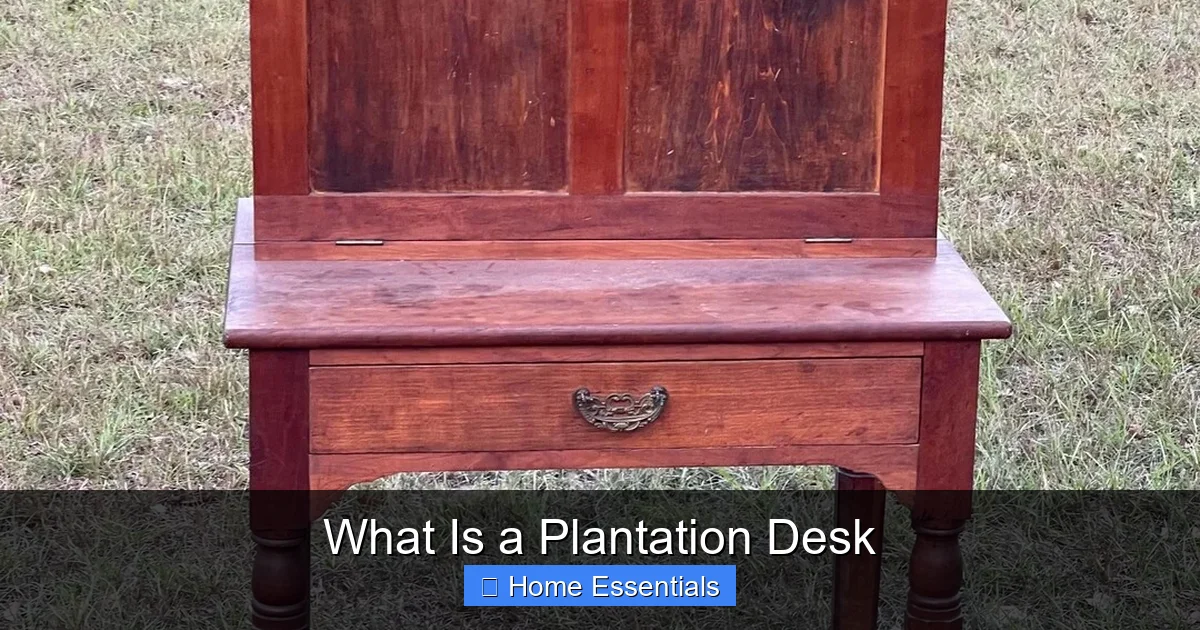
The name “plantation desk” leaves little to the imagination about its origins. This style of furniture was born in the American South during the 19th century, primarily on large agricultural estates—cotton, tobacco, and sugar plantations. These were sprawling, often remote properties where the main house served as the central hub for all family activities, including correspondence, record-keeping for the estate, and personal business.
Visual guide about What Is a Plantation Desk
Image source: i.etsystatic.com
The Need for Multifunctional Furniture
In these households, a dedicated, permanent home office was a luxury. Rooms had to serve multiple purposes. A family might use a parlor for receiving guests, playing music, and conducting business. A plantation desk was the perfect answer. Its closed form allowed it to sit against a wall, looking like a respectable piece of storage furniture, blending seamlessly into formal rooms. When the master of the house or a family member needed to write a letter, settle accounts, or read, they could simply open the top and have an instant, private workspace. All papers, ink, quills, and ledgers could be neatly stowed away inside, keeping the room’s aesthetic pristine for social calls. It was furniture that understood the need for privacy and order in a busy, public-facing domestic life.
Evolution of a Classic
While the core design remained, the plantation desk evolved. Craftsmen in different regions added their own touches—some with elegant serpentine fronts, others with simple, clean lines. The materials often reflected local resources: mahogany was prized for its dark, rich finish and durability, while oak and cherry were also common. After the Civil War, as the plantation system waned, these sturdy, well-made pieces found their way into urban homes and offices. Their inherent practicality and handsome appearance ensured their survival. Today, the design is celebrated not for its historical context alone, but for its brilliant, space-conscious functionality that feels utterly contemporary. Modern manufacturers continue to produce them, and antique dealers maintain a robust market for these timeless pieces.
Defining Features: What Makes a Desk a “Plantation” Desk?
You might see desks with flip tops or tambour doors and wonder if they’re all the same. While variations exist, a true plantation desk has a specific combination of features that set it apart. Recognizing these characteristics will help you identify an authentic piece, whether vintage or new.
Visual guide about What Is a Plantation Desk
Image source: benchfurniture.com.au
The Signature Flip-Top Lid
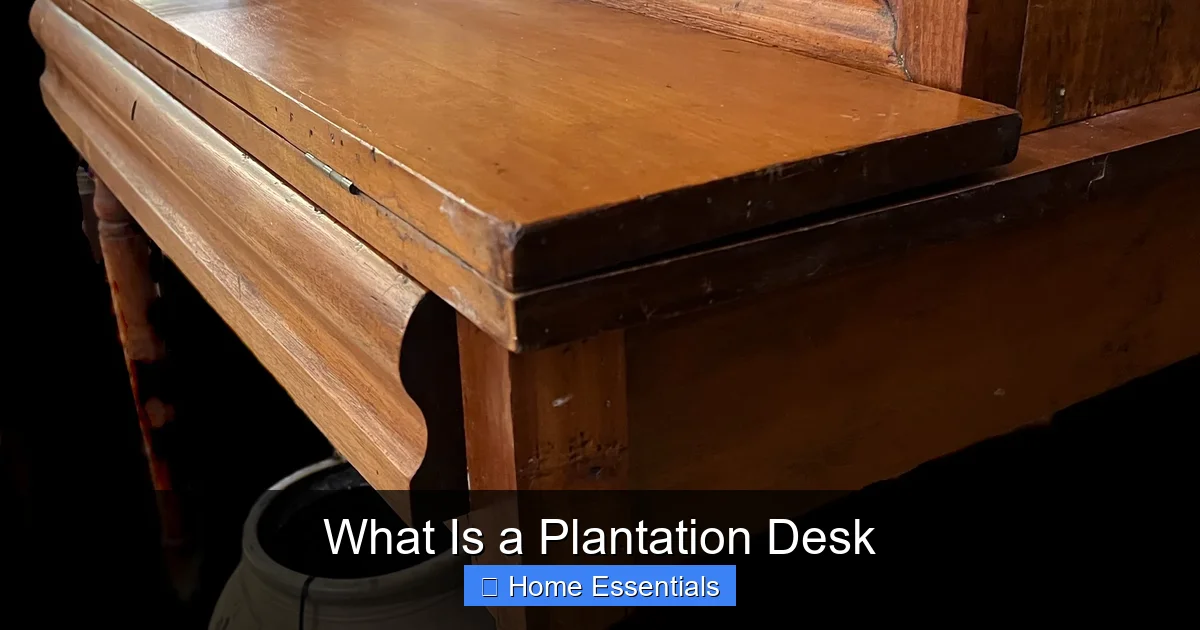
This is the non-negotiable heart of the design. The entire desktop surface is a single, continuous panel hinged at the back or sometimes the front. When lowered, it forms a perfect, flat writing surface, typically supported by a chain, a metal arm, or a wooden prop. When raised, it completely covers the work area and the front of the desk, masking any internal compartments. The action should be smooth and deliberate, a satisfying mechanical movement. A wobbly or stiff hinge is a sign of poor maintenance or construction.
Concealed Storage Compartments
Behind the flip-top lies the organizational heart. Unlike a standard desk with an open surface, a plantation desk’s interior is a carefully planned puzzle of storage. You’ll typically find:
- Pigeonholes or Cubbyholes: Open compartments perfect for vertically storing letters, folders, and notebooks.
- Drawers: Often one or two shallow drawers for pens, stamps, and other small tools. These may have simple brass or wooden pulls.
- Deep Cabinets: Larger enclosed spaces for bulkier items like books, paper reams, or personal files.
- Secret Compartments: Higher-end antique models sometimes featured hidden drawers behind a false panel, a fun nod to the espionage and secrecy of the era.
The interior layout varies, but the golden rule is: everything is hidden when the top is down.
The Tambour Door or Paneled Front
Many plantation desks feature a tambour door—a flexible, horizontal slatted door that rolls or slides into the side of the desk casing. This provides access to deeper interior shelving while maintaining a sleek front. Others have traditional paneled doors that swing open. The choice often depends on the period and region of manufacture. The tambour mechanism is a marvel of 19th-century engineering and should operate smoothly without derailing.
Scale and Proportion
These desks were designed to be substantial yet not overpowering. They are typically narrower and taller than a standard modern desk, often with a height around 30-36 inches (76-91 cm) and a depth of 18-24 inches (46-61 cm). Their vertical emphasis makes them excellent for narrow walls or small rooms. The overall silhouette is often rectilinear and elegant, with a base that may rest on elegant turned legs or a simple bracket foot.
Materials and Craftsmanship: The Soul of the Piece
The material and build quality of a plantation desk determine not only its aesthetics but its longevity and value. Understanding wood types and construction methods is key to making a wise purchase.
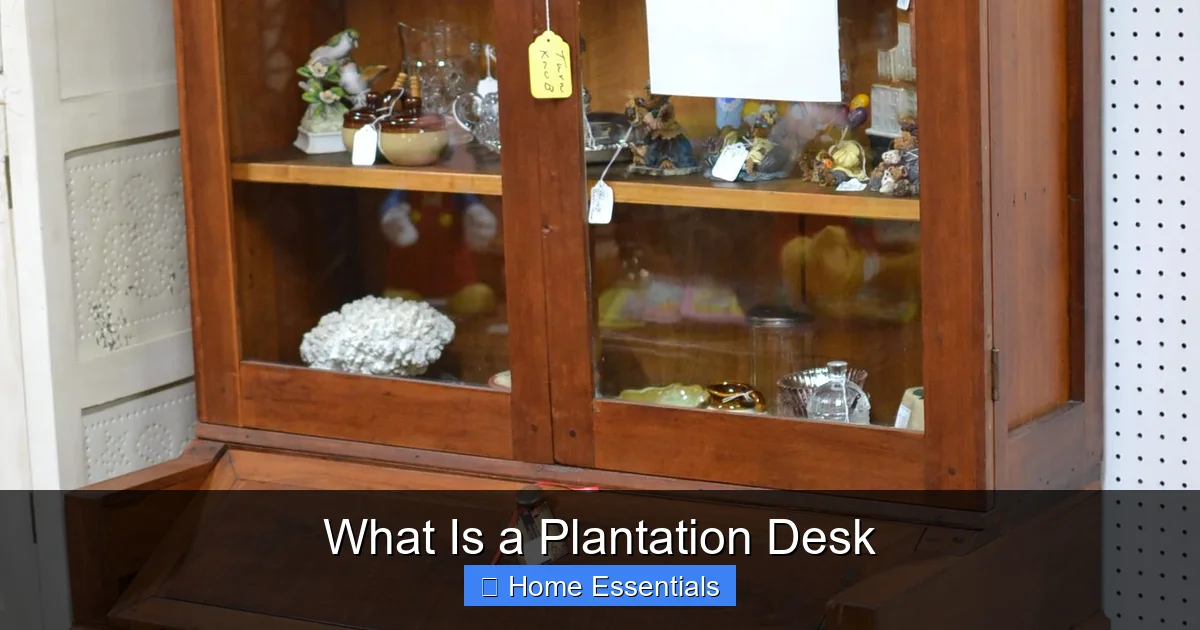
Visual guide about What Is a Plantation Desk
Image source: arkantiques.org
Classic Wood Choices
Antique and high-end reproduction plantation desks are almost always made from solid hardwoods.
- Mahogany: The undisputed king. Its reddish-brown hue deepens with age, and its interlocking grain makes it incredibly durable and resistant to wear. It was the preferred wood for Southern furniture due to its availability and prestigious look.
- Cherry: Known for its warm, reddish tones that also mellow beautifully over time. Cherry is a bit softer than mahogany but still very sturdy and often used in finer New England and Mid-Atlantic styles.
- Oak: Whether red or white, oak offers a pronounced grain pattern. It was widely used for its strength and was a staple in American furniture-making. Quarter-sawn oak, with its unique ray fleck pattern, is particularly prized.
- Walnut: A darker, sophisticated alternative with a rich, chocolate-brown color. It’s a dense, stable wood that finishes superbly.
Vintage desks may also feature secondary woods like pine for interior shelves or drawer sides, but the primary case and top should be a hardwood.
Construction: What to Look For
Examine the desk’s anatomy. Quality construction is a testament to its durability.
- Joinery: Look for dovetail joints on drawers—a sign of skilled craftsmanship. Mortise-and-tenon joints for the main frame are exceptionally strong. Avoid desks held together primarily by staples or screws visible from the outside.
- Drawer Slides: Antique pieces will have wooden runners. They should be smooth but may have a bit of friction. Modern reproductions often have metal ball-bearing slides. Test them; they should operate silently and fully extend.
- Finish: A good original finish on an antique will have a warm patina, possibly with some crazing (fine cracks) or minor wear that tells its story. It should not be sticky, peeling, or bubbly. A new piece should have a smooth, even coat without drips or rough spots.
- Hardware: Original brass or iron hardware adds value. Check that hinges are secure and the flip-top chain/arm is intact and functional. Replacement hardware isn’t necessarily bad but should be period-appropriate if seeking authenticity.
Modern Uses: Why This Old Design Fits Perfectly in Today’s Home
The plantation desk’s genius is its timeless adaptability. Its core problem-solving feature—hiding a workspace—is more relevant now than ever. In an age of open-plan living and constant digital connectivity, the need to create physical and visual boundaries between work and rest is paramount.
The Ultimate Small-Space Home Office
For apartment dwellers, studio owners, or anyone with a nook instead of a spare room, the plantation desk is a dream. Its narrow footprint tucks into a hallway, under a window, or into a bedroom corner. When the workday ends, you flip the top down, stash the laptop, and the room instantly reverts to a peaceful living space. No more “office eyesore” dominating your sanctuary. It’s a dedicated zone that politely disappears.
A Stylish Entryway or Console
Place a plantation desk in your foyer. Use the interior to stash mail, spare keys, and charging cables. The closed top provides a perfect spot for a decorative vase, a tray for your wallet and keys, or a lamp. Guests never see the clutter; they just see a beautiful, welcoming piece of furniture. It functions as a command center that maintains a guest-ready appearance.
Living Room Media or Display Unit
Its cabinet-like appearance makes it an excellent alternative to a standard media console. The interior can hide gaming consoles, routers, and remotes, while the top can hold a soundbar or a few decorative objects. When not watching TV, the flip-top can be down, presenting a clean, uncluttered wall.
Bedroom Vanity or Dressing Table
With a mirror placed on the wall above or a small mirror kept inside, a plantation desk becomes a charming, organized vanity. The drawers and cubbies are perfect for makeup, jewelry, and skincare products. The closed design keeps morning routines tidy and private.
Buying Guide: Finding Your Perfect Plantation Desk
Whether you’re hunting at an antique mall or browsing online retailers, a discerning eye is your best tool. Here’s how to evaluate options for your home and budget.
Antique vs. New Reproduction vs. Modern Interpretation
- Antique (Pre-1900): Offers history, character, and often superior solid wood construction. Look for signs of authentic age: dovetail marks made by hand (irregular), old hardware, and a finish with natural wear. Be prepared for potential repairs, warping, or woodworm holes. It’s an investment. Tip: Always ask about the desk’s structural integrity, especially the hinge points and any previous repairs.
- Vintage (Mid-20th Century): Desks from the 1940s-1970s can be great value. They often use quality materials but with more streamlined, less ornate designs. Look for brands like Henredon or Drexel. Construction is still solid, often with better hardware than modern mass-produced pieces.
- New Reproduction: Made today to mimic antique styles. Can be all solid wood, a mix of solid and veneers, or entirely manufactured wood (MDF). Check specifications carefully. A reputable maker will use solid wood for the case and top, with quality hardware. This is the best route for a flawless piece with consistent dimensions.
- Modern Interpretation: These take the core flip-top concept and apply contemporary aesthetics—clean lines, minimalist hardware, mixed materials like metal and wood, or bold paint colors. They function identically but look entirely current.
Critical Inspection Points
Regardless of age, test these elements:
- The Flip Mechanism: Open and close it 5-10 times. It should move smoothly, stay open securely at a usable angle (usually 70-90 degrees), and close flush without forcing. Listen for grinding or see for sagging.
- Storage Function: Open every drawer and door. They should operate fully without sticking. Check for splinters inside or rough edges that could snag papers.
- Stability: Give the desk a gentle shake. There should be no significant rattle or flex. A solid piece feels planted and immovable.
- Wood Condition: Look for cracks, especially along the grain on the top or near hinges. Check the back and underside—these areas often reveal repairs, warping, or woodworm activity (small pin-sized holes and fine sawdust-like frass).
- Measure Your Space: Don’t just note the desk’s width and depth. Measure the swing arc of the flip-top. You need clearance in front for it to open fully. Also, consider the path you’ll take to sit at it—ensure there’s room for your chair to pull out.
Budgeting Realistically
Prices vary wildly. A small, mass-produced MDF version might cost $200-$400. A solid wood reproduction from a quality furniture store ranges from $800-$2,500+. A desirable antique in good condition can start at $1,500 and soar into the tens of thousands. Set a budget and prioritize: for daily use, invest in the best mechanism and solid wood you can afford. For a purely decorative piece, a reproduction may suffice.
Care and Maintenance: Preserving Your Investment
A plantation desk, especially a solid wood one, is built to last generations with proper care. The principles are simple but crucial.
Dusting: Your First and Most Important Defense
Dust is abrasive. It contains tiny particles that, when left to accumulate, act like sandpaper on your finish. Dust your desk at least once a week, or more in dry climates. Always use a soft, dry microfiber cloth. Its electrostatically charged fibers grab and hold dust particles without scratching. Microfiber is superior to cotton, which can leave lint and is less effective at trapping fine dust. For a deeper clean, slightly dampen the microfiber cloth—never spray liquid directly on the wood—and wipe with the grain. Immediately dry with a second clean, dry cloth. Learn more about the why microfiber is better than cotton for dusting wood.
Polishing and Conditioning
Polish is not a cleaner; it’s a protector and enhancer. Over-polishing can cause buildup. For antique finishes with a natural patina, often less is more. Use a high-quality, beeswax-based furniture polish or a dedicated wood conditioner 2-4 times a year. Apply a small amount to a soft cloth, rub in circular motions, let it sit for a few minutes, and buff to a soft sheen with a clean section of the cloth. This nourishes the wood and adds a protective layer against moisture. Avoid silicones and oils that can penetrate and degrade the finish over time.
Protecting from the Elements
Wood hates extremes. Keep your desk away from direct sunlight (fading), radiators or fireplaces (drying and cracking), and humidifiers or air conditioners blasting directly on it (swelling and shrinking). Use coasters under all drinks. If the desk is in a sunny spot, consider UV-filtering window film. For antique pieces, maintain a stable indoor humidity level between 40-55%.
Dealing with Spills and Stains
Act fast. Blot (don’t rub!) liquid immediately with an absorbent cloth. For sticky residues, a cloth dampened with a tiny bit of mild dish soap diluted in water can be used, followed immediately by a damp clean cloth and then a dry one. Always test any cleaning solution on an inconspicuous area first, like the back or underside.
Caring for the Mechanism
Twice a year, check the flip-top hinge, chain, or arm. Ensure screws are tight. If it’s a metal chain, you can apply a tiny drop of a clear, dry lubricant like PTFE (Teflon) spray to the pivot points if it begins to stiffen. Never use oil, as it will attract dust and gum up the works. For a properly maintained cleaning tool, remember to wash your microfiber cloths frequently to keep them effective and hygienic.
Styling Your Plantation Desk: Blending Old and New
Because of its classic, furniture-forward look, a plantation desk can anchor a room’s style. Here’s how to make it shine in a contemporary setting.
Embrace Contrast
The rich, traditional lines of a mahogany plantation desk pair beautifully with modern, minimalist surroundings. Place it against a stark white wall and pair it with a sleek, transparent acrylic chair or a simple mid-century modern chair in a contrasting color like teal or mustard. This juxtaposition highlights the desk’s beauty without making the room feel dated.
Create a Cohesive Traditional Look
If you prefer a more classic or cottage aesthetic, style it with other vintage or traditional pieces. A brass banker’s lamp is the iconic companion. Add a few leather-bound books, a vintage globe, and a small potted fern or ivy. A woven basket inside one of the lower cubbies can hold magazines or knitting supplies, maintaining the hidden-storage principle.
Functional Decor on the Closed Top
The closed top is your decorative stage. Think less is more. A single statement object works best: a sculptural ceramic vase, a small tray with a candle and a few precious stones, or a framed photo. Avoid cluttering this surface; its clean lines are part of its appeal. A small, low-profile lamp can add ambient light without overwhelming the space.
Organizing the Interior with Purpose
Use the internal organization to your advantage. Assign zones: one cubby for active projects, a drawer for stationery and tech accessories, a deeper shelf for reference materials. Use small trays or boxes inside to corral loose items like paperclips, USB drives, and stamps. This ensures that when you close the top, everything has its place, and true order is achieved.
Conclusion: More Than Just a Desk
The plantation desk is a testament to intelligent design that transcends eras. It was born from a genuine need for order, privacy, and beauty in a bustling household, and that same need resonates deeply in our 21st-century lives. It offers a rare promise: a dedicated, organized workspace that does not have to dominate your home’s visual landscape. It is a quiet diplomat between productivity and peace. Whether you choose a historic antique with a story to tell or a crisp new reproduction ready for your projects, you are investing in a piece of furniture that works as hard as you do—but only when you need it. It’s a lesson in restraint, in hidden strength, and in the enduring power of a well-considered solution. In a world of open shelves and visible everything, the plantation desk’s greatest luxury is its ability to simply, elegantly, disappear.
Frequently Asked Questions
What is the difference between a plantation desk and a roll-top desk?
The key difference is the mechanism. A plantation desk has a single, hinged flip-top lid that opens straight down. A roll-top desk has a flexible tambour door that rolls or slides up into the top of the desk casing to reveal the work surface. Both hide the workspace, but the roll-top’s door is separate from the desktop itself.
What is the best wood for a plantation desk?
For durability and beauty, solid hardwoods like mahogany, cherry, and oak are traditional favorites. Mahogany is exceptionally stable and develops a rich patina. Cherry offers warm tones that deepen. Oak is very sturdy with a distinctive grain. For a modern piece, sustainably sourced hardwoods or high-quality veneers over stable cores are good options. Avoid desks made primarily of particleboard for long-term use.
Are plantation desks worth buying used or antique?
Absolutely, if you value character and solid construction. Antique and vintage desks are often made from denser, old-growth wood and feature hand-cut joinery. However, you must inspect carefully for structural issues like warped tops, loose hinges, cracks, or woodworm damage. A well-preserved piece can be a fantastic investment, while one needing extensive repair may not be cost-effective.
How much weight can a plantation desk hold?
A sturdy, solid wood plantation desk can easily support 50-100 lbs (23-45 kg) on its closed top for decorative items. When open, the desktop is designed for typical desk use: a computer, monitor, books, and writing tasks—generally up to 40-60 lbs (18-27 kg) distributed evenly. Always check manufacturer specs and avoid placing extremely heavy, point-load items (like a full aquarium) on it.
Do plantation desks require assembly?
It depends. Antique and vintage pieces are fully assembled. New reproductions shipped from retailers often require some assembly, typically attaching the legs or base to the main desk case. This is usually straightforward with basic tools. Always check the product description. Modern flat-pack versions will require more extensive assembly.
Can a plantation desk be used as a dining table or console?
While its closed form makes it an excellent console or entryway table, it is not designed as a primary dining table. The flip-top mechanism and interior storage make it less stable for heavy, dynamic dining use (pulling chairs, leaning on edges). Its height (usually 30-36″) is also taller than standard dining tables (28-30″). It’s best suited for light dining, like a quick breakfast for one or two, or as a buffet server where plates are placed on top, not sat upon.