Desk Lamp for Kids Room
Choosing the right desk lamp for your child’s room is crucial for their eye health, study focus, and room decor. It’s not just about light; it’s about smart, safe illumination. Look for adjustable brightness, stable bases, and cool-to-touch designs. The right lamp can turn a simple desk into a productive and inspiring haven for homework and creativity.
Key Takeaways
- Safety is Non-Negotiable: Prioritize lamps with UL/CE certification, cool-to-touch surfaces, stable bases to prevent tipping, and secure, enclosed cords to protect curious hands.
- Adjustable Brightness is Key: A dimmable LED lamp allows you to tailor light for reading, writing, or using a tablet, preventing eye strain from overly harsh or dim light.
- Color Temperature Matters: Choose lamps with a color temperature around 4000K-5000K (neutral to cool white) for task lighting to enhance alertness and focus during study time.
- Stable & Flexible Design: A weighted base and an adjustable arm (pivot, tilt) ensure the light can be positioned perfectly without wobbling or falling over during use.
- Fun Design Motivates: Involving your child in choosing a lamp with a color or theme they love (space, animals, cars) can make their study space feel personal and inviting.
- Easy to Clean & Maintain: Opt for simple designs with few crevices. A soft, damp cloth or a microfiber duster for electronics keeps dust off the lamp without scratching surfaces.
- Proper Placement is Crucial: Position the lamp to the side of the child’s dominant hand (left side for right-handers) to avoid shadows on their work surface and reduce glare.
📑 Table of Contents
- Why a Special Desk Lamp for a Kids Room is a Must-Have
- Essential Features to Look For: Your Checklist
- Top Types of Kids Desk Lamps: Pros and Cons
- Smart Lighting and Modern Tech: Is It Right for Your Kid?
- Placement, Setup, and Creating the Perfect Study Nook
- Maintenance, Cleaning, and Longevity Tips
- Conclusion: Lighting the Path to Success
Why a Special Desk Lamp for a Kids Room is a Must-Have
You might think any old lamp will do for your child’s desk. But think again. A child’s eyes are still developing, and their study habits are being formed. The lighting in their personal workspace has a direct impact on their visual comfort, concentration levels, and even their posture. A standard overhead light or a cheap, brittle clip-on lamp simply doesn’t cut it. Investing in a proper, child-friendly desk lamp is one of the most straightforward and impactful upgrades you can make to support your child’s learning and well-being.
Poor lighting is a silent contributor to eye strain, headaches, and fatigue. When a child squints to see their homework or works under a dim, yellow-toned bulb, their eyes have to work overtime. This leads to frustration and makes sitting down to study feel like a chore. A dedicated task lamp provides focused, adjustable light exactly where it’s needed, creating a clear boundary between playtime and worktime within their room. It signals to their brain that it’s time to focus. Furthermore, a well-lit workspace encourages better posture, as they don’t have to crane their neck or hunch over to see their books or worksheets properly.
The Eye Health Factor
Children’s eyes are more sensitive to light than adults’. Their pupils are larger, and their lenses are clearer, allowing more light to enter the eye. This means harsh, flickering, or overly bright lights can be particularly bothersome and potentially damaging over time. A quality kids’ desk lamp will provide steady, flicker-free illumination. Many modern LED options also boast high CRI (Color Rendering Index) scores, meaning they display colors more accurately—a subtle but important factor for art projects and accurately seeing textbook diagrams.
Blue light emission is another hot topic. While all LED lights emit some blue light, choosing a lamp with a warmer color temperature (more yellow/red tones) for evening use can help support healthy melatonin production. Some advanced lamps even offer specific “reading” or “night light” modes with minimized blue light. It’s about having control, which is why adjustability is a cornerstone feature we’ll explore further.
Essential Features to Look For: Your Checklist
Walking into a store or browsing online for a desk lamp can be overwhelming. Shapes, sizes, colors, and tech specs—it’s a lot. To cut through the noise, focus on these non-negotiable features that separate a great kids’ lamp from a mediocre one. Print this checklist and tick the boxes as you shop.
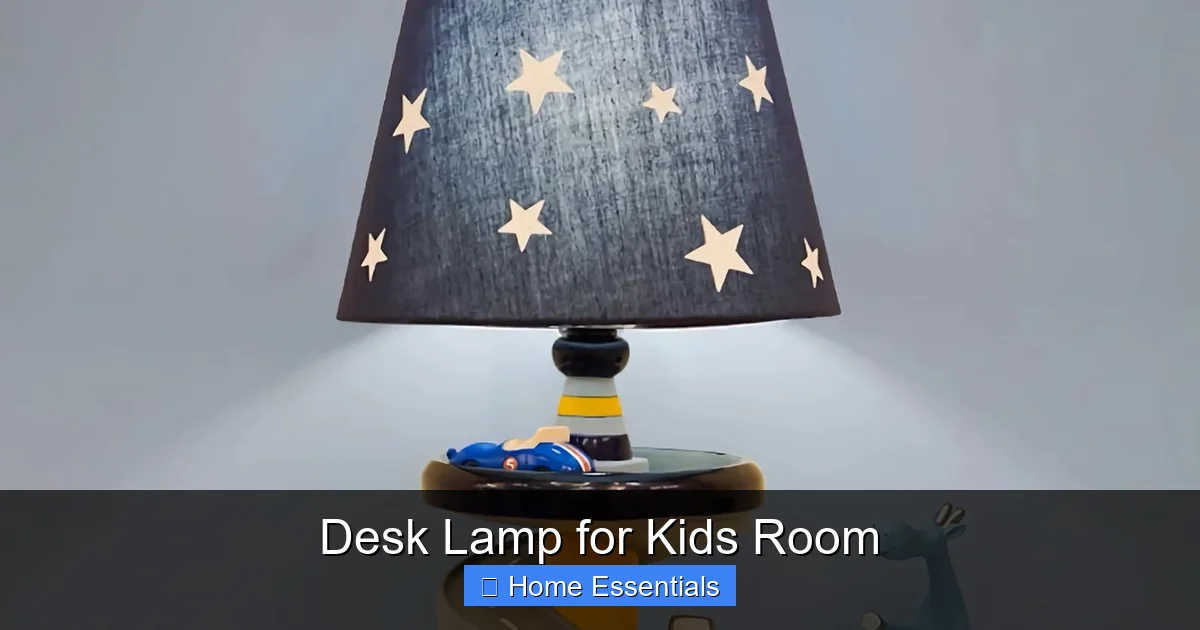
Visual guide about Desk Lamp for Kids Room
Image source: m.media-amazon.com
Safety First: Certifications, Materials, and Stability
This is the absolute top priority. Look for a UL (Underwriters Laboratories) or CE (Conformité Européenne) certification. This mark means the lamp has been independently tested for electrical safety and fire risk. Do not buy a lamp without one. Next, examine the materials. The base and arm should be made of sturdy, non-toxic materials like metal, solid wood, or thick, high-quality plastic. It should feel substantial, not flimsy. Give the base a little push—it should not tip easily. A wide, weighted base is ideal. The cord should be short (to avoid tripping hazards) and have a secure strain relief where it enters the lamp housing. For younger children, a cord cover or a short, non-detachable cord is a smart safety feature.
The lamp’s exterior should remain cool to the touch after hours of use. LED bulbs are naturally cooler than incandescent, but the lamp’s housing and any decorative elements (like plastic animal shapes) should not get hot. Check for any small, detachable parts that could become choking hazards for toddlers. The on/off switch should be easily accessible but not so prominent that a child accidentally switches it off while working.
Light Quality: Brightness, Color Temperature, and Dimmability
This is where eye comfort is won or lost. Brightness is measured in lumens. For a child’s desk task lighting, you generally want between 300 and 500 lumens. Too little, and it’s ineffective; too much, and it’s glaring. The magic is in having dimmability. A lamp with a smooth dimmer switch or touch-sensitive controls lets you and your child dial in the perfect brightness for the task and the time of day. Brighter for detailed math problems, softer for reading a novel before bed.
Color temperature, measured in Kelvin (K), describes the “warmth” or “coolness” of the light. A warm, yellowish light (2700K-3000K) is cozy but can be too relaxing for focused work. A cool, bluish-white light (5000K-6500K) is very alerting but can feel harsh and clinical. The sweet spot for a kids’ study lamp is 4000K to 5000K—a neutral to slightly cool white that mimics daylight and promotes alertness without being glaring. The best lamps offer both dimming and color temperature adjustment, sometimes even with preset modes like “Focus,” “Reading,” or “Relax.”
Flexibility and Adjustability: The Right Angle Every Time
Kids move. Their books shift. Their posture isn’t always perfect. A lamp with a fixed neck is a recipe for shadows and glare. Look for multiple points of articulation. A pivot joint at the base of the head allows you to angle the light up or down. A tilt function in the lamp head itself fine-tunes the direction. Some high-end models even have a rotating head or a fully articulated arm. This flexibility ensures you can always position the light source to the side and slightly in front of the child’s working hand, eliminating shadows cast by their own hand onto their paper—a major source of frustration.
The arm should move smoothly but hold its position firmly once set. Test this in a store if you can. It shouldn’t sag or require constant readjusting. A gooseneck design offers ultimate flexibility but can be less stable than a jointed arm; it’s a trade-off to consider based on your child’s age and behavior.
Top Types of Kids Desk Lamps: Pros and Cons
Not all desk lamps are created equal. The form factor often dictates the flexibility and suitability for a child’s space. Here’s a breakdown of the most common types you’ll encounter.
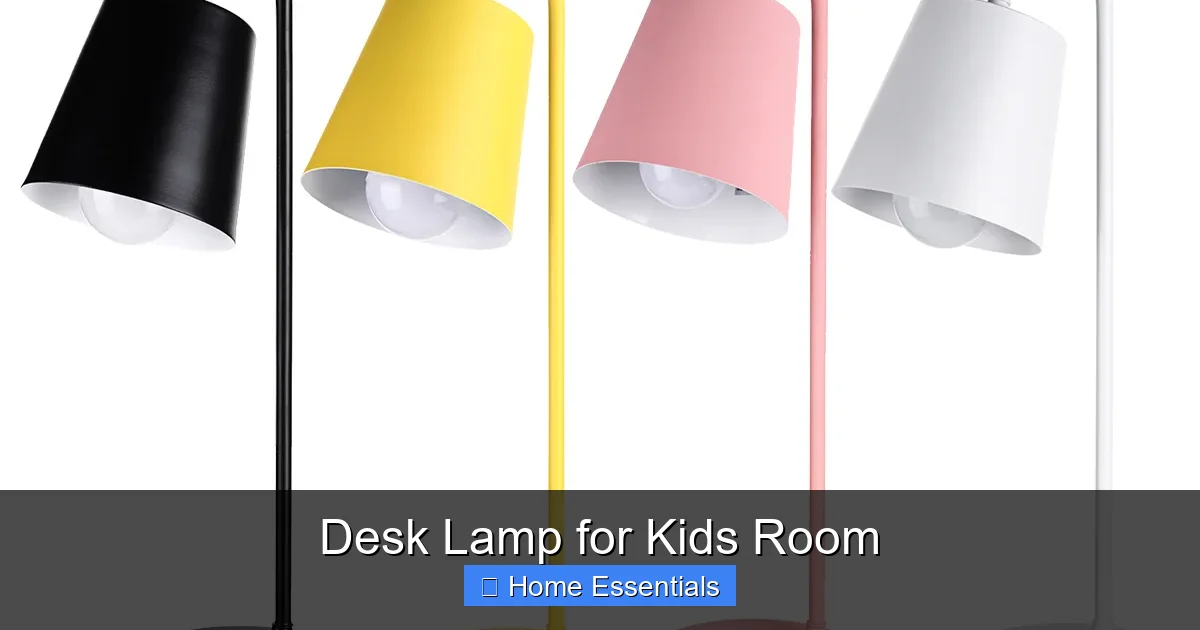
Visual guide about Desk Lamp for Kids Room
Image source: alexnld.com
Traditional Articulating Desk Lamps
This is the classic design you probably picture: a weighted base, a vertical pole, and a lamp head with one or two pivot points. Pros: Extremely stable, highly adjustable, durable, and often come with the best light quality and features. They are a long-term investment. Cons: Can take up more desk space, design is often more “adult” or utilitarian (though many colorful kids’ versions exist). They are the gold standard for serious study spaces. Look for ones with a clamp base if desk space is at a premium, but ensure the clamp is robust and the desk edge is thick enough to hold it securely.
Clip-On and Clamp Lamps
As the name suggests, these lamps attach to the edge of a desk, shelf, or even a headboard. Pros: Saves valuable desk surface area, great for small spaces or shared desks, often very flexible. Cons: Stability depends entirely on what they’re clamped to. A wobbly desk or a thin shelf can make the lamp unstable. The clamp mechanism can be a pinching hazard for very young children if not properly designed. They can also cast light from an awkward angle if not positioned perfectly. These are excellent for older, more careful kids in a dedicated, stable workstation.
USB-Rechargeable and Portable Lamps
These are cordless wonders, often with a built-in battery. They are lightweight and can be moved anywhere—from the desk to the bed for reading, to a fort in the living room. Pros: Ultimate flexibility, no cord tripping hazard, great for renters or multi-use rooms. Many have multiple brightness settings and color temperatures. Cons: Battery life is a consideration (though many last 8-12 hours on a mid setting). They need to be recharged, which requires planning. The light output is often lower than a plugged-in lamp, so they may not be sufficient for detailed, long-term tasks. They are perfect for younger children’s bedtime reading or as a secondary light source.
Novelty and Themed Lamps
These are the lamps shaped like rockets, dinosaurs, unicorns, or sports balls. Pros: High engagement factor! They can make a child excited to have their own special space. Often integrate playful elements like color-changing LEDs. Cons: The design can sometimes compromise function. The light source might be poorly positioned (e.g., shining upwards from the base instead of down onto the desk). Stability can be an issue if the base is small or the shape is top-heavy. Quality and safety certifications vary wildly. If you go this route, scrutinize the safety features and adjustability just as closely as you would a “boring” lamp. The best novelty lamps are built on a safe, functional base with the theme applied tastefully to the shade or arm.
Smart Lighting and Modern Tech: Is It Right for Your Kid?
The world of lighting is getting smarter, and kids’ lamps are no exception. You can now find lamps with app control, voice assistant compatibility (Alexa, Google Home), and sophisticated scheduling. Before you jump on the smart bandwagon, let’s weigh the pros and cons for a child’s environment.
Visual guide about Desk Lamp for Kids Room
Image source: m.media-amazon.com
The biggest advantage is effortless control and automation. You can set schedules to gradually dim the lamp at bedtime, or have it turn on automatically at homework time. Voice commands are handy if your child’s hands are full. Some smart lamps offer a vast range of color temperatures and millions of colors, which can be fun for mood lighting. However, consider your child’s age and responsibility level. A complex app might be frustrating for a young child. Do you want your child’s lamp to be on the same network as your security cameras? Privacy is a consideration with any smart device. For most families, a simple, high-quality manual dimmer and color switch is more than sufficient and less prone to tech glitches. But if you already have a smart home ecosystem and want granular control, a smart lamp can be a cool addition. Just be sure to research the brand’s reputation for security and reliability.
On a related note, the type of bulb is crucial. LED is the only sensible choice for a kids’ lamp. They are cool-running, energy-efficient, and last for years—often the lifetime of the lamp itself. You won’t be constantly replacing hot, fragile incandescent bulbs. When possible, opt for a lamp with an integrated, non-replaceable LED module from a reputable manufacturer. This ensures optimal heat dissipation and light quality. If it uses a replaceable LED bulb, buy a high-quality, dimmable one with a good CRI. You can learn more about the safety and efficacy of different bulb types by reading our article on Are Smart Bulbs Bad For You?, which covers general lighting health considerations that apply to desk lamps too.
Placement, Setup, and Creating the Perfect Study Nook
You’ve bought the perfect lamp. Now, where do you put it? Incorrect placement can render even the best lamp ineffective and cause glare or shadows. Here’s your setup guide.
The general rule: position the lamp on the side opposite your child’s dominant hand. If they are right-handed, place the lamp on the left side of the desk, and vice versa. This ensures the light falls over their shoulder and illuminates the work surface without their writing hand casting a shadow. The lamp head should be positioned slightly in front of the midline of their body, so light comes from the side and slightly ahead.
The height is also critical. The bottom of the lamp shade should be at or just slightly below eye level when your child is sitting upright at the desk. If it’s too high, the light will spill everywhere and cause glare. If it’s too low, it will create a harsh spotlight and deep shadows. The goal is to have the light beam spread evenly across the entire desk surface—books, paper, and computer screen—without creating hot spots. Use the lamp’s adjustability to achieve this. For computer use, it’s especially important to position the lamp so it does not shine directly into the eyes or cause reflections on the screen.
Finally, think about the whole desk ecosystem. The lamp is one part of a good lighting plan. The room should have a good overall ambient light source (like a ceiling fixture) to avoid a stark contrast between the bright desk and the dark room, which also causes eye strain. A clutter-free desk with a comfortable chair completes the productive study nook. Keep the area around the lamp clear of papers and toys to prevent fire hazards, even with a cool LED.
Maintenance, Cleaning, and Longevity Tips
A desk lamp is a tool, and like any tool, it needs a little care to perform its best for years. The good news is that maintenance is simple.
Dusting: Dust buildup on the lamp shade diffuses the light and makes it look dull. Make it a monthly habit. Always turn the lamp off and unplug it before cleaning. Use a soft, dry microfiber cloth to gently wipe down the base, arm, and shade. For intricate designs or hard-to-reach areas, use a soft-bristled paintbrush or a can of compressed air (held upright). A microfiber duster for electronics is perfect for this job, as its gentle fibers won’t scratch finishes and its shape can get into crevices. Avoid household dust sprays, which can leave residues that attract more dust and potentially damage certain plastics or finishes.
Deep Cleaning: If the lamp gets sticky from little fingers, dampen your microfiber cloth with a tiny amount of mild soapy water ( dish soap and water). Wring it out thoroughly so it’s barely damp. Gently wipe the soiled area, then immediately go over it with a dry microfiber cloth. Never spray liquid directly onto the lamp, especially near any electrical components or the bulb socket.
Electrical Safety: Periodically check the cord for any signs of fraying, cracking, or chew marks (if you have pets). Check that the plug is secure. If you notice any burning smell, flickering, or the lamp feels hot to the touch (beyond normal warmth), unplug it immediately and discontinue use. These are signs of a potential electrical fault. With a good quality, certified lamp and proper care, it should last for many years, providing reliable light for countless homework sessions.
Conclusion: Lighting the Path to Success
Choosing a desk lamp for your child’s room is a small decision with big implications. It’s not just a piece of furniture; it’s a tool for their education, a guardian of their eye health, and a potential anchor for their daily routine. By prioritizing safety certifications, seeking out adjustable brightness and color temperature, ensuring a stable and flexible design, and involving your child in the selection of a style they love, you are giving them a significant advantage.
A well-lit, comfortable, and personally meaningful workspace teaches children that their studies are important. It helps them focus longer, read more comfortably, and actually look forward to sitting down at their desk. Remember, the best lamp is the one that gets used properly and consistently. Take the time to set it up correctly, teach your child how to adjust it for their needs, and establish a simple cleaning routine. With the right lamp casting its perfect glow, you’re not just illuminating a desk—you’re illuminating their path to learning and creativity.
Frequently Asked Questions
What is the safest type of bulb for a child’s desk lamp?
LED bulbs are the safest choice. They produce very little heat, reducing burn risks, and are shatter-resistant unlike glass incandescent bulbs. Always ensure the lamp has proper safety certifications (UL/CE) and that the LED module or bulb is securely enclosed.
How bright should a desk lamp for a child be?
Look for a lamp with an output between 300-500 lumens. The most important feature is dimmability. This allows you to adjust the brightness for different tasks—higher for detailed writing, lower for reading or using a tablet—preventing eye strain from overly bright light.
Should I choose a lamp with a warm or cool light color?
For task lighting and studying, choose a cooler color temperature (4000K-5000K). This neutral-to-cool white light mimics daylight, promotes alertness, and helps with concentration. Warmer light (2700K-3000K) is better for relaxation before bedtime.
At what age can a child have their own desk lamp?
There’s no strict age, but safety is key. Children as young as 5 or 6 can use a lamp if it has a stable, weighted base, a cool-touch design, a short secure cord, and is placed under adult supervision initially. For younger toddlers, a low-voltage, cordless, battery-operated lamp with no small parts is a safer option for bedtime reading.
How do I clean my child’s desk lamp safely?
Always unplug the lamp first. Use a soft, dry microfiber cloth to dust. For fingerprints or grime, slightly dampen the cloth with mild soapy water, wring it out completely, wipe gently, and then immediately dry with a separate dry cloth. Never spray liquid directly on the lamp. For detailed cleaning, a soft brush or a microfiber duster for electronics works well.
Can a desk lamp help with my child’s posture?
Indirectly, yes. Proper task lighting eliminates the need for a child to lean in, crouch down, or twist their body to see their work clearly. When the light is positioned correctly—on the side opposite their dominant hand and at the right height—they can sit back in their chair with a neutral spine and view their work comfortably, supporting better posture habits.