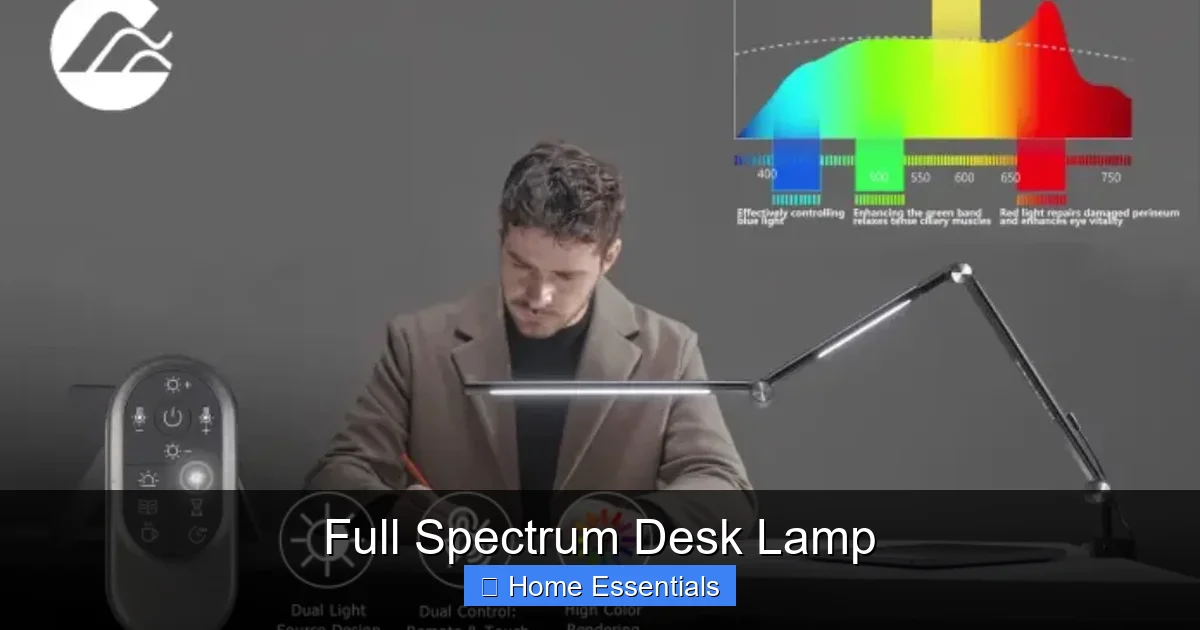
Full Spectrum Desk Lamp
A full spectrum desk lamp is designed to emit light across the entire visible spectrum, closely mimicking natural sunlight. This specialized lighting can significantly reduce eye strain, improve mood and focus, and support healthy circadian rhythms, making it ideal for home offices, studies, and detailed work. Choosing the right lamp involves understanding color temperature, CRI, and brightness to match your specific tasks and environment.
Key Takeaways
- Natural Light Mimicry: Full spectrum lamps replicate the balanced, full-range wavelengths of sunlight, providing more natural and less harsh illumination than standard bulbs.
- Health & Productivity Boost: They can alleviate symptoms of Seasonal Affective Disorder (SAD), reduce eye fatigue from screen use, and enhance concentration and alertness during daytime hours.
- CRI is Critical: Look for a high Color Rendering Index (CRI 90-100) to ensure colors appear true and vibrant, which is essential for tasks like design, art, or makeup application.
- Adjustable Color Temperature: The best lamps offer tunable white light (from warm ~2700K to cool ~6500K), allowing you to shift from relaxing evening light to energizing daylight simulation.
- Task-Specific Brightness: Measured in lumens, adequate brightness (500-1000+ lumens) is necessary for reading and detailed work, but avoid overly intense light that causes glare.
- Technology Matters: LED full spectrum lamps are energy-efficient, long-lasting, and often include dimming and scheduling features, making them superior to older fluorescent models.
- Proper Placement is Key: Position the lamp to the side of your dominant hand to avoid shadows on your work surface, and ensure it doesn’t create screen glare on your computer monitor.
[FEATURED_IMAGE_PLACEHOLDER]
📑 Table of Contents
What Exactly is a Full Spectrum Desk Lamp?
You’ve probably heard the term “full spectrum” thrown around in lighting stores or on product boxes. But what does it really mean for your little workspace lamp? Simply put, a true full spectrum light source emits light across the entire visible spectrum—all the colors of the rainbow, from deep violet to deep red. This is exactly what our beloved sun does. Most standard LED or fluorescent bulbs produce a skewed spectrum, often peaking in certain colors and missing others. This imbalance is what can make indoor lighting feel flat, harsh, or even cause discomfort over time.
A full spectrum desk lamp is engineered to balance these wavelengths. Think of it as bringing a slice of a sunny day indoors, even when it’s gray and gloomy outside. The goal isn’t just to brighten a room; it’s to provide light that interacts with our eyes and brains in a more natural way. This has profound implications for how we feel, how well we see details, and how our bodies regulate sleep and wake cycles. It’s a functional tool for wellness, not just a decorative source of illumination.
The Science of Sunlight vs. Artificial Light
Sunlight is the gold standard. Its spectrum is continuous and rich, providing the ideal conditions for human vision and physiological health. Our circadian rhythm, the internal clock that governs sleep and alertness, is tightly synchronized with the sun’s cycle. Blue-rich light in the morning signals wakefulness, while warmer, redder light in the evening prompts melatonin production for sleep.
Traditional artificial lighting, especially older fluorescents and cheap LEDs, often has spikes and gaps in their spectral output. The “spikes” can cause glare and visual discomfort, while the “gaps” mean certain colors aren’t rendered accurately. A full spectrum LED uses a sophisticated mix of phosphors and blue LED chips to create a smooth, balanced curve that closely approximates the solar spectrum, typically targeting a color temperature around 5000K to 6500K, which is perceived as “daylight.”
The Tangible Benefits: Why You Need One on Your Desk
Now that we understand the “what,” let’s dive into the “why.” Investing in a full spectrum desk lamp isn’t a luxury; for many, it’s a practical upgrade that pays dividends in comfort, health, and output. The benefits are both immediate and long-term.
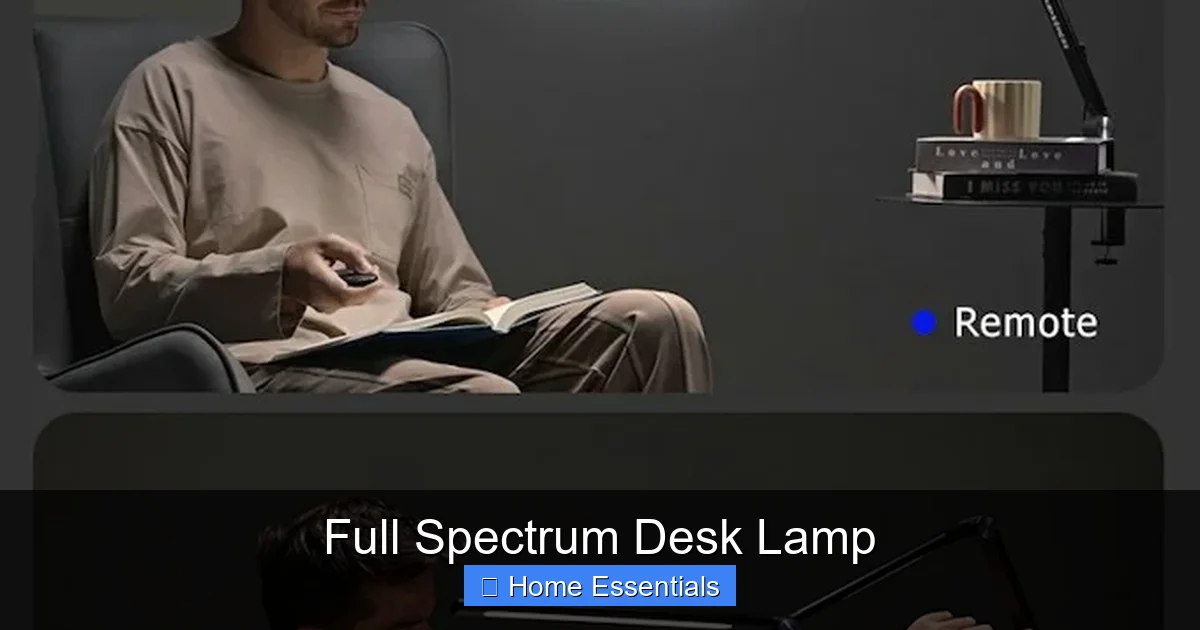
Visual guide about Full Spectrum Desk Lamp
Image source: c1.iggcdn.com
Banishing Eye Strain and Fatigue
If you spend hours staring at a computer screen under a standard overhead light or a cheap desk lamp, you’ve likely experienced that familiar ache: dry, tired eyes, headaches, and a general feeling of visual exhaustion. This is often caused by poor illumination quality. The unbalanced spectrum and potential flicker from some bulbs force your eye muscles to work harder to focus and distinguish colors.
Full spectrum light provides superior uniformity and higher luminance distribution. The balanced wavelengths reduce the scattering of light within the eye, leading to less glare and more comfortable viewing. For anyone doing detailed work—reading small print, sketching, sewing, or circuit board repair—this clarity is a game-changer. You can work longer without that pressing need to rub your eyes or look away.
Mood Enhancement and SAD Relief
This is where the benefits go beyond vision. Our brains are deeply affected by light. The lack of adequate, high-quality light exposure, particularly in winter months, is a primary contributor to Seasonal Affective Disorder (SAD). Symptoms include low energy, difficulty concentrating, and a persistent low mood.
Full spectrum lamps, especially those with a high output in the blue-enriched daylight spectrum (around 5000K-6500K), are used in light therapy boxes to treat SAD. Having this quality of light on your desk provides a consistent, mini-dose of stimulating light exposure. It can help regulate your circadian rhythm, boost serotonin levels, and keep you feeling more alert and positive throughout the day, combating the “winter blues” and the general malaise of a dimly lit home office.
Cognitive Boost and Focus
Ever notice how you feel more awake and focused on a bright, sunny day compared to a overcast one? The quality of light directly impacts cognitive performance. Studies have shown that exposure to high-intensity, blue-enriched light similar to daylight can improve alertness, reaction times, and accuracy on cognitive tasks.
Placing a full spectrum lamp on your desk creates a localized “sunny spot” that signals to your brain that it’s time to be productive. It’s not magic; it’s biology. The light suppresses melatonin (the sleep hormone) during working hours, helping you maintain sharper focus. For students, writers, coders, or anyone whose work demands sustained concentration, this is a powerful, non-caffeinated tool.
How to Choose the Right Full Spectrum Desk Lamp
Not all lamps marketed as “full spectrum” are created equal. The term isn’t strictly regulated, so some products may only approximate the effect. To ensure you’re getting a genuinely beneficial lamp, you need to become a savvy shopper and look for specific technical specifications.
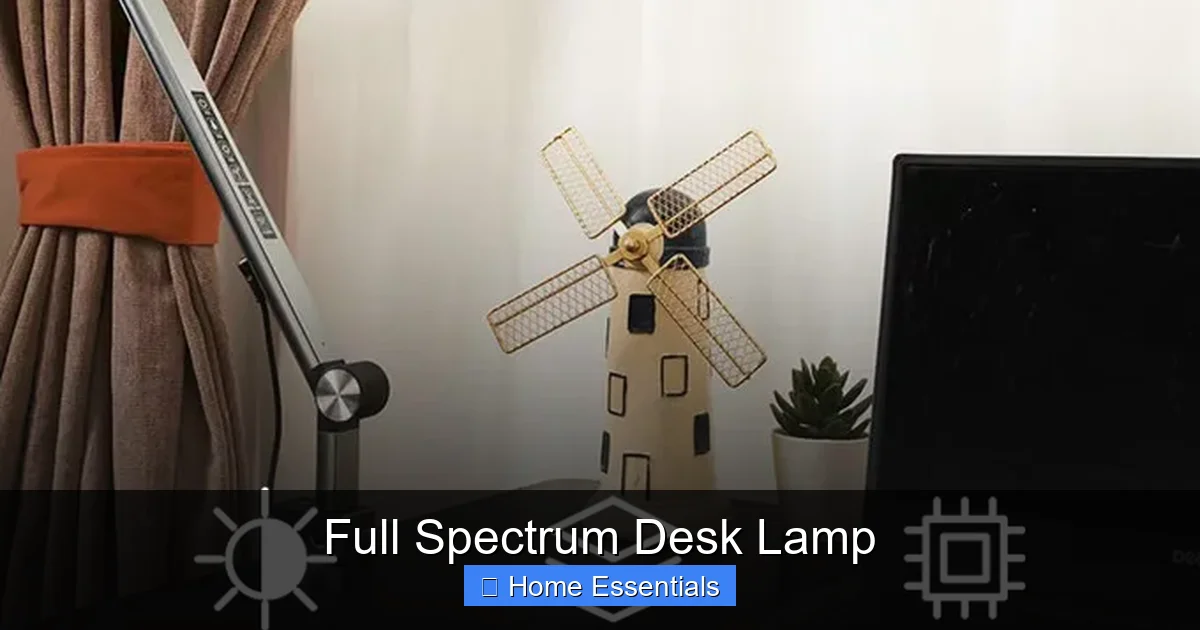
Visual guide about Full Spectrum Desk Lamp
Image source: c1.iggcdn.com
Critical Specs: CRI and Color Temperature
Two numbers are your best friends in this search: CRI (Color Rendering Index) and Color Temperature (in Kelvins, K).
- CRI (90+ is Excellent): This measures a light source’s ability to reveal the true colors of objects compared to natural light. A CRI of 100 is perfect (like sunlight). For a full spectrum lamp, you want a minimum CRI of 90. Anything lower, and you’ll notice that reds look dull or blues look washed out. For artists, designers, or anyone working with color, this is non-negotiable.
- Color Temperature (5000K-6500K for “Daylight”): This describes the “warmth” or “coolness” of white light. Lower numbers (2700K-3000K) are warm and yellowish (like incandescent bulbs). Higher numbers (5000K-6500K) are cool and bluish-white, mimicking midday sun. For the classic full spectrum “daylight” effect aimed at boosting focus and mimicking sun, look for a fixed or adjustable range within this higher band. The best lamps offer tunable white, letting you shift from a warm 3000K for evening relaxation to a cool 6500K for afternoon focus.
Brightness (Lumens) and Dimmability
Brightness is measured in lumens. For a task lamp, you generally want between 500 and 1000 lumens on the high end. This is sufficient to brightly illuminate a desk area without creating excessive glare. More importantly than a single lumen number is the presence of smooth, stepless dimming. The ability to fine-tune intensity is crucial. You might need full brightness for intricate work but prefer a softer glow for general computer use. Avoid lamps with only a few fixed brightness steps.
Form Factor and Adjustability
A lamp is a long-term companion on your desk. It needs to be flexible. Look for:
- Multiple Articulation Points: A gooseneck, double-hinged arm, or swiveling head that lets you position the light exactly where you need it without moving the entire base.
- Stable, Weighted Base: It shouldn’t wobble or tip when you adjust the arm.
- Appropriate Size: Consider your desk real estate. Some full spectrum lamps have large heads for even coverage; others are more compact.
- USB Charging Port: A convenient modern feature to charge your phone or headset directly from the base.
LED vs. Other Technologies
Stick with LED. Modern LED full spectrum lamps are vastly superior to the old “full spectrum” fluorescent tubes. LEDs are:
- More energy-efficient (using watts for the same or better lumens).
- Instant on with no warm-up period.
- Mercury-free and cooler to the touch.
- Long-lasting (often rated for 25,000-50,000 hours).
- Capable of smooth, flicker-free dimming.
You may still find CFL (compact fluorescent) full spectrum bulbs, but they contain mercury, have slower warm-up times, and inferior dimming capabilities. LED is the clear winner.
Practical Tips for Using Your Full Spectrum Lamp Effectively
You’ve done your research and bought a fantastic lamp. Now, how do you maximize its benefits? Placement and usage habits matter just as much as the lamp’s specifications.
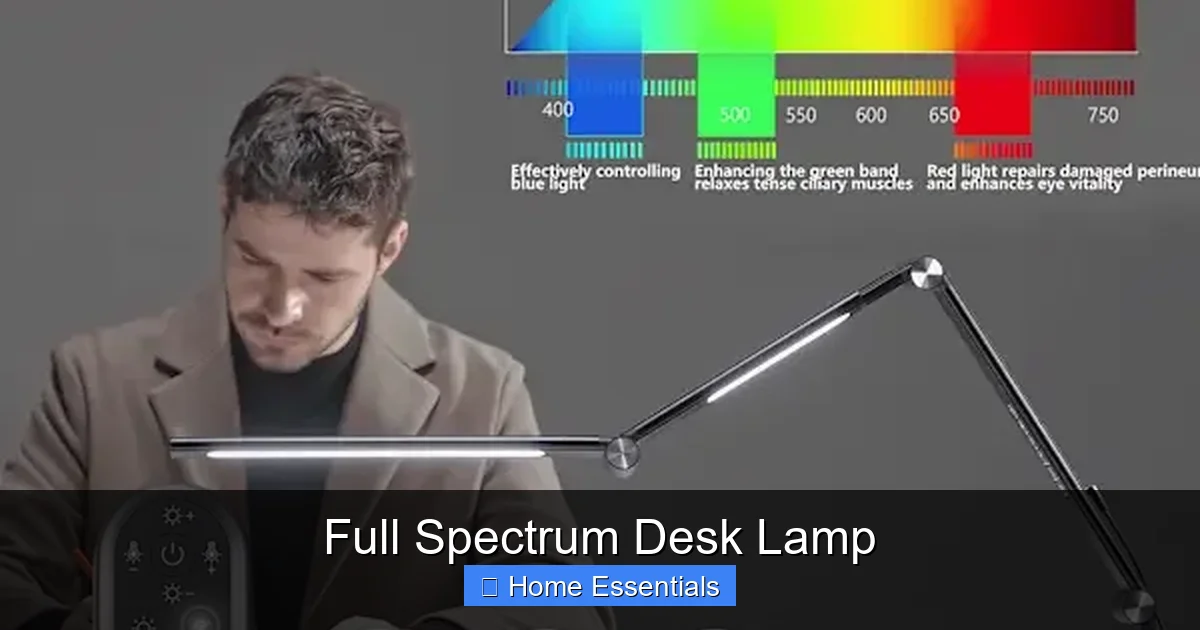
Visual guide about Full Spectrum Desk Lamp
Image source: c1.iggcdn.com
Positioning for Optimal Effect
The classic rule for task lighting is to position the lamp on the side opposite your dominant hand. If you’re right-handed, place the lamp on the left side of your desk, and vice versa. This prevents your hand and writing from casting shadows onto your work. The light should hit your desk surface at an angle, not from directly in front of you.
Avoid Screen Glare: This is the #1 mistake. Never place the lamp directly behind you shining over your shoulder onto the monitor. This creates a blinding reflection. The lamp should be positioned so the light falls on your desk and keyboard from the side, not on the screen itself. You may need to adjust the arm height and angle to find the sweet spot where your work is bright but your screen remains clear.
Integrating with Your Circadian Rhythm
To truly support your natural sleep-wake cycle, be intentional about your lamp’s color temperature throughout the day.
- Morning & Day (8 AM – 4 PM): Set your lamp to a cool, blue-enriched daylight temperature (5000K-6500K). Use it at a higher brightness during the first few hours of work to promote alertness and suppress melatonin.
- Late Afternoon & Evening (4 PM onwards): As the sun sets, manually switch your lamp to a warmer, softer white (2700K-3500K). This reduces blue light exposure, which can interfere with melatonin production and make it harder to fall asleep. Many high-end lamps offer automated scheduling via an app to do this transition for you.
Beyond the Desk: Ambient and Accent Lighting
While designed as a task light, a full spectrum lamp can serve secondary purposes. Its high-quality light is excellent for:
- Reading Nooks: Place it beside an easy chair for strain-free reading.
- Art Studios or Craft Areas: The high CRI ensures paint colors, fabric dyes, and materials look true.
- Plant Care: While not a replacement for a dedicated grow light, the full spectrum can help sustain low-light houseplants in a dark corner, especially in winter.
However, don’t rely on a single desk lamp to light a whole room. It’s designed for a focused area. For overall room illumination, you’d need dedicated full spectrum overhead fixtures.
Top Features to Look For in a Premium Model
The market is crowded. To help you narrow down your choices, here are the hallmark features that separate a good lamp from a great one.
Smart Features and Connectivity
Modern full spectrum lamps often include smart home integration. Look for models that connect via Wi-Fi or Bluetooth to an app. This allows you to:
- Precisely control brightness and color temperature in 1K increments.
- Set schedules (e.g., “turn on to 5000K at 8 AM, dim to 3000K at 7 PM”).
- Create custom scenes for different tasks (“Reading,” “Computer Work,” “Relax”).
- Control the lamp with your voice via Alexa or Google Assistant.
These features make circadian rhythm alignment effortless.
Flicker-Free and Low Blue Light Certifications
Poorly designed LEDs can flicker at a high frequency, invisible to the naked eye but capable of causing eye strain and headaches over time. Reputable manufacturers will advertise flicker-free technology, often verified by third-party labs. Similarly, look for low blue light certifications (like TÜV’s Low Blue Light certification) for models that have modes optimized for evening use, further protecting your sleep.
Build Quality and Warranty
A lamp you’ll use daily for years should feel solid. Check for metal construction (aluminum is common and dissipates heat well), smooth mechanical movement in the arm, and a non-slip base. A good warranty (2-5 years) is a sign of manufacturer confidence in the LED’s longevity and the lamp’s durability.
Our Top Contender Types
While specific brand recommendations change, the market generally falls into two excellent categories:
- The Ultra-Adjustable Task Master: Think brands like BenQ e-Reading, TaoTronics, or LUMIMAN. These often feature huge, wide heads for even desk coverage, superb gooseneck arms, and full tunable white with smart controls. They are the all-around champions for serious home offices.
- The Sleek & Stylish Minimalist: Brands like Philips Hue (with its Play line), or other design-forward options. These prioritize aesthetics, often with a single, elegant arm and a smaller head. They may have slightly less adjustability but integrate beautifully into modern decor and still offer excellent full spectrum color tuning, especially within a smart ecosystem.
Your choice depends on whether your priority is maximum adjustability and coverage or seamless design integration.
Conclusion: Lighting Up a Healthier Workspace
A full spectrum desk lamp is one of the most impactful yet understated upgrades you can make to your daily environment. It’s not about chasing a trend; it’s about returning to a fundamental human need: exposure to clean, balanced light that respects our biology. In a world of screens and artificial environments, this simple tool acts as a bridge to the natural world, right from your desk.
The benefits compound over time. Less eye strain means greater comfort and fewer headaches. Better circadian regulation means more restful sleep and more energetic days. Improved color clarity means more accurate work and less mental fatigue from visual guesswork. By choosing a lamp with a high CRI, tunable color temperature, and solid build quality, and by using it mindfully throughout your day, you are making a direct investment in your long-term well-being and daily productivity. So, shed a little light on the situation—your eyes, your mood, and your work will thank you.
Frequently Asked Questions
Is a full spectrum desk lamp the same as a daylight lamp?
They are very similar and the terms are often used interchangeably. A true full spectrum lamp aims to replicate the entire visible spectrum of sunlight. A “daylight” lamp specifically targets the color temperature and spectral quality of midday sun (around 5000K-6500K). All full spectrum lamps are daylight lamps, but not all daylight lamps have the high CRI and balanced spectrum of a true full spectrum model.
Do I need to replace the bulb in a full spectrum LED lamp?
No, that’s a major advantage of LED-based full spectrum lamps. The LEDs are integrated into the fixture and are rated for 25,000 to 50,000 hours of use. For context, if you use the lamp 8 hours a day, 365 days a year, it would take over 8 years to reach 25,000 hours. You will effectively never need to replace the “bulb.”
Can a full spectrum lamp damage my eyes if used for too long?
No, when used correctly, it is actually better for your eyes than standard artificial light. The goal is to reduce strain. However, as with any light source, you should avoid staring directly into the bright LED array. Use the dimmer to set a comfortable brightness for your task, and ensure the lamp is positioned to avoid glare on your screen or work surface. The blue light content in the “daylight” setting is comparable to being outdoors on a cloudy day and is not harmful in normal desk-use durations.
What color temperature is best for reading and studying?
For active reading, studying, or computer work, a cooler color temperature between 4000K and 6500K is generally best. This blue-enriched light promotes alertness, focus, and can help prevent drowsiness. For relaxed reading before bed, switch to a warmer 2700K-3000K setting to minimize sleep disruption.
Are full spectrum lamps energy efficient?
Yes, very. Modern full spectrum lamps use LED technology, which is the most energy-efficient lighting available. A quality full spectrum LED desk lamp will typically use between 8 and 15 watts of power while providing the same or better light output (lumens) than a 60-watt incandescent bulb. This saves significant money on electricity over time.
I work with art and color. How important is CRI?
Extremely important. CRI (Color Rendering Index) is the single most critical spec for color-critical work. You must choose a lamp with a CRI of 90 or higher. A CRI of 95-100 is ideal. This ensures that the colors you see on your canvas, screen, or materials are true and accurate. A lamp with a low CRI (below 80) will distort colors, leading to mistakes and frustration in any artistic or design endeavor.