When Was the Smart Light Bulb Invented
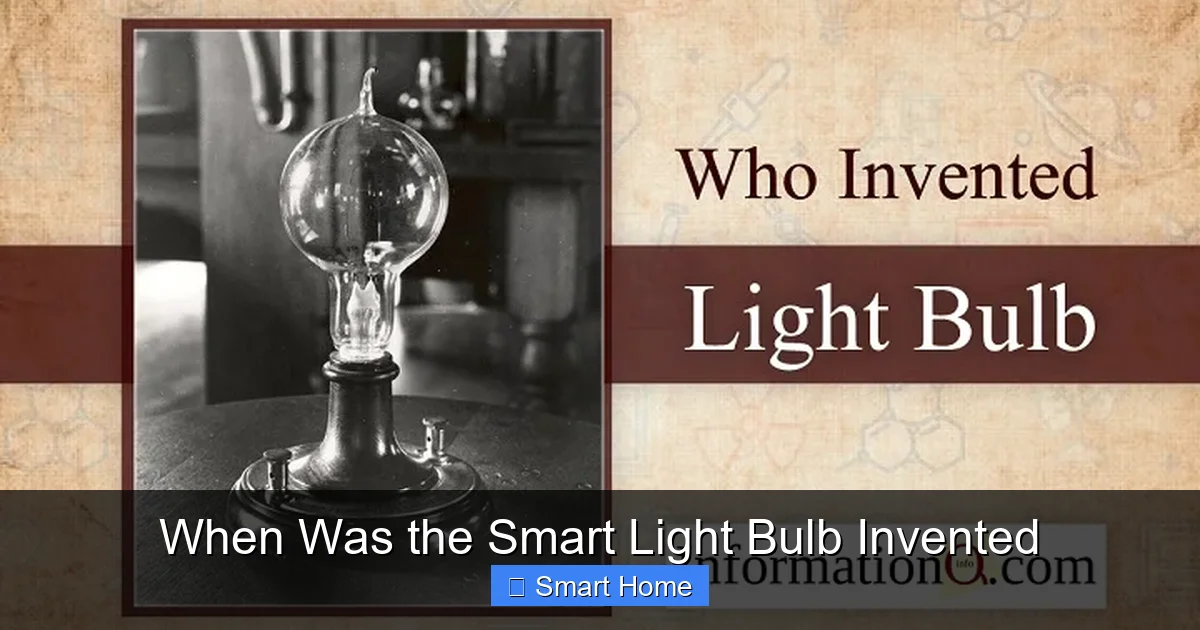
Smart light bulbs were first introduced around 2012 with the launch of the Philips Hue, marking a major milestone in home automation. These innovative bulbs allowed users to control lighting remotely via smartphones and integrate with voice assistants. Since then, smart lighting has evolved rapidly, becoming a cornerstone of modern smart homes.
Key Takeaways
- Understanding When Was The Smart Light Bulb Invented: Provides essential knowledge
📑 Table of Contents
- When Was the Smart Light Bulb Invented?
- The Birth of the Smart Light Bulb: A Technological Revolution
- How Smart Light Bulbs Work: The Technology Behind the Magic
- The Evolution of Smart Lighting: From Hue to Today
- Benefits of Smart Light Bulbs
- Choosing the Right Smart Light Bulb
- The Future of Smart Lighting
- Conclusion: A Bright Future
When Was the Smart Light Bulb Invented?
Imagine flipping a switch and having your entire living room light up in perfect warm white—just like you wanted—without even touching a physical button. Now imagine being able to dim those lights from bed, change their color to match your mood, or set them to turn on automatically when you walk into the room. That’s the magic of smart light bulbs, and it all started with a single product that changed the way we think about home lighting forever.
The smart light bulb as we know it today—a device that connects to your Wi-Fi network, responds to voice commands, and can be controlled via a smartphone app—was officially born in 2012. That’s when Philips, a Dutch electronics giant, launched the Philips Hue, the world’s first commercially available smart LED bulb. It wasn’t just another LED bulb; it was a fully programmable lighting solution that could change color, dim, and sync with music or schedules. This innovation didn’t just change lighting—it changed how people interact with their homes.
Before the Hue, lighting was mostly a passive experience. You turned it on or off, maybe used a dimmer switch, but that was it. Smart bulbs introduced active control, automation, and integration with other smart devices. They opened the door to a new era of smart home technology, where lighting could be part of a larger ecosystem. Today, smart bulbs are everywhere—from living rooms to offices, bedrooms to outdoor spaces—and they’ve become one of the most popular entry points for people entering the smart home world.
The Birth of the Smart Light Bulb: A Technological Revolution
The Long Road to Smart Lighting
To understand when the smart light bulb was invented, we need to look back at the journey that led to it. For decades, lighting technology evolved slowly—from incandescent bulbs in the 1800s to fluorescent tubes in the 1900s, and finally to energy-efficient LEDs in the early 2000s. But even as LEDs became more popular, they were mostly standalone devices. You couldn’t control them remotely or change their behavior programmatically.
Visual guide about When Was the Smart Light Bulb Invented
Image source: solaratics.com
The real breakthrough came when engineers figured out how to embed wireless communication chips inside LED bulbs. This allowed them to receive commands from a central hub or directly from the internet. Early prototypes existed in labs and tech demos, but it wasn’t until the rise of home automation platforms like Apple HomeKit, Google Home, and Amazon Alexa that smart bulbs became practical for everyday users.
Philips Hue was the first to bring all these pieces together in a consumer-friendly package. It used a Zigbee wireless protocol to connect to a bridge (a small device plugged into your router), which then communicated with your smartphone or voice assistant. This setup allowed for stable, low-power communication without overloading your Wi-Fi network—a crucial design decision that made smart bulbs reliable and scalable.
Why 2012 Was a Game-Changer
Launching in 2012, the Philips Hue was not just another product—it was a statement. It proved that consumers were ready for connected devices in their homes. The bulb retailed for around $199 for a starter kit (including the bridge and three bulbs), which might sound expensive today, but at the time, it was a premium product that captured the imagination of tech enthusiasts and early adopters.
What made the Hue special wasn’t just its features—it was its ecosystem. The bulb could be controlled via a dedicated app, synced with music, set to wake you up gradually, or even change color based on the time of day. It could be integrated with other smart home devices, like motion sensors or door locks, to create automated lighting scenes. For example, the lights could turn on automatically when your phone’s geofencing detected you were leaving work, or dim when you started watching a movie.
Within a year of its launch, the Hue had sold over 1 million units. Tech blogs, YouTube reviewers, and gadget magazines hailed it as a breakthrough. It wasn’t just a bulb—it was a platform. Developers started building apps and integrations, and third-party manufacturers took notice. The success of the Hue paved the way for a wave of competitors, each bringing their own twist on smart lighting.
How Smart Light Bulbs Work: The Technology Behind the Magic
From Incandescent to Smart LED
To appreciate how smart light bulbs work, it helps to understand how they’re different from traditional bulbs. Regular incandescent bulbs produce light by heating a filament until it glows. They’re inefficient, get hot, and can’t be dimmed easily. Fluorescent bulbs are more efficient but contain mercury and can’t change color quickly.
Visual guide about When Was the Smart Light Bulb Invented
Image source: lihpao.com
LED bulbs, on the other hand, use semiconductor technology to produce light. They’re energy-efficient, long-lasting, and can be dimmed. But the real innovation with smart bulbs is the addition of microchips and wireless communication. These chips allow the bulb to receive commands, process data, and connect to a network.
Most smart bulbs today use one of two main technologies: Wi-Fi or Zigbee. Wi-Fi bulbs connect directly to your home network, which means they don’t need a separate hub. They’re easy to set up and work with voice assistants, but they can draw more power and may interfere with other devices. Zigbee bulbs, like the original Hue, use a mesh network and require a hub. They’re more energy-efficient and reliable for automation, but you need to buy the hub separately.
Voice Control and App Integration
One of the most popular features of smart bulbs is voice control. Thanks to integration with Amazon Alexa, Google Assistant, and Siri, you can say things like, “Turn on the living room lights” or “Set the bedroom to blue.” This voice control is powered by cloud-based AI, which listens for your command, interprets it, and sends the signal to your bulb.
Smartphone apps are another key component. Most smart bulb brands have their own apps—like the Philips Hue app or the LIFX app—where you can control individual bulbs, create lighting scenes, set schedules, and monitor energy usage. Some apps even let you sync your lights to music or movies, creating a dynamic lighting experience.
Automation and Scheduling
Beyond manual control, smart bulbs shine in automation. You can set them to turn on at sunrise, dim as you fall asleep, or flash when your doorbell rings. Geofencing—using your phone’s location—lets the lights turn on when you’re 10 minutes away from home. These features make your home feel more secure and comfortable, even when you’re not there.
The Evolution of Smart Lighting: From Hue to Today
The Rise of Competitors
After the success of the Philips Hue, a flood of competitors entered the market. Brands like LIFX, TP-Link Kasa, Philips Hue (with new models), and Nanoleaf quickly followed, each offering their own take on smart lighting. Some focused on Wi-Fi-only bulbs, others on Zigbee, and some on unique designs or features like color-changing panels.
Visual guide about When Was the Smart Light Bulb Invented
Image source: asapeducate.com
One of the biggest trends was the move toward Wi-Fi-only smart bulbs. Unlike the Hue, which required a hub, Wi-Fi bulbs connect directly to your router. This made them cheaper and easier to set up, though they can sometimes be slower or less reliable during peak usage times. Brands like LIFX and Nanoleaf became known for their bright, vibrant colors and sleek designs.
Another trend was the integration with broader smart home ecosystems. Today, almost all major smart bulb brands work with Alexa, Google Home, and Apple HomeKit, making it easy to control them with voice or through routines. Some bulbs even work with IFTTT (If This Then That), a service that lets you create custom automations using web-based triggers.
Advancements in Features and Functionality
Smart bulbs have come a long way since 2012. Early models were limited to basic on/off control and dimming. Today’s bulbs offer:
- Color changing: Over 16 million colors to choose from.
- Scheduling: Set lights to turn on/off at specific times.
- Geofencing: Lights respond to your phone’s location.
- Energy monitoring: Track how much power your lights use.
- Music syncing: Lights pulse or change color to the beat of music.
- Sunrise simulation: Gradually brighten lights to mimic sunrise.
Some advanced models even include motion sensors or ambient light detection, so they can adjust brightness based on natural light levels or movement in the room.
Affordability and Accessibility
When the Philips Hue launched, a single bulb cost around $50–$60. Today, you can find Wi-Fi smart bulbs for under $10 each. This dramatic drop in price has made smart lighting accessible to millions of people. Many brands now offer multipacks, and you can often find deals during holiday sales or tech events like Black Friday.
For budget-conscious buyers, there are also smart bulbs with basic features that still work with voice assistants but don’t offer full color control or automation. These are great for people who want the convenience of voice control without the premium price.
Benefits of Smart Light Bulbs
Energy Efficiency and Cost Savings
One of the biggest advantages of smart bulbs is their energy efficiency. LEDs use up to 80% less energy than incandescent bulbs and last 25 times longer. When combined with automation—like turning off lights when no one’s home—smart bulbs can significantly reduce your electricity bill.
For example, a typical smart bulb uses about 9 watts of power, compared to 60 watts for an incandescent bulb. Over a year, that’s a difference of about 45 kWh per bulb. At an average electricity rate of $0.12 per kWh, that’s a savings of around $5.40 per bulb per year. Multiply that by 10 bulbs, and you’re looking at over $50 in annual savings.
Convenience and Control
Smart bulbs give you complete control over your lighting from anywhere. Whether you’re in bed, on vacation, or stuck in traffic, you can turn on your lights, change their color, or set a scene—all from your phone. This is especially useful for security: having lights turn on when you’re away can make your home look occupied and deter intruders.
Enhanced Comfort and Well-being
Lighting has a big impact on mood and sleep. Smart bulbs allow you to adjust color temperature throughout the day. In the morning, cooler, bluish light can help you wake up. In the evening, warmer, reddish light can promote relaxation and better sleep.
Some bulbs even include “sleep mode” or “sunset simulation”, which gradually dim the lights over 30–60 minutes to help you wind down naturally. This can improve sleep quality and reduce eye strain.
Accessibility and Safety
Smart bulbs are especially helpful for people with disabilities or mobility issues. They allow individuals to control lighting without reaching switches, which can be difficult for those with arthritis, limited mobility, or visual impairments. Voice control and app-based systems make lighting accessible to everyone.
Choosing the Right Smart Light Bulb
Factors to Consider
With so many smart bulbs on the market, how do you choose? Here are some key factors to consider:
- Compatibility: Make sure the bulb works with your existing smart home system (Alexa, Google, Apple, etc.).
- Connectivity: Decide between Wi-Fi and Zigbee. Wi-Fi is easier to set up; Zigbee is more reliable for automation.
- Brightness and Color: Check the lumens (brightness) and whether the bulb offers full color changing or just dimming.
- Price: Set a budget. Entry-level bulbs start around $10, while premium models can cost $30 or more.
- App and Features: Look for user-friendly apps, scheduling, and automation options.
Top Brands to Consider
Some of the most reliable smart bulb brands include:
- Philips Hue: Industry leader, best for automation and ecosystem integration.
- LIFX: Wi-Fi-only, no hub needed, vibrant colors.
- TP-Link Kasa: Affordable, easy to use, great for beginners.
- Nanoleaf: Known for colorful panels and creative lighting designs.
- Wyze: Budget-friendly, works with Alexa and Google, basic features.
Tips for Getting Started
- Start with a multipack to save money and test different rooms.
- Choose bulbs that match your existing fixtures (E26 or E27 base).
- Set up a routine for lights to turn on/off automatically.
- Use voice control to make daily tasks easier.
- Monitor energy usage to see how much you’re saving.
The Future of Smart Lighting
Emerging Technologies
Smart lighting is evolving fast. Future innovations may include:
- AI-powered lighting: Bulbs that learn your habits and adjust automatically.
- Health-focused lighting: Bulbs that track sleep, mood, or circadian rhythms.
- Seamless integration: Lights that work with everything in your home without extra hubs.
- Sustainable materials: Eco-friendly bulbs made from recycled or biodegradable materials.
We’re also seeing more integration with augmented reality and smart mirrors, where lighting responds to your appearance or mood in real time.
The Role in Smart Home Ecosystems
Smart bulbs are no longer just about lighting—they’re part of a larger smart home ecosystem. They can work with security cameras, doorbells, thermostats, and even appliances. For example, your lights could turn red when your security system is armed, or flash when a package is delivered.
As smart homes become more common, lighting will play a central role in creating environments that adapt to your needs, preferences, and routines. The humble light bulb has truly become a smart home hub.
Conclusion: A Bright Future
So, when was the smart light bulb invented? The answer is clear: it was born in 2012 with the launch of the Philips Hue. That single product didn’t just introduce a new type of bulb—it sparked a revolution in how we think about home lighting, energy use, and automation.
Today, smart light bulbs are affordable, reliable, and packed with features that enhance comfort, convenience, and energy efficiency. They’re a gateway to the smart home, offering a simple yet powerful way to control your living space. Whether you want to save money, improve your sleep, or just make your home feel more alive, smart bulbs are a smart choice.
As technology continues to evolve, we can expect even more exciting developments in smart lighting. But one thing is certain: the smart light bulb has already changed the way we live—one click, one voice command, or one dimmed light at a time.
Frequently Asked Questions
When was the first smart light bulb released?
The first commercially available smart light bulb, Philips Hue, was released in 2012. It introduced Wi-Fi and Zigbee connectivity, voice control, and color-changing features, setting the standard for future smart lighting products.
What technology do smart light bulbs use?
Smart light bulbs primarily use Wi-Fi or Zigbee wireless technology. Wi-Fi bulbs connect directly to your router, while Zigbee bulbs use a hub for stable, low-power communication. Both allow remote control via apps and voice assistants.
Are smart light bulbs worth buying?
Yes, smart light bulbs offer energy savings, convenience, and enhanced comfort. They can be controlled remotely, set on schedules, and integrate with other smart devices, making them a valuable addition to any modern home.
Can I use smart bulbs with my existing light fixtures?
Yes, most smart bulbs use standard screw bases like E26 or E27, which fit in most household fixtures. Just make sure your lamps are compatible with LED bulbs and have room for the bulb’s electronics.
Do smart bulbs work without a hub?
Some smart bulbs, like those from LIFX or Wyze, work without a hub by connecting directly to your Wi-Fi network. Others, like the original Philips Hue, require a bridge for Zigbee connectivity.
How much do smart light bulbs cost?
Smart light bulbs range from $10 to $30 each, depending on features like color changing, brightness, and brand. Multipacks are often available at lower prices, making them more affordable for whole-home setups.