Do Smart Bulbs Work Without Wifi
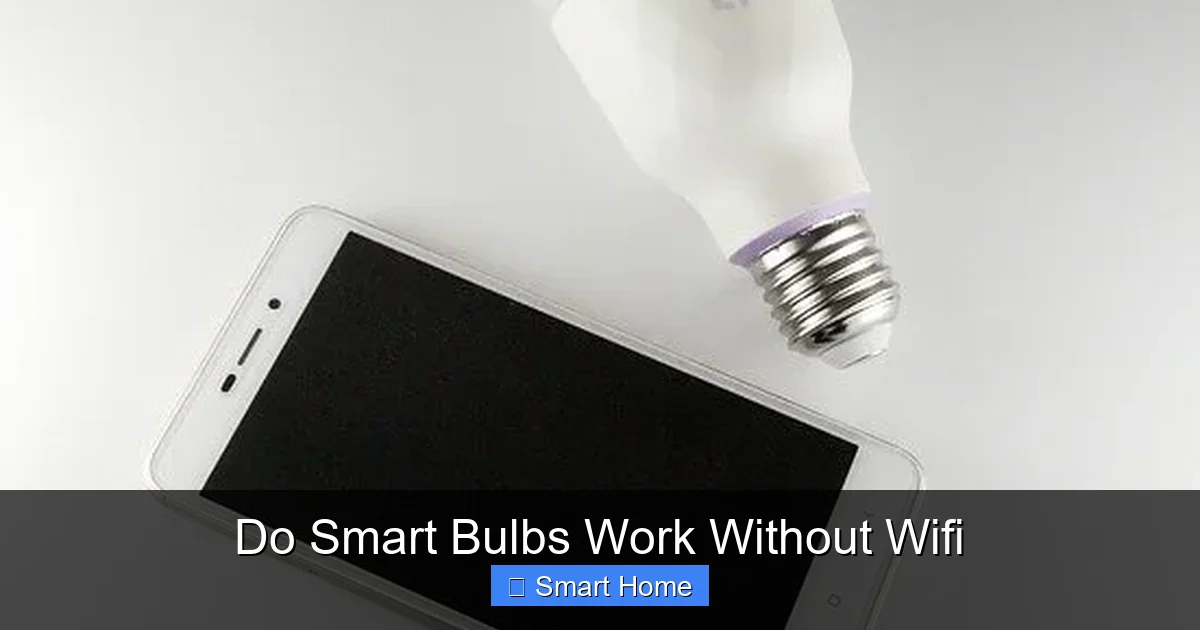
Smart bulbs don’t always need Wi-Fi to work—many can operate independently using Bluetooth, Zigbee, or Z-Wave protocols. While they shine brightly without an internet connection, features like scheduling, voice control, and remote access may be limited. Understanding how your smart bulbs function offline helps you make smarter lighting choices for your home.
Key Takeaways
- Understanding Do Smart Bulbs Work Without Wifi: Provides essential knowledge
📑 Table of Contents
- Do Smart Bulbs Work Without Wifi?
- How Smart Bulbs Communicate: Wifi vs. Alternative Protocols
- What Happens When Wi-Fi Is Down?
- Can You Use Smart Bulbs Offline?
- Pros and Cons of Smart Bulbs Without Wifi
- Choosing the Right Smart Bulb for Your Needs
- Tips for Using Smart Bulbs Without Wifi
- Common Myths About Smart Bulbs and Wifi
- Future of Smart Bulbs: Going Beyond Wifi
- Conclusion: Smart Bulbs Without Wifi Are Here to Stay
Do Smart Bulbs Work Without Wifi?
You’ve probably seen those sleek, app-controlled lights that let you change colors, set timers, and sync with music—smart bulbs. They’re a favorite for upgrading your home lighting with just a tap on your phone. But here’s a question many people ask: Do smart bulbs work without Wi-Fi? The short answer is yes—but not always the way you’d expect. Let’s break it down so you can make informed decisions for your smart home.
Smart bulbs come in different flavors. Some rely entirely on Wi-Fi for every feature, while others use alternative wireless technologies to stay connected. Understanding these differences helps you pick the right bulb for your setup. Whether you’re building a smart home or just adding a few lights, knowing how your bulbs communicate is key. And yes, many can function beautifully—even when your Wi-Fi goes down.
How Smart Bulbs Communicate: Wifi vs. Alternative Protocols
Smart bulbs use wireless signals to talk to your devices and apps. The most common method is Wi-Fi, but it’s not the only one. Let’s look at the main ways smart bulbs stay connected.

Visual guide about Do Smart Bulbs Work Without Wifi
Image source: ledlightinginfo.com
Wi-Fi-Enabled Smart Bulbs
These bulbs connect directly to your home network. Once set up, they can be controlled from anywhere using an app—even when you’re away from home. But here’s the catch: they need Wi-Fi to function remotely. If your internet goes out, so do features like turning the lights on from another room or adjusting brightness via voice command through Alexa or Google Assistant.
Examples include Philips Hue (when used with a Hue Bridge) and LIFX bulbs. While these offer full smart features, they’re not truly offline-capable unless you have a backup internet source.
Bluetooth-Only Smart Bulbs
These bulbs skip Wi-Fi entirely and connect directly to your smartphone or tablet using Bluetooth. They’re simpler, often cheaper, and don’t need a router. You can change colors, set timers, and dim them—right from your phone. And since Bluetooth works locally, these bulbs work perfectly fine without Wi-Fi.
However, their range is limited—usually about 30 feet. That means your phone needs to be nearby to control them. No voice control unless your phone is listening, and no remote access when you’re out. Think of them as “smart” in a basic sense, not a full smart home sense.
Zigbee and Z-Wave Smart Bulbs
These use low-power wireless protocols designed for home automation. Unlike Wi-Fi, they don’t hog bandwidth. Instead, they connect through a central hub—like Amazon Echo or Google Nest—which acts as a translator between your bulbs and your phone.
Because the hub stays connected to your router, the bulbs can work even if your Wi-Fi drops—as long as the hub has power. So yes, smart bulbs using Zigbee or Z-Wave can work without Wi-Fi, as long as the hub remains online. This makes them a great choice for reliable, low-energy lighting.
What Happens When Wi-Fi Is Down?
Let’s say your Wi-Fi goes out during a storm. Do your smart bulbs stop working? It depends on the type.
Visual guide about Do Smart Bulbs Work Without Wifi
Image source: thehomewiser.com
Wi-Fi Bulbs: Limited Functionality
If your bulb relies on Wi-Fi, it won’t respond to voice commands or app controls until the network comes back. But—and this is important—many Wi-Fi bulbs can still be turned on or off manually. That means you can flip the switch and use them like regular bulbs. Some even have physical buttons on the bulb itself for basic control.
Also, if you have a smart switch that works with your bulb (like Lutron Caseta), you might still control the light through the switch even if the bulb’s app loses connection. It’s not ideal, but it’s not dead either.
Bluetooth and Hub-Based Bulbs: Stay Connected
Bluetooth bulbs? No Wi-Fi needed. Your phone connects directly, so you can still change colors and set scenes—even during an outage. Hub-based systems like Philips Hue or IKEA TRÅDFRI? As long as the hub has power and stays connected to your router, your bulbs keep working. And since the hub doesn’t rely on Wi-Fi to talk to the bulbs, you’re good.
Pro tip: Keep your hub in a central location and avoid power outages by using a battery backup if needed.
Can You Use Smart Bulbs Offline?
Yes, you can—but “offline” doesn’t mean “without any connection.” It means without internet access. Let’s clarify what “offline” really means in this context.
Visual guide about Do Smart Bulbs Work Without Wifi
Image source: candid.technology
Local Control vs. Cloud Control
Many smart bulbs use local control for basic functions. That means your phone talks directly to the bulb (via Bluetooth or through a hub), not through the cloud. So even without Wi-Fi, you can still dim the lights or change colors.
But features like “turn on when I leave home” or “sync with sunrise” rely on cloud services. These won’t work during an outage. So while the bulb itself may be active, some smart features go offline.
Offline Scenarios and Workarounds
Imagine you’re on a camping trip with no Wi-Fi. A Bluetooth-only smart bulb? Perfect. You can control it from your phone. A hub-based system? As long as your phone and hub are nearby, you’re set. But a Wi-Fi-only bulb? It’s like a smart bulb in name only—unless you bring a hotspot.
For homes, consider a hybrid setup: use hub-based bulbs in key areas and Bluetooth bulbs for convenience. That way, you get smart features without total Wi-Fi dependency.
Pros and Cons of Smart Bulbs Without Wifi
Let’s weigh the benefits and drawbacks of using smart bulbs that don’t rely on Wi-Fi.
Advantages
- Reliability during outages: Bluetooth and hub-based bulbs keep working when Wi-Fi fails.
- Lower internet usage: These protocols use less bandwidth, ideal for older networks.
- Easier setup: No need to configure a Wi-Fi network—just pair with your phone or hub.
- Better privacy: Local control means less data sent to the cloud.
- Energy efficiency: All smart bulbs use less power than incandescent lights, regardless of connectivity.
Disadvantages
- Limited range: Bluetooth has a short range—no controlling bulbs across the house.
- No remote access: You can’t turn on lights from outside the home.
- Fewer integrations: Some smart home ecosystems (like Apple HomeKit) play better with certain protocols.
- Hub dependency: Zigbee/Z-Wave bulbs need a hub, which adds cost and complexity.
- App limitations: Without Wi-Fi, some apps won’t sync settings or schedules.
Choosing the Right Smart Bulb for Your Needs
Not all smart bulbs are created equal. Here’s how to pick the one that fits your lifestyle.
For Simplicity: Bluetooth Bulbs
Best if you want smart lighting without fuss. Use them in lamps, nightstands, or small rooms. Pair with a phone app, and you’re done. No hub, no Wi-Fi required. Just plug in, open the app, and go.
For Full Smart Home Integration: Hub-Based Bulbs
Choose Philips Hue, IKEA TRÅDFRI, or LIFX with a hub if you want voice control, automation, and integration with other devices. These work through Zigbee or Wi-Fi, but the hub ensures reliability. And yes—they work without Wi-Fi, as long as the hub stays online.
For Wi-Fi Lovers: Direct-Connect Bulbs
LIFX and others connect directly to Wi-Fi. They’re easy to set up but require a strong internet connection. Use them if you’re always online and want full remote control. Just remember—no Wi-Fi, no smart features.
For Energy-Conscious Users: Look for Low-Power Protocols
Zigbee and Z-Wave bulbs use less energy than Wi-Fi bulbs. They’re ideal for homes with smart thermostats, doorbells, and sensors—all competing for bandwidth. Less interference, longer bulb life.
Tips for Using Smart Bulbs Without Wifi
Want to get the most out of your smart bulbs—even when Wi-Fi is down? Try these tips.
Use a Smart Hub
A hub like Amazon Echo or Google Nest lets you control Zigbee and Z-Wave bulbs without Wi-Fi. Just keep the hub powered and connected. It’s the backbone of a reliable smart lighting system.
Keep a Bluetooth Bulb Nearby
For emergency use, have a Bluetooth bulb in a key location—like the kitchen or bedroom. You can control it from your phone, even if the rest of your smart home is offline.
Set Up Local Scenes
Many apps let you create scenes that work offline. For example, “Movie Night” can dim the lights and change colors—no internet needed. Set these up in advance.
Use Physical Switches
Install smart switches alongside your bulbs. Even if the bulb loses connection, you can still turn the light on and off manually. It’s a backup that never fails.
Check Compatibility
Not all bulbs work with all hubs or voice assistants. Read reviews and check compatibility before buying. Apple HomeKit users, for example, need bulbs that support that protocol.
Common Myths About Smart Bulbs and Wifi
Let’s clear up some misconceptions.
Myth: “Smart bulbs only work with Wi-Fi.”
False. Many smart bulbs use Bluetooth, Zigbee, or Z-Wave. They can function without Wi-Fi entirely.
Myth: “If Wi-Fi is down, smart bulbs are useless.”
Not true. Bluetooth bulbs work fine. Hub-based systems keep running. Even Wi-Fi bulbs can be turned on manually.
Myth: “All smart bulbs need a hub.”
Only some do. Bluetooth bulbs connect directly to your phone. Others use Wi-Fi or require a hub—check the specs.
Myth: “Smart bulbs use more energy than regular bulbs.”
No. They’re more efficient. LED smart bulbs use up to 80% less energy than incandescent bulbs.
Future of Smart Bulbs: Going Beyond Wifi
Technology is evolving. New protocols like Matter are emerging to unify smart home devices. Matter uses internet, but it’s designed to work reliably even during outages. It supports local control, so your lights won’t die when Wi-Fi fails.
Imagine a future where smart bulbs work seamlessly—no matter the network. Whether Wi-Fi, Zigbee, or something new, the goal is reliability and ease. For now, choosing the right protocol today sets you up for tomorrow’s innovations.
Conclusion: Smart Bulbs Without Wifi Are Here to Stay
So, do smart bulbs work without Wi-Fi? Absolutely. But the answer isn’t one-size-fits-all. Bluetooth bulbs? Yes, fully offline. Hub-based systems? Yes, as long as the hub is online. Wi-Fi bulbs? Mostly no—unless you have backup power or a local switch.
The key is understanding how your bulbs communicate. Once you do, you can build a smart lighting system that’s reliable, efficient, and flexible. Whether you’re saving energy, improving safety, or just making life easier, smart bulbs offer real value—even without the internet.
So go ahead. Light up your world. And rest easy knowing your smart bulbs might just work—even when the Wi-Fi does not.
Frequently Asked Questions
Can smart bulbs work without a router?
Yes, many smart bulbs use Bluetooth or connect through a hub like Amazon Echo, so they don’t need a router. They can function locally without Wi-Fi.
Do smart bulbs need Wi-Fi to change colors?
Not always. Bluetooth bulbs change colors directly from your phone. Hub-based bulbs do the same through local communication. Wi-Fi bulbs may need internet for cloud features, but basic color changes often work offline.
Are smart bulbs reliable during power outages?
It depends. If the bulb has a physical switch or works through a hub with backup power, it can stay on. But if it relies on Wi-Fi and the power is out, it won’t respond to apps or voice commands.
Can I use smart bulbs in an apartment with weak Wi-Fi?
Yes. Bluetooth bulbs work well. Hub-based systems like Philips Hue are also great for weak networks because they use less bandwidth and stay connected through the hub.
Do smart bulbs save energy without Wi-Fi?
Yes. All smart bulbs are LED-based and use less energy than traditional bulbs, regardless of connectivity. Wi-Fi or not, they’re more efficient.
What’s the best smart bulb for no Wi-Fi?
Bluetooth bulbs are ideal for no Wi-Fi setups. For more features, use a hub-based system like Philips Hue or IKEA TRÅDFRI. Both work without Wi-Fi, as long as the hub stays connected.