Are Smart Bulbs Energy Efficient
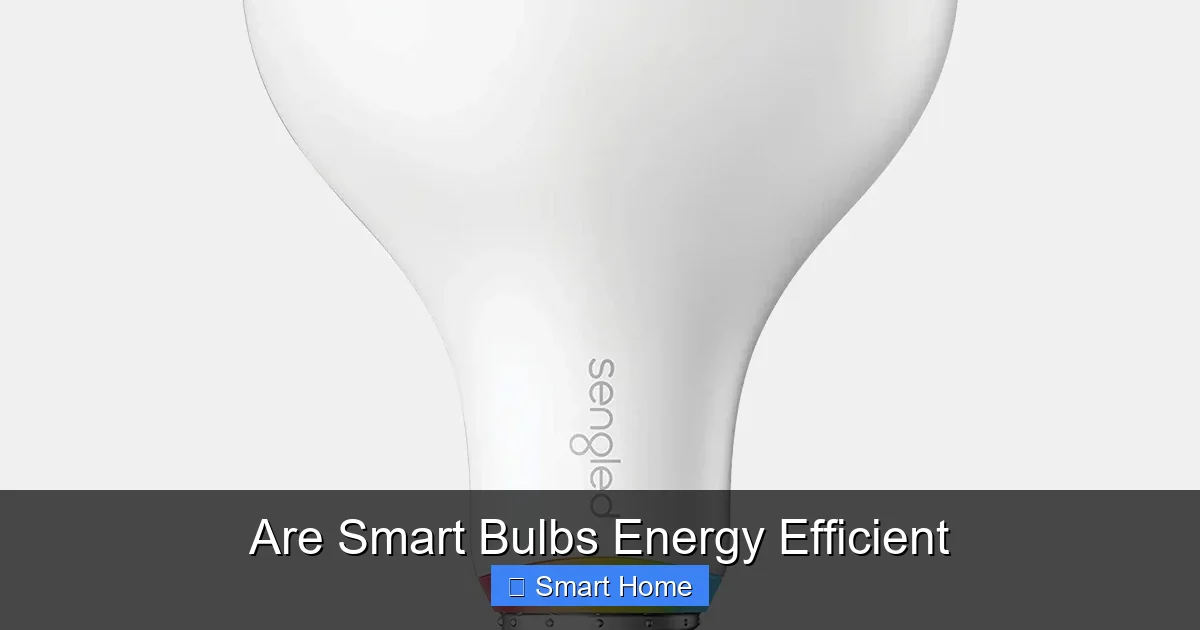
Smart bulbs are generally more energy efficient than traditional incandescent bulbs, using up to 80% less energy while offering advanced features like dimming and scheduling. With LED technology and smart controls, these bulbs help reduce electricity bills and environmental impact—when used wisely.
Are Smart Bulbs Energy Efficient?
You’ve probably seen them—those sleek, voice-controlled lights that let you change colors, dim the brightness, or turn on from your phone. Smart bulbs are everywhere these days, popping up in living rooms, bedrooms, and even outdoor spaces. But with all that tech inside, you might be wondering: Are smart bulbs actually energy efficient?
At first glance, it seems like adding intelligence to lighting should mean more power usage. After all, there’s a computer chip, Wi-Fi, and maybe even color-changing LEDs inside. But here’s the good news: most smart bulbs are built on energy-efficient LED technology, and their smart features can actually help you use less electricity over time. The real question isn’t just whether they’re efficient—it’s whether they’re efficient in practice, and how you use them.
In this article, we’ll break down exactly how smart bulbs compare to traditional lighting, what makes them efficient (or inefficient), and how to get the most energy-saving benefits from your smart lighting setup. Whether you’re considering upgrading your home lighting or just curious about the green credentials of your next smart bulb, we’ve got you covered.
Key Takeaways
- LED Technology: Most smart bulbs use LED chips, which are inherently more energy efficient than incandescent or halogen bulbs.
- Dimming and Scheduling: Smart features allow users to reduce brightness and automate usage, cutting down unnecessary energy consumption.
- Standby Power Draw: Even when “off,” some smart bulbs use a small amount of power—this can be minimized with smart plugs or power-saving modes.
- Energy Ratings Matter: Look for ENERGY STAR certification or high lumen-per-watt ratios to ensure optimal efficiency.
- Usage Patterns Impact Savings: The more you use smart features like motion sensors and geofencing, the greater your energy savings will be.
- Lifespan Reduces Waste: Longer-lasting bulbs mean less frequent replacement, lowering both cost and environmental footprint.
- Smart Home Integration: When paired with systems like Google Home or Alexa, smart bulbs can optimize lighting based on time, occupancy, and natural light.
📑 Table of Contents
- How Smart Bulbs Work: Tech Inside the Light
- Energy Efficiency Compared: Smart Bulbs vs. Traditional Lighting
- What Makes Smart Bulbs Energy Efficient?
- Potential Energy Drawbacks of Smart Bulbs
- How to Maximize Energy Efficiency with Smart Bulbs
- Are Smart Bulbs Worth the Energy Cost?
- Environmental Impact of Smart Bulbs
- Choosing the Most Energy-Efficient Smart Bulbs
How Smart Bulbs Work: Tech Inside the Light
Before we dive into energy efficiency, let’s understand what makes a smart bulb different from a regular one. At its core, a smart bulb is still an LED bulb—meaning it uses light-emitting diodes to produce light. But unlike traditional bulbs, smart bulbs include built-in electronics that allow them to connect to your home Wi-Fi, respond to voice commands, and follow schedules.
Inside the bulb, you’ll find:
– An LED driver (the component that powers the LED)
– A microcontroller (a tiny computer chip)
– A radio (like Wi-Fi or Zigbee) for communication
– Sometimes, a Bluetooth module for local control
These components allow features like remote access, color changes, dimming, and integration with smart home systems. But all of this added tech comes at a cost—not just in complexity, but in energy use.
The LED Foundation
Most smart bulbs use LED (light-emitting diode) technology. LEDs are far more energy efficient than older lighting types like incandescent or halogen bulbs. In fact, LEDs use up to 80% less energy than incandescent bulbs to produce the same amount of light. That’s because LEDs convert a higher percentage of electricity into light rather than heat.
For example, a 10-watt LED bulb can produce the same brightness as a 60-watt incandescent bulb. That’s a huge difference when you’re running lights all day.
Smart Features: Convenience vs. Energy Use
Now, the “smart” part. Features like voice control, scheduling, and app-based dimming don’t use much power when the bulb is off. But when the bulb is on—especially if it’s running 24/7 or constantly checking for updates—it may use slightly more energy than a non-smart LED.
However, the real energy savings come from how you use these features. For instance:
– Scheduling lights to turn off when you leave home
– Using motion sensors to only light rooms when someone’s there
– Dimming lights instead of running them at full brightness
These behaviors reduce overall energy consumption, even if the bulb itself uses a bit more power due to its smart components.
Energy Efficiency Compared: Smart Bulbs vs. Traditional Lighting
Visual guide about Are Smart Bulbs Energy Efficient
Image source: i.ebayimg.com
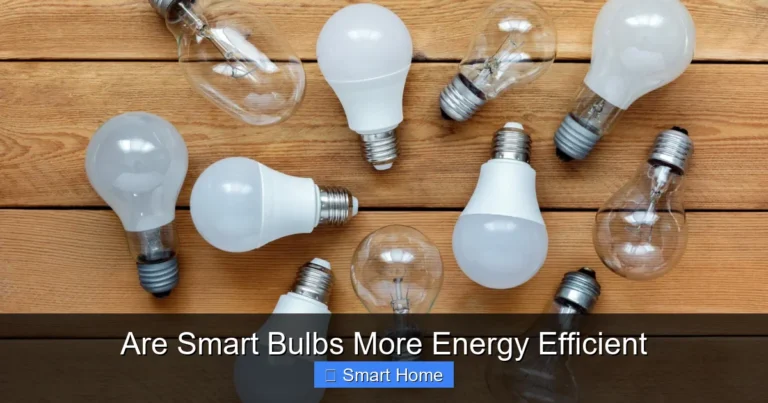
To understand if smart bulbs are truly energy efficient, we need to compare them to other lighting options. Let’s look at the big three: incandescent, CFL, and LED.
Incandescent Bulbs
These are the old-school bulbs that glow with a warm, yellowish light. They’re inefficient because most of the energy they use is turned into heat, not light. A 60-watt incandescent bulb uses far more electricity than a 10-watt LED equivalent.
If you’re still using incandescents, switching to a smart LED bulb is one of the easiest ways to cut your energy bill.
Compact Fluorescent Lamps (CFLs)
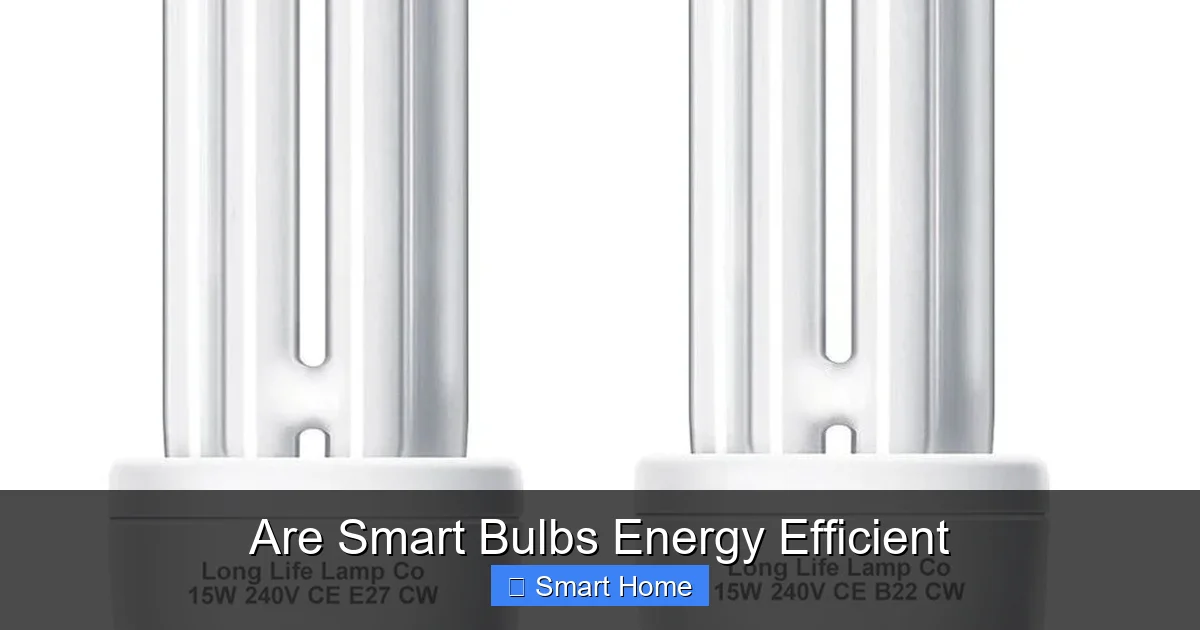
CFLs use about 75% less energy than incandescents and last longer. But they contain small amounts of mercury, require a warm-up time, and aren’t compatible with dimmers or smart systems in the same way LEDs are. Smart bulbs, especially LED-based ones, are a more modern and efficient replacement.
LED Bulbs (Non-Smart)
Standard LED bulbs are already energy efficient, using 70–90% less energy than incandescents. The difference with smart bulbs is mainly in the added features—not necessarily in the base energy use. In fact, some smart bulbs are built on the same LED platforms as non-smart versions, with only the control circuitry added.
So, are smart bulbs more efficient than regular LEDs? Not necessarily—but they can help you use less energy because they’re more convenient and controllable.
What Makes Smart Bulbs Energy Efficient?
Visual guide about Are Smart Bulbs Energy Efficient
Image source: wyattdowling.ca
Several factors contribute to the energy efficiency of smart bulbs. Let’s explore the key ones.
LED Technology
As mentioned, LEDs are the foundation. They’re designed to be efficient from the start. Smart bulbs that use high-quality LED chips will perform better in terms of lumens per watt (lm/W)—a measure of how much light you get for each watt of electricity used.
For example, a 9-watt smart bulb that produces 800 lumens has an efficiency of about 89 lm/W. That’s excellent compared to older technologies.
Dimming Capabilities
One of the biggest energy-saving features of smart bulbs is dimming. Most smart bulbs can be dimmed from 1% to 100% brightness. Running a light at 50% brightness uses roughly half the energy of running it at full power.
With smart bulbs, you can:
– Dim lights when watching movies
– Lower brightness in the evening to reduce eye strain and save energy
– Use geofencing to automatically dim lights when you’re home but relaxing
Automation and Scheduling
Smart bulbs can follow schedules set in apps or voice assistants. For example, you can program your lights to turn off at 11 PM or turn on only when motion is detected.
Automation prevents lights from being left on accidentally. It also allows for “vacation mode,” where lights simulate occupancy to deter burglars—without wasting energy.
Integration with Smart Home Systems
When smart bulbs work with systems like Google Home, Amazon Alexa, or Apple HomeKit, they can respond to routines. For example:
– “Goodnight” routine turns off all lights
– “Morning” routine slowly brightens lights to wake you up
– “Away” mode activates motion-sensing lighting only in high-traffic areas
These routines reduce unnecessary lighting and make energy use more intuitive.
Energy Monitoring (in Some Models)
A few smart bulbs come with energy monitoring features. These let you track how much electricity your lights use over time. While not all models include this, it can help you identify energy hogs and adjust usage.
Potential Energy Drawbacks of Smart Bulbs
Visual guide about Are Smart Bulbs Energy Efficient
Image source: static.vecteezy.com
While smart bulbs are generally efficient, they’re not perfect. There are a few ways they can use more energy than expected.
Standby Power Consumption
Even when turned off, some smart bulbs draw a small amount of power to stay connected to your Wi-Fi or respond to voice commands. This is called standby power or vampire power.
For example, a smart bulb might use 0.5 watts when off. While that seems small, if you have 10 bulbs like that running 24/7, that’s 120 watts per day—or about 43.8 kilowatt-hours (kWh) per year. At an average electricity rate of $0.12 per kWh, that’s about $5.26 in wasted energy annually.
How to Reduce Standby Power
You can minimize standby power in a few ways:
– Use a smart plug with energy-saving mode: These plugs can cut power to the bulb when it’s not needed.
– Enable “sleep mode” in your smart bulb app: Some bulbs have a low-power mode that reduces background usage.
– Turn off the light completely when not in use—not just “off” on the app.
Frequent Communication
Smart bulbs communicate with your router or hub to sync settings, check for updates, or respond to voice commands. This constant communication uses a tiny bit of energy. However, this is minimal—usually less than 0.1 watts—and the benefit of automation outweighs the cost.
How to Maximize Energy Efficiency with Smart Bulbs
You don’t have to do anything special to make smart bulbs efficient—they’re designed to be efficient. But there are smart habits you can adopt to get even more energy savings.
Use Scheduling Wisely
Set up schedules based on your daily routine. For example:
– Turn off bedroom lights at 11 PM
– Lights in the living room only come on when motion is detected
– Kitchen lights only activate during meal prep hours
Avoid leaving lights on “just in case.” Automation takes the guesswork out of energy use.
Take Advantage of Geofencing
Geofencing uses your phone’s location to turn lights on when you’re near home and off when you’re away. This ensures lights aren’t left on unnecessarily.
Dim When Possible
Dimming uses less energy. Use warm dimming (2700K–3000K) in living areas for comfort and lower brightness in reading nooks or hallways.
Use Natural Light
Smart bulbs can be set to gradually dim as daylight increases. This reduces the need for artificial lighting during the day.
Choose the Right Bulb for the Room
Not all bulbs are created equal. Use cooler, brighter bulbs (4000K–5000K) in kitchens and workspaces. Use warmer, dimmer bulbs (2700K–3000K) in bedrooms and living rooms.
Turn Off the Power
For maximum efficiency, especially if you have many smart bulbs, consider using a smart plug that cuts power when the bulb isn’t in use.
Are Smart Bulbs Worth the Energy Cost?
Yes, absolutely—especially if you’re replacing inefficient bulbs like incandescents. The energy saved by switching to LEDs (even smart ones) far outweighs the small extra energy used by the smart features.
Let’s do a quick comparison:
| Bulb Type | Watts | Lumens | Annual Energy Use (kWh) | Estimated Annual Cost* |
|———|——-|——–|————————–|————————|
| 60W Incandescent | 60 | 800 | 525 | $63.00 |
| 9W Smart LED | 9 | 800 | 78.75 | $9.45 |
| Standby Draw (10 bulbs @ 0.5W each) | — | — | 43.8 | $5.26 |
*Estimated at $0.12 per kWh
Even accounting for standby power, the smart LED bulb saves you over 80% in energy costs compared to an incandescent. And that’s before you factor in the convenience of automation, dimming, and scheduling.
Environmental Impact of Smart Bulbs
Energy efficiency isn’t just about cost—it’s about reducing your carbon footprint. Electricity generation is a major source of greenhouse gas emissions. By using less energy, you help reduce demand on power plants, especially those running on coal or gas.
LED bulbs last 25 times longer than incandescent bulbs, meaning fewer bulbs end up in landfills. Smart bulbs typically last 20,000 to 50,000 hours—far longer than traditional bulbs.
Additionally, many smart bulb manufacturers are moving toward recyclable packaging and reducing plastic use. Some brands even offer take-back programs for old bulbs.
Choosing the Most Energy-Efficient Smart Bulbs
Not all smart bulbs are equally efficient. Here’s how to pick the best ones:
Look for ENERGY STAR Certification
ENERGY STAR is a U.S. government-backed program that certifies energy-efficient products. Smart bulbs with this label meet strict efficiency and performance standards.
Check Lumen-per-Watt Ratios
A higher lm/W ratio means more light for less electricity. Aim for bulbs with at least 70 lm/W.
Choose Wi-Fi vs. Zigbee Wisely
Wi-Fi bulbs connect directly to your router and may use slightly more power. Zigbee or Z-Wave bulbs use less power and are better for large smart home setups.
Opt for Local Control
Some bulbs can be controlled locally (via Bluetooth) without needing a constant internet connection. This reduces standby power.
Read Reviews for Real-World Data
Manufacturer specs are one thing—real-world energy use can vary. Look for reviews that mention energy use, heat output, and longevity.
Frequently Asked Questions
Are smart bulbs more energy efficient than regular LED bulbs?
Not necessarily. Smart bulbs and regular LEDs often use similar amounts of power when lit. The real energy savings come from smart features like scheduling and dimming, which help you use less electricity overall.
Do smart bulbs use power when turned off?
Yes, most smart bulbs use a small amount of standby power (usually 0.1–0.5 watts) to stay connected to Wi-Fi or respond to voice commands. This can add up over time, but the energy cost is minimal.
Can I reduce standby power on my smart bulbs?
Yes. Use smart plugs with energy-saving modes, enable sleep mode in your bulb’s app, or turn off the light completely when not needed. Some bulbs also support power-saving protocols like Zigbee.
Are smart bulbs worth it for energy savings?
Absolutely. Even with standby power, smart bulbs use far less energy than incandescent bulbs and last much longer. The convenience and automation features help you reduce electricity use in real time.
How do I choose the most energy-efficient smart bulb?
Look for ENERGY STAR certification, high lumen-per-watt ratios, and efficient communication protocols like Zigbee. Also, consider local control options and read user reviews for real-world energy performance.
Do smart bulbs work with solar power systems?
Yes, smart bulbs can work with solar-powered homes. Since they use very little energy, they’re compatible with most solar setups. Just make sure your system can handle the small power draw of Wi-Fi or Zigbee radios.