Can Smart Bulbs Be Hacked
Can smart bulbs be hacked? Yes, unfortunately—but understanding how and why is the first step to protecting your home. Smart bulbs connect to the internet, making them potential entry points for cybercriminals if not properly secured. With a few simple steps, you can significantly reduce the risk and keep your smart lighting system safe.
Key Takeaways
- Yes, smart bulbs can be hacked: Due to internet connectivity and software vulnerabilities, smart bulbs are not immune to cyber threats.
- Common attack vectors: Weak passwords, unsecured Wi-Fi networks, outdated firmware, and insecure cloud services are frequent entry points.
- Real-world examples exist: Hackers have demonstrated remote control of smart lights, used them for DDoS attacks, and even turned them into listening devices.
- You can protect your bulbs: Strong passwords, regular updates, network segmentation, and choosing reputable brands go a long way.
- Impact of a hack: Beyond privacy risks, hacked smart bulbs can be used to spy, disrupt routines, or even serve as part of larger botnets.
- Stay informed: Awareness and proactive security measures are your best defense against smart bulb hacking.
📑 Table of Contents
- Can Smart Bulbs Be Hacked? The Truth Behind Smart Lighting Security
- How Smart Bulbs Work: The Technology Behind the Lights
- Can Smart Bulbs Be Hacked? The Short Answer
- Real-World Examples of Smart Bulb Hacks
- How Hackers Gain Access to Smart Bulbs
- What Happens If Your Smart Bulb Is Hacked?
- How to Protect Your Smart Bulbs from Being Hacked
- Smart Bulb Security vs. Convenience: Finding the Balance
- What to Do If You Suspect Your Smart Bulb Is Hacked
- The Future of Smart Bulb Security
- Conclusion: Stay Smart, Stay Safe
Can Smart Bulbs Be Hacked? The Truth Behind Smart Lighting Security
Imagine walking into a dark room and your smart bulb flickering on and off like a disco light—completely out of your control. Or worse, your bedroom light suddenly flashing red while you sleep, not because you set it that way, but because someone else is remotely accessing it. Sounds like a sci-fi thriller, right? But this isn’t fiction—it’s a real concern for millions of smart home users. The question on everyone’s mind is: Can smart bulbs be hacked?
As smart home technology becomes more affordable and accessible, smart bulbs are lighting up living rooms, offices, and bedrooms around the world. These nifty devices allow you to control your lighting with your voice, smartphone, or even automate them based on your daily routines. But with convenience comes responsibility—and risk. Like any internet-connected device, smart bulbs are potential targets for cybercriminals. The good news? Understanding how hacking works and what you can do about it is the key to staying safe.
In this article, we’ll dive deep into the world of smart bulb security. We’ll explore how hackers might target your lights, what real-world attacks have looked like, and—most importantly—how you can protect yourself. Whether you’re a tech newbie or a smart home enthusiast, this guide will help you make informed decisions and keep your home secure.
How Smart Bulbs Work: The Technology Behind the Lights
Before we talk about hacking, let’s break down how smart bulbs actually function. Unlike traditional bulbs, smart bulbs connect to your home Wi-Fi network. This allows them to receive commands from your smartphone app, voice assistant (like Alexa or Google Assistant), or automated routines. Some even use Bluetooth or Zigbee protocols for communication, depending on the model.
Visual guide about Can Smart Bulbs Be Hacked
Image source: images.deepai.org
Key Components of Smart Bulbs
- LED Chip: The actual light source, just like in regular bulbs.
- Microcontroller: The tiny computer inside that handles instructions.
- Wireless Module: Wi-Fi, Bluetooth, or Zigbee that connects the bulb to your network.
- Mobile App or Cloud Service: The bridge between you and the bulb, often hosted by the manufacturer.
When you ask your phone to turn on the living room light, the app sends a signal through the internet to the manufacturer’s cloud server. The server then relays the command to your bulb via your home Wi-Fi. It’s a simple flow, but it introduces several potential weak points—especially if security isn’t a top priority during development.
Common Smart Bulb Brands and Their Security Posture
Not all smart bulbs are created equal when it comes to security. Some manufacturers, like Philips Hue and LIFX, have strong reputations for regular firmware updates and robust encryption. Others, especially cheaper, off-brand models, may cut corners on security to keep prices low. Researching the brand before buying is one of the best ways to reduce your risk of being hacked.
Can Smart Bulbs Be Hacked? The Short Answer
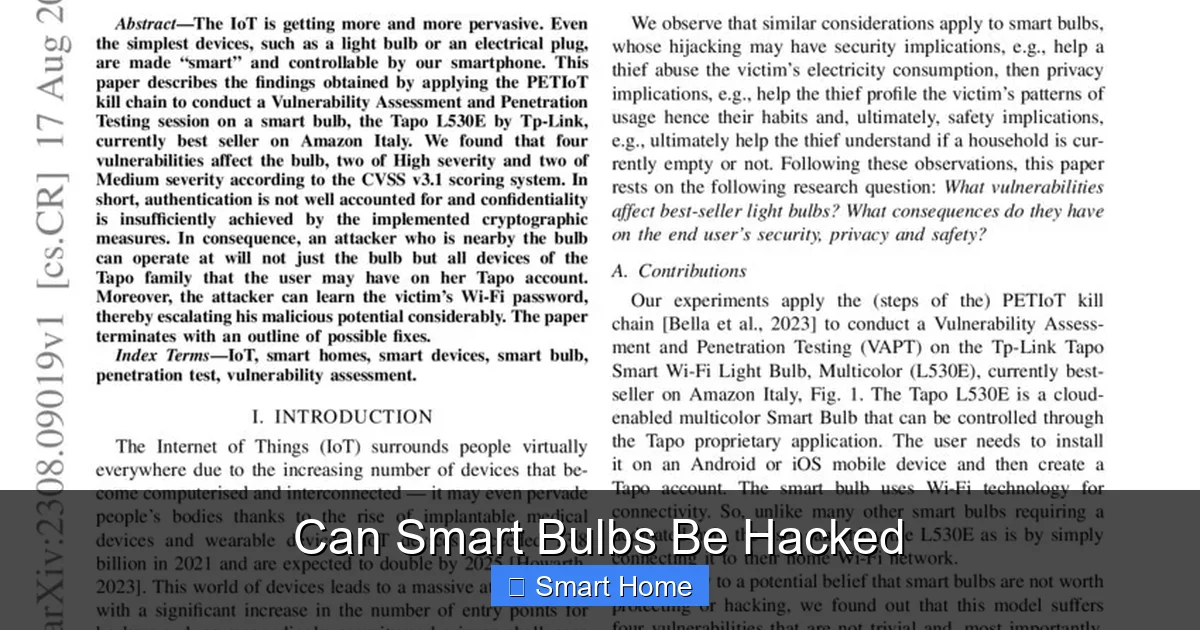
Yes, smart bulbs can be hacked. While they may not be as high-profile as hacking a car or a bank account, smart bulbs are vulnerable to cyberattacks due to their internet connectivity and reliance on third-party cloud services. Hackers don’t need physical access—just a few technical skills and the right tools.
Visual guide about Can Smart Bulbs Be Hacked
Image source: smarthomeowl.com
Let’s be clear: hacking a smart bulb isn’t about stealing your Netflix password or draining your bank account. It’s more about control, access, and sometimes, mischief. But even minor breaches can lead to bigger problems if they’re part of a larger smart home network.
Real-World Examples of Smart Bulb Hacks
To understand the risk, let’s look at what’s already happened.
Visual guide about Can Smart Bulbs Be Hacked
Image source: iottechtrends.com
1. The “Lampbrella” Attack
In 2019, security researchers demonstrated a clever attack where they hacked a smart lamp (including its bulb) to send fake weather alerts. By manipulating the bulb’s display or light patterns, they tricked users into thinking it was raining—even when it wasn’t. This wasn’t just a prank; it showed how easily smart devices can be manipulated to spread misinformation.
2. DDoS Attacks Using Smart Lights
Smart bulbs have been recruited into botnets—networks of compromised devices used to launch Distributed Denial of Service (DDoS) attacks. These attacks overwhelm websites with traffic, making them inaccessible to real users. While individual bulbs don’t have much processing power, thousands of them can be used together to create significant disruption. In 2020, a botnet called “IoTroop” was found using cheap smart devices, including bulbs, to launch attacks.
3. Privacy Concerns: Using Lights as Microphones
Some researchers have explored whether smart bulbs can be used to detect sound. While not a common hack, the idea is that tiny vibrations in the bulb’s filament or housing could be analyzed to infer audio patterns. This is still largely theoretical, but it highlights how even passive devices can be repurposed for surveillance.
How Hackers Gain Access to Smart Bulbs
Now that we’ve seen real examples, let’s explore the most common ways hackers target smart bulbs.
1. Weak or Default Passwords
Many smart bulbs come with default usernames and passwords—like “admin/admin”—that users never change. Hackers scan the internet for devices using these credentials and gain access in seconds. Even if you change the password, using something like “password123” makes it easy to crack with automated tools.
2. Unsecured Wi-Fi Networks
If your home Wi-Fi isn’t encrypted or uses WEP (an outdated security protocol), hackers can intercept data traveling between your bulb and the cloud. This allows them to eavesdrop or inject malicious commands. Always use WPA3 or WPA2 encryption on your router.
3. Outdated Firmware
Smart bulbs receive firmware updates to fix bugs and improve security. But many users never check for updates, leaving known vulnerabilities open. Hackers exploit these outdated systems to take control.
4. Insecure Cloud Services
The cloud server that relays commands to your bulb may have security flaws. If it’s poorly protected, hackers can intercept data or spoof commands. This is why choosing a reputable brand with strong cloud security matters.
5. Man-in-the-Middle (MitM) Attacks
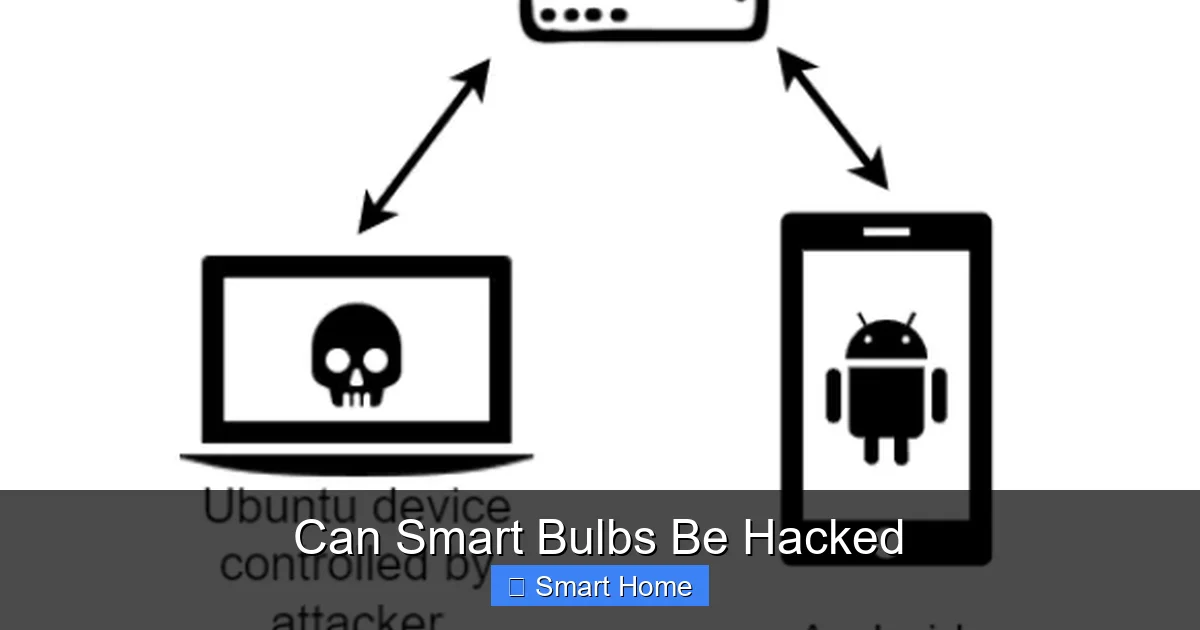
In this type of attack, a hacker positions themselves between your phone and the bulb, intercepting and possibly altering the communication. This can happen if your network isn’t properly segmented or if you’re using public Wi-Fi.
What Happens If Your Smart Bulb Is Hacked?
So, what’s the worst that could happen if your smart bulb gets hacked?
You Lose Control
Once hacked, you may no longer be able to control the bulb through your app or voice assistant. The hacker can turn it on, off, change colors, or set it to blink at random intervals. Imagine coming home to a strobe-light party you didn’t invite.
Privacy Violations
Some smart bulbs have microphones or cameras (though rare in standard bulbs). If compromised, these could be used to eavesdrop. Even without those features, the timing and patterns of your lighting could reveal routines—like when you’re home or asleep.
Part of a Larger Attack
Hacked bulbs can be used as stepping stones to attack other devices on your network. Once inside one device, hackers often try to move laterally to access your computer, smart TV, or security cameras.
Reputation Damage
If your hacked bulb is part of a botnet, it could be used to send spam or launch attacks on others. You might unknowingly become an accomplice to cybercrime.
How to Protect Your Smart Bulbs from Being Hacked
The good news? Most smart bulb hacks are preventable with simple, practical steps.
1. Use Strong, Unique Passwords
Change the default password on your smart bulb app and router. Use a mix of uppercase, lowercase, numbers, and symbols. Consider using a password manager to generate and store secure passwords.
2. Keep Firmware Updated
Regularly check for firmware updates in your bulb’s app. Enable automatic updates if available. This ensures you have the latest security patches.
3. Secure Your Wi-Fi Network
Use WPA3 encryption (or WPA2 if WPA3 isn’t available). Change your Wi-Fi password every few months. Avoid using public Wi-Fi for smart home control.
4. Segment Your Network
Use a guest network or VLAN to isolate smart devices from your main devices (like laptops and phones). This limits the damage if a bulb is compromised.
5. Choose Reputable Brands
Stick with well-known brands that prioritize security and provide regular updates. Avoid unknown, no-name brands from discount stores.
6. Disable Unused Features
If your bulb has voice control or remote access, disable it if you don’t use it. Fewer active features mean fewer attack surfaces.
7. Monitor Your Devices
Check your smart bulb app for unusual activity. If your lights are acting strange, investigate immediately. Some apps show login history or device status.
Smart Bulb Security vs. Convenience: Finding the Balance
It’s easy to feel overwhelmed by security concerns. After all, we want smart homes to be safe *and* convenient. The key is balance.
Think of smart bulb security like locking your front door. You don’t stop using your home because of a lock—you use it to protect what matters. Similarly, smart bulbs shouldn’t scare you away from automation and convenience. Instead, they should encourage you to be more thoughtful about how you set up and manage your devices.
For example, you might decide to keep sensitive areas (like bedrooms) on a separate network or use physical switches as backups. These small choices add up to meaningful protection.
What to Do If You Suspect Your Smart Bulb Is Hacked
Even with the best precautions, breaches can happen. Here’s what to do if you suspect your smart bulb has been hacked:
- Disconnect the bulb from Wi-Fi: Unplug it or turn off its network access.
- Change your passwords: Update your router, app, and cloud account passwords.
- Check for updates: Install any pending firmware updates.
- Review connected devices: Look for unknown devices on your network.
- Contact the manufacturer: Report the issue and ask for support.
- Monitor other devices: Hackers may have accessed your whole network.
In most cases, removing and resetting the bulb will resolve the issue. But it’s important to act quickly to prevent further damage.
The Future of Smart Bulb Security
As smart home technology evolves, so does the threat landscape. Manufacturers are becoming more aware of security risks and are implementing better practices—like end-to-end encryption and secure boot processes. Some are even introducing hardware security chips to protect data.
At the same time, users are getting smarter. Awareness of risks like “can smart bulbs be hacked” is growing, leading to more proactive security habits. This arms race between hackers and defenders is ongoing, but the trend is moving in the right direction.
Future smart bulbs may come with built-in security features like automatic anomaly detection, user behavior analytics, and even self-repairing firmware. While we’re not there yet, the foundation for better security is being laid today.
Conclusion: Stay Smart, Stay Safe
So, can smart bulbs be hacked? Absolutely. But that doesn’t mean you should avoid them altogether. Smart lighting offers incredible benefits—energy savings, convenience, ambiance—that far outweigh the risks when you take proper precautions.
The truth is, any internet-connected device can be a target. Smart bulbs are just one piece of the puzzle in your smart home ecosystem. By staying informed, choosing secure devices, and following best practices, you can enjoy the benefits of smart lighting without fear.
Remember: security isn’t about perfection—it’s about awareness. The more you know about how smart bulbs work and how they can be compromised, the better equipped you’ll be to protect your home. So go ahead—light up your life with smart bulbs. Just make sure they’re doing it on your terms.
Frequently Asked Questions
Can smart bulbs be hacked remotely?
Yes, smart bulbs can be hacked remotely if they have weak security. Hackers can exploit unsecured networks, default passwords, or outdated firmware to take control of your bulbs from anywhere in the world.
How do I know if my smart bulb has been hacked?
Signs include unexpected light changes, flickering, or your app showing unfamiliar activity. If your bulb behaves erratically without your input, it could be a sign of unauthorized access.
Are all smart bulbs equally vulnerable to hacking?
No. Reputable brands like Philips Hue and LIFX typically offer better security with regular updates and strong encryption. Cheap, off-brand bulbs are often more vulnerable due to poor security practices.
Can hacking a smart bulb affect my entire home network?
Yes. If your smart bulb is connected to the same network as your computer or security cameras, a hacker could potentially use it as a gateway to access other devices.
Is it safe to use smart bulbs with voice assistants?
It can be safe if you take precautions. Use strong passwords, keep firmware updated, and disable voice control when not needed. Also, be aware that voice assistants can be tricked by audio commands.
How often should I update my smart bulb firmware?
Check for updates at least once every few months, or enable automatic updates if available. Regular updates patch security vulnerabilities and improve device performance.