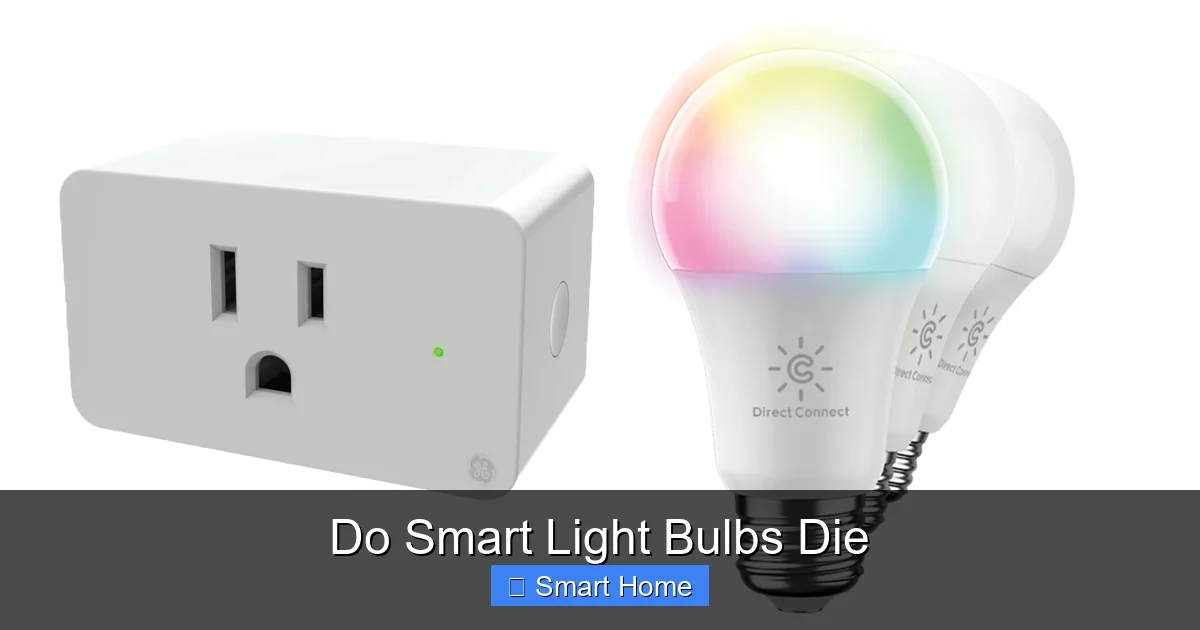
Do Smart Light Bulbs Die
Smart light bulbs don’t “die” overnight—they gradually lose brightness and efficiency over time. Like traditional bulbs, their lifespan depends on usage, quality, and environmental factors. Understanding how long they last and how to care for them can save you money and keep your smart home glowing.
Key Takeaways
- Smart light bulbs have a finite lifespan: Most last 15,000 to 25,000 hours, depending on the type and brand.
- They don’t “die” suddenly: Instead, they dim, flicker, or change color before needing replacement.
- Usage patterns matter: Frequent on/off cycles and high brightness levels can shorten their life.
- Quality affects longevity: Premium brands like Philips Hue and LIFX often outlast budget options.
- Smart features don’t kill bulbs: Wi-Fi and app control use minimal power and don’t accelerate wear.
- Proper installation and care extend life: Avoid overheating, tight fixtures, and voltage fluctuations.
- Recycling is important: Dispose of old smart bulbs responsibly—many contain recyclable materials.
📑 Table of Contents
- Do Smart Light Bulbs Die?
- How Long Do Smart Light Bulbs Last?
- Do Smart Features Shorten the Lifespan?
- Signs Your Smart Bulb Is Dying
- How to Extend the Life of Your Smart Bulbs
- Smart Bulbs vs. Traditional Bulbs: A Lifespan Comparison
- What Happens When a Smart Bulb Dies?
- Can You Recycle Smart Light Bulbs?
- Choosing the Right Smart Bulb for Longevity
- Conclusion: Do Smart Light Bulbs Die?
Do Smart Light Bulbs Die?
We’ve all been there—you’re relaxing with your favorite movie, the soft glow of your smart lights casting a warm ambiance, when suddenly the bulb flickers and dies. Or maybe it’s been dimming slowly over months, making you wonder: Do smart light bulbs die? The short answer is yes—but not in the dramatic, sudden way you might imagine. Like any electronic device, smart bulbs have a lifespan. They don’t just vanish overnight, but they do degrade over time. Understanding how and why this happens can help you make smarter choices for your home lighting.
Smart light bulbs are more than just bulbs with Wi-Fi. They’re compact computers with LEDs, sensors, and wireless chips that allow you to control them from your phone, voice assistants, or home automation systems. While these features make them incredibly convenient, they also mean the bulbs are more complex than traditional incandescent or even CFL bulbs. So, do smart light bulbs die? Absolutely. But the good news is that with proper care, they can last a long time—often longer than you’d expect.
How Long Do Smart Light Bulbs Last?
The lifespan of a smart light bulb varies depending on the type of bulb, the quality of its components, and how you use it. Most smart bulbs are LED-based, and LEDs are known for their longevity. On average, you can expect a high-quality smart LED bulb to last between 15,000 and 25,000 hours. To put that in perspective, if you use your smart bulb for three hours a day, that’s roughly 14 to 23 years of use.
Factors That Influence Lifespan
Several key factors determine how long your smart bulb will last:
- Quality of LEDs: Cheaper bulbs may use lower-grade LEDs that degrade faster.
- Heat management: Poor heat dissipation can shorten the bulb’s life.
- Usage patterns: Frequent switching on and off, or keeping the bulb at maximum brightness for long periods, can wear it out faster.
- Voltage stability: Power surges or inconsistent voltage can damage internal electronics.
- Brand reputation: Established brands like Philips Hue, LIFX, and Sylvania tend to use more durable components.
For example, a budget smart bulb from an unknown brand might last only 10,000 hours, while a premium Philips Hue bulb could easily exceed 20,000 hours. The difference often comes down to build quality, thermal design, and component reliability.
Do Smart Features Shorten the Lifespan?
One common question is whether the smart features—like Wi-Fi connectivity, app control, and voice commands—cause the bulb to die faster. The answer is no, not significantly. The smart components in a bulb use very little power. The LED itself is what consumes most of the energy and generates heat, but the electronics are designed to operate efficiently even when connected to a network.
Power Consumption Breakdown
Here’s a quick look at how much power different parts of a smart bulb use:
- LED: 70–80% of total energy use
- Driver circuit (controls LED): 10–15%
- Wi-Fi module: Less than 5%
- Sensors (e.g., motion or ambient light): Minimal
Because the smart features use so little power, they don’t contribute meaningfully to the bulb’s degradation. In fact, some smart bulbs are designed to enter low-power “sleep” mode when not in use, which helps conserve energy and extend life.
Signs Your Smart Bulb Is Dying
Smart bulbs don’t suddenly explode or vanish. Instead, they give subtle clues that it’s time to replace them. Recognizing these signs early can save you from sudden lighting failures.
Common Warning Signs
- Flickering: This is often the first sign. It could be due to loose wiring, power fluctuations, or internal component wear.
- Dimming: If the light gets noticeably weaker over time, the LED is likely nearing the end of its life.
- Color shifts: Some smart bulbs change color temperature or fail to reach full brightness.
- App disconnections: If your bulb frequently drops from your smart home network, it might be a hardware issue.
- Overheating: If the bulb feels unusually warm, especially in a ceiling fixture, it could be overworking.
For example, if you notice your smart bulb in the living room flickering every few minutes, check the fixture first. If the fixture is fine, the bulb might be failing. Try replacing it with a new one to confirm.
How to Extend the Life of Your Smart Bulbs
You don’t have to accept a short lifespan. With a few simple habits, you can make your smart bulbs last longer and perform better.
Best Practices for Longevity
- Use dimmer settings: Running a bulb at 100% brightness for long periods generates more heat and wears out the LED faster. Dimming to 70–80% can extend life by up to 30%.
- Avoid frequent switching: While modern smart bulbs handle on/off cycles well, excessive switching can still stress the electronics.
- Keep bulbs cool: Ensure proper airflow around the bulb. Avoid enclosed fixtures unless the bulb is rated for it.
- Use surge protectors: Protect your bulbs from power spikes, especially during storms.
- Update firmware: Manufacturers often release updates that improve efficiency and stability.
For instance, if you’re using smart bulbs for ambient lighting at night, consider setting them to a dim, warm tone instead of full brightness. This not only saves energy but also reduces heat output.
Smart Bulbs vs. Traditional Bulbs: A Lifespan Comparison
It’s easy to compare smart bulbs to traditional incandescent or CFL bulbs, but the differences are significant. Let’s break it down:
Lifespan Comparison Table
| Bulb Type | Average Lifespan (Hours) | Smart Features? |
|---|---|---|
| Incandescent | 1,000 | No |
| CFL | 8,000–10,000 | No |
| Halogen | 2,000–4,000 | No |
| Standard LED | 15,000–25,000 | No |
| Smart LED | 15,000–25,000+ | Yes |
As you can see, smart bulbs are not only more energy-efficient but also last longer than most traditional bulbs. The added smart features don’t come at the cost of longevity—in fact, they often include better thermal management and quality components.
What Happens When a Smart Bulb Dies?
When a smart bulb dies, it’s usually because the LED has burned out or the internal circuit has failed. Unlike a traditional bulb that just stops working, a dead smart bulb may:
- Stop responding to app or voice commands
- Fail to connect to your Wi-Fi network
- Show error messages in the app (e.g., “Bulb not found”)
- Flicker or emit a faint glow
In most cases, the bulb is simply replaced. Smart bulbs are designed to be user-replaceable, so you don’t need a technician. Just screw in a new one and re-pair it with your system.
Can You Recycle Smart Light Bulbs?
Yes, smart bulbs can and should be recycled. They contain materials like aluminum, plastic, and rare earth elements from the LED components. Many manufacturers offer take-back programs or partner with recycling centers. For example, Philips and Cree provide recycling options for their bulbs.
Check with your local waste management authority or retailer to find a recycling point near you. Never throw smart bulbs in the trash—they can release harmful substances if not handled properly.
Choosing the Right Smart Bulb for Longevity
If you want your smart bulbs to last, start with a high-quality brand. Here are some tips when shopping:
- Look for ENERGY STAR certification: This ensures efficiency and durability.
- Check warranty: A 2–5 year warranty often indicates confidence in the product.
- Read reviews: Focus on comments about lifespan and reliability.
- Avoid overly cheap options: If it seems too cheap, it probably won’t last.
For example, the Philips Hue White and Color Ambiance bulb comes with a 2-year warranty and has a rated lifespan of 15,000 hours. It’s a solid investment if you want reliability.
Conclusion: Do Smart Light Bulbs Die?
Yes, smart light bulbs do die—but they don’t die suddenly or without warning. With proper care, high-quality models can last 15,000 to 25,000 hours, which is far longer than most traditional bulbs. The smart features themselves don’t shorten their life; in fact, they’re built to last. By understanding how to use and maintain your bulbs, you can enjoy reliable, long-lasting smart lighting that enhances your home without constant replacements.
Remember: dimming when you can, avoiding frequent switching, and choosing reputable brands are your best tools for extending bulb life. And when it’s time to replace, do so responsibly by recycling. Smart lighting isn’t just about convenience—it’s about smart choices that last.
Frequently Asked Questions
How long should smart light bulbs last?
Most smart LED bulbs last between 15,000 and 25,000 hours. If used 3 hours per day, that’s roughly 14 to 23 years. Quality and usage patterns affect this range.
Do smart bulbs wear out faster than regular LEDs?
No, smart bulbs typically last as long as—or longer than—standard LEDs. Their smart features use minimal power and don’t significantly reduce lifespan.
Can I leave smart bulbs on all night?
Yes, but dimming them reduces heat and energy use, which can extend their life. Avoid 100% brightness for long periods.
Why is my smart bulb flickering?
Flickering can be due to loose wiring, power issues, or internal component failure. Check the fixture first, then consider replacing the bulb.
Are smart bulbs worth the extra cost?
Yes, if you value convenience, energy savings, and long-term reliability. Premium smart bulbs often outlast cheaper models and offer better performance.
How do I know when to replace my smart bulb?
Look for signs like flickering, dimming, color shifts, or app disconnections. These indicate the bulb is nearing the end of its life.