Ambient Light Desk Lamp
An ambient light desk lamp isn’t just a lamp—it’s a wellness tool for your eyes and mind. It provides soft, glare-free illumination that mimics natural daylight, reducing eye strain and headaches during long work or study sessions. Unlike harsh overhead lights, these lamps create a calming, focused atmosphere that enhances concentration and improves your overall comfort at your desk. Investing in the right one can significantly upgrade your daily productivity and well-being.
Have you ever finished a long day at your desk feeling a deep, aching fatigue behind your eyes? That gritty, dry sensation isn’t just from staring at a screen for hours. A huge part of it comes from the light—or lack thereof—in your workspace. The glaring overhead fluorescent, the single, harsh bulb in a cheap desk lamp, or the deep shadows cast across your keyboard. This is where the humble ambient light desk lamp steps in, not as a mere accessory, but as a fundamental piece of ergonomic equipment for your modern life. It’s the unsung hero of the home office, the quiet guardian of your reading nook, and the secret weapon for students pulling all-nighters. This isn’t about just lighting a room; it’s about crafting the perfect micro-climate of illumination for your specific task and time of day. Let’s dive deep into why this simple tool is so powerful and how to choose one that truly transforms your space.
Key Takeaways
- Eye Comfort is Primary: Ambient lamps eliminate glare and harsh shadows, directly combating digital eye strain and fatigue from screens and detailed tasks.
- Mood & Atmosphere Creator: The right color temperature (warm vs. cool) and dimmability can signal your brain to relax or focus, actively supporting your circadian rhythm.
- Task-Specific Versatility: They are ideal not just for desks, but for reading nooks, craft stations, and home offices, providing targeted light where you need it most.
- Tech-Enhanced Functionality: Many modern models integrate smart features like app control, scheduling, and voice commands, blending seamlessly with a smart light bulb ecosystem.
- Design as Decor: These lamps are designed to be aesthetically pleasing, serving as a stylish object on your desk that complements your home’s decor rather than cluttering it.
- Energy Efficient & Long-Lasting: Using LED technology, they consume minimal power and can last for years, offering both environmental and cost benefits over traditional bulbs.
- Simple Setup, Big Impact: A quick adjustment of position, brightness, and color temperature can immediately transform your workspace comfort and efficiency.
📑 Table of Contents
What Exactly *Is* an Ambient Light Desk Lamp?
Let’s clear up the terminology first, because “ambient light” gets thrown around a lot. In lighting design, ambient light is the general, soft illumination that fills a space and provides overall visibility. It’s the opposite of task lighting, which is a focused, bright beam aimed at a specific activity (like a spotlight on a cookbook). An ambient light desk lamp cleverly blends these concepts. It’s a lamp designed for your desk—a task area—but instead of firing a piercing spotlight directly onto your work, it emits a broader, softer, and more evenly distributed glow.
The Science of Softness: Diffusers and Shields
The magic is in the engineering. These lamps use wide shade designs, fabric or acrylic diffusers, and sometimes internal reflectors to scatter the light. This process eliminates the stark contrast between the brightly lit work surface and the darker surroundings. The result? No harsh glare off your computer screen or glossy paper, no deep, eye-straining shadows under your nose or hands. It creates a gentle, enveloping field of light that makes the entire desk area feel uniformly bright and comfortable. Think of the difference between a camera flash (task light) and the soft, even light of a cloudy day (ambient light).
Color Temperature: The Hidden Mood Switch
This is the second critical feature. Light isn’t just white; it has a “temperature” measured in Kelvin (K). Warm light (2700K-3000K) has yellow/orange hues, like sunset or old incandescent bulbs. It’s calming, cozy, and perfect for evening relaxation. Cool light (5000K-6500K) has blue-ish tones, mimicking bright daylight. It’s energizing, promotes alertness, and is ideal for detailed work, studying, or morning tasks. The best ambient desk lamps offer adjustable color temperature, often called “tunable white” or “circadian rhythm lighting.” This allows you to sync your lamp’s output with your body’s natural clock—cool for focused afternoon work, warm for winding down in the evening. Some even automate this shift.
The Profound Benefits: More Than Just Brighter
So why go through the trouble? The benefits extend far beyond “I can see better.” They directly impact your physical health, mental state, and work output.
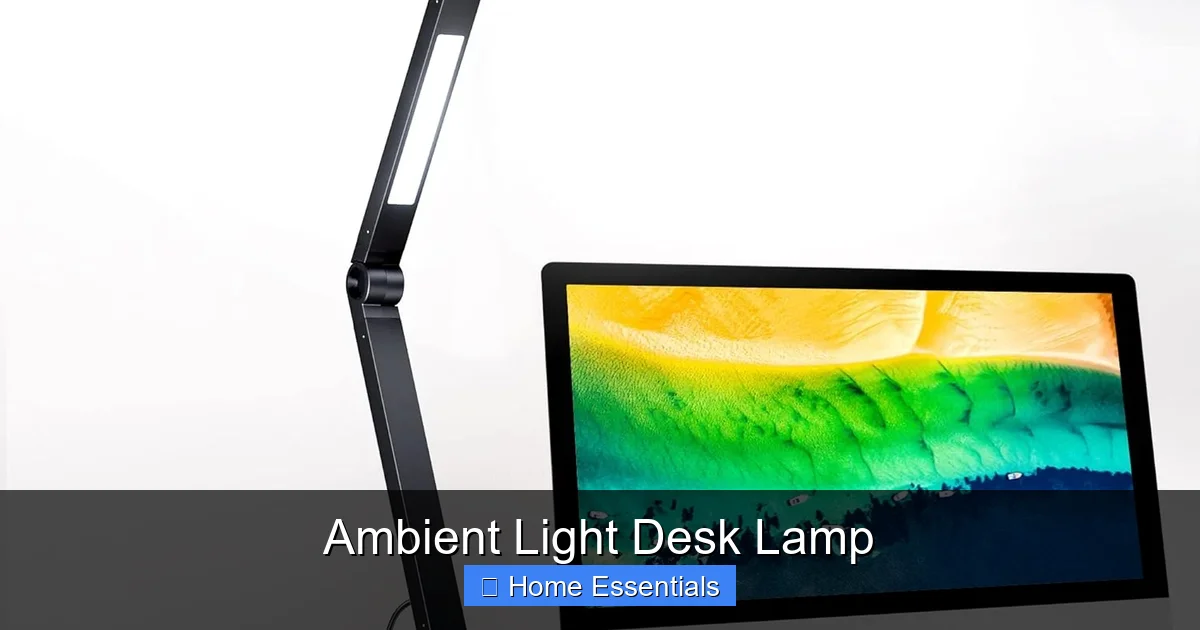
Visual guide about Ambient Light Desk Lamp
Image source: m.media-amazon.com
1. A Shield for Your Eyes (The End of Digital Eye Strain)
Digital Eye Strain, or Computer Vision Syndrome, is a real medical condition. Symptoms include sore eyes, headaches, blurred vision, and neck pain. A primary culprit is glare and poor contrast. An ambient desk lamp, by providing even, shadow-minimizing light, drastically reduces the effort your eye muscles need to focus. Your eyes don’t have to constantly adjust between a bright screen and a dark desk. Furthermore, many modern ambient lamps are flicker-free and have a high Color Rendering Index (CRI). Flicker (often invisible) causes subtle but constant eye fatigue. A high CRI (90+) means colors appear true and vibrant, which is crucial for designers, artists, or anyone working with color, reducing the cognitive load of interpreting inaccurate hues.
2. Your Productivity & Focus Powerhouse
Have you ever felt a sudden wave of sleepiness at 3 PM in a dimly lit room? Light is a powerful signal to your brain’s suprachiasmatic nucleus, your body’s master clock. Exposure to cooler, brighter light (5000K+) has been shown in studies to increase alertness, improve cognitive performance, and boost reaction times. By deliberately using a cool, bright ambient setting during work hours, you’re giving your brain a biochemical nudge to stay sharp. Conversely, switching to a warm, dim setting in the evening helps your body produce melatonin, preparing for restful sleep. You’re literally engineering your environment to support your goals.
3. The Unseen Mood Enhancer
Light therapy is a proven treatment for Seasonal Affective Disorder (SAD). While a desk lamp isn’t a medical device, the principle is the same. Consistent exposure to bright, full-spectrum light can elevate mood and combat the blues. On a practical level, a well-lit, visually comfortable workspace simply feels better. It reduces the subconscious stress of visual discomfort, making the act of working or reading more pleasant. This is especially vital for those in windowless rooms or working late hours. The lamp becomes your personal slice of “good light.”
Tech & Smart Features: The Modern Evolution
The category has exploded with innovation, moving far beyond simple on/off switches. Today’s ambient desk lamps are often hubs of smart technology.
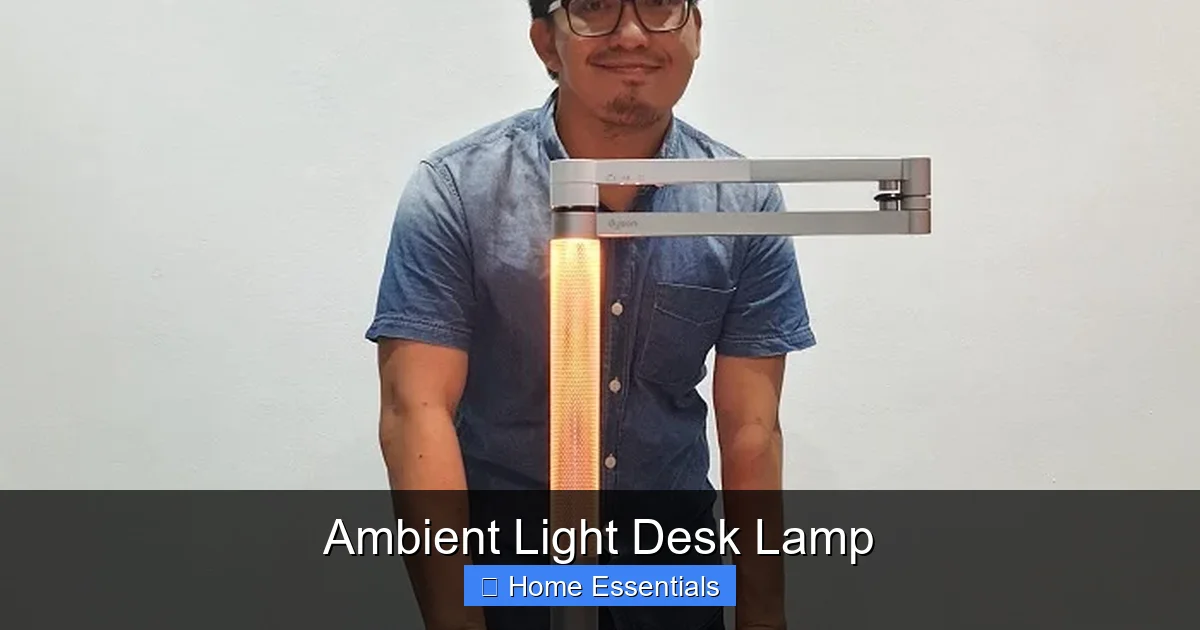
Visual guide about Ambient Light Desk Lamp
Image source: blogger.googleusercontent.com
Dimmability & Color Tuning: Non-Negotiable
At minimum, seek a lamp with smooth, stepless dimming and adjustable color temperature. This isn’t a luxury; it’s the core of the lamp’s utility. A simple touch-sensitive strip or a discrete dial is ideal. The ability to fine-tune from 1% to 100% brightness and slide from warm to cool white lets you create the perfect setting for any moment—from a focused coding session to a relaxed evening novel.
Smart Home Integration & App Control
This is where things get exciting. Wi-Fi or Bluetooth-enabled lamps connect to your home network. You can control everything from your phone: set schedules (e.g., bright and cool at 8 AM, warm and dim at 9 PM), create scenes (“Reading Mode,” “Movie Mode”), or even control them with your voice via Amazon Alexa or Google Assistant. This automation is a game-changer for maintaining healthy light habits without thinking about it. It’s part of a broader shift towards smart lighting ecosystems that personalize your home’s ambiance.
USB Charging Ports & Other Perks
Many models now include built-in USB-A or USB-C ports (often with fast charging) directly on the base or stem. This turns your lamp into a dual-purpose device, clearing clutter from your power strip. Other thoughtful extras include memory functions (recalls your last setting), timer functions (auto-off after 30/60 minutes), and even integrated wireless phone chargers on the base.
How to Choose Your Perfect Lamp: A Practical Guide
With so many options, how do you pick? Focus on these pillars.
Visual guide about Ambient Light Desk Lamp
Image source: m.media-amazon.com
Assess Your Primary Task & Space
Are you a graphic designer needing accurate color? Prioritize a lamp with a CRI of 95+ and high, even brightness (measured in lumens, aim for 500-800+). A student writing papers? A simpler model with good dimming range and a warm/cool toggle may suffice. Consider your desk size. A massive lamp with a wide shade might overwhelm a small writing desk. Look for adjustable arms, heads, or bases that let you position the light exactly where it’s needed without taking up too much real estate.
Light Quality Specs: Look Beyond the Marketing
Don’t just trust “bright” on the box. Check for:
- Lumens: Total light output. 300-500 is good for general desk use; 500-800+ for detailed tasks.
- Color Temperature Range: Ideally 2700K to 6500K for full flexibility.
- CRI (Color Rendering Index): 80 is standard, 90+ is excellent for color-critical work.
- Flicker-Free: Should be stated explicitly. Look for “PWM-free” or “flicker-free” certifications.
Build Quality, Design, and Usability
This is a desk object you’ll touch daily. Is the switch/control intuitive? Is the base stable? Is the material (metal, wood, fabric) durable and matching your aesthetic? A lamp that wobbles or has a confusing interface will frustrate you instantly. Read reviews specifically mentioning build quality and control usability.
Smart Features: Do You Need Them?
If you’re already invested in a smart home ecosystem (Alexa, Google Home, Apple HomeKit), a smart lamp is a fantastic, low-friction addition. If not, a physical dial might be more satisfying and reliable. Also, consider longevity and support. Does the manufacturer have a history of firmware updates? Will the app still work in 5 years? These are valid questions for connected devices.
Setup & Optimization: Getting It Right
You’ve bought the lamp. Now, position it for maximum benefit.
The Golden Rules of Placement
For right-handed users, place the lamp on the left side of your desk, and vice versa. This prevents your writing hand from casting a shadow over your work. The light source should be just above eye level and slightly in front of you, angled down. Never place it directly behind you, causing glare on your screen, or directly in front of you, blinding you. The goal is to illuminate the entire desk surface evenly without any direct light hitting your eyes or screen.
Dialing In Your Settings: A Daily Habit
Make it a routine. In the morning, set it to a cool (5000K+), bright (80-100%) setting to match daylight and promote alertness. As afternoon fades, gradually shift to a warmer (3000K) and slightly dimmer (60-70%) level. In the evening, if you’re still working, go warm and dim (2700K, 30-50%). This simple habit aligns your artificial light with your circadian biology, which can improve sleep quality and energy levels.
Complementary Lighting
An ambient desk lamp is a superstar, but it works best as part of a layered lighting scheme. Ensure your room’s general overhead light isn’t fighting your desk lamp. Often, it’s best to turn off harsh overhead lights and rely solely on your well-positioned ambient desk lamp for task work. For larger rooms, a soft floor lamp or wall sconce in the corner can provide a low level of fill light, eliminating the “island of light” effect and making the room feel more spacious and comfortable.
The Future & Final Thoughts
The ambient desk lamp is evolving from a static tool to an intelligent, responsive environment manager. We’re seeing integration with circadian rhythm science becoming standard, with lamps that automatically sync to your local sunrise/sunset times. The smart bulb revolution has paved the way for this. Future models may incorporate biometric feedback—imagine a lamp that subtly brightens and cools if it senses your posture slumping or your focus waning via a connected camera or wearable. Material innovation is also key, with more sustainable, recycled materials and designs that blend seamlessly into minimalist or retro-futuristic decor.
Ultimately, an ambient light desk lamp is one of the highest-impact, lowest-cost upgrades you can make to your daily environment. It’s an investment in your long-term eye health, a tool for mental clarity, and a contributor to a more beautiful, peaceful workspace. In a world where so many of us spend countless hours at a desk, curating the light in that small square of space is not a frivolous pursuit—it’s an essential act of self-care. Stop just seeing your work. Start experiencing it in light that supports, soothes, and inspires you.
Frequently Asked Questions
What’s the real difference between an ambient light desk lamp and a regular desk lamp?
A regular desk lamp typically has a narrow shade that focuses a bright, direct beam on a small spot, creating high contrast and glare. An ambient light lamp uses a wide shade and diffuser to scatter light softly across a larger area, minimizing shadows and providing even, comfortable illumination for your entire desk and immediate surroundings.
Can an ambient light desk lamp really help with headaches and eye strain?
Absolutely. By eliminating glare on screens and documents and providing uniform light, it reduces the constant refocusing effort your eyes must make. This directly combats the muscle fatigue and tension that lead to headaches and the gritty feeling of digital eye strain, especially during prolonged screen use.
Do I need a “smart” ambient lamp, or is a manual one enough?
It depends on your habits. A manual lamp with a good dial is reliable and simple. A smart lamp offers automation (scheduled color/brightness changes) and convenience (voice/app control), which is great for maintaining healthy light habits without manual adjustment. If you want to sync with your circadian rhythm effortlessly, smart is a significant upgrade.
What color temperature should I use during the day vs. at night?
For daytime work and study, use cooler light (5000K-6500K) to promote alertness and mimic daylight. In the evening, switch to warmer light (2700K-3000K) to support melatonin production and prepare your body for sleep. The ability to adjust this is a key feature to look for.
Is this type of lamp only for offices and studying?
No! It’s perfect for any detailed task where you need clear, comfortable light. This includes makeup application, reading, sewing, model-building, puzzle-solving, and even as a soft, non-glaring light for video calls where you want a professional, well-lit appearance without a harsh spotlight effect.
Are ambient light desk lamps energy efficient?
Yes, the vast majority use LED technology, which is extremely energy-efficient. They consume a fraction of the power of old incandescent or halogen bulbs and have lifespans of 25,000 to 50,000 hours, meaning they can last for years with normal use, saving you money on both electricity and bulb replacements. Concerns about privacy with smart models are separate from their core energy efficiency.