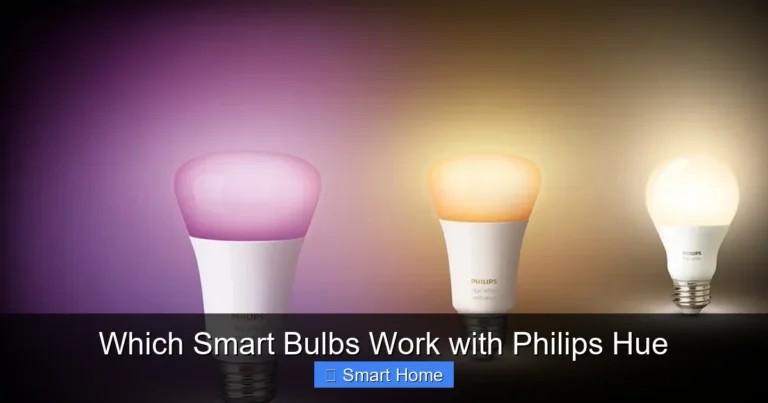
Are Smart Bulbs Bad for You
Smart bulbs are not inherently bad for your health. While they emit blue light and use wireless signals, most meet safety standards. With proper use, they can enhance your well-being—not harm it.
Key Takeaways
- Understanding Are Smart Bulbs Bad For You: Provides essential knowledge
📑 Table of Contents
- Are Smart Bulbs Bad for You? The Truth About Health, Safety, and Smart Lighting
- Understanding Smart Bulbs: How Do They Work?
- Are Smart Bulbs Bad for You? The Blue Light Debate
- Smart Bulbs and Electromagnetic Fields (EMF): What You Need to Know
- Smart Bulbs and Your Eyes: Can They Cause Eye Strain?
- Smart Bulbs and Mental Health: Can They Help or Hurt?
- Are Smart Bulbs Safe for Children and Babies?
- Choosing the Right Smart Bulbs: Safety and Health in Mind
- Smart Bulbs vs. Traditional Lighting: A Health Comparison
- Smart Bulbs and the Environment: Are They Eco-Friendly?
- Conclusion: Are Smart Bulbs Bad for You? The Final Verdict
Are Smart Bulbs Bad for You? The Truth About Health, Safety, and Smart Lighting
You’ve probably seen them glowing in living rooms, kitchens, and offices—those sleek, colorful smart bulbs that let you change the light with your voice or phone. They’re the stars of smart home systems, the ones that sync with Alexa or Google Assistant, and the ones that promise energy savings and convenience. But lately, a quiet buzz has grown: Are smart bulbs bad for you? Is the glow from your smart bulb actually hurting your health? Could the wireless signals be affecting your sleep or brain function?
We’re going to cut through the noise and give you the real story. Smart bulbs aren’t magic—but they’re not inherently harmful either. Like any technology, their impact depends on how you use them. In this article, we’ll explore the science behind smart lighting, break down the potential health concerns, and give you practical tips to enjoy smart bulbs safely and smartly. Whether you’re a new smart home enthusiast or a cautious parent, you’ll walk away with clear, evidence-based answers.
Understanding Smart Bulbs: How Do They Work?
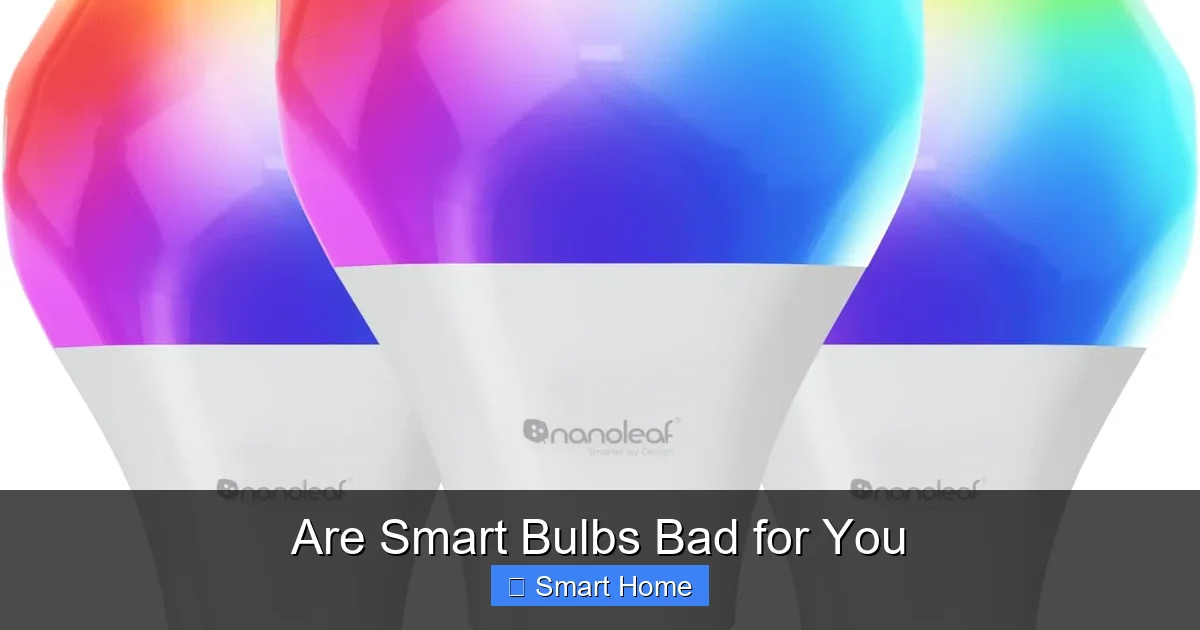
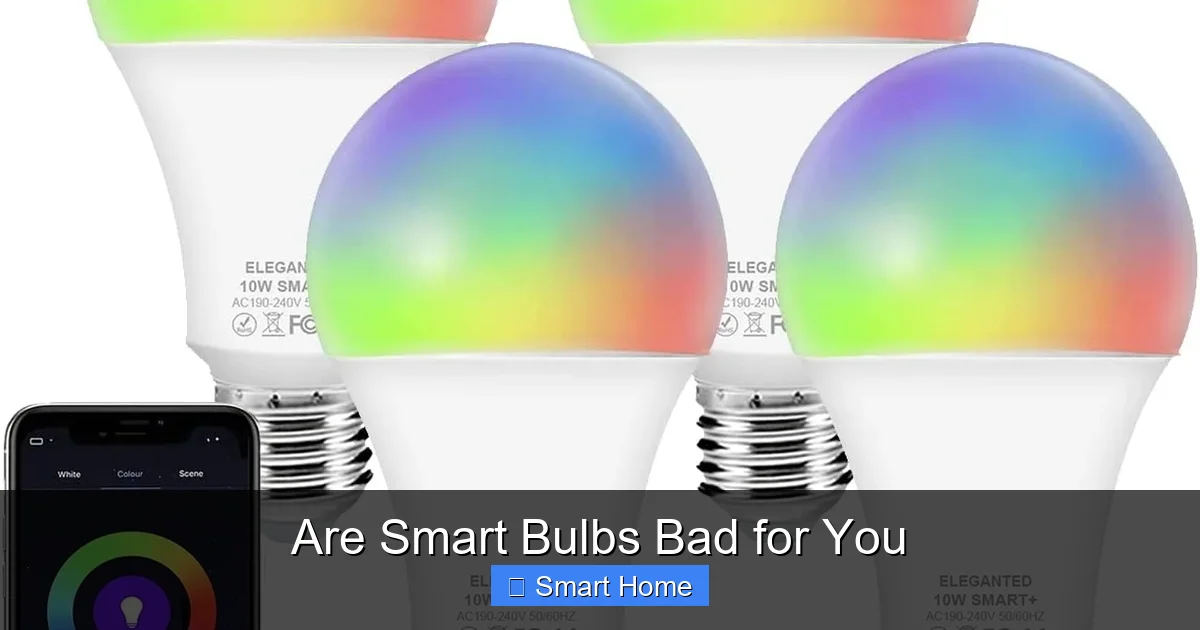
Before we dive into the health debate, let’s talk about what smart bulbs actually are. At their core, smart bulbs are LED bulbs with built-in electronics. They include microchips, wireless communication modules (like Wi-Fi or Zigbee), and sometimes color-changing LEDs. Unlike traditional bulbs, they don’t just turn on and off—they respond to commands, change color, dim, and even sync with music or scenes.
Visual guide about Are Smart Bulbs Bad for You
Image source: m.media-amazon.com
Types of Smart Bulbs
There are three main types of smart bulbs, each with different features and connectivity options:
- Wi-Fi Bulbs: Connect directly to your home Wi-Fi network. You control them via an app, voice assistant, or smart home hub. They’re easy to set up but can slow down your network.
- Zigbee/Z-Wave Bulbs: Use low-power wireless protocols. They work with smart hubs (like Amazon Echo or Samsung SmartThings) and are more energy-efficient than Wi-Fi bulbs.
- Bluetooth Bulbs: Only work with nearby devices. Best for small setups, like a bedside lamp or desk light.
Energy Efficiency and Lifespan
One of the biggest selling points of smart bulbs is efficiency. They use 75-80% less energy than traditional incandescent bulbs and last 25,000 to 50,000 hours—that’s 20 to 30 years of use if lit 3 hours a day. This not only saves money but also reduces your environmental footprint.
For example, replacing five 60W incandescent bulbs with 9W smart LEDs can save you about $100 per year on electricity. Plus, because they produce less heat, they’re safer to use near fabrics or curtains.
Are Smart Bulbs Bad for You? The Blue Light Debate
Let’s get to the heart of the matter: Are smart bulbs bad for you? One of the most common concerns is about blue light exposure. Smart bulbs, especially those with color-changing features, emit a broad spectrum of light—including blue wavelengths. And blue light has been linked to sleep disruption and potential long-term eye strain.
Visual guide about Are Smart Bulbs Bad for You
Image source: home-cdn.reolink.us
How Blue Light Affects Sleep
Blue light suppresses the production of melatonin, the hormone that helps you fall asleep. When your brain detects blue light—especially in the evening—it thinks it’s still daytime. This delays your sleep cycle and can make it harder to fall asleep and stay asleep.
For instance, if you use your phone, tablet, or smart bulb at night, your body might take 30 to 60 minutes longer to feel sleepy. Over time, this can lead to chronic sleep deprivation, which affects mood, memory, and immunity.
Are All Smart Bulbs Equally Harmful?
Not all smart bulbs are created equal when it comes to blue light. Here’s how to tell:
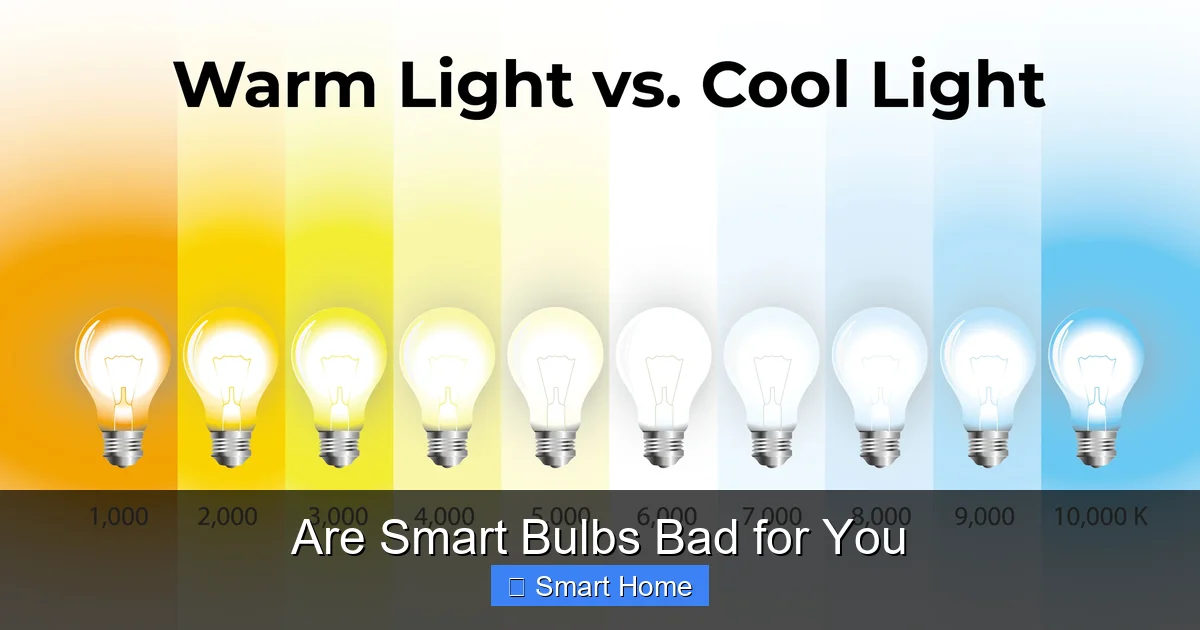
- Warm-white bulbs: Emit light at 2700K–3000K, similar to traditional incandescent bulbs. These have minimal blue light and are safer for evening use.
- Cool-white bulbs: Around 4000K–5000K, closer to daylight. These have more blue light and are best for task lighting during the day.
- Color-changing bulbs: Can shift from warm to cool white or full-color spectrum. These emit the most blue light—especially in blue or white modes.
To minimize blue light exposure, use warm-white settings in the evening and avoid full-color modes after dark.
Tips to Reduce Blue Light Impact
- Use night mode or warm dimming in the evening.
- Set a schedule to automatically dim or turn off bulbs at 9 PM.
- Keep bulbs away from your bed or reading nook.
- Consider blue light filters on your devices or wear blue-blocking glasses.
Smart Bulbs and Electromagnetic Fields (EMF): What You Need to Know
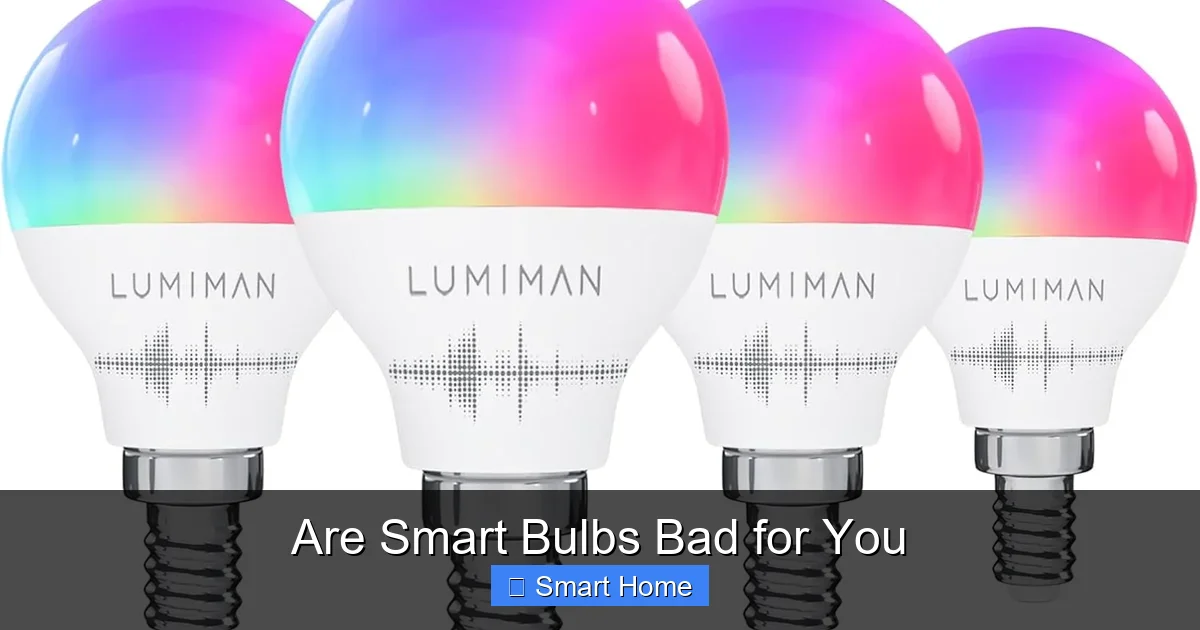
Another concern people raise is about electromagnetic fields (EMF) and radiofrequency (RF) radiation from smart bulbs. After all, these bulbs communicate with your router, hub, or phone wirelessly. Could this radiation be harmful?
Visual guide about Are Smart Bulbs Bad for You
Image source: m.media-amazon.com
What Are EMF and RF Radiation?
EMF is a type of energy produced by electronic devices. Smart bulbs emit low-level RF radiation when connected to Wi-Fi or Zigbee networks. This is the same type of radiation used in cell phones, routers, and microwaves.
But here’s the good news: smart bulbs emit far less radiation than cell phones. For example:
- A smart bulb might emit 0.001 mW/cm² of RF radiation.
- A cell phone can emit 10 to 100 mW/cm² during a call.
Both are well below FCC safety limits, which cap RF exposure at 1.6 mW/cm² for the general public.
Are EMFs Dangerous?
The scientific consensus is that low-level EMF from smart bulbs is not harmful. Organizations like the World Health Organization (WHO) and FDA state that current evidence does not confirm that EMF causes cancer or other health issues at typical exposure levels.
However, some people are sensitive to EMF—a condition sometimes called electromagnetic hypersensitivity (EHS). Symptoms include headaches, fatigue, and sleep issues, though these are not scientifically proven to be caused by EMF.
How to Minimize EMF Exposure
- Place bulbs at least 3 feet away from where you sit or sleep.
- Use Zigbee or Z-Wave bulbs instead of Wi-Fi ones—they use less power and emit less radiation.
- Turn off bulbs when not in use.
- Consider a wired smart switch instead of a smart bulb for areas where you don’t need light changes.
Smart Bulbs and Your Eyes: Can They Cause Eye Strain?
Staring at screens all day can cause eye strain, but what about smart bulbs? Can the flickering or color shifts from smart bulbs hurt your eyes?
Flicker and Stroboscopic Effects
Some older LED bulbs flicker slightly, which can cause eye strain or headaches in sensitive people. But most smart bulbs use advanced drivers that eliminate flicker. Look for bulbs labeled “flicker-free” or “low flicker.”
To check, use a smartphone camera—point it at the bulb. If you see a strobe effect, the bulb may flicker. Avoid those.
Color Rendering and Eye Comfort
The color rendering index (CRI) measures how accurately a bulb shows colors. Smart bulbs with CRI above 90 are excellent for reducing eye strain, especially for reading or detailed work.
For example, a bulb with CRI 95 will make your books, art, and food look more natural—reducing visual fatigue.
Tips for Healthy Smart Lighting
- Use warm white (2700K–3000K) for relaxing activities.
- Switch to cool white (4000K–5000K) for tasks like cooking or reading.
- Avoid bright, cool colors in bedrooms or living rooms in the evening.
- Use dimmer settings to match your activity and mood.
Smart Bulbs and Mental Health: Can They Help or Hurt?
Lighting doesn’t just affect your eyes—it affects your brain. Light influences mood, alertness, and emotional well-being. Smart bulbs can play a role in mental health when used thoughtfully.
Light and Circadian Rhythms
Your body has an internal clock called the circadian rhythm, which responds to light. Morning sunlight wakes you up; dim, warm light in the evening helps you wind down.
Smart bulbs can mimic natural daylight by:
- Starting cool white in the morning to boost alertness.
- Switching to warm white in the evening to signal it’s time to relax.
- Using sunrise simulations to gently wake you up.
This kind of lighting is especially helpful for people with seasonal affective disorder (SAD) or irregular sleep schedules.
Smart Lighting for Mood and Productivity
Studies show that lighting affects dopamine and serotonin levels. Bright, cool light increases focus and energy, while warm, dim light promotes calm and relaxation.
For example:
- Use blue-enriched light during work hours to improve concentration.
- Switch to red or amber tones during movie time to reduce blue light exposure.
- Create “relax” or “sleep” scenes that dim lights and shift to warm white.
Smart Bulbs and Autism or ADHD
Some people with autism or ADHD are sensitive to light. Smart bulbs can help by:
- Reducing flicker and glare.
- Allowing gradual dimming to ease transitions.
- Providing consistent, predictable lighting.
Always consult a healthcare provider before making lighting changes for medical conditions.
Are Smart Bulbs Safe for Children and Babies?
Parents often worry: Are smart bulbs safe for kids? The short answer: Yes, but with precautions.
Sleep and Development
Children’s brains are still developing, and their eyes are more sensitive to blue light. Excessive blue light at night can disrupt sleep and growth hormone release.
To keep kids safe:
- Avoid color-changing smart bulbs in children’s bedrooms.
- Use warm-white, dimmable bulbs at night.
- Turn off all smart lights at 8 PM or use a nightlight only.
EMF and Kids
Children’s skulls are thinner, and their nervous systems are still developing. While EMF levels from smart bulbs are low, it’s wise to minimize exposure.
Tips:
- Place bedroom lamps at least 3 feet away from the bed.
- Use wired switches or non-smart bulbs in kids’ rooms.
- Choose bulbs with Zigbee or Bluetooth instead of Wi-Fi.
Smart Bulbs for Play Areas
In playrooms or nurseries, use smart bulbs for fun—like color-changing nightlights—but disable color modes after dark. A gentle glow is fine; bright colors are not.
Choosing the Right Smart Bulbs: Safety and Health in Mind
Not all smart bulbs are the same. To protect your health, choose wisely.
Look for These Certifications
- FCC (Federal Communications Commission): Ensures radiation is within safe limits.
- CE (European Conformity): Indicates safety and environmental compliance.
- RoHS (Restriction of Hazardous Substances): Ensures no toxic materials.
- Energy Star: Guarantees energy efficiency.
Top Brands Known for Safety
- LIFX: Uses Wi-Fi and Zigbee, no hub required. Flicker-free, high CRI.
- Philips Hue: Zigbee-based, widely compatible, dimmable and color-tunable.
- TP-Link Kasa: Wi-Fi bulbs, affordable, easy app control.
- Sengled: Budget-friendly, Energy Star certified.
Red Flags to Avoid
- Bulbs that flicker when dimmed.
- No safety certifications.
- Unclear manufacturer info.
- Overly bright or harsh white light.
Smart Bulbs vs. Traditional Lighting: A Health Comparison
Let’s compare smart bulbs to traditional lighting to see where they stand.
| Feature | Smart Bulbs | Incandescent Bulbs |
|---|---|---|
| Energy Use | Low (75–80% less) | High |
| Lifespan | 25,000–50,000 hours | 1,000 hours |
| Blue Light | Adjustable (can reduce at night) | Very low |
| Control | Remote, voice, app, scheduling | Manual switch only |
| EMF | Low-level RF (safe) | None |
| Cost | Higher upfront, lower long-term | Cheap upfront, high long-term cost |
Overall, smart bulbs win in energy savings, convenience, and health adaptability—if used responsibly.
Smart Bulbs and the Environment: Are They Eco-Friendly?
Yes! Smart bulbs are better for the planet. They use less energy, last longer, and reduce waste. Plus, many are recyclable or come in eco-friendly packaging.
For example, replacing five old bulbs with smart ones can save 1,000 kWh of electricity over 10 years—enough to power a refrigerator for a year.
Conclusion: Are Smart Bulbs Bad for You? The Final Verdict
So, are smart bulbs bad for you? The answer is no—not if you use them wisely. Smart bulbs are safe, energy-efficient, and can even improve your sleep and mood when used correctly. The key is awareness and moderation.
To stay healthy with smart bulbs:
- Use warm white light in the evening.
- Limit color-changing modes at night.
- Choose certified, high-quality bulbs.
- Keep bulbs away from sleeping areas.
- Use schedules and dimmers to automate healthy lighting.
Smart lighting isn’t just about convenience—it’s about creating a healthier home. With the right habits, your smart bulb can be a friend, not a foe.
Frequently Asked Questions
Are smart bulbs safe for sleep?
Yes, but only if used correctly. Smart bulbs can disrupt sleep if used in blue or bright modes at night. Use warm, dim settings and schedule automatic dimming to protect your sleep cycle.
Do smart bulbs emit harmful radiation?
Smart bulbs emit low-level RF radiation from Wi-Fi or Zigbee signals. This is far below safety limits and not considered harmful by health agencies like the WHO and FDA.
Can smart bulbs cause eye strain?
They can if they flicker or have poor color rendering. Choose flicker-free bulbs with high CRI (above 90) and avoid overly bright or cool white light during long tasks.
Are smart bulbs bad for children?
Not inherently, but use caution. Avoid color-changing modes in kids’ rooms and use warm, dim lights at night. Keep bulbs away from cribs and beds.
How can I reduce blue light from smart bulbs?
Use warm-white settings (2700K–3000K), enable night mode, set schedules to dim at night, and avoid full-color modes after 8 PM.
Are smart bulbs worth the health risks?
Most people won’t experience any health risks. The benefits—energy savings, convenience, and mood support—far outweigh the minimal risks, especially with smart usage habits.