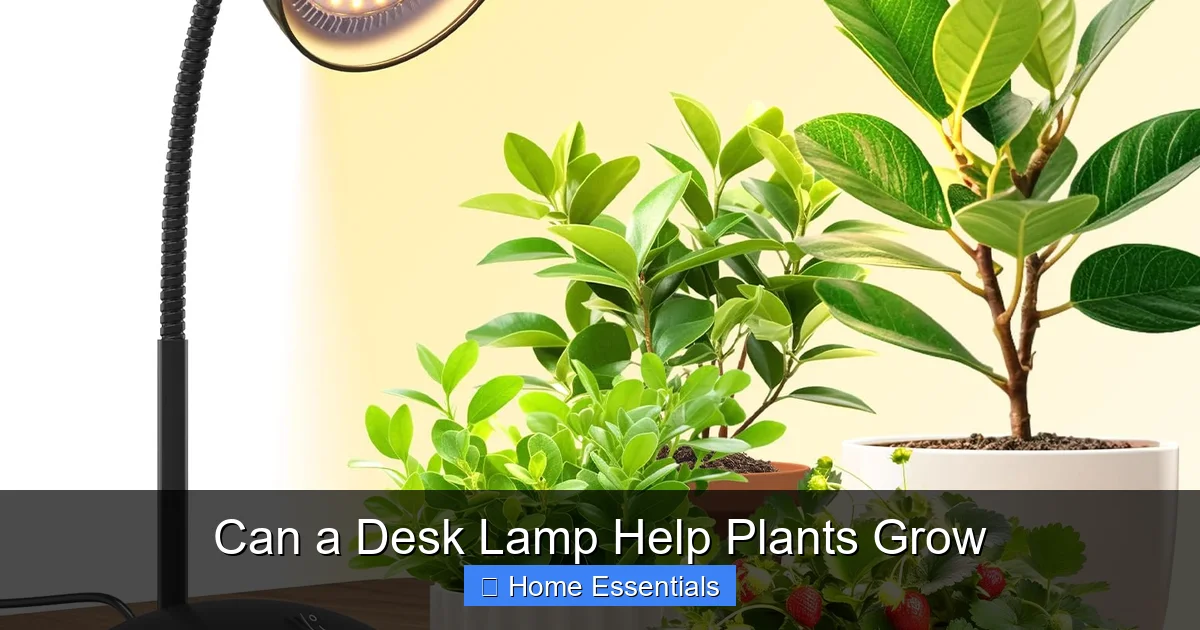
Can a Desk Lamp Help Plants Grow
Yes, a desk lamp can technically help some plants grow, but with major caveats. Most standard desk lamps lack the specific light spectrum and intensity required for healthy plant photosynthesis. However, if you equip the lamp with a full-spectrum LED bulb designed for plants and position it correctly, it can supplement light for low-light tolerant species or seedlings. It’s not a replacement for a proper grow light, but a strategic tool for specific, small-scale indoor gardening scenarios.
Key Takeaways
- Light Spectrum is Critical: Plants primarily need blue and red light spectrums for growth and flowering. Standard warm-white bulbs are deficient.
- Intensity & Distance Matter: A desk lamp’s light must be bright enough and close enough (often 6-12 inches) to be effective, which can cause heat damage with incandescent bulbs.
- Not All Plants Are Equal: Low-light plants (e.g., pothos, snake plants) may tolerate desk lamp supplementation, while fruiting plants and herbs have high demands it can’t meet.
- The Bulb Makes the Lamp: A desk lamp’s utility depends entirely on using a proper full-spectrum “grow” LED bulb, not a standard household bulb.
- Duration is Part of the Equation: Plants need 12-18 hours of consistent light. A desk lamp on a simple timer can provide this, but wattage must be sufficient.
- Heat is a Hidden Hazard: Old incandescent or halogen desk lamps generate excessive heat that can scorch leaves and dry soil rapidly.
- It’s a Supplement, Not a Solution: For most plants beyond seedlings or very low-light varieties, a dedicated grow light panel is necessary for robust growth.
📑 Table of Contents
- The Great Indoors: When Your Desk Lamp Doubles as a Grow Light
- The Science of Light for Plants: It’s Not Just About Brightness
- Desk Lamp Limitations: Why Your Reading Light Probably Isn’t Cutting It
- When a Desk Lamp Might Actually Work: The “It Depends” Scenarios
- Choosing the Right Desk Lamp & Bulb: Your Upgraded Toolkit
- Practical Setup & Care: Making Your Lamp-Grow System Thrive
- When to Abandon the Desk Lamp and Get a Real Grow Light
- Conclusion: A Niche Tool, Not a Universal Solution
The Great Indoors: When Your Desk Lamp Doubles as a Grow Light
You’ve got a sad-looking fern in a dark corner, a tray of seedlings on your home office desk, or maybe a herb garden that’s stretching toward the nearest window. In a moment of resourcefulness, you glance at your trusty desk lamp and think: can this thing help my plants grow? It’s a fantastic question that sits at the intersection of practicality and plant science. The short answer is a nuanced yes, but…. The longer answer unpacks the complex relationship between artificial light and plant biology, and whether your desk lamp is a hero or a hindrance.
Let’s be clear from the start: the vast majority of desk lamps sold for reading or ambient lighting are not designed for plants. They are engineered for human visual comfort, emitting light in a spectrum that pleases our eyes but often leaves plants wanting. However, with the right bulb and a smart setup, that lamp can transition from a task light to a tiny, targeted grow light. This guide will walk you through exactly how, when, and why this works—and more importantly, when it doesn’t. We’ll separate the myths from the mechanics so you can decide if your desk lamp is up to the job.
The Science of Light for Plants: It’s Not Just About Brightness
Photosynthesis 101: What Plants Actually Crave
To understand if a desk lamp can help, we need to understand what plants need from light. It’s a process called photosynthesis. Plants absorb light primarily through pigments like chlorophyll. While chlorophyll absorbs red and blue light most efficiently, it reflects green light (which is why plants look green). This means the “white” light from a standard bulb is a mix of all colors, but if it’s heavy on the green/yellow end (like a warm incandescent bulb), it’s inefficient for the plant.
Visual guide about Can a Desk Lamp Help Plants Grow
Image source: i.pinimg.com
Plants use different light spectrums for different stages. Blue light (400-500 nm) promotes strong vegetative growth, sturdy stems, and healthy leaf development. Red light (600-700 nm) is crucial for flowering and fruiting. A balanced full-spectrum light that mimics natural sunlight provides both. This is the first major hurdle for most desk lamps: their default bulbs are not balanced for this purpose.
PPFD: The Metric That Actually Matters
You’ve heard of lumens (brightness for humans) and watts (energy use). For plants, the key metric is PPFD (Photosynthetic Photon Flux Density). It measures the number of photons in the photosynthetically active radiation (PAR) spectrum that actually hit a surface per second. It’s expressed in micromoles per square meter per second (μmol/m²/s). Low-light plants might thrive at 50-150 μmol/m²/s, while high-light plants like tomatoes need 600+ μmol/m²/s.
Here’s the harsh truth: a typical 60-watt incandescent desk lamp bulb might have a PPFD of less than 10 μmol/m²/s at 12 inches away. It’s virtually useless. A quality full-spectrum LED grow bulb in the same lamp, however, can push 100-300 μmol/m²/s at that distance, which is meaningful for low-light plants or seedlings. The bulb technology is everything.
Desk Lamp Limitations: Why Your Reading Light Probably Isn’t Cutting It
The Spectrum Problem: “White” Light is Deceptive
Most desk lamps come with either incandescent, halogen, or standard LED bulbs. Incandescent and halogen bulbs are essentially tiny heaters that produce light as a byproduct. Their spectrum is heavily weighted toward the red and infrared end, with very little blue. This gives them a warm, yellow-orange glow that is terrible for plant growth. Standard “daylight” LED bulbs are better, as they often have more blue, but they are still optimized for human color perception, not plant photosynthetic efficiency. Their phosphor coating is designed to create a pleasant white, not a balanced red/blue spectrum.
Visual guide about Can a Desk Lamp Help Plants Grow
Image source: i.etsystatic.com
This is where specialized full-spectrum LED grow bulbs come in. These are engineered with specific LED chips and phosphors to maximize the blue and red wavelengths while minimizing the green/yellow waste. They often have a purplish or pinkish hue because they are emitting the colors plants actually use. If your desk lamp has a standard bulb, it’s likely helping your plants very little, if at all.
The Intensity & Coverage Conundrum
Even with a great bulb, desk lamps have a fundamental physical limitation: coverage area. A desk lamp with a single bulb produces a conical, focused beam of light. The intensity (PPFD) drops off exponentially as you move away from the center of that beam. At 6 inches below the lamp, you might have perfect intensity for a small seedling tray. At 12 inches, it might be halved. At 18 inches, it’s likely insufficient for anything but the most shade-tolerant plants.
This means a desk lamp can only effectively serve one or two small plants positioned directly under it. You cannot use it to light a shelf of herbs or a medium-sized foliage plant. The light is too directional and too weak outside its narrow path. For broader coverage, you need a panel or multiple light sources, which a single desk lamp cannot provide.
The Heat Factor: A Silent Plant Killer
This is a critical safety and health issue. Incandescent and halogen bulbs convert over 90% of their energy into heat. Placing such a bulb 6 inches above a plant will create a hot spot that can quickly scorch leaves, wilt tender growth, and dry out the soil in hours. The lamp itself can become dangerously hot, posing a fire risk if placed near flammable materials like paper or dry foliage.
Modern LED bulbs, even high-power ones, run much cooler. A good quality full-spectrum LED grow bulb will be warm to the touch but not scalding. This makes them safe for close proximity to plants. If your desk lamp uses an old-style bulb, it is not safe for use as a plant light. The risk of thermal damage far outweighs any minimal light benefit.
When a Desk Lamp Might Actually Work: The “It Depends” Scenarios
Scenario 1: Starting Seedlings and Cuttings
This is the #1 best use case for a desk lamp as a grow light. Seedlings and cuttings have relatively low light demands initially but require consistent, gentle light to prevent “legginess” (weak, stretched growth). A desk lamp with a 10-15 watt full-spectrum LED bulb, positioned 6-8 inches above a tray of seedlings, can provide a perfect 100-200 μmol/m²/s. You can use a simple outlet timer to give them 16 hours of light per day. The focused light is efficient, and the setup is cheap and space-saving. Just ensure the bulb doesn’t touch the tender sprouts and monitor soil moisture, as the soil will dry out faster under direct light.

Visual guide about Can a Desk Lamp Help Plants Grow
Image source: infinitylearn.com
Scenario 2: Giving a Boost to a Low-Light Survivor
Plants like ZZ plants, snake plants, pothos, and peace lilies are famously tolerant of low light. If yours is in a genuinely dark corner and is growing very slowly or losing its variegation, a desk lamp with a full-spectrum LED bulb can provide a helpful supplement. Position it to shine on the plant for a few hours during the day. You’re not trying to replicate full sun; you’re just boosting the ambient photons to help the plant photosynthesize more efficiently. This can maintain health and slow decline. Don’t expect explosive growth, but you can prevent decline.
Scenario 3: Propagating in Water
Stem cuttings in water (like pothos, philodendron, or coleus) benefit from bright, indirect light to encourage root development. A desk lamp placed a foot away from a glass jar on your desk can provide the perfect amount of light without encouraging algae growth on the water (which happens in direct, intense sunlight). It’s a clean, controlled way to speed up the propagation process on your workspace.
Choosing the Right Desk Lamp & Bulb: Your Upgraded Toolkit
The Lamp Itself: Form Over Function (Mostly)
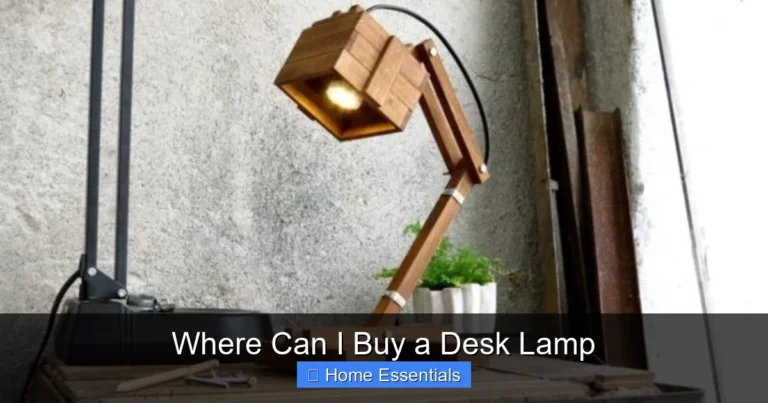
When repurposing a desk lamp for plants, the lamp’s design matters less than its adjustability. Look for a lamp with a flexible gooseneck or adjustable arm. This allows you to easily change the height and angle as your plant grows or to target specific plants. A heavy, fixed base is fine. The material (metal, plastic) isn’t critical if you’re using a cool-running LED bulb. Ensure the lamp’s socket (E26 or E27 is standard) matches the bulb you buy. The most important factor is the ability to position the bulb close to the plant without the lamp becoming unstable.
The Bulb: This is the Heart of the Operation
Forget the lamp that came with it. You must buy a dedicated full-spectrum LED grow bulb. Here’s what to look for:
- Watts & PPFD: Look for actual power draw (e.g., 10W, 15W, 20W). Higher wattage generally means higher PPFD at a given distance. For a desk lamp, 10-20W is the sweet spot.
- Spectrum: It should say “Full Spectrum,” “Full Cycle,” or “Vegetative+Flowering.” Avoid “Bloom” or “Flowering” only bulbs unless you only have flowering plants.
- Coverage: Check the manufacturer’s specs for effective coverage area at a certain height. For a desk lamp, you want one that covers a 1×1 ft area at 12 inches.
- Form Factor: Standard A-shaped bulbs (like a classic light bulb) are easiest for desk lamps. Some are “cobra” or “UFO” shapes, but these won’t fit most desk lamp shades.
Pro Tip: When researching bulbs, you might come across smart bulbs marketed for plants. The technology is similar, but connectivity isn’t necessary for growth. However, if you already have a smart bulb, it’s worth checking its specs. For a deep dive into the technology behind these bulbs, you can read about how a smart bulb works to understand the LED and control systems, though the plant-specific spectrum is the key differentiator.
Smart Features: Nice to Have, Not Need to Have
Some modern full-spectrum LED bulbs come with app control or scheduling. This is convenient for setting timers without buying a separate plug-in timer. However, a basic $5 mechanical outlet timer is more reliable and doesn’t depend on Wi-Fi. Don’t pay a premium for smart features unless you want them for other reasons. The core job is emitting the right light spectrum at the right intensity.
Practical Setup & Care: Making Your Lamp-Grow System Thrive
Positioning: The 6-12 Inch Rule (With a Caveat)
This is the most common question: how close? Start with the bulb manufacturer’s recommendation. As a general guide for a 10-15W full-spectrum LED bulb, place the lamp so the bottom of the bulb is 6-12 inches above the top of your plant’s foliage. Use your hand as a sensor: if you hold your hand under the light at plant level and it feels warm (not hot), the distance is likely safe. If it’s hot, raise the lamp immediately. For seedlings, start at 12 inches and lower gradually as they grow. For a mature low-light plant, 12-18 inches might be sufficient. Watch your plant: if leaves start bleaching or crisping at the edges, the light is too intense or too close. If growth is spindly and pale, it may be too far or the bulb is insufficient.
Timing: Mimicking the Sun’s Schedule
Plants need darkness too for respiration. A timer is non-negotiable for consistency. For vegetative growth (leaves, stems), aim for 14-18 hours of light. For flowering plants, 12 hours can trigger blooming, but most need more. Set your timer to turn on at, say, 6 AM and off at 10 PM. Consistency is more important than perfect hours. Never leave the lamp on 24/7.
Monitoring and Maintenance
Your role doesn’t end after setup. Check your plants weekly:
- Soil Moisture: Light from a close lamp increases evaporation. Water more frequently, but always check soil dryness first.
- Leaf Temperature: Feel leaves under the lamp. They should not be warm.
- Growth Response: Is the plant producing new, healthy growth? Or is it etiolating (stretching)? Adjust height accordingly.
- Bulb Dust: Dust on the bulb reduces light output significantly. Wipe the bulb gently with a dry microfiber cloth every few weeks. (Learn how to clean a microfiber duster properly to keep it effective).
Remember, LED bulbs degrade over time. A high-quality bulb will maintain 90% of its output for 30,000-50,000 hours, but a cheap one may dim significantly in a year. If your plant’s growth slows despite no other changes, the bulb may be aging.
When to Abandon the Desk Lamp and Get a Real Grow Light
A desk lamp is a clever hack for specific, small-scale situations. It is not a scalable or optimal solution for serious indoor gardening. Here’s when you must upgrade:
- You want to grow food: Herbs (basil, cilantro), lettuce, tomatoes, peppers—these are high-light, high-PPFD plants. A desk lamp simply cannot deliver the necessary intensity and coverage.
- You have more than a couple of small plants: If you’re trying to light a shelf, a small table, or multiple pots, you need a panel that spreads light evenly.
- Your plant is in a dark room with no windows: A desk lamp is a sole light source. You need a dedicated grow light designed to be a primary source.
- You’re seeing poor results despite correct setup: If your plant is leggy, yellowing, or not thriving after a month with the desk lamp, the light is inadequate.
Investing in a proper LED grow panel (even a small 20W panel) will be more effective, efficient, and often safer than jury-rigging multiple desk lamps. The technology has become very affordable, and the results are dramatically better.
Conclusion: A Niche Tool, Not a Universal Solution
So, can a desk lamp help plants grow? Yes, but only under a narrow set of circumstances. It requires the right bulb—a full-spectrum LED grow bulb—used in the right way: close, for the right duration, for the right plants. It’s an excellent tool for a home office worker who wants to start a few herbs on their desk, give a sad pothos a boost, or propagate cuttings without buying a separate appliance. It’s a testament to adaptable, multi-purpose thinking.
However, it’s crucial to manage your expectations. A desk lamp is a supplement and a starter kit. It is not a replacement for the powerful, broad-coverage, spectrum-optimized light that a dedicated grow light provides. For most edible plants and for vibrant, robust growth in low-light conditions, a proper grow light is a necessary investment. Your desk lamp can be a helpful sidekick in your indoor gardening journey, but it shouldn’t be expected to carry the entire load. Start with the right bulb, monitor your plants closely, and know when it’s time to upgrade your lighting arsenal for the health of your green companions.
Frequently Asked Questions
Can I use any LED bulb in my desk lamp for plants?
No. Standard “daylight” or “soft white” LED bulbs are designed for human vision and lack the balanced red/blue spectrum plants need. You must use a bulb specifically marketed as a “full-spectrum” or “grow” LED bulb for any meaningful effect.
How close should the desk lamp be to my plant?
For a 10-20W full-spectrum LED bulb, start with the bulb 6-12 inches above the plant’s top leaves. Adjust based on plant response: raise it if leaves show signs of burning, lower it if growth is spindly. Always ensure the lamp is stable and the bulb doesn’t touch the plant.
How many hours a day should I leave the desk lamp on?
Set a timer for 14-18 hours per day for foliage plants. For seedlings, 16 hours is common. Plants need a dark period for respiration, so never leave it on 24/7. Consistency with the schedule is key.
Can a desk lamp support fruiting plants like tomatoes or peppers?
Practically no. Fruiting plants have extremely high light demands (PPFD requirements) that a single desk lamp cannot meet, no matter the bulb. They require high-intensity, broad-coverage dedicated grow lights to produce a worthwhile harvest.
Is it more cost-effective to buy a grow light or use my desk lamp with a special bulb?
For a single seedling tray or one low-light plant, repurposing a desk lamp with a $10-$20 grow bulb is very cost-effective. However, if you need to light multiple plants or food crops, a dedicated small LED grow panel ($30-$60) will be more efficient, provide better coverage, and yield far better results per watt of electricity used.
Can I use a smart bulb as a grow light in my desk lamp?
Some smart bulbs offer full-spectrum modes, but many do not. You must verify the bulb’s spectrum specifications. The “smart” features (app control, color changing) are irrelevant for plant growth. If the bulb isn’t a true full-spectrum grow bulb, it won’t be effective. For more on smart bulb capabilities, you can read about whether smart bulbs can be dimmed, but dimming is a separate feature from spectral output.