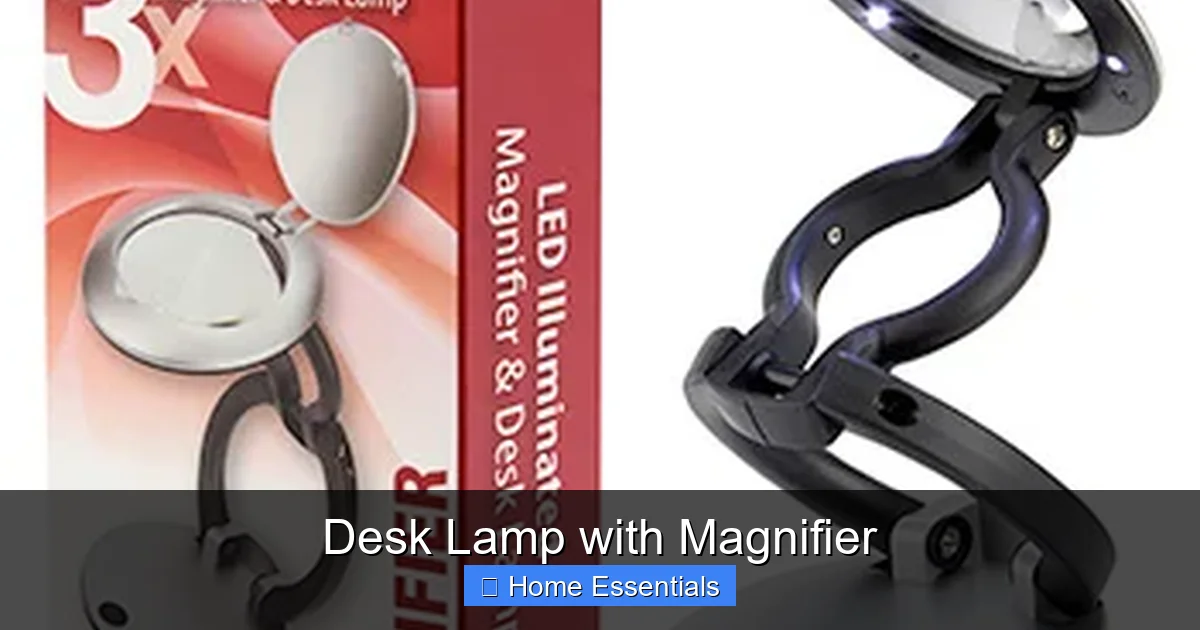
Desk Lamp with Magnifier
A desk lamp with magnifier is a versatile tool that merges focused illumination with optical magnification, essential for tasks demanding visual precision. It eliminates eye strain and shadows, making it perfect for hobbies like model building, electronics repair, jewelry making, and detailed reading. Choosing the right one involves understanding magnification strength, light quality, adjustability, and your specific workspace needs to boost both comfort and accuracy.
Have you ever hunched over a project, squinting at tiny text or intricate details, only to feel a headache coming on? That frustrating combination of poor lighting and tiny components is a universal pain point for hobbyists, professionals, and anyone who values precision. This is where the unsung hero of the focused workspace enters: the desk lamp with magnifier. It’s more than just a lamp with a lens attached; it’s a purpose-built instrument designed to illuminate the unseen and make the minute manageable. Whether you’re restoring a vintage clock, beading a necklace, threading a needle, or inspecting a circuit board, this tool transforms a visually taxing chore into a clear, comfortable, and accurate experience. In this comprehensive guide, we’ll shed light on everything you need to know—from the science of magnification to choosing the perfect model for your needs—so you can work smarter, not harder.
Key Takeaways
- Dual-Function Design: These lamps combine a dedicated, high-quality light source with an integrated optical magnifier, solving two critical problems—poor lighting and small detail visibility—in one ergonomic tool.
- Magnification is Not One-Size-Fits-All: Power is measured in diopters or “X” (e.g., 2X, 5X). Higher magnification (5X-10X) offers extreme detail but a smaller viewing area and shorter working distance, ideal for fine jewelry or watch repair. Lower magnification (1.5X-3X) provides a larger, more natural field of view for reading, sewing, or electronics.
- Light Quality is Paramount: Look for lamps with high CRI (Color Rendering Index >90) for true color accuracy, adjustable brightness (dimmable), and minimal heat emission from the bulb. LED is the modern standard for cool, energy-efficient, long-lasting light.
- Articulation and Stability Matter: A fully adjustable arm, neck, and head allow you to position the light and lens exactly where needed without straining. A weighted, stable base is non-negotiable for safety and ease of use, especially with heavier magnifier heads.
- Application-Specific Features: Consider your primary use. Crafters may want a flexible gooseneck, while dentists or labs need sterile, professional-grade arms. Some models offer interchangeable lenses or built-in tool trays for added functionality.
- Ergonomics Prevent Fatigue: The best lamp reduces physical strain. Ensure the magnification lens can be positioned comfortably in your line of sight, and that the light source can be angled to avoid glare on the work surface or in your eyes.
- Investment in Precision: While budget options exist, a well-built lamp with quality optics and a reliable mechanism is a long-term investment that protects your eyesight and improves the quality and speed of your detailed work.
📑 Table of Contents
- How a Desk Lamp with Magnifier Works: The Perfect Pairing of Light and Lens
- Types and Mounting Styles: Finding Your Perfect Match
- Essential Features to Consider Before You Buy
- Practical Applications: Who Needs a Magnifier Lamp?
- Buying Guide: Step-by-Step Selection Process
- Care, Maintenance, and Longevity
How a Desk Lamp with Magnifier Works: The Perfect Pairing of Light and Lens
At its core, a desk lamp with magnifier is a synergy of two distinct technologies working in concert. Understanding this partnership is key to appreciating why a dedicated combo unit is vastly superior to using a separate lamp and handheld magnifying glass.
The Illumination Engine: More Than Just a Bulb
The lighting component is specifically engineered for task work. Unlike a standard ambient bulb, these lamps prioritize:
- Directional Focus: The light is channeled to fall directly on the work surface, minimizing scattered light that creates glare and eye strain.
- Shadow Reduction: Many designs position the light source close to the lens or use dual LEDs to cast light from multiple angles, banishing the annoying shadow your hand or tool would otherwise cast.
- Adjustable Intensity: Dimmable LEDs allow you to tailor brightness from a soft glow for reading to a brilliant, shadow-free beam for soldering.
- True Color Rendering: A high CRI (Color Rendering Index) rating, ideally 90 or above, ensures colors appear as they truly are. This is critical for artists matching paints, crafters selecting thread colors, or anyone for whom color accuracy is part of the job.
The shift to LED technology was a game-changer. LEDs run cool, eliminating the heat distortion that could warp materials or make prolonged work uncomfortable. They also consume a fraction of the power and last for tens of thousands of hours, making them both efficient and economical.
The Optical Magnifier: Diopters, Focal Length, and Field of View
The magnifying lens is an optical element, not just a piece of plastic. Its power is measured in diopters, which relates to the lens’s focal length. A simple conversion is that a 3-diopter lens equals approximately 1.75X magnification. Here’s what that means for you:
- Magnification Power (X): 2X-3X is the versatile sweet spot for most hobbies and reading. It enlarges sufficiently without extreme distortion or a tiny viewing area. 5X-10X is for extreme detail work like watch repair, dentistry, or entomology, requiring you to be very close to the lens.
- Working Distance: This is the space between the lens and your work surface when in focus. Higher magnification means dramatically shorter working distance—often just a few centimeters with a 10X lens. This can feel claustrophobic and limits tool use.
- Field of View: The area you can see clearly through the lens. This shrinks as magnification increases. A 3X lens might show a 4-inch diameter area clearly; a 10X might only show a 1-inch circle.
Many professional lamps feature interchangeable lenses, allowing you to swap a 2X lens for a 5X depending on the task. The lens itself should be made of optical-grade glass or high-clarity acrylic, free of distortions or inclusions that could mislead your eye.
Types and Mounting Styles: Finding Your Perfect Match
Not all desk lamps with magnifiers are created equal. The mounting style dictates the lamp’s footprint, flexibility, and suitability for different workspaces. Choosing the wrong base can lead to constant readjustment and frustration.
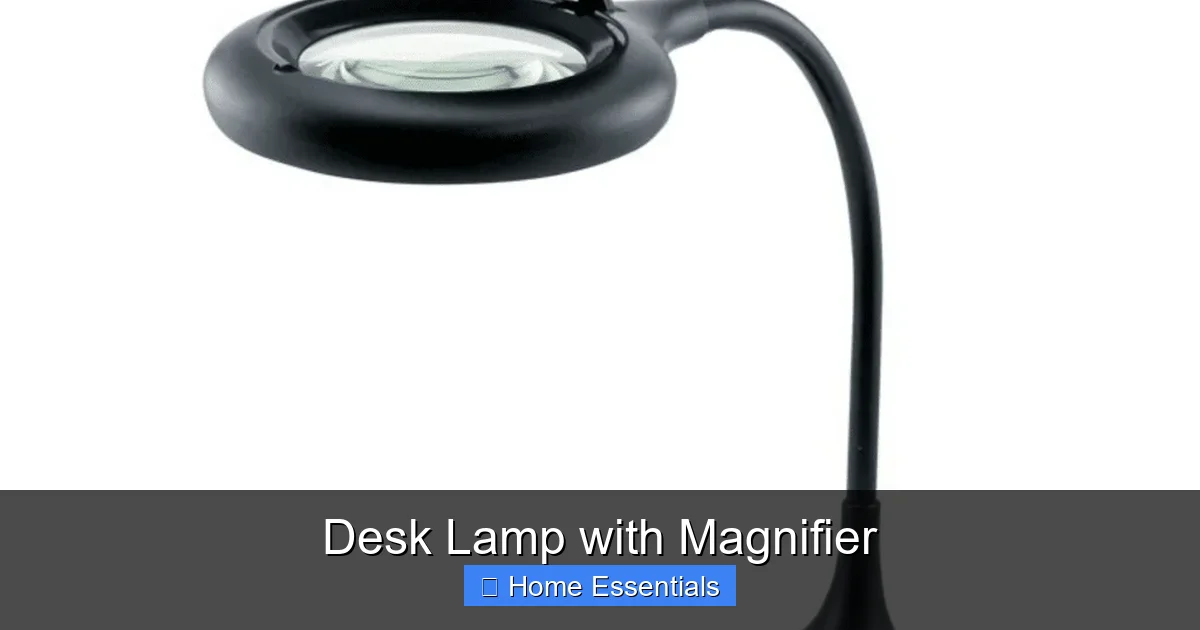
Visual guide about Desk Lamp with Magnifier
Image source: rovert.com.au
Clamp-On Magnifier Lamps: Space-Saving Specialists
As the name suggests, these lamps attach to the edge of your desk, workbench, or table with a sturdy clamp. They are the champions of small spaces and permanent workstations.
- Pros: Frees up valuable desk real estate. The arm often has exceptional reach and articulation since the base is anchored to a solid structure. Very stable when properly clamped.
- Cons: Requires a suitable mounting surface (a thick, stable desk edge). Not portable. Installation can sometimes be fiddly.
- Best For: Permanent craft stations, electronics workbenches, jewelry benches, home offices where desk space is at a premium.
Heavy-Duty Base/Stand Lamps: The Unwavering Workhorses
These feature a wide, weighted base (often cast iron or metal filled with sand) that provides a low center of gravity. They sit directly on the desk surface.
- Pros: Extremely stable and tip-resistant, even with a heavy magnifier head and a fully extended arm. Easy to move around the desk as needed. No installation required.
- Cons: Takes up more desk space. The base can be bulky.
- Best For: Workshops, laboratories, professional settings (dentists, estheticians), and anyone who needs a rock-solid, non-moving foundation for delicate work.
Flexible Gooseneck and Articulating Arm Designs
This describes the arm mechanism, not the base, and you’ll find it on both clamp-on and base models.
- Gooseneck: A flexible, wire-reinforced tubing that can be bent and hold its position. Offers intuitive, quick repositioning but can lose stiffness over time and may not hold extreme angles perfectly.
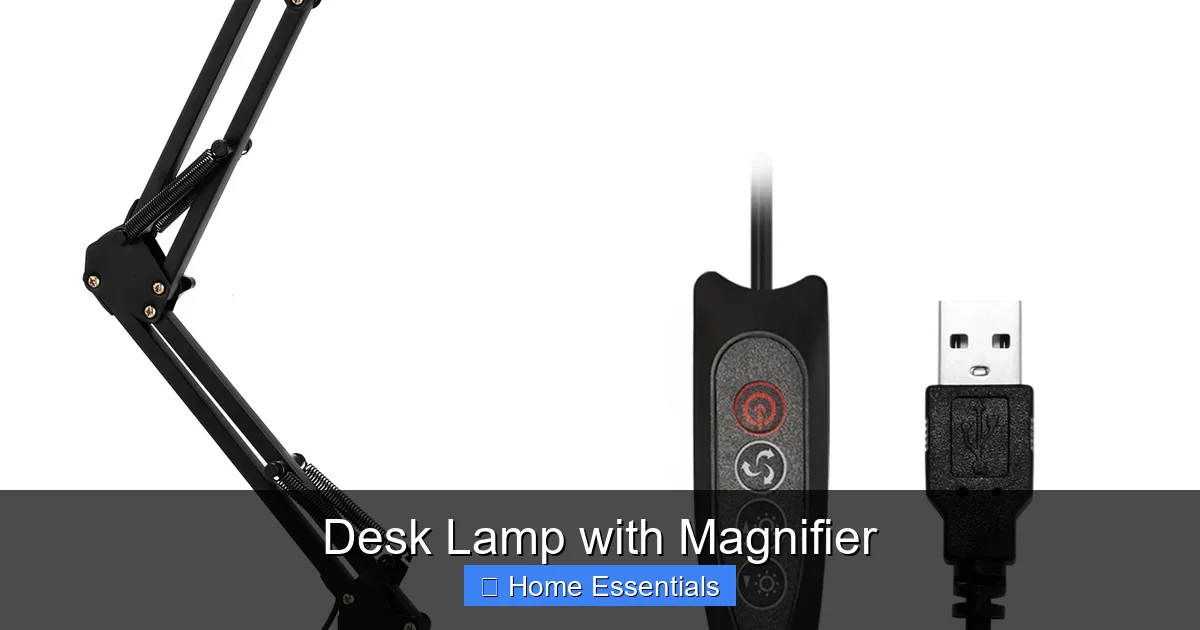
- Articulating Arm (Spring or Counterbalance): A system of linked arms with internal springs or counterweights. This provides smooth, precise, and firm positioning at any point in its range. It’s the gold standard for professional use, offering the most control and stability, but is typically more expensive.
Pro Tip: If you frequently switch between tasks at different angles (e.g., from a flat piece of paper to a tall object), an articulating arm is worth the investment for its effortless, stay-put adjustability.
Essential Features to Consider Before You Buy
With a clear idea of the type you need, it’s time to drill down into the specifications that separate a frustrating gadget from a cherished tool. Don’t be swayed by a single feature; consider how they all interact.
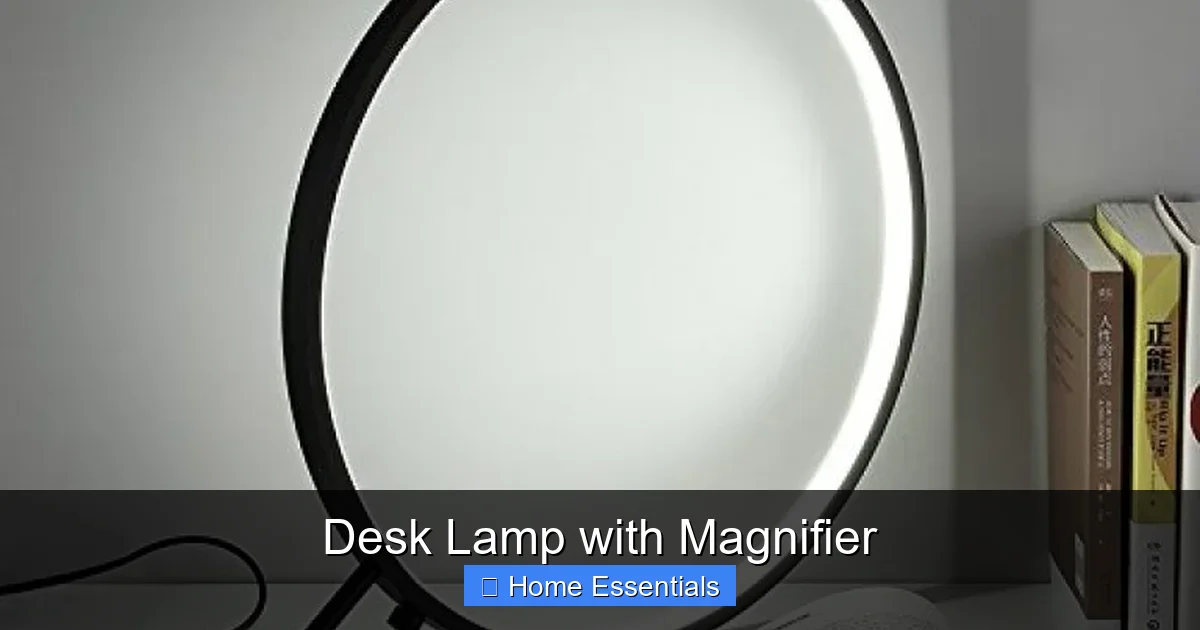
Visual guide about Desk Lamp with Magnifier
Image source: 7gadgets.com
Lighting Specs: Beyond “Bright”
The light is half the equation. Scrutinize these details:
- LED Color Temperature (Kelvin): Measured in K. 4000K-5000K is a comfortable “daylight” white that’s alert but not harsh. Avoid lamps that are too blue (>6000K) as they can cause eye fatigue over time.
- CRI (Color Rendering Index): On a scale of 0-100, this measures how accurately a light source reveals color. For any task where color matters (art, fabric, skin tones), a CRI of 90+ is essential. A CRI of 80 is the bare minimum.
- Lumens and Dimmability: Lumens indicate brightness. For a focused task lamp, 300-600 lumens is usually sufficient. Dimmability is a huge plus, letting you adapt from a bright surgical light to a softer reading glow.
- Heat Dissipation: Quality LEDs should be cool to the touch. If the lamp head or body gets hot, it’s a sign of poor engineering and could be a safety hazard or damage sensitive materials.
Magnification and Lens Quality
As discussed, choose power based on task. Also, consider:
- Lens Size (Diameter): A larger lens (e.g., 5″ diameter) with lower power (2X) is often more usable than a small (3″) high-power (10X) lens for general tasks. You can always move your head closer for more detail.
- Lens Shape: Round is standard. Some offer a rectangular or square lens, which can be more ergonomic for reading long lines of text or working on wide surfaces.
- Distortion: Read reviews specifically mentioning “clear,” “no distortion,” or “true to scale.” Cheap lenses can create a “fish-eye” effect, making it hard to judge proportions.
Ergonomics and Build Quality
You’ll be adjusting this constantly. A cheap, stiff, or wobbly mechanism is a deal-breaker.
- Arm Movement: Test (in person if possible) how smoothly the arm moves. It should require minimal force to reposition and stay firmly where you put it. A tension knob or dial is a good sign for easy fine-tuning.
- Base Weight: For base models, pick it up. It should feel substantially heavy. A light base will tip when you bump the arm.
- Materials: Metal components (aluminum, steel) are more durable and stable than all-plastic constructions. The finish should be smooth and resistant to oils from your hands.
- Cable Management: A neat, retractable, or clip-on cable prevents a tripping hazard and keeps your workspace tidy.
Practical Applications: Who Needs a Magnifier Lamp?
The utility of a desk lamp with magnifier spans a surprisingly wide range of activities. It’s not just for grandpas with weak eyes; it’s a proactive tool for anyone who values precision and comfort.
Visual guide about Desk Lamp with Magnifier
Image source: i5.walmartimages.com
The Hobbyist’s Secret Weapon
This is where these lamps truly shine. The combination of hands-free magnification and shadow-free light is transformative for:
- Model Building & Scale Miniatures: Painting tiny details, applying decals, and assembling fragile parts becomes a joy instead of a squinting marathon.
- Jewelry Making & Beading: Threading seed beads, closing jump rings, and setting stones require the 3X-5X range and excellent color rendering to match gemstones and metals.
- Needlecrafts (Embroidery, Cross-Stitch): Following complex patterns, seeing the eye of a tiny needle, and choosing the correct floss color are all drastically easier.
- Coin & Stamp Collecting: Inspecting mint marks, grading condition, and enjoying the fine details of your collection under perfect light.
- Electronics & Circuit Board Repair: Identifying tiny component values, inspecting solder joints, and using precision tools like fine-tip soldering irons is safer and more accurate.
Professional and Clinical Use
In professional settings, the lamp is a critical instrument, not a luxury.
- Dentistry & Dental Labs: For examining teeth, crafting crowns, or repairing prosthetics, a high-CRI, cool-light, 3X-5X magnifier lamp is standard equipment.
- Esthetics & Tattooing: Facials, microblading, and tattooing demand extreme precision. Artists rely on magnification to see skin texture and hair strokes, with light that renders skin tones accurately.
- Watchmaking & Clock Repair: The classic use case. Working on gears and springs smaller than a fingernail requires 5X-10X magnification and a completely shadow-free, steady light source.
- Laboratory & Research: Biologists, entomologists, and materials scientists use them for slide work, specimen examination, and quality control.
Everyday Home and Office Relief
Even if you’re not a crafter, you might benefit:
- Reading Fine Print: Medication labels, legal documents, dense instruction manuals, or tiny font in a beloved paperback.
- Personal Grooming: Plucking eyebrows, applying makeup with precision, or examining your skin.
- Repairing Household Items: Fixing eyeglasses, re-attaching a tiny button, or repairing small electronics around the house.
Internal Link Integration: When setting up your dedicated workspace, proper task lighting is just one part of a comfortable, functional home environment. Just as you’d carefully choose a desk lamp with magnifier for visual precision, selecting the right ambient lighting for your home is crucial for atmosphere and well-being. Smart bulbs offer incredible control over your home’s lighting scene. To understand which bulbs will seamlessly integrate with your existing smart home ecosystem, whether you use Amazon Alexa, Google Home, or Apple HomeKit, you’ll need to check compatibility first.
Buying Guide: Step-by-Step Selection Process
Don’t wander the online aisles aimlessly. Follow this checklist to narrow down your choices.
Step 1: Define Your Primary Task
Be honest. Will you use it 90% for reading paperback novels? Then a 2X lens with a large diameter and a warm, dimmable light is perfect. Is it for soldering surface-mount components? You need 5X+ magnification, a cool 5000K light with high CRI, and an arm that can position the lens millimeters from the board without casting a shadow. Your task dictates every other choice.
Step 2: Assess Your Workspace
Measure the area. Do you have a thick desk edge to clamp to, or is it a glass-top table? How much surface space can you dedicate to a base? Do you need to move the lamp between rooms? This step eliminates entire categories of lamps immediately.
Step 3: Prioritize Features
Rank these in order of importance to you: Magnification Power, Light Quality (CRI/Color Temp), Arm Flexibility, Stability, Portability, Extra Features (USB port, tool tray). This helps you compare models by what matters most to you.
Step 4: Read Reviews with a Critical Eye
Look for reviews that mention your specific use case. Pay special attention to comments about:
- “Wobble” or “shakiness” after a few months.
- “Lens distortion” or “chromatic aberration” (colored fringes around edges).
- “Light gets hot” or “flickering.”
- “Difficult to adjust” or “spring too tight/too loose.”
These are red flags for poor build quality or design.
Step 5: Set a Realistic Budget
You get what you pay for. A $20 lamp will likely have a plastic lens, a wobbly arm, and an LED with poor CRI that will tire your eyes. A $100-$200 lamp from a reputable brand (like Luxo, Donegan, or BenQ) will offer a lifetime of reliable, comfortable use. Consider it an investment in your eyesight and the quality of your work.
Care, Maintenance, and Longevity
A quality desk lamp with magnifier can last for decades with proper care. Here’s how to keep yours in peak condition.
Daily Cleaning: The Microfiber Rule
Dust and fingerprints on the lens scatter light and reduce clarity. Never use paper towels or regular cloths, as they can scratch the lens surface. Always use a clean, lint-free microfiber cloth. For smudges, slightly dampen the cloth with a lens-safe cleaner or a drop of distilled water. Gently wipe the lens in a circular motion from the center outward. For the lamp body and base, a damp microfiber cloth with a mild cleaner is sufficient. To learn the best techniques for cleaning delicate optical surfaces and other household items without damage, it’s helpful to review guides on cleaning electronics with microfiber and cleaning glass with microfiber, as the principles for a lens are very similar.
Mechanical Maintenance
Every 6-12 months, check all adjustment points (knobs, tension screws). If the arm feels loose, consult the manual—some have adjustable tension. Tighten any visibly loose screws on the base or arm joints. Avoid overtightening, which can strip plastic threads. For gooseneck lamps, gently flex the neck in various directions periodically to prevent it from “setting” in one position and becoming stiff.
Bulb Replacement and Electrical Care
LEDs rarely need replacing, but if your model uses a replaceable LED module or a traditional bulb, always unplug the lamp first and let it cool. Use only the exact bulb type and wattage specified by the manufacturer. A higher-wattage bulb will generate excessive heat and could damage the lamp or start a fire. Never yank on the cord; grasp the plug firmly when unplugging. Keep the cord away from desk edges where it can be pinched or cut.
With this knowledge, you are now equipped to select, use, and care for a desk lamp with magnifier that will serve you faithfully for years to come, turning every detailed task into a clear, comfortable, and successful endeavor.
Frequently Asked Questions
What magnification strength is best for general hobby use?
For most hobbies like model building, jewelry making, or detailed reading, a 2X to 3X magnification offers the best balance. It provides noticeable enlargement while maintaining a comfortable working distance and a large, natural field of view. Higher magnifications (5X+) are best reserved for extremely fine work like watch repair.
Can I use a desk lamp with magnifier for reading regular books?
Yes, absolutely. The combination of a large, evenly lit field of view from a 2X or 2.5X lens and the adjustable, shadow-free light makes it excellent for reading small print or for anyone with mild vision challenges. It’s far more versatile than a simple reading light.
Are LED magnifier lamps safe for prolonged use?
Yes, modern LED magnifier lamps are specifically designed for prolonged use. LEDs emit very little heat compared to old halogen bulbs, and quality models use high-CRI LEDs that minimize blue light hazards. The key is choosing a lamp with adjustable brightness so you can set a comfortable level that reduces glare and eye fatigue.
How do I clean the magnifying lens without scratching it?
Always use a clean, soft, lint-free microfiber cloth. For dust, use a lens brush first. For smudges, breathe lightly on the lens to create a tiny amount of moisture or use a drop of lens cleaner on the cloth (never directly on the lens). Wipe gently in a circular motion from the center outward. Never use paper towels, tissues, or household cleaners, as they are abrasive.
Is a clamp-on or base model better for a small desk?
A clamp-on model is unequivocally better for a small desk. It attaches to the edge of your desk, freeing up 100% of your desk surface for your project. A base model, even a small one, will always occupy a footprint on your work surface, which can be a significant limitation in a tight space.
What’s the difference between a gooseneck and an articulating arm?
A gooseneck is a flexible metal tube you bend by hand. It’s simple and intuitive but can lose stiffness over time and may not hold extreme angles perfectly. An articulating arm uses a system of linked arms with internal springs or counterweights. It provides incredibly smooth, precise, and firm positioning at any point, holding heavy magnifier heads without sagging. Articulating arms are more durable and professional but are typically found on higher-end models.