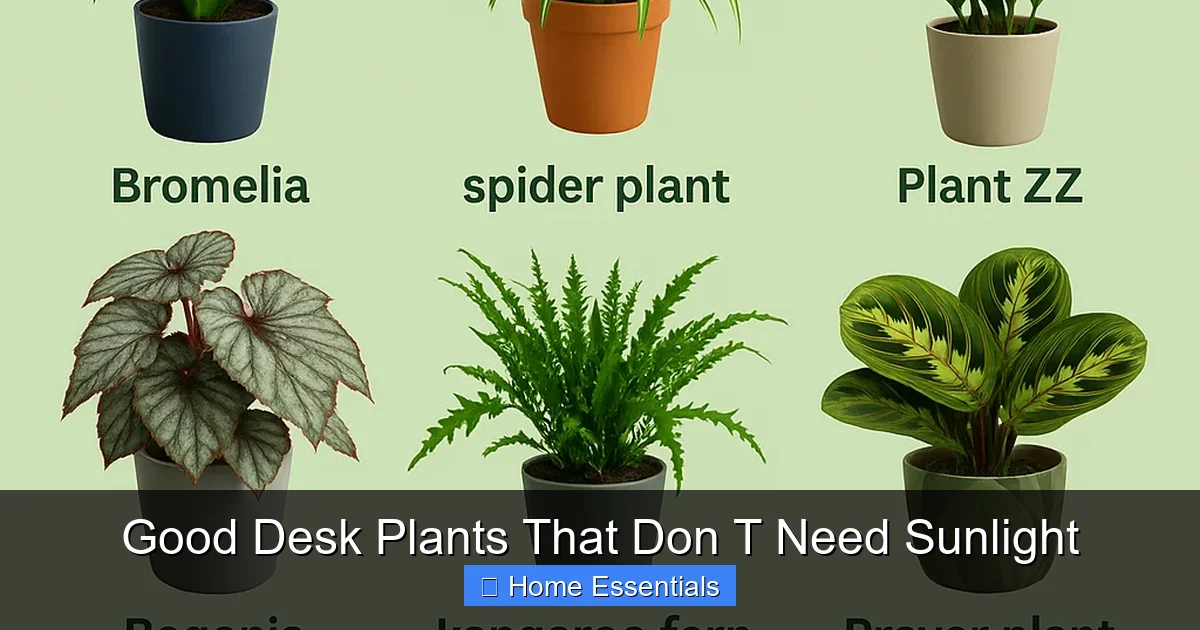
Good Desk Plants That Don T Need Sunlight
Bring life to your dimly lit desk or office without the hassle of direct sunlight. Many beautiful, air-purifying plants thrive in low-light conditions, requiring minimal care. From the nearly indestructible Snake Plant to the trailing Pothos, you can enjoy the mental and physical health benefits of greenery anywhere. This guide provides expert recommendations and simple care tips to help you choose and nurture the perfect shade-loving desk companion.
Key Takeaways
- Low-light doesn’t mean no light: These plants need indirect, ambient light from a window or artificial office lighting to survive, not direct sunbeams.
- Overwatering is the #1 killer: Low-light plants use water much slower. Always check soil moisture before watering to prevent root rot.
- Air purification is a key benefit: Many shade-tolerant plants, like the Snake Plant and Peace Lily, are excellent at removing common indoor toxins.
- Choose the right plant for your space: Consider mature size, growth habit (upright vs. trailing), and toxicity if you have pets or small children.
- Drainage is non-negotiable: Always use pots with drainage holes to allow excess water to escape, protecting the plant’s roots.
- They boost mood and productivity: Adding a living element to your desk reduces stress, improves focus, and makes your workspace more inviting.
- Simple fertilization is sufficient: Feed with a diluted, balanced liquid fertilizer only during the spring and summer growing seasons, once a month at most.
📑 Table of Contents
- Why Your Desk Craves a Low-Light Plant (Even Without a Window)
- The All-Star Cast: Top 6 Desk Plants That Thrive in Darkness
- Essential Care Guide: Keeping Your Low-Light Desk Plant Happy
- Styling Your Desk: Creating a Green, Productive Oasis
- Common Mistakes (And How to Avoid Them)
- The Final Word: Your Green Desk Awaits
Why Your Desk Craves a Low-Light Plant (Even Without a Window)
Let’s be honest. Not all of us are blessed with a sun-drenched corner office or a desk by a bright window. Many workspaces are tucked away in interior rooms, under fluorescent lights, or in basements. The idea of adding a plant can feel like a recipe for a sad, leggy, drooping disaster. But what if we told you that creating a lush, green oasis on your desk is absolutely possible, even in the dimmest of conditions? The secret lies in understanding the world of low-light plants.
These aren’t weak plants; they are survivors, adapted to thrive on the forest floor where sunlight is dappled and filtered. They have evolved to make the most of every bit of light they receive. Bringing one of these resilient good desk plants that don’t need sunlight into your workspace does more than just decorate. It’s a small act of self-care. Studies show that interacting with houseplants can reduce stress, lower blood pressure, and improve concentration and productivity. They literally clean the air by absorbing toxins like formaldehyde and benzene. In a space that often feels sterile and artificial, a living plant provides a vital connection to nature, a concept known as biophilia. So, before you give up on the dream of a verdant desk, know this: your low-light space is a perfect opportunity to host one of these tough, beautiful, and beneficial companions.
The All-Star Cast: Top 6 Desk Plants That Thrive in Darkness
Now for the fun part! Let’s meet the champions of the shade. These plants have earned their reputation for being nearly impossible to kill in an office setting. We’ve selected them based on their tolerance for low light, low watering needs, manageable size, and overall aesthetic appeal for a desk.
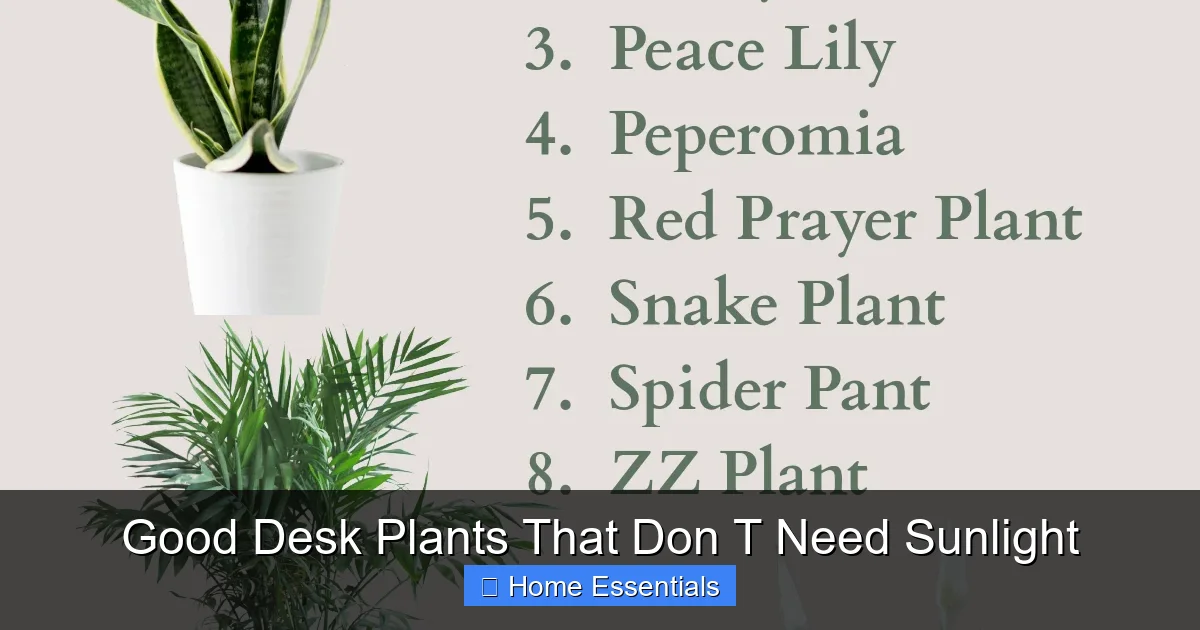
Visual guide about Good Desk Plants That Don T Need Sunlight
Image source: i.pinimg.com
1. The Indestructible Warrior: Snake Plant (Sansevieria trifasciata)
If there was a plant that could survive a zombie apocalypse, it would be the Snake Plant. Also charmingly called “Mother-in-Law’s Tongue,” this architectural beauty is the ultimate good desk plant that doesn’t need sunlight. Its stiff, upright, sword-like leaves come in various shades of green, often with striking yellow or white margins. It’s a master of efficiency, performing photosynthesis at night (a process called Crassulacean Acid Metabolism), which is rare and makes it exceptional at purifying air while you sleep—though that’s less relevant at your desk, it speaks to its hardy nature.
- Care Level: Beginner. Forgets-to-water-it friendly.
- Light Needs: Low to bright indirect. It tolerates the darkest corner of a room but grows faster in brighter spots.
- Watering: Every 3-6 weeks. Let soil dry completely. In winter, you might only water once every two months.
- Pro Tip: Its shallow root system means you don’t need a deep pot. A wide, sturdy pot is perfect to prevent top-heaviness as it grows tall.
2. The Glossy Gem: ZZ Plant (Zamioculcas zamiifolia)
The ZZ Plant is the silent, sleek professional of the plant world. With its deep green, glossy, oval-shaped leaves on graceful, arching stems, it adds a touch of modern elegance. Its secret weapon is a potato-like rhizome underground that stores water and nutrients, making it incredibly drought-tolerant. You could literally ignore it for a month and it would just look at you judgmentally, then perk up after a drink. It’s a perfect desk plant for windowless offices.
- Care Level: Beginner+ (almost indestructible).
- Light Needs: Low light to medium indirect. Avoid direct sun, which will scorch its leaves.
- Watering: Every 3-4 weeks. The #1 rule: when in doubt, wait. Its rhizome hates soggy soil.
- Fun Fact: The ZZ Plant is often propagated by dividing its rhizomes. You can create new plants for your coworkers!
3. The Trailblazer: Golden Pothos (Epipremnum aureum)
Want a plant that adds life and movement to your desk? The Golden Pothos, with its heart-shaped leaves splashed with yellow or white variegation, is a cascading dream. It’s incredibly versatile—you can let it trail down the side of your desk, train it up a small trellis, or keep it pruned into a bushy mound. It’s famously fast-growing and forgiving. If you forget to water it, it might droop dramatically to tell you it’s thirsty, but it will almost always recover fully. It’s one of the most popular low-light office plants for a reason.
- Care Level: Beginner. Very forgiving.
- Light Needs: Low to bright indirect. In very low light, the variegation may fade to solid green, and growth will slow.
- Watering: Every 1-2 weeks. Allow the top inch of soil to dry out. Drooping is a clear sign it needs water.
- Caution: All parts are toxic if ingested, so keep away from pets and small children.
4. The Peaceful Purifier: Peace Lily (Spathiphyllum)
The Peace Lily is the diplomat of the desk plant world—elegant, serene, and communicative. Its dark green, glossy leaves are stunning on their own, but the real showstopper is the elegant white “spathe” (flower) that blooms periodically. It’s a top performer in NASA’s clean air study, effectively removing common volatile organic compounds (VOCs). It’s also a drama queen when thirsty, with its entire plant dramatically drooping—a clear, unmistakable signal that it’s time for water. This makes it a great desk plant for beginners who need a visual cue.
- Care Level: Beginner.
- Light Needs: Low to medium indirect. It will rarely flower in very low light but will survive and look healthy.
- Watering: Every 1-2 weeks. Water thoroughly when the top inch of soil is dry or when it droops. Don’t let it sit in water.
- Note: Like the Pothos, it is toxic to pets and humans if ingested.
5. The Cast-Iron Classic: Cast Iron Plant (Aspidistra elatior)
Living up to its name, the Cast Iron Plant is tough as nails. It was a favorite in Victorian-era homes precisely because it tolerated the soot and low light of gas-lit rooms. It features long, broad, dark green leaves that shoot straight up from the soil. It’s slow-growing, extremely low-maintenance, and virtually pest-free. It won’t wow you with flowers or rapid growth, but it will provide a reliable, architectural green presence on your desk for years with almost no intervention. It’s the definition of a good desk plant that doesn’t need sunlight.
- Care Level: Beginner. The most hands-off option on this list.
- Light Needs: Low to medium indirect. Tolerates deep shade remarkably well.
- Watering: Every 2-3 weeks. Allow soil to dry out almost completely between waterings. Under-watering is better than over.
- Bonus: It’s non-toxic, making it a safe choice for homes with curious pets.
6. The Versatile Vine: Heartleaf Philodendron (Philodendron hederaceum)
Similar to the Pothos but with simpler, solid green, heart-shaped leaves, the Heartleaf Philodendron is a charming and adaptable trailing plant. It’s slightly less variegated but equally resilient. Its vines can be encouraged to climb a moss pole or small trellis on your desk, adding a vertical element, or allowed to trail gracefully. It’s a prolific grower that roots easily in water, making propagation a fun project. Its deep green foliage adds a rich, lush texture to any low-light office space.
- Care Level: Beginner.
- Light Needs: Low to medium indirect. Will survive in very low light but may become leggy (long stems with fewer leaves).
- Watering: Every 1-2 weeks. Let the top inch of soil dry. It’s more sensitive to overwatering than the Snake Plant or ZZ.
- Pet Safety: Toxic to pets and humans if consumed, like its Philodendron and Pothos cousins.
Essential Care Guide: Keeping Your Low-Light Desk Plant Happy
So you’ve chosen your plant. Now, how do you keep it thriving and not just surviving? The rules for caring for good desk plants that don’t need sunlight are simple but crucial, and they differ from caring for sun-loving plants. The golden principle is: less is more. These plants are adapted to slow growth and resource conservation. Your job is to avoid the common pitfalls, primarily overwatering and poor drainage.
Visual guide about Good Desk Plants That Don T Need Sunlight
Image source: typicallytopical.com
The Watering Conundrum: How to Get It Right
Watering is the most common point of failure. In low light, the plant’s metabolic processes slow down. The soil stays moist for much longer than it would on a sunny windowsill. The #1 rule is to always check the soil before watering. Insert your finger about 1-2 inches deep. If the soil feels dry at that depth, it’s time to water. If it’s still cool and moist, wait a few more days and check again. When you do water, do it thoroughly—pour water until it runs out the drainage holes—then immediately dump any water that collects in the saucer. Never let the pot sit in a waterlogged saucer. In winter, when growth slows, you can often cut watering frequency in half. Remember, it’s far easier to revive an underwatered plant than an overwatered one.
Light: Understanding “Low-Light”
“Low-light” is a relative term. It does not mean “no light.” All plants need some light for photosynthesis. For our desk heroes, “low-light” means:
- A spot several feet away from a north or east-facing window.
- A location in a room with windows but where you can comfortably read a book without turning on a lamp.
- Under the bright, indirect glow of standard office fluorescent or LED lighting.
- Avoid placing them in a completely dark closet or a windowless bathroom with no artificial light for days on end.
Rotate your plant a quarter turn every month or so to ensure even growth, as it will naturally lean toward its light source.
Soil, Pot, and Fertilizer: The Foundational Trio
Use a standard, well-draining potting mix. Avoid heavy garden soil or mixes that retain too much water. You can add a handful of perlite or orchid bark to any standard mix to improve drainage. The pot is critical: it must have a drainage hole. This is non-negotiable. A decorative cachepot without a hole is fine, but only if you place a plastic nursery pot with holes inside it. Empty the cachepot of excess water after watering. Fertilizer is a bonus, not a requirement. During the active growing season (spring and summer), use a balanced, water-soluble houseplant fertilizer at half the recommended strength once a month. Do not fertilize in the fall and winter when growth is dormant.
Styling Your Desk: Creating a Green, Productive Oasis
Now that you have the know-how, let’s talk aesthetics. How you display your low-light desk plant can transform your entire workspace from a utilitarian desk to a personal sanctuary. The goal is to complement your work style, not hinder it.
Visual guide about Good Desk Plants That Don T Need Sunlight
Image source: sarahscoop.com
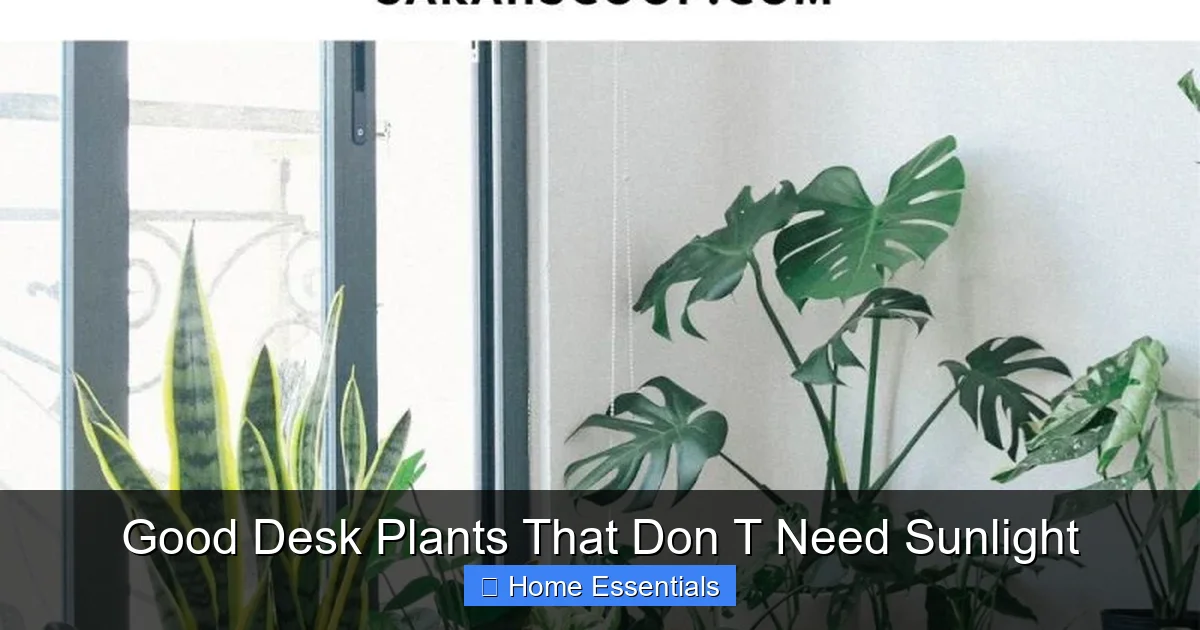
Consider the Plant’s Form: A tall, architectural Snake Plant in a simple, geometric pot adds a modern, structured feel and can even act as a subtle room divider if your desk is in an open plan. A trailing Pothos or Philodendron in a hanging pot or placed on a high shelf adds softness and vertical interest. A bushy ZZ Plant in a wide, ceramic pot creates a grounding, substantial presence right at your elbow.
Pot Matters: Choose pots that match your office decor. Neutral tones (white, black, terracotta, cement) are versatile and let the plant shine. Ensure the pot is proportionate to the plant—not too big, which can lead to soggy soil, and not too small, which will restrict root growth. Remember the drainage hole rule!
Grouping for Impact: Create a “desk garden” by grouping 2-3 plants of varying heights and textures together. Place a tall Snake Plant behind a mounding ZZ Plant, with a small trailing Philodendron cascading over the edge. This creates a mini-landscape. Just be mindful that grouped plants may need slightly less frequent watering as the microclimate retains humidity.
Accessorize: Add a small decorative dish for water droplets, a moss-covered stone, or a tiny figurine among the soil. A stylish watering can or mister kept on the desk reminds you to care for your plant. The key is to keep accessories minimal so they don’t create clutter on your work surface.
Common Mistakes (And How to Avoid Them)
Even the hardiest plants can fall victim to well-intentioned but misguided care. Here are the top pitfalls to avoid when choosing and caring for your good desk plants that don’t need sunlight.
- Mistake 1: The “Weekly Watering” Routine. Watering on a strict calendar schedule is a death sentence. The plant’s needs change with the seasons, the pot size, and the actual light it receives. Always check soil moisture first.
- Mistake 2: Ignoring Drainage. A pot without a hole is a swamp in disguise. Roots will rot silently until it’s too late. Always, always use pots with drainage.
- Mistake 3: The “Rescue” Repot. If a plant looks sad, don’t immediately repot it. Repotting is stressful. First, diagnose the issue (likely over or under-watering). Only repot if the plant is severely root-bound, and do it in spring.
- Mistake 4: Using the Wrong Soil. Heavy, dense soil holds too much water. Use a light, airy potting mix formulated for indoor plants.
- Mistake 5: Forgetting to Clean the Leaves. Dust builds up on leaves in an office, blocking the already limited light. Gently wipe leaves with a damp cloth every month or so to help the plant photosynthesize efficiently.
- Mistake 6: Buying a “Low-Light” Plant and Placing It in Total Darkness. A closet or a hallway with no windows and no artificial light is not low-light; it’s no-light. Ensure your plant receives some form of ambient light for several hours a day.
The Final Word: Your Green Desk Awaits
Incorporating a living plant into your workspace is one of the simplest, most rewarding upgrades you can make. It’s a statement that you care about your environment and your own well-being. The misconception that you need a sunny window to keep plants alive is just that—a misconception. As we’ve seen, a robust selection of good desk plants that don’t need sunlight is readily available, each with its own unique personality and care requirements. By choosing a plant suited to your specific light conditions and following the simple, fundamental rules of watering and drainage, you are setting yourself up for success. Start with the nearly foolproof Snake Plant or ZZ Plant if you’re a self-proclaimed plant killer. Graduate to the communicative Peace Lily or the trailing Pothos as you build confidence. These plants don’t just survive in the shade; they thrive, bringing a pulse of life, a breath of fresh air, and a moment of calm to your daily grind. So, pick your champion, find it a pot with a hole, and let the greenery begin. Your desk—and your mind—will thank you for it.
Frequently Asked Questions
How often should I water my low-light desk plant?
Watering frequency depends on the specific plant, pot size, and your office’s temperature and humidity. The universal rule is to check the soil: water thoroughly only when the top 1-2 inches of soil are dry. For most plants on this list, this means every 1-6 weeks, with winter intervals being much longer. Never water on a fixed schedule.
Can any plant survive in a completely windowless room with only fluorescent lights?
Most plants on this list can survive, but not necessarily thrive, in a completely windowless room under standard office fluorescent lighting for long periods. They will grow very slowly and may become leggy as they stretch for light. For best results, place the plant under a dedicated, brighter LED plant light for 8-10 hours a day, or choose the most tolerant options like the Snake Plant or ZZ Plant.
Are any of these low-light desk plants safe for cats and dogs?
Yes, but with a major caveat. Of the plants listed, the Cast Iron Plant (Aspidistra) is considered non-toxic to pets by the ASPCA. The Snake Plant (Sansevieria) is also listed as non-toxic to dogs but can cause mild nausea in cats. However, the Peace Lily, Pothos, Philodendron, and ZZ Plant are all toxic to cats and dogs if ingested, causing oral irritation, vomiting, and difficulty swallowing. Always research a plant’s toxicity before bringing it into a pet-friendly home.
What type of soil is best for a desk plant in low light?
A well-draining, peat-based potting mix is ideal. You can use any standard “houseplant potting soil” from a garden center. To improve drainage and aeration even further, mix in 20-30% perlite, pumice, or orchid bark chips. This prevents the soil from staying soggy, which is the primary cause of root rot in low-light conditions.
Why are the leaves on my low-light plant turning yellow?
Yellowing leaves are most commonly a sign of overwatering or poor drainage, which leads to root rot. Less commonly, it can be due to underwatering, a lack of nutrients (if you haven’t fertilized in years), or natural aging (older leaves turning yellow and dropping). First, check your watering habits and ensure your pot has a drainage hole.
Can I propagate my desk plant to make more?
Absolutely! Many of these plants are easy to propagate, which is a great way to multiply your collection or share with friends. Snake Plants and ZZ Plants are propagated by dividing their rhizomes at the root. Pothos, Philodendron, and Peace Lilies can be easily propagated in water by cutting a stem with at least one node (the little bump where a leaf meets the stem). Place the cutting in a jar of water, change the water weekly, and wait for roots to develop before potting in soil.