How Does a Smart Bulb Work
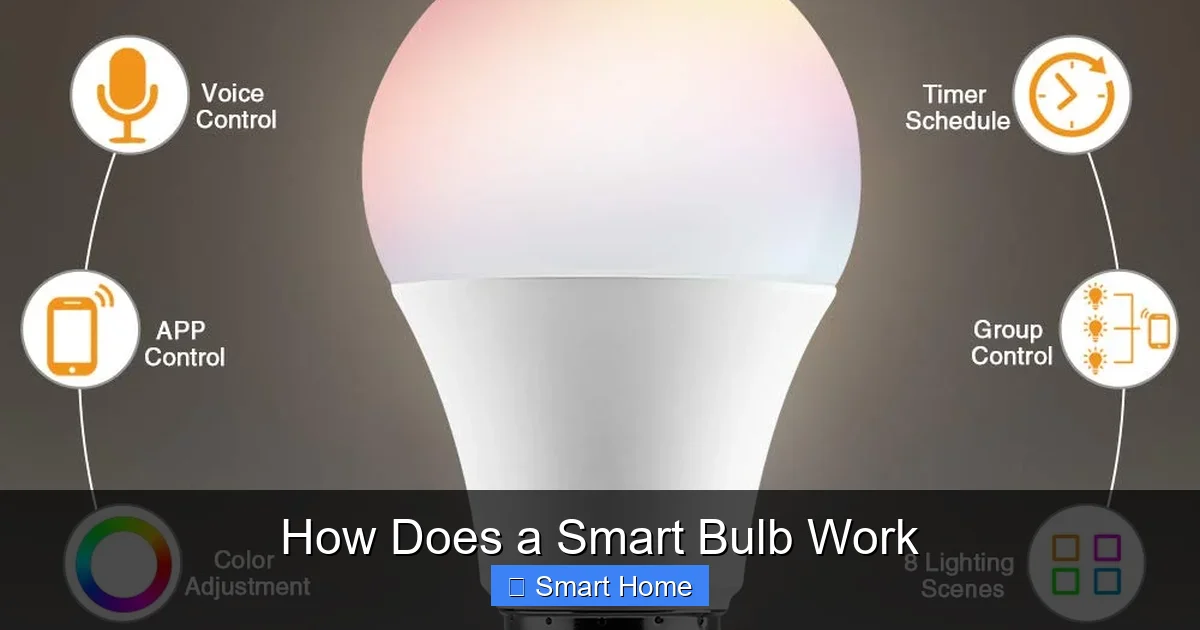
Smart bulbs are revolutionizing home lighting by combining LED technology with Wi-Fi connectivity and app control. Unlike traditional bulbs, they allow you to adjust brightness, color, and schedule lighting from your phone or voice assistant—all while saving energy. Whether you’re setting the mood for movie night or automating your daily routine, smart bulbs offer convenience, savings, and endless customization.
Key Takeaways
- Smart bulbs use LED technology for energy efficiency and long life, often lasting 25,000+ hours.
- They connect via Wi-Fi or Zigbee/Z-Wave, enabling control through apps, voice assistants, or smart home hubs.
- Color-changing models use RGB (red, green, blue) LEDs to create millions of colors and moods.
- Scheduling and automation let you set routines like sunrise simulations or nighttime dimming.
- Voice control integration with Alexa, Google Assistant, or Siri allows hands-free operation.
- Energy savings come from lower wattage and smart features like motion detection.
- Compatibility matters—check your router, hub, or assistant before buying.
📑 Table of Contents
- How Does a Smart Bulb Work?
- The Basics: What Is a Smart Bulb?
- The Technology Behind Smart Bulbs
- How Smart Bulbs Connect to Your Smart Home
- Popular Smart Bulb Brands and Platforms
- Setting Up Your Smart Bulb: A Step-by-Step Guide
- Benefits of Using Smart Bulbs
- Limitations and Considerations
- Future of Smart Lighting
- Conclusion
How Does a Smart Bulb Work?
Imagine turning on the lights with just your voice, dimming them while watching a movie, or setting them to slowly brighten as your alarm goes off—all without touching a switch. That’s the magic of smart bulbs. These aren’t your grandma’s incandescent bulbs. Instead, they’re high-tech LED lights packed with Wi-Fi, Bluetooth, or Zigbee chips that let you control them from anywhere using your smartphone or voice assistant.
In this article, we’ll break down exactly how smart bulbs work—what makes them tick, what powers them, and how they connect to your smart home. Whether you’re a tech newbie or a gadget enthusiast, you’ll walk away with a clear understanding of the technology behind these tiny but mighty lights.
The Basics: What Is a Smart Bulb?

Visual guide about How Does a Smart Bulb Work
Image source: i.pinimg.com
At its core, a smart bulb is just an LED light—like the energy-efficient bulbs you’ve been using for years—but with a brain. That brain includes a microcontroller, a wireless communication chip, and sometimes even a motion sensor or color-changing LEDs. The key difference? Instead of being hardwired to a switch, smart bulbs connect to your home network, allowing remote control and automation.
Most smart bulbs look almost identical to regular bulbs—they screw into standard light sockets—but they contain advanced electronics. You don’t need to rewire your house. Just unscrew your old bulb and replace it with a smart one. It’s that simple.
How Smart Bulbs Save Energy
One of the biggest reasons people switch to smart bulbs is energy efficiency. Traditional incandescent bulbs waste up to 90% of their energy as heat. Smart bulbs, on the other hand, use LED technology, which converts nearly all energy into light. A typical smart bulb uses only 9 watts to produce the same brightness as a 60-watt incandescent bulb.
But the energy savings don’t stop there. Smart bulbs can be programmed to turn off when no one’s home, dim during the day, or shut off automatically after a period of inactivity. Some models even learn your habits and adjust lighting accordingly. Over time, these small efficiencies add up—saving you money on your electricity bill and reducing your carbon footprint.
Types of Smart Bulbs
Not all smart bulbs are created equal. They come in different types, depending on your needs:
- Standard Smart Bulbs – These are the most common. They connect to Wi-Fi and work with voice assistants like Alexa and Google Assistant. You can control them via an app or voice commands.
- Smart Bulbs with Color – These use RGB (red, green, blue) LEDs to produce millions of colors. Perfect for setting the mood in your living room or adding ambiance to a party.
- Smart Bulbs with Tunable White – These adjust between warm white (2700K) and cool white (6500K), mimicking natural daylight. Great for reading or working.
- Smart Bulbs with Sensors – Some models include motion detection, ambient light sensing, or even temperature monitoring. These can trigger actions like turning on lights when you enter a room.
The Technology Behind Smart Bulbs
Visual guide about How Does a Smart Bulb Work
Image source: i.ytimg.com
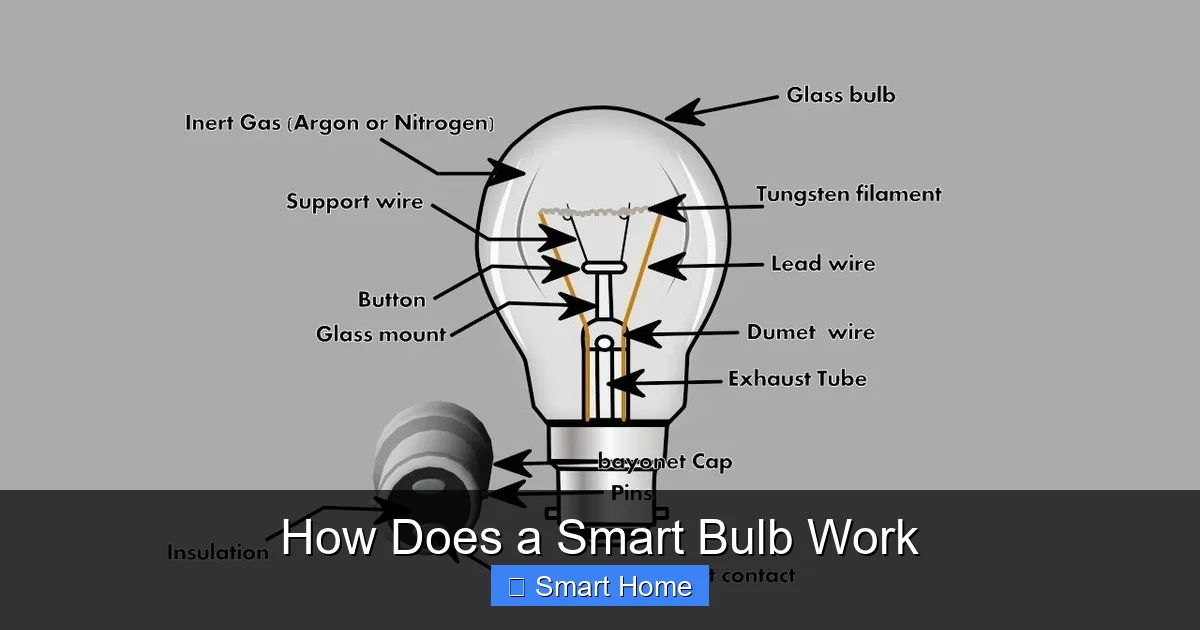
So, what’s inside a smart bulb? Let’s take a peek under the hood.
LED Technology
All smart bulbs use LED (light-emitting diode) technology. LEDs are semiconductor devices that emit light when electricity passes through them. They’re far more efficient than incandescent or fluorescent bulbs and last much longer—typically 25,000 to 50,000 hours.
Inside a smart bulb, you’ll find multiple small LEDs. In color-changing models, there are separate red, green, and blue LEDs. By adjusting the intensity of each color, the bulb can create any color in the spectrum. This is how smart bulbs deliver millions of color combinations.
Microcontrollers and Processors
Every smart bulb has a tiny computer—a microcontroller—that manages its functions. This little chip handles everything from adjusting brightness to connecting to your Wi-Fi network. It also processes commands from your phone or voice assistant.
The processor ensures the bulb responds quickly and reliably. Some advanced models even have built-in timers, schedules, or sensors that operate independently of your phone.
Wireless Communication Modules
This is the magic that lets you control your bulb from across the room—or across the world. Smart bulbs use one of three main communication technologies:
- Wi-Fi – Most common. The bulb connects directly to your home Wi-Fi network. You control it through a smartphone app. Pros: No extra hub needed. Cons: Can slow down your network if you have many devices.
- Zigbee – A low-power, mesh network protocol. Zigbee bulbs usually require a hub (like Amazon Echo or Samsung SmartThings) to connect to Wi-Fi. Pros: More reliable, less network strain. Cons: Need a hub.
- Bluetooth – Some bulbs use Bluetooth for short-range control. You’ll need your phone nearby. Best for single-room setups.
Each method has pros and cons. Wi-Fi is easiest to set up, but Zigbee is more stable for large smart homes.
Power Supply and Regulation
Smart bulbs need a consistent power supply to function properly. They include built-in power regulation circuits that convert AC household voltage (120V in the U.S.) to the low DC voltage required by the LEDs and electronics.
This internal power supply also includes safety features like surge protection and thermal management. Without these, the bulb could overheat or fail.
How Smart Bulbs Connect to Your Smart Home
Visual guide about How Does a Smart Bulb Work
Image source: lihpao.com
Now that we know what’s inside, let’s talk about how smart bulbs connect to your world.
Wi-Fi Connection
Most smart bulbs connect to your home Wi-Fi network. During setup, you’ll use a companion app (like Philips Hue, LIFX, or TP-Link Kasa) to connect the bulb to your router. The app guides you through entering your Wi-Fi password and assigning the bulb a name.
Once connected, you can control the bulb from anywhere—as long as you’re on the same Wi-Fi network. Some apps even let you control bulbs when you’re away from home, though this requires a stable internet connection.
Voice Control Integration
One of the most popular features of smart bulbs is voice control. They work seamlessly with Amazon Alexa, Google Assistant, and Apple Siri. Once paired, you can say things like:
- “Alexa, turn on the living room lights.”
- “Hey Google, dim the bedroom lights to 50%.”
- “Siri, set the kitchen lights to blue.”
Voice control is powered by cloud-based voice recognition. When you speak a command, your assistant processes it and sends it to the cloud, which then communicates with your smart bulb through your home network.
Smart Home Hubs and Bridges
Some smart bulbs, like Philips Hue or IKEA TRÅDFRI, require a hub or bridge to work. This is a small device that plugs into your router and connects to the bulbs via Zigbee or Z-Wave. The hub then communicates with your Wi-Fi network.
While this adds a small extra step to setup, hubs offer better reliability, faster response times, and support for more advanced automation. They’re ideal for larger smart home systems.
App Control and Automation
The smartphone app is your command center. Most apps let you:
- Turn lights on/off
- Adjust brightness and color
- Set schedules (e.g., “Turn on at 7 a.m. on weekdays”)
- Create scenes (e.g., “Movie Night” dims lights and sets them to red)
- Set up geofencing (lights turn on when you arrive home)
Automation is where smart bulbs truly shine. You can create routines that run automatically based on time, location, or sensor input. For example, your lights can gradually brighten in the morning to simulate sunrise or turn red when smoke is detected.
Popular Smart Bulb Brands and Platforms
Not all smart bulbs are the same. Here are some of the most popular brands and platforms:
Philips Hue
Philips Hue is often considered the gold standard for smart lighting. Their bulbs use Zigbee and require a Hue Bridge. They offer a wide range of colors, dimming, scheduling, and integration with major smart home platforms. Hue also has a robust app and supports thousands of integrations.
LIFX
LIFX bulbs connect directly to Wi-Fi—no hub required. They’re known for bright, vibrant colors and fast response times. LIFX offers both color and tunable white models, and their app is user-friendly.
TP-Link Kasa
Kasa offers affordable, reliable smart bulbs with easy setup. They work with both Wi-Fi and Zigbee (via Kasa Hub). Kasa bulbs are great for beginners and integrate well with Alexa and Google Assistant.
IKEA TRÅDFRI
IKEA’s smart lighting system is budget-friendly and uses Zigbee. You’ll need the TRÅDFRI Gateway, but the bulbs are stylish and come in various finishes. IKEA’s app is simple and supports automation.
Nanoleaf
Nanoleaf focuses on design and color. Their hexagonal panels and smart bulbs are visually striking and perfect for creative lighting setups. They use Wi-Fi and work with Alexa, Google, and Apple HomeKit.
Setting Up Your Smart Bulb: A Step-by-Step Guide
Ready to install your first smart bulb? Here’s how to do it:
Step 1: Choose the Right Bulb
Make sure your bulb is compatible with your router, voice assistant, and any smart home hub you use. Check the packaging or manufacturer’s website for compatibility lists.
Step 2: Install the Bulb
Turn off the power to the light fixture. Screw the smart bulb into the socket. Turn the power back on.
Step 3: Download the App
Most brands have their own app (e.g., Philips Hue, LIFX, Kasa). Download it from your app store.
Step 4: Set Up the Bulb
Open the app and follow the on-screen instructions. This usually involves putting the bulb into pairing mode (often by turning it on and off several times) and connecting it to your Wi-Fi network.
Step 5: Connect to Voice Assistant
Go to your voice assistant’s app (Alexa or Google Home), search for “Smart Lights,” and add your bulb. Follow the prompts to link it.
Step 6: Customize and Automate
Use the app to adjust settings, create scenes, and set up schedules. Experiment with voice commands to get comfortable.
Pro Tip:
Start with one room. Once you’re comfortable, expand to other areas. This helps you learn the system without feeling overwhelmed.
Benefits of Using Smart Bulbs
Smart bulbs aren’t just a tech novelty—they offer real, everyday benefits.
Energy Savings
As mentioned earlier, smart bulbs use far less energy than traditional bulbs. According to the U.S. Department of Energy, switching to LED lighting can reduce lighting energy use by up to 75%. When combined with smart features like motion detection and scheduling, savings can be even greater.
Convenience and Control
No more fumbling for light switches in the dark. With a tap on your phone or a voice command, you can control your lights from anywhere. This is especially helpful for people with mobility issues or those who forget to turn off lights.
Enhanced Security
Smart bulbs can make your home look occupied when you’re away. Set them to turn on and off at random intervals or use geofencing to mimic your routine. This deters intruders and gives you peace of mind.
Mood and Productivity
Light affects your mood and energy levels. Smart bulbs let you adjust color temperature throughout the day—warm light for relaxing evenings, cool light for focus and productivity. Some models even sync with music or movies for immersive experiences.
Sustainability
Longer lifespan and energy efficiency make smart bulbs a greener choice. Fewer bulbs mean less waste, and lower energy use reduces your carbon footprint.
Limitations and Considerations
While smart bulbs offer many advantages, they’re not perfect.
Internet Dependence
Smart bulbs rely on Wi-Fi or a hub. If your internet goes down, you may lose control. Some bulbs have local control options (like Bluetooth), but these are limited in range.
Privacy Concerns
Smart bulbs collect data on your usage patterns. While most companies protect this data, it’s worth reading privacy policies. Also, always use strong Wi-Fi passwords and enable two-factor authentication on your accounts.
Cost
Smart bulbs are more expensive than regular bulbs. A single bulb might cost $20–$50. But over time, energy savings and convenience often justify the investment.
Compatibility Issues
Not all smart bulbs work with every hub or voice assistant. Always check compatibility before buying. Mixing brands can lead to a fragmented smart home experience.
Network Load
Too many Wi-Fi-connected devices can slow down your network. If you have many smart bulbs and other devices, consider using Zigbee or Z-Wave, which are more efficient.
Future of Smart Lighting
The future of smart bulbs is bright—literally. Here’s what’s coming:
- AI Integration – Future bulbs may learn your habits and adjust automatically without programming.
- Health Monitoring – Some bulbs may track air quality, humidity, or UV exposure.
- Seamless Integration – Expect tighter integration with smart thermostats, security systems, and even wearables.
- Improved Energy Management – Smart bulbs could respond to grid demand, helping reduce peak energy use.
As smart home technology evolves, smart bulbs will become smarter, more efficient, and more integrated into daily life.
Conclusion
Smart bulbs are more than just a trend—they’re a practical, energy-efficient upgrade that brings convenience, control, and creativity to your home. By understanding how they work—from LED technology to Wi-Fi connectivity and voice control—you can make informed choices and get the most out of your smart lighting setup.
Whether you’re setting the mood for a cozy dinner, automating your morning routine, or saving on your electricity bill, smart bulbs offer a simple yet powerful way to enhance your living space. As technology continues to advance, these tiny lights will only get smarter, brighter, and more connected.
So the next time you reach for the light switch, remember: there’s a whole world of light control waiting just behind your fingertips. And with a smart bulb, that world is at your command.
Frequently Asked Questions
Can smart bulbs work without Wi-Fi?
Yes, some smart bulbs use Bluetooth or Zigbee and can work locally without Wi-Fi. However, full features like remote control and automation usually require a network connection.
Do smart bulbs work during a power outage?
No, smart bulbs need power to function. If the electricity goes out, the bulbs will turn off. Some smart switches (not bulbs) can work during outages, but bulbs do not.
Are smart bulbs compatible with all light fixtures?
Most smart bulbs fit standard screw sockets (E26 or E27), but always check the bulb’s specifications. Some fixtures, like dimmer switches, may require compatible smart bulbs to avoid flickering.
Can I use smart bulbs with a traditional switch?
Yes, but for full functionality, it’s best to replace the traditional switch with a smart switch. Otherwise, you may lose remote control and automation features.
How many smart bulbs can I connect to one router?
It depends on your router and internet speed. Most routers can handle 20–30 Wi-Fi devices, but too many smart bulbs can slow down your network. Use Zigbee or Z-Wave for better performance.
Are smart bulbs safe to leave on all night?
Yes, smart bulbs are safe. They use low heat and energy-efficient LEDs. You can set them to turn off automatically or use timers to avoid wasting energy.