How Much Electricity Does a Desk Lamp Use
The electricity a desk lamp uses depends entirely on its bulb’s wattage and how long it’s on. A traditional 60-watt incandescent bulb consumes 0.06 kWh per hour, while a modern 10-watt LED uses only 0.01 kWh. Choosing the right bulb and being mindful of usage can save you significant money and energy over time. Smart bulbs offer advanced scheduling and dimming to optimize consumption further.
You plug in your desk lamp, flip the switch, and a pool of light appears on your work surface. It feels like a tiny, insignificant source of power. But have you ever paused to wonder, how much electricity does a desk lamp use really? It’s a deceptively simple question with a fascinating answer that sits at the intersection of physics, technology, and personal habit. Understanding this isn’t just about satisfying curiosity; it’s a practical step toward managing your home’s energy footprint and lowering your utility bills. In this complete guide, we’ll pull the plug on the mystery, breaking down exactly how your lamp consumes power, how to calculate its cost, and what you can do to make every watt count.
Key Takeaways
- Wattage is the key factor: A lamp’s electricity use is determined by the bulb’s wattage (e.g., 60W vs. 10W) and its hours of operation.
- Bulb technology matters immensely: LED bulbs use up to 80% less electricity than old incandescent bulbs for the same light output.
- Cost is minimal but additive: Running a typical LED desk lamp costs pennies per day, but this small usage adds up across all your home lighting.
- Smart features drive savings: Timers, schedules, and dimmers in smart bulbs can automatically reduce energy waste from forgotten lights.
- Standby power is real: Some smart bulbs and lamps with transformers draw a tiny amount of power even when “off,” a concept known as phantom load.
- Efficiency is about lumens, not just watts: Choose bulbs based on lumens (brightness) for your needs, then select the lowest wattage technology that provides it.
- Long-term savings outweigh cost: While LEDs cost more upfront, their extreme energy efficiency and long lifespan provide a rapid return on investment.
📑 Table of Contents
- Understanding Wattage and Energy Consumption: The Basics
- The Great Bulb Showdown: Incandescent, CFL, and LED
- Calculating the Real Cost: It’s Easier Than You Think
- Smart Features and Energy Savings: Beyond the Bulb
- Choosing the Right Lamp and Bulb for Maximum Efficiency
- Environmental and Practical Considerations: The Bigger Picture
- Conclusion: Shedding Light on Smart Choices
Understanding Wattage and Energy Consumption: The Basics
Before we dive into specific numbers, we need to clarify two terms that are often confused: watts and watt-hours. Think of it like this: watts (W) are a measure of power, or the rate of energy use at any given moment. Watt-hours (Wh) measure the total energy consumed over time. Your electricity bill is measured in kilowatt-hours (kWh), which is 1,000 watt-hours.
How to Find Your Lamp’s Wattage
The first step is to know your lamp’s power draw. This is almost always printed on the bulb itself or its packaging. Look for a number followed by a “W.” Common desk lamp bulbs range from the ancient 40W or 60W incandescent to 10W-15W LEDs. If your lamp has a built-in LED module (common in modern designs), the wattage should be on a label on the lamp’s base or cord. If you can’t find it, the bulb’s shape and base can give you clues—a standard A-shape bulb with a medium base (E26) could be anything from 4W (LED) to 100W (incandescent), so checking is crucial.
Let’s do a quick, real-world comparison. A traditional 60-watt incandescent bulb burning for one hour uses 60 watt-hours, or 0.06 kWh. A modern 10-watt LED bulb providing a similar light output uses only 10 watt-hours (0.01 kWh) in that same hour. That’s a massive difference for the same task. The formula is simple: (Wattage ÷ 1000) x Hours Used = kWh Used.
The Great Bulb Showdown: Incandescent, CFL, and LED
The type of bulb in your lamp is the single biggest determinant of its electricity use. Let’s compare the main contenders you’ll encounter.
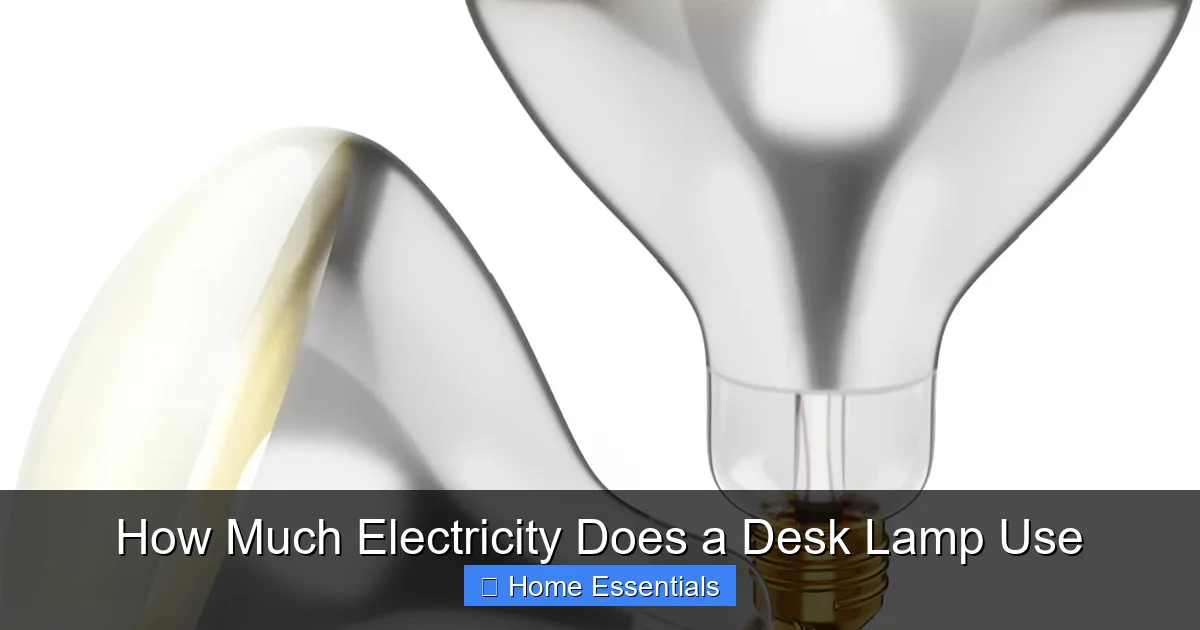
Visual guide about How Much Electricity Does a Desk Lamp Use
Image source: craftedchronicle.com
The Inefficient Incandescent (The Old Standard)
The classic glass bulb with a tungsten filament is a relic of the past. It works by heating the filament until it glows, which means about 90% of its energy is wasted as heat, not light. A 60W incandescent produces about 800 lumens. Its major drawbacks are high energy use and a very short lifespan (around 1,000 hours). While cheap to buy, it’s incredibly expensive to operate. For a desk lamp used 4 hours daily, a 60W incandescent will cost you roughly $8-10 per year in electricity (at a national average rate of 13¢/kWh) and need replacing every few months.
The Compact Fluorescent Lamp (CFL)
CFLs were the first major energy-efficient alternative. They work by exciting mercury vapor to create ultraviolet light, which then stimulates a phosphor coating to glow. A 13-15W CFL can produce the same 800 lumens as a 60W incandescent, using about 75% less energy. They have a longer lifespan (8,000-10,000 hours) but contain a small amount of mercury, requiring careful disposal. They can take a moment to reach full brightness and are less ideal for frequent on/off cycles. Their cost savings are significant over incandescents but they are now largely superseded by LEDs.
The Light Emitting Diode (LED) – The Modern Champion
LED technology is the undisputed winner for desk lamps. LEDs produce light by moving electrons through a semiconductor material. They are incredibly efficient; a high-quality 9-10W LED bulb matches the 800 lumens of a 60W incandescent, using about 85% less energy. Their lifespan is staggering, often rated for 15,000-25,000 hours or more—that’s over a decade of typical use. They are instant-on, dimmable (with compatible fixtures), and contain no hazardous materials. The upfront cost is higher, but the payback period is often less than a year through energy savings. For a desk lamp used 4 hours daily, a 10W LED will cost only about $1.30-$1.50 per year in electricity. This is the baseline for modern, cost-effective lighting.
Calculating the Real Cost: It’s Easier Than You Think
Knowing the wattage is step one. Step two is translating that into dollars and cents. This empowers you to compare bulbs and see the true impact of your habits.
Visual guide about How Much Electricity Does a Desk Lamp Use
Image source: lamplure.com
The Simple Calculation Formula
You need three numbers: your bulb’s wattage (W), your average daily usage time (hours), and your electricity rate ($ per kWh). Your rate is on your utility bill. The national average in the US is around 13-15¢ per kWh, but it varies widely by state and provider.
The formula is: Annual Cost = (Watts ÷ 1000) x Hours per Day x 365 x Electricity Rate
Let’s run the numbers for a lamp used 4 hours a day at 14¢/kWh:
- 60W Incandescent: (60 ÷ 1000) x 4 x 365 x $0.14 = $12.26 per year
- 13W CFL: (13 ÷ 1000) x 4 x 365 x $0.14 = $2.66 per year
- 10W LED: (10 ÷ 1000) x 4 x 365 x $0.14 = $2.04 per year
The difference between the incandescent and LED is over $10 annually for a single lamp. Now, multiply that by every lamp in your house, and the savings become substantial. If you have a home office with a lamp on 8 hours a day, that LED’s annual cost jumps to about $4.10, while the incandescent soars to $24.50.
Factoring in Bulb Replacement Costs
The true cost isn’t just electricity. Incandescents burn out quickly. At $1 per bulb and replacing one every 4 months for a single lamp, that’s $3/year in bulb costs. An LED bulb costing $5 and lasting 10 years adds only $0.50/year. When you add the electricity and bulb costs together, the LED’s total annual cost is still less than the incandescent’s electricity cost alone.
Smart Features and Energy Savings: Beyond the Bulb
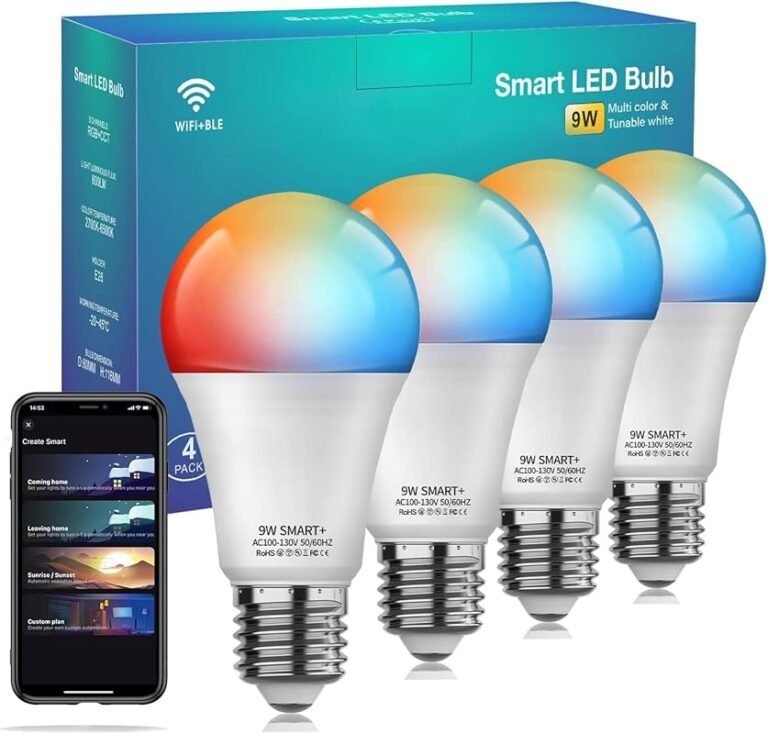
This is where technology gets interesting. Smart bulbs—LED bulbs with built-in Wi-Fi or Bluetooth connectivity—take energy management to the next level. They don’t inherently use less electricity per hour than a standard LED of the same wattage. Their power-saving magic comes from intelligence and automation.
Visual guide about How Much Electricity Does a Desk Lamp Use
Image source: storables.com
How Smart Bulbs Prevent Waste
The biggest energy waste in lighting is forgetting to turn lights off. A smart bulb, controlled via an app or voice assistant (like Alexa or Google Assistant), can be programmed with schedules. Set your desk lamp to turn off automatically at 10 PM, even if you fall asleep at your desk. Create a “Goodnight” scene that turns off all lamps. Some smart bulbs offer geofencing, turning off when your phone leaves the house. These features directly eliminate the human-error component of wasted electricity. To understand the underlying tech that makes this possible, learning how a smart bulb works is a great first step.
The Phantom Load Question
A common concern is whether smart bulbs draw power when turned off. The answer is yes, but it’s tiny. Most smart bulbs have a low-power standby mode to maintain their connection to your network, typically drawing 0.3 to 0.5 watts. Let’s calculate that: 0.5W x 24 hours x 365 days = 4.38 kWh per year. At 14¢/kWh, that’s about $0.61 annually per bulb. It’s a real but negligible cost for the convenience. For perspective, a standard LED lamp with a simple on/off switch has virtually zero standby draw. You can delve deeper into this specific issue by reading does a smart bulb consume electricity when off. The key is that the savings from automated on/off schedules almost always dwarf this tiny standby cost.
Dimming and Adaptive Lighting
Most smart bulbs and many modern LED lamps are dimmable. You don’t always need 100% brightness. Dimming a light to 70% doesn’t use 70% of the power; it uses significantly less due to the nature of LED circuitry. Using a lower brightness setting for ambient light or during daytime hours directly reduces energy consumption. Some advanced smart bulbs can even adjust their color temperature (warm to cool) based on the time of day, potentially supporting circadian rhythms without any energy penalty.
Choosing the Right Lamp and Bulb for Maximum Efficiency
Your choices extend beyond just the bulb. The lamp itself and how you use it play a role in overall efficiency and effectiveness.
Lumens vs. Watts: Shop for Brightness, Not Power
This is the most important shopping tip. Forget about watts. Lumens (lm) measure the total amount of visible light emitted. For a typical desk task (reading, writing), you’ll want 300-500 lumens. For detailed work or a larger desk, 500-800 lumens may be better. Once you know your lumen target, choose the bulb with the lowest wattage that achieves it. An 800-lumen LED will be around 10W; an 800-lumen incandescent is 60W. The lumen output is the same, the energy use is not. Always check the lumens on the bulb package.
Lamp Design and Direction
A good desk lamp directs light where you need it—on your desk—and minimizes glare and ambient spill. A well-designed shade or shade-less directional LED panel focuses the light, meaning you get the useful lumens where you need them without needing a higher-wattage bulb to overcome inefficient shading. A lamp with a dark, opaque shade that blocks light is forcing you to use a brighter (higher-wattage) bulb to compensate, wasting energy.
The Integrated LED Lamp
Many modern desk lamps have the LED module permanently built-in. You can’t change the bulb. Here, you must research the lamp’s specifications. Reputable brands will list the wattage and total lumens of the integrated LED. The advantage is that the optics are perfectly tuned for that specific LED, often leading to superior efficiency and light quality. The downside is that if the LED fails (though they last ages), you may have to replace the entire lamp. Look for lamps with high-efficiency, high-lumen-per-watt ratings.
Environmental and Practical Considerations: The Bigger Picture
Your desk lamp’s electricity use is a microcosm of larger energy and environmental issues. The choices you make here reflect broader principles.
Lifecycle Impact: Manufacturing to Disposal
An LED bulb’s manufacturing footprint is slightly higher than an incandescent’s due to its more complex electronics. However, this is overwhelmingly offset during its use phase by its drastically lower energy consumption. Over its entire life, an LED bulb has a far smaller carbon footprint. When it finally does expire, proper disposal is key. LEDs don’t contain mercury like CFLs, but they do have electronic components. Check for local e-waste recycling programs rather than tossing them in the trash.
The Cumulative Effect of Small Savings
Saving $10 per year on one lamp might not change your life. But consider the average home has 20-30 lighting points. Replacing ten 60W bulbs with 10W LEDs, used 4 hours daily, could save you $100 or more per year. When combined with efficient choices in other areas—like understanding how much energy smart bulbs consume overall—the savings compound. This is the philosophy of “negawatts”: the most cost-effective and clean energy is the energy you never have to generate.
Heat Generation and Comfort
Incandescent and halogen bulbs waste most of their energy as heat. That 60W incandescent feels hot to the touch. In a small home office, that waste heat can contribute to a warmer room, potentially increasing your air conditioning load in summer. An LED producing the same light might use only 10W and be barely warm. This secondary effect on your HVAC system is another hidden cost of inefficient bulbs.
Conclusion: Shedding Light on Smart Choices
So, how much electricity does a desk lamp use? The answer is: it’s entirely up to you. The lamp itself is just a vessel. The story is written by the bulb you choose and how you use it. A single lamp with an old incandescent bulb is a tiny but inefficient energy drain. That same lamp with a modern LED bulb becomes a model of efficiency, costing mere dollars per year to operate. By understanding the simple math of watts, hours, and your electricity rate, you can calculate the impact of every light in your home. Embrace LED technology as your default. If you opt for smart bulbs, leverage their scheduling and dimming features to automate savings and eliminate forgetfulness. Finally, remember that efficiency isn’t just about the lowest wattage; it’s about getting the exact lumens you need with the most advanced technology available. Your desk lamp is a small but powerful tool for practicing mindful energy consumption. Make it count.
Frequently Asked Questions
How much does it cost to run a desk lamp for one night?
It depends on the bulb and duration. For an 8-hour night, a 10W LED costs less than 1.5¢ (at 14¢/kWh). A 60W incandescent would cost about 8¢. The difference is stark.
Do LED desk lamps really save that much money?
Yes. An LED uses about 85% less energy than an equivalent incandescent. While the bulb costs more upfront, the energy savings typically pay for the bulb within the first year, and you’ll enjoy savings for a decade after.
Should I get a smart bulb for my desk lamp?
A smart bulb is a great choice if you value convenience and automation. Its ability to schedule on/off times and be controlled remotely can prevent energy waste from forgotten lights, easily justifying its small standby power draw and higher initial cost.
What is the typical wattage for a modern desk lamp?
>Modern efficient desk lamps using LED technology typically have a wattage between 6W and 15W. This provides ample brightness (300-800 lumens) for most desk tasks while using a fraction of the power of old bulbs.
Does a lamp with a dimmer use less electricity?
Yes. Dimming an LED bulb reduces its power consumption. The relationship isn’t perfectly linear, but dimming to 50% brightness often reduces power draw to 40-50% of the full wattage. This provides direct energy savings when full brightness isn’t necessary.
How can I calculate my exact desk lamp energy use?
Find your bulb’s wattage (W). Estimate daily hours of use. Find your electricity rate ($/kWh) on your bill. Use this formula: (Watts ÷ 1000) x Daily Hours x 365 x Your Rate. For example, a 12W bulb on 5 hours/day at $0.15/kWh costs about $3.29 per year.