How Much Energy Does Smart Bulbs Consume
Smart bulbs are surprisingly energy-efficient, using up to 90% less power than traditional incandescent bulbs. With features like dimming, scheduling, and motion detection, you can reduce energy waste and lower your electricity bill. This guide breaks down exactly how much energy smart bulbs use and shares practical tips to maximize savings.
Key Takeaways
- Smart bulbs use significantly less energy than traditional bulbs—LED smart bulbs consume as little as 9 watts compared to 60+ watts for incandescents.
- Energy consumption varies by type: LED smart bulbs use the least power, followed by CFL smart bulbs, while halogen and incandescent versions are rare and inefficient.
- Smart features impact energy use—constant connectivity and cloud syncing add minimal overhead, but automation saves more energy than it uses.
- Scheduling and dimming reduce usage—using timers, geofencing, and dimming can cut energy consumption by 30% or more.
- Brightness (lumens) matters more than wattage—choose bulbs with the right lumen output for your space to avoid over-lighting.
- Standby power is minimal—even when off, smart bulbs use less than 1 watt, so leaving them plugged in isn’t a major concern.
- Long-term savings outweigh upfront cost—despite higher initial prices, smart bulbs pay for themselves through lower electricity bills and longer lifespans.
📑 Table of Contents
- How Much Energy Does Smart Bulbs Consume?
- Understanding Smart Bulb Energy Consumption
- Energy Consumption by Smart Bulb Type
- How Smart Features Affect Energy Use
- Real-World Energy Usage Examples
- Tips to Minimize Smart Bulb Energy Consumption
- Environmental Impact and Long-Term Savings
- Common Misconceptions About Smart Bulb Energy Use
- Conclusion: Smart Bulbs Are a Smart Energy Choice
How Much Energy Does Smart Bulbs Consume?
Have you ever wondered how much energy your smart bulbs actually use? With the rise of smart home technology, it’s natural to question whether these convenient devices are truly eco-friendly—or if they’re secretly guzzling electricity and inflating your utility bills. The good news? Smart bulbs are among the most energy-efficient lighting options available today. But how much energy do they really consume, and what factors influence their power usage?
In this comprehensive guide, we’ll break down everything you need to know about smart bulb energy consumption. From understanding wattage and lumens to exploring the impact of smart features like scheduling and dimming, you’ll learn how to make informed decisions that save both energy and money. Whether you’re a new smart home enthusiast or a seasoned tech-savvy homeowner, this article will help you optimize your lighting for efficiency without sacrificing convenience.
Understanding Smart Bulb Energy Consumption
Before diving into numbers, it’s important to understand the basics of how smart bulbs work and what drives their energy use. Smart bulbs are essentially regular light bulbs—like LEDs or CFLs—with built-in wireless connectivity (usually Wi-Fi or Zigbee) that allows them to be controlled remotely via apps or voice assistants like Alexa or Google Assistant.
The key difference lies in their intelligence: smart bulbs can be dimmed, scheduled, grouped, and automated based on your habits or environmental triggers. While these features add convenience, they also introduce a small amount of standby power draw. However, this extra energy use is negligible compared to the savings from automation and efficient lighting.
How Smart Bulbs Differ from Traditional Bulbs
Traditional incandescent bulbs convert only about 10% of the electricity they use into light, with the rest wasted as heat. Compact fluorescent lamps (CFLs) are slightly better, using about 25–30% of energy for light. In contrast, LED smart bulbs are up to 90% more efficient, converting most of the energy into visible light.
Smart bulbs typically use LEDs as their light source, which means they already consume far less power than older technologies. The “smart” part adds a microcontroller and wireless module, but this increases energy use by less than 1 watt—still a tiny fraction of the total consumption.
Measuring Energy Use: Watts vs. Lumens
When comparing bulbs, you’ll often see two numbers: watts and lumens. Watts measure energy consumption (how much electricity is used), while lumens measure brightness (how much light is produced). This distinction is crucial because you want a bright bulb that uses as little energy as possible.
For example, a 60-watt incandescent bulb produces about 800 lumens. A 9-watt LED smart bulb can produce the same brightness—making it far more energy-efficient. When shopping for smart bulbs, focus on lumens for brightness and look for the lowest wattage that meets your needs.
Energy Consumption by Smart Bulb Type
Not all smart bulbs are created equal. The type of bulb you choose has a significant impact on energy consumption. Let’s compare the most common types:
LED Smart Bulbs
LED smart bulbs are the gold standard in energy efficiency. They typically use between 7 to 12 watts to produce 800 to 1100 lumens—equivalent to a 60-watt incandescent. Some advanced models can dim from 100% to 10% brightness, allowing you to adjust both light output and energy use.
For instance, a 10-watt LED smart bulb running for 5 hours a day uses just 1.5 kWh per week. At an average electricity rate of $0.12 per kWh, that’s about $0.18 per week—less than a penny per hour.
CFL Smart Bulbs
While less common today, some smart CFL bulbs exist. They use about 13–15 watts to produce 800 lumens, making them slightly less efficient than LEDs. CFLs also contain small amounts of mercury, which raises environmental concerns. Due to these drawbacks, most smart home manufacturers have shifted focus to LEDs.
Halogen and Incandescent Smart Bulbs
True smart versions of halogen or incandescent bulbs are rare and generally not recommended. These bulbs consume far more energy for the same brightness and have shorter lifespans. Even if available, they’re not cost-effective or eco-friendly.
Smart Bulbs with Color Changing Features
RGB (red, green, blue) smart bulbs can change colors and are popular for ambiance. These often use slightly more power than white-only LEDs because they have multiple LED chips. A typical color-changing smart bulb might use 10–15 watts, depending on brightness and color intensity. However, the energy difference is minimal, and the added functionality is worth the small increase in consumption.
How Smart Features Affect Energy Use
One of the biggest misconceptions is that smart bulbs use more energy because they’re “always on.” In reality, the opposite is true—smart features are designed to save energy.
Standby Power Consumption
When a smart bulb is powered but not emitting light (e.g., turned off via an app), it still uses a small amount of electricity for its internal electronics and wireless connection. This is known as standby power. Most smart bulbs consume less than 1 watt in standby mode, which is comparable to leaving a phone charger plugged in.
For example, if a 10-watt smart bulb uses 0.5 watts while off, running 24/7 for a year would add just 4.38 kWh—about $0.53 at $0.12/kWh. That’s a rounding error compared to the energy saved by using automation.
Energy Savings from Automation
Smart bulbs shine brightest (literally and figuratively) when used with automation. Features like:
– Scheduling: Turning lights on/off at specific times
– Geofencing: Lights turn on when you arrive home
– Motion sensors: Lights activate only when needed
– Dimming: Reducing brightness when full light isn’t necessary
These features can reduce lighting energy use by 30% to 50%. Imagine a smart bulb in your living room that dims to 50% after 10 PM or turns off when you leave the room—each action saves energy.
Cloud Connectivity and App Usage
Smart bulbs connect to the cloud to enable remote control and voice commands. This constant communication adds a tiny amount of energy overhead. However, modern smart bulbs are designed to minimize data usage and battery drain. The energy cost of staying connected is negligible—typically less than 0.1 watt.
Moreover, the convenience and energy-saving benefits far outweigh this minor draw. For example, using a motion sensor to turn off lights eliminates the need to manually switch them off, which alone saves energy.
Real-World Energy Usage Examples
Let’s put numbers to real-life scenarios. Suppose you have four smart bulbs in your home—a bedroom, living room, kitchen, and hallway—each using an 11-watt LED smart bulb.
Scenario 1: Standard Usage (6 hours/day)
– Daily energy use: 4 bulbs × 11 watts × 6 hours = 264 watt-hours (0.264 kWh)
– Weekly use: 0.264 kWh × 7 = 1.85 kWh
– Monthly cost: 1.85 kWh × 4 weeks × $0.12 = $0.89
Compare this to four 60-watt incandescent bulbs:
– Daily use: 4 × 60 watts × 6 hours = 1,440 watt-hours (1.44 kWh)
– Monthly cost: 1.44 kWh × 4 × $0.12 = $0.69
Wait—that’s more expensive? Yes, but only because we’re using the same brightness. An 11-watt LED produces the same light as a 60-watt incandescent. So if you replace those 60-watt bulbs with 11-watt smart LEDs, your monthly cost drops to $0.89—a savings of $0.69 per month, or $8.28 per year.
Scenario 2: With Automation (4 hours/day active, dimmed 50%)
– Active hours: 4 hours at 11 watts = 44 watt-hours
– Dimmed hours (2 hours at 5.5 watts): 11 watt-hours
– Total daily: 55 watt-hours (0.055 kWh)
– Monthly cost: 0.055 × 30 × $0.12 = $0.19
That’s a 79% reduction in lighting energy costs!
Scenario 3: Always On (24 hours/day)
Even if you leave the lights on all day:
– Daily use: 4 × 11 watts × 24 = 1,056 watt-hours (1.056 kWh)
– Monthly cost: $3.80
Still far less than incandescents (which would cost $10.18), and only slightly more than standard usage.
Tips to Minimize Smart Bulb Energy Consumption
You don’t need to overhaul your entire lighting system to save energy. Here are practical tips to reduce smart bulb power use:
1. Use Scheduling Wisely
Set your smart bulbs to turn off during daylight hours or when you’re away. Most apps let you create routines—like “Good Morning” that dims bedroom lights at sunrise.
2. Leverage Geofencing
Enable geofencing so lights turn off when you leave home. This prevents lights from running unnecessarily while you’re out.
3. Dim When Possible
Use dimming features for evening ambiance. A 50% brightness setting can save up to 50% of energy while still providing adequate light.
4. Group Bulbs and Control Together
Group lights by room and control them as a set. This prevents forgetting to turn off one bulb while turning off others.
5. Choose High-Efficiency Models
Look for ENERGY STAR-certified smart bulbs. These meet strict efficiency standards and often include dimming and scheduling features.
6. Avoid Over-Lighting
Match lumen output to room size. A small bedroom doesn’t need 1,000 lumens—800 is usually sufficient.
7. Turn Off Wi-Fi When Not Needed
If you rarely use remote control, turn off Wi-Fi on the bulb or hub. This reduces standby power slightly, though the savings are minimal.
Environmental Impact and Long-Term Savings
Beyond cost savings, smart bulbs offer environmental benefits. By reducing electricity demand, they lower greenhouse gas emissions, especially in regions where power comes from coal or natural gas.
A single LED smart bulb can save about 55 pounds of carbon dioxide annually compared to an incandescent bulb. With four bulbs, that’s 220 pounds of CO2 saved per year—equivalent to planting nearly 10 trees.
Financially, the average smart bulb costs $15–$25 upfront but lasts 15–25 times longer than incandescents. Combined with lower energy bills, the payback period is typically 1–3 years.
Common Misconceptions About Smart Bulb Energy Use
Let’s clear up some myths:
Myth: Smart bulbs use more energy because they’re “always on.”
Reality: Standby power is minimal. The real energy savings come from automation, not the smart features themselves.
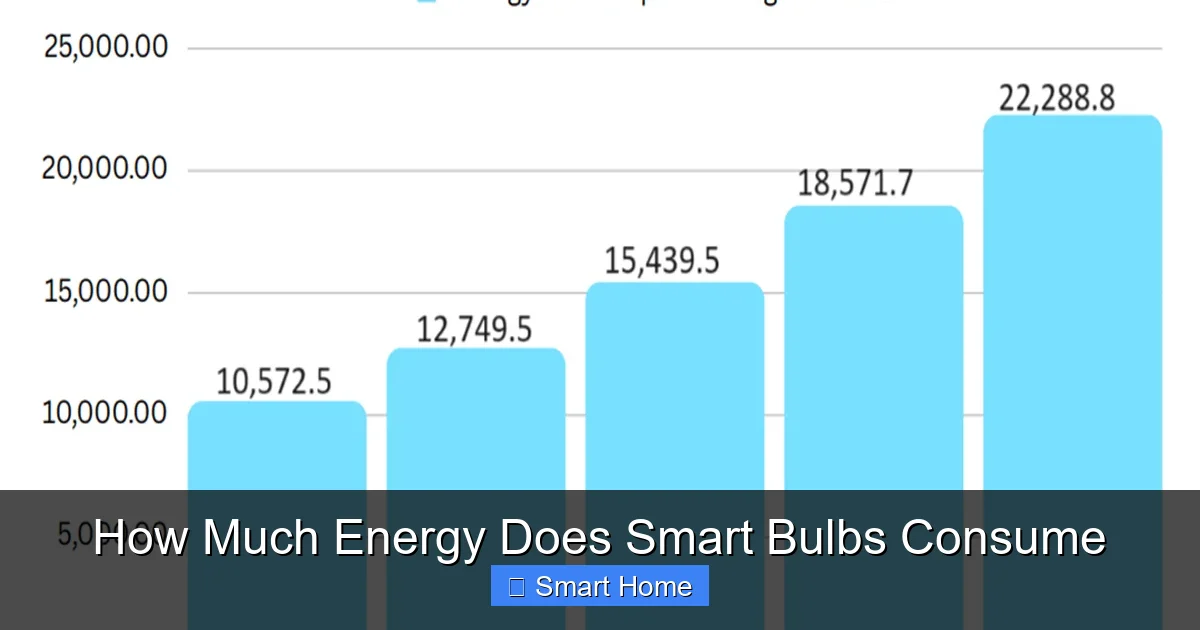
Visual guide about How Much Energy Does Smart Bulbs Consume
Image source: energytheory.com
Visual guide about How Much Energy Does Smart Bulbs Consume
Image source: consumerenergycenter.org
Visual guide about How Much Energy Does Smart Bulbs Consume
Image source: consumerenergycenter.org
Myth: You must leave smart bulbs on 24/7 to stay connected.
Reality: You can turn them off completely via app or switch off the power at the outlet. The bulb still works when powered on.
Myth: All smart bulbs are the same in terms of efficiency.
Reality: LED smart bulbs are far more efficient than older technologies. Always check wattage and lumens.
Myth: Smart bulbs are only for tech lovers, not energy savers.
Reality: Even basic scheduling and dimming can cut energy use significantly. You don’t need a full smart home to benefit.
Conclusion: Smart Bulbs Are a Smart Energy Choice
Smart bulbs are not only convenient—they’re also one of the most effective ways to reduce your home’s energy consumption. With typical usage, an 11-watt LED smart bulb can cost less than $1 per month to run, compared to over $7 for a traditional incandescent. When combined with automation, the savings multiply.
The energy used by smart features like connectivity and standby is negligible, and the environmental and financial benefits are substantial. By choosing the right bulb, using dimming and scheduling, and matching brightness to your needs, you can enjoy all the perks of smart lighting while keeping your energy bills—and carbon footprint—in check.
If you’re considering upgrading your lighting, smart bulbs are a no-brainer. They’re efficient, versatile, and increasingly affordable. Start with one room, automate a routine, and watch your energy use—and savings—shine.
Frequently Asked Questions
How many watts does a smart bulb use?
Most smart bulbs use between 7 to 12 watts, depending on brightness. For example, a typical 10-watt smart LED produces the same light as a 60-watt incandescent bulb.
Do smart bulbs use a lot of electricity?
No, smart bulbs use very little electricity. An LED smart bulb uses up to 90% less energy than traditional incandescent bulbs, making them highly efficient.
Can smart bulbs be left on all the time?
Yes, you can leave smart bulbs on 24/7, but using scheduling and dimming features can significantly reduce energy consumption and extend bulb life.
Are smart bulbs worth the energy cost?
Absolutely. Despite a higher upfront cost, smart bulbs save money over time through lower electricity bills and longer lifespans, often paying for themselves in 1–3 years.
Do smart bulbs use energy when turned off?
Yes, but very little—typically less than 1 watt in standby mode. This is similar to other smart devices and is minimal compared to energy savings from automation.
How can I reduce smart bulb energy use?
Use scheduling, dimming, geofencing, and motion sensors to automate usage. Also, match bulb brightness (lumens) to your room’s needs to avoid over-lighting.