How to Study Without a Desk
Studying without a desk is entirely possible and can be highly effective with the right approach. You can transform any flat surface—from a coffee table to a floor cushion—into a productive study zone. The key is prioritizing ergonomics, smart organization, and proper lighting to maintain focus and comfort. By embracing flexibility and creating intentional routines, you can study successfully anywhere in your home.
Key Takeaways
- Any stable surface works: Your study “desk” can be a dining table, couch arm, floor, or kitchen counter—stability is the only real requirement.
- Ergonomics are non-negotiable: Always support your back, keep screens at eye level, and avoid hunching to prevent strain, even without a traditional desk.
- Organization is portable: Use wall shelves, digital tools, and portable caddies to keep materials accessible and clutter-free in any location.
- Lighting dictates focus: Position your setup near natural light or use adjustable smart lighting to reduce eye fatigue and boost concentration.
- Routine beats location: A consistent study schedule and dedicated “zone” are more important than the specific furniture you use.
- Minimize distractions actively: Use noise-canceling headphones, website blockers, and visual cues to signal study time in shared spaces.
- Personalize your space: Add a plant, a favorite mug, or a specific blanket to create a psychological association with your study environment.
📑 Table of Contents
- Why Ditch the Desk? The Freedom of Flexible Studying
- Finding Your Perfect Study Surface: Beyond the Traditional Desk
- Ergonomics on the Fly: Protecting Your Body Anywhere
- Organization Without Boundaries: Your Mobile Command Center
- Lighting the Way: See Clearly, Focus Fully
- Beating Distractions & Building a Rock-Solid Routine
- The Conclusion: Your Space, Your Rules, Your Success
Why Ditch the Desk? The Freedom of Flexible Studying
Let’s be real: not everyone has the luxury of a spare room for a home office or a dedicated study nook. Maybe you live in a tiny apartment, share a space with roommates, or simply crave a change of scenery from the same old desk. The great news? You don’t need a formal desk to study effectively. The concept of “deskless studying” is all about adaptability and intention. It’s about reclaiming your space and your focus, no matter your square footage.
Studying without a desk challenges the traditional image of a student hunched over a wooden workstation. It embraces the reality that learning can happen on a couch, at a kitchen table, or even on a floor mat. This approach fosters creativity, reduces the pressure of having a “perfect” setup, and can make studying feel less like a chore and more like a flexible part of your lifestyle. The goal isn’t to abandon ergonomics, but to reimagine them for your unique environment.
The Mental Shift: From “Desk Required” to “Focus Required”
The biggest hurdle is often mental. We associate desks with productivity. Breaking that association is the first step. Your brain needs to learn that a specific activity (studying) is tied to a specific time and mental state, not necessarily a specific piece of furniture. This mental shift empowers you to create a study habit that travels with you.
Finding Your Perfect Study Surface: Beyond the Traditional Desk
Once you’ve made the mental shift, it’s time to get practical. Your primary task is to identify a stable, flat surface at a comfortable height. Here’s a tour of your home’s untapped potential.

Visual guide about How to Study Without a Desk
Image source: imgcdn.stablediffusionweb.com
The Dining Table or Kitchen Counter
This is the most common and often best alternative. These surfaces are usually at a standard table height (around 28-30 inches), which is ideal for most people when paired with a regular chair. They offer ample space for spreading out books, notes, and a laptop. The key is to clear it completely before each session. A cluttered dining table feels like a missed meal, not a study zone. Use a small caddy or a dedicated box to store your study supplies and put them away when you’re done.
The Couch or Armchair
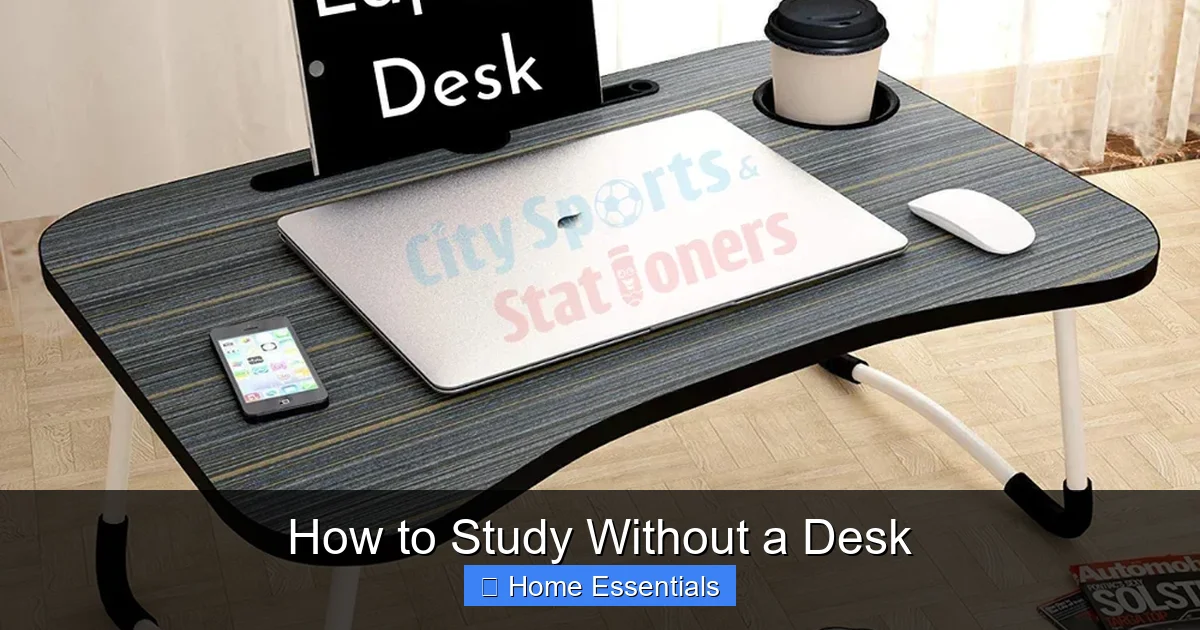
Perfect for reading-heavy subjects or video lectures. The challenge here is posture. You’ll need to invest in a good lap desk or a sturdy tray to keep your laptop or books at a comfortable viewing angle and prevent them from sinking into the cushions. A supportive throw pillow behind your lower back is essential. This setup is cozy but can encourage slouching, so set a timer to check your posture every 30 minutes.
The Floor: A Grounding Option
For some, sitting on the floor with their back against a wall or sofa is a fantastic, low-cost option. It encourages an upright, active sitting posture. You’ll need a firm cushion or a folded blanket for comfort. Use a low coffee table or a sturdy lap desk for your work surface. This is a great choice for group study sessions or when you want to feel spread out. Just ensure the floor surface is clean—a quick once-over with a microfiber cloth can remove dust and allergens.
Unconventional Surfaces: The Stairs, a Window Seat, or a Bar
Think vertically and architecturally. A wide step on a staircase can be a surprisingly good perch for a tablet and notebook. A built-in window seat with a view can provide inspiring natural light. A kitchen bar with a stool might be the perfect height. The rule is simple: if it’s stable, flat, and you can sit comfortably for 30-60 minutes, it’s a candidate.
Ergonomics on the Fly: Protecting Your Body Anywhere
Studying in a non-ergonomic setup can lead to neck pain, eye strain, and restless legs. You must be your own occupational health and safety officer. The core principles remain the same: support your spine, position your screen, and move regularly.

Visual guide about How to Study Without a Desk
Image source: matric.co.za
The 90-Degree Rule
Whether you’re on a dining chair, a couch, or the floor, aim for your knees and elbows to be at roughly 90-degree angles. Your feet should rest flat on the floor (or on a footrest if your chair is too high). If your feet dangle, use a stack of books or a small ottoman. This alignment takes pressure off your lower back and hips.
Screen Height is Everything
Your eye line should naturally fall on the top third of your screen. Looking down for hours causes “tech neck.” If your surface is too low (like a coffee table), stack books or a sturdy box under your laptop. If it’s too high (like a kitchen counter), use a chair that allows your elbows to be at 90 degrees, and consider a separate keyboard and mouse so your shoulders can relax.
The Portable Ergonomic Toolkit
Build a small kit you can grab and go. Include: a lumbar support pillow or a rolled towel for your lower back, a lap desk with a wrist rest for couch/bed sessions, a footrest (even a small storage cube works), and a pair of noise-canceling headphones to block auditory distractions in shared spaces. A small, supportive seat cushion can make a hard chair infinitely more comfortable.
Organization Without Boundaries: Your Mobile Command Center
Clutter is the enemy of focus, especially when you’re studying in a multipurpose space. Without a dedicated desk to “contain” your mess, you need a system.
Visual guide about How to Study Without a Desk
Image source: images-cdn.ubuy.co.in
Go Vertical with Wall Solutions
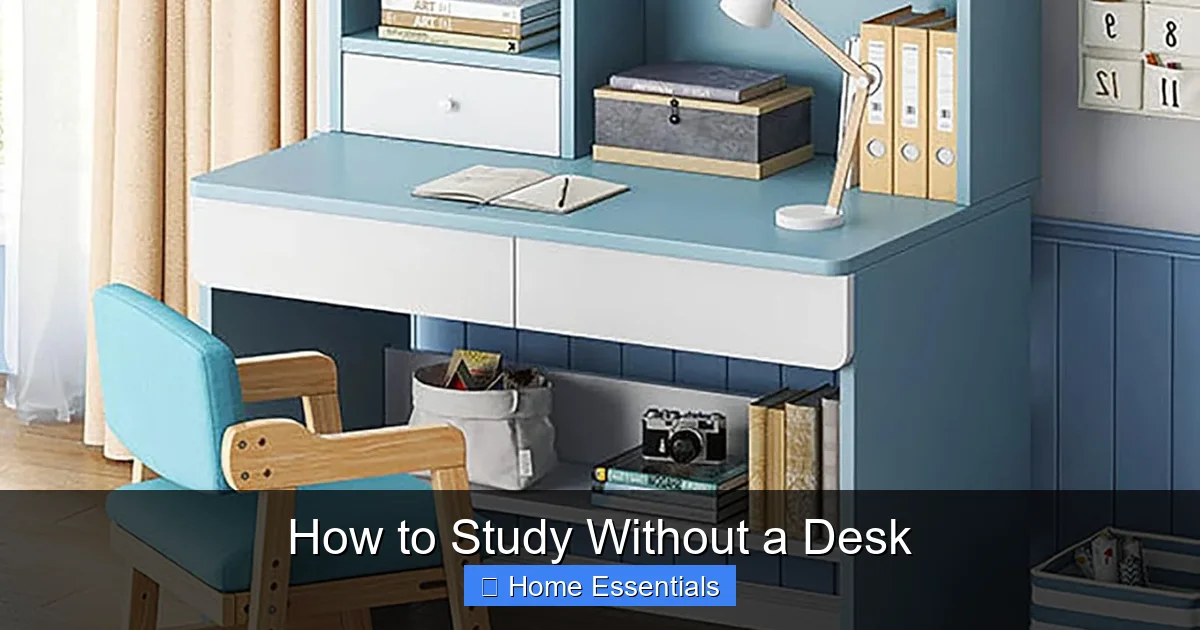
Use your walls! Install a simple floating shelf or a grid panel (like a pegboard) near your chosen study spot. This is where you can hang folders, notebooks, pens, and headphones. It keeps everything visible and off your limited surface area. A magnetic board on the side of a fridge or a filing folder on the back of a door are other genius vertical storage hacks.
Embrace the Digital Paperless Life
The less physical stuff you have, the less you have to organize. Use cloud-based tools like Google Docs, Notion, or OneNote for all your notes and assignments. Scan handouts with your phone’s scanner app. This means your entire study “library” travels with you in your pocket, reducing the need for stacks of paper on your temporary surface.
The Portable Caddy is Your Best Friend
Designate a specific basket, box, or backpack as your “Study Kit.” It should contain everything you ever need: pens, highlighters, sticky notes, a calculator, notepads, chargers, and headphones. When study time is over, you pack it all away in one motion, instantly resetting the space. This ritual signals to your brain that the study session is complete.
Lighting the Way: See Clearly, Focus Fully
Poor lighting leads to eye strain, headaches, and fatigue. In a deskless setup, you’re often competing with the ambient lighting of a living room or bedroom, which is usually too dim for detailed work.
Harness Natural Light (The Best Light)
Position your setup near a window whenever possible. Natural light is easiest on the eyes and can boost mood and alertness. However, be mindful of glare on your screen. Sit with the light coming from the side or behind you, not directly in front or behind your screen.
Master Artificial Light with Smart Bulbs
This is where technology shines. A simple desk lamp might not be enough in a dark corner. Consider a smart light bulb in a nearby lamp. You can adjust the brightness (lumens) and color temperature (warm yellow for relaxation, cool blue for focus) from your phone. Setting a “Study Bright” scene that turns on a cool, bright light automatically can be a powerful cue for your brain to switch into focus mode. If your bulb is already installed, learn how to connect it to your WiFi for full control.
The Two-Light Rule
Aim for a combination of ambient light (the room’s main light) and a direct task light (a lamp shining on your work surface). This eliminates harsh shadows and prevents your eyes from constantly adjusting between bright and dim areas, which causes strain. A small, adjustable LED desk lamp is a worthwhile investment for any study spot.
Beating Distractions & Building a Rock-Solid Routine
Studying on a couch in a shared living room comes with unique challenges: TV temptations, chatty housemates, the siren call of your bed. Your defense is a combination of environment control and disciplined routine.
Designate a “Study Zone,” Even if it’s Temporary
Use a specific throw blanket, a particular chair cushion, or a certain corner of the couch as your exclusive study spot. When you spread that blanket out, it’s a visual signal to you and others: “I am in study mode.” Packing it away signals the end of the session. This creates a psychological boundary in a space without physical walls.
Time-Block with Military Precision
Without the physical act of walking to a desk, it’s easy to drift. Use a timer. The Pomodoro Technique (25 minutes focused, 5 minutes break) is perfect for this. During your focus block, you are *only* studying. No phone, no snacks, no tidying. The timer creates urgency. During your break, get up, move to a different part of the room, and physically separate from your study materials.
Control the Digital Environment
Use website blockers (like Freedom or Cold Turkey) on your laptop and phone during study blocks. Put your phone in another room, or at least in your backpack. If you’re using a shared device, create a separate browser profile for study that has no bookmarks to social media or entertainment sites.
The Conclusion: Your Space, Your Rules, Your Success
Studying without a desk isn’t a compromise; it’s an opportunity. It forces you to be intentional about your environment, your body, and your time. You learn to curate your space, listen to your body’s needs, and build habits that are portable and resilient. Whether you’re a nomadic learner in a studio apartment or just someone who hates their old desk, the principles of good posture, clear organization, proper lighting, and unwavering focus apply universally. So, clear that coffee table, fluff those couch cushions, grab your portable caddy, and claim your corner. Your perfect study setup is wherever you decide to make it. Start small, experiment with different surfaces and tools, and discover the freedom of learning on your own terms.
Frequently Asked Questions
Is it bad for your posture to study on a bed or couch?
Yes, it can be if you’re not careful. These soft surfaces encourage slouching and provide no back support, leading to neck and back pain over time. Always use supportive pillows behind your lower back and a lap desk to keep your work at a proper height to maintain a neutral spine.
How do I stay focused when studying in a shared living space?
Create clear signals for your study time, like wearing headphones or putting a “Do Not Disturb” sign on your chair. Use a timer for focused work blocks and communicate your schedule to housemates. Noise-canceling headphones or playing low-fi or white noise can also help mask ambient sound.
What’s the minimum equipment I need for a good deskless study setup?
You need three things: 1) A stable, flat surface at approximately elbow height when seated. 2) A comfortable chair with good back support (or cushions to create it). 3) A reliable light source, preferably adjustable. From there, add a laptop/tablet, a notepad, and a pen.
Can I effectively study for long exams without a desk?
You can, but it requires more discipline. For marathon sessions, prioritize ergonomics even more. Use a proper chair, take frequent breaks to stand and stretch, and ensure your lighting is excellent to prevent fatigue. Consider rotating between two different spots (e.g., table in the morning, couch in the afternoon) to vary your posture.
How do I mentally switch into “study mode” when I’m not at a desk?
Build a consistent pre-study ritual. This could be pouring a glass of water, tidying your immediate area for 2 minutes, opening your study app, and putting on a specific focus playlist. The ritual signals to your brain that it’s time to transition, creating the mental boundary that the physical desk would normally provide.
What’s the biggest mistake people make when studying without a desk?
The biggest mistake is neglecting ergonomics for comfort. It’s tempting to curl up in bed, but after an hour, you’ll likely be sore and distracted. Always prioritize a supportive seated position with your screen at eye level, even if it means using a floor cushion and a low table instead of the sofa. Comfort should not mean compromising your physical alignment.