Industrial Desk Lamp
An industrial desk lamp is more than just a light source; it’s a statement piece that brings rugged, utilitarian charm to your home office or workspace. Characterized by exposed metals, functional hardware, and minimalist design, these lamps offer powerful task lighting while seamlessly blending with modern, rustic, or minimalist decor. Choosing the right one involves considering material, adjustability, and light temperature to enhance both productivity and style.
Key Takeaways
- Defining Aesthetic: Industrial desk lamps are defined by exposed metals (iron, steel, brass), utilitarian hardware, and a lack of ornamentation, drawing inspiration from factories and warehouses.
- Functional Focus: They prioritize adjustability and directed task lighting, often featuring articulating arms, pivoting heads, and high-quality bulbs for eye comfort during long work sessions.
- Material Matters: Common materials include brushed steel, cast iron, and aged brass. Finishes like powder-coated black, raw metal, or patinaed copper contribute to the authentic, worn-in look.
- Style Versatility: Despite their specific name, these lamps pair surprisingly well with modern, rustic, farmhouse, and minimalist interiors, adding a touch of grounded, sophisticated texture.
- Bulb & Brightness: Opt for LED bulbs with a color temperature between 2700K-3000K for a warm, comfortable glow, or 4000K-5000K for crisp, focused task light. Dimmability is a key feature to look for.
- Investment Piece: A well-made industrial desk lamp is built to last with durable components, making it a cost-effective long-term investment compared to cheaper, disposable alternatives.
- Placement is Key: Position the lamp to the side of your dominant hand to avoid shadows on your work surface. Its weight and base stability are crucial for safe placement on a desk.
📑 Table of Contents
- The Rise of Industrial Design in Modern Homes
- Core Design Elements That Define an Industrial Desk Lamp
- Types of Industrial Desk Lamps: From Task to Statement Pieces
- The Functional Benefits: Why Choose an Industrial Desk Lamp?
- How to Choose the Perfect Industrial Desk Lamp for Your Space
- Styling Your Industrial Desk Lamp: Blending Form and Function
- Conclusion: More Than a Lamp, a Legacy Piece
The Rise of Industrial Design in Modern Homes
Walk into a trendy coffee shop, a modern architect’s home office, or a curated workspace on Instagram, and you’ll likely spot a common thread: the industrial desk lamp. It’s no longer just a relic of 19th-century factories. This design movement, born from the honest, unadorned aesthetics of warehouses, lofts, and machinery, has been repurposed and refined for our living rooms, studies, and home offices. Its popularity isn’t just about looks; it’s a response to a craving for authenticity, durability, and a break from the disposable, plastic-heavy world of mass-produced furniture. The industrial desk lamp tells a story of craftsmanship and purpose, where every bolt, every weld, and every finish is part of its character.
This resurgence is part of a larger trend towards “authentic living.” In a digital age, people are drawn to objects with tangible weight, texture, and history. An industrial lamp feels substantial. It’s built to do a job, not just to be looked at. This philosophy aligns perfectly with the remote work revolution, where our personal workspaces have become extensions of our identity. We don’t just need a place to log hours; we want a space that inspires focus, reflects our taste, and feels uniquely ours. The industrial desk lamp, with its no-nonsense functionality and bold presence, fits this need perfectly. It bridges the gap between the hard-edged world of commerce and the personal sanctuary of home.
From Factory Floor to Desktop: A Brief History
The roots of industrial design trace back to the early 20th century, with pioneers like the Bauhaus school championing “form follows function.” Post-World War II, as old factories were repurposed into living spaces (the famous loft conversions in New York City), the existing infrastructure—exposed brick, ductwork, pipes, and utilitarian lighting—became the interior design. What was once a cost-saving measure became a coveted style. Manufacturers began producing reproduction “factory” lighting for this new market. The classic “bankers lamp” with its green glass shade and articulated arm, originally designed for precision work, is a prime example that transitioned from the counting house to the home study. Today’s industrial desk lamp evolves this legacy, using modern materials and LED technology while keeping the soul of its industrial ancestors.
Core Design Elements That Define an Industrial Desk Lamp
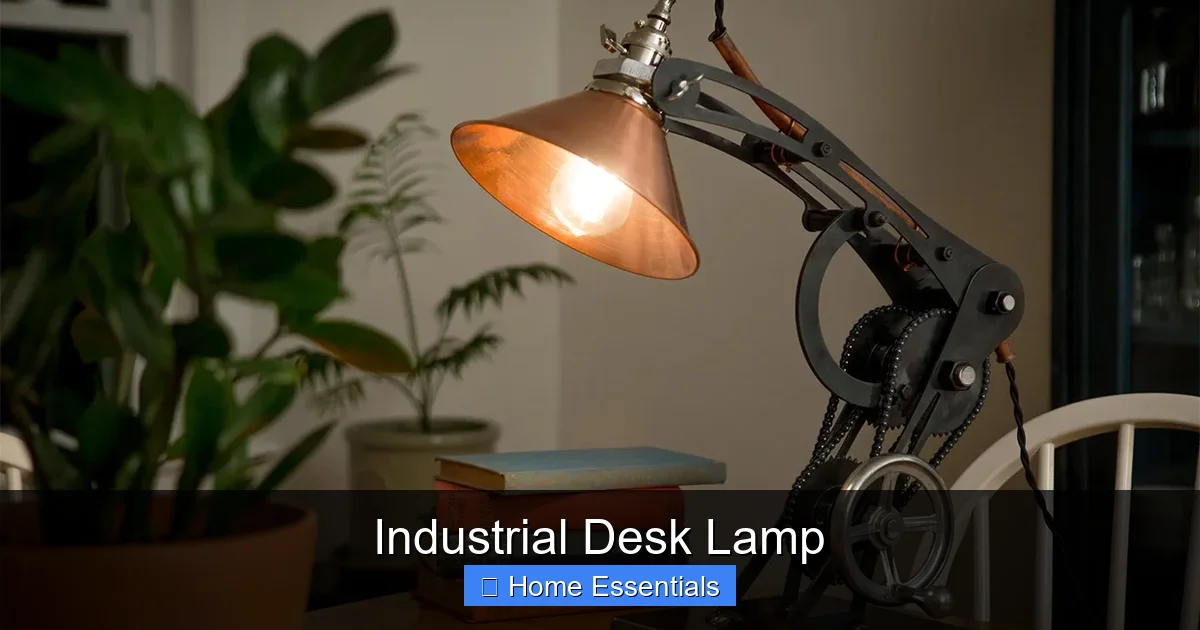
Not every black metal lamp qualifies as industrial. The style is defined by a specific set of visual and material cues that speak to its utilitarian origins. Recognizing these elements helps you distinguish a true industrial piece from a generic “modern” lamp. It’s about the honesty of construction and the celebration of materials in their natural or lightly finished state. When you look at a quintessential industrial desk lamp, you should see a tool for a task, not just a decorative object.
Visual guide about Industrial Desk Lamp
Image source: theawesomer.com
Exposed Metals and Hardware
This is the hallmark. You’ll see the nuts, bolts, screws, and joints. They are not hidden behind smooth plastic casings; they are part of the design. Common metals include:
- Steel & Iron: Often seen in matte black, graphite, or raw, unfinished looks. They provide the robust, heavy base and structural arms.
- Brass & Copper: Used for accents, joints, or full fixtures. They develop a beautiful patina over time, adding to the vintage character. Polished brass offers a brighter, more refined industrial look, while antique brass or raw copper feels more aged and authentic.
- Aluminum: Lightweight and often brushed or anodized, used for adjustable arms and shades.
The hardware is frequently oversized and functional. A large, turnable knob to tighten an arm joint isn’t just an adjustment mechanism; it’s a visual element that reinforces the “built for a purpose” ethos.
Minimalist, Functional Shapes
Industrial design eschews ornamentation. Shades are simple geometries: cylinders, cones, or domes. They are often made of metal (sometimes with a perforated pattern), glass (smoked, seeded, or clear), or even a simple woven wire cage. The arms are articulated, with hinge points at the base, middle, and head, allowing for precise positioning. The overall silhouette is often architectural, with clean lines and a sense of balance derived from counterweights or sturdy bases. There’s no room for frills; every curve has a structural reason.
A Neutral, Weathered Color Palette
The color scheme is rooted in the factory floor: black, gray, brown, and metallic tones. Think soot-stained iron, aged steel, rust-colored accents, and warm brass. Finishes are typically matte, satin, or brushed—anything that avoids a high-gloss, plastic-like sheen. Powder-coating is common for durable, uniform color on steel. Some pieces embrace intentional wear, like a “reclaimed” finish that shows hints of rust or brush marks, telling a story of use and age. This palette makes the industrial desk lamp incredibly versatile, acting as a neutral anchor that can complement bolder wall colors or other decorative elements.
Types of Industrial Desk Lamps: From Task to Statement Pieces
Within the broad industrial category, several distinct styles have emerged, each with its own history and ideal use case. Understanding these types will help you match a lamp not just to your decor, but to your specific work habits and spatial constraints.
Visual guide about Industrial Desk Lamp
Image source: d2a2wjuuf1c30f.cloudfront.net
The Articulating “Bankers” or “Architect” Lamp
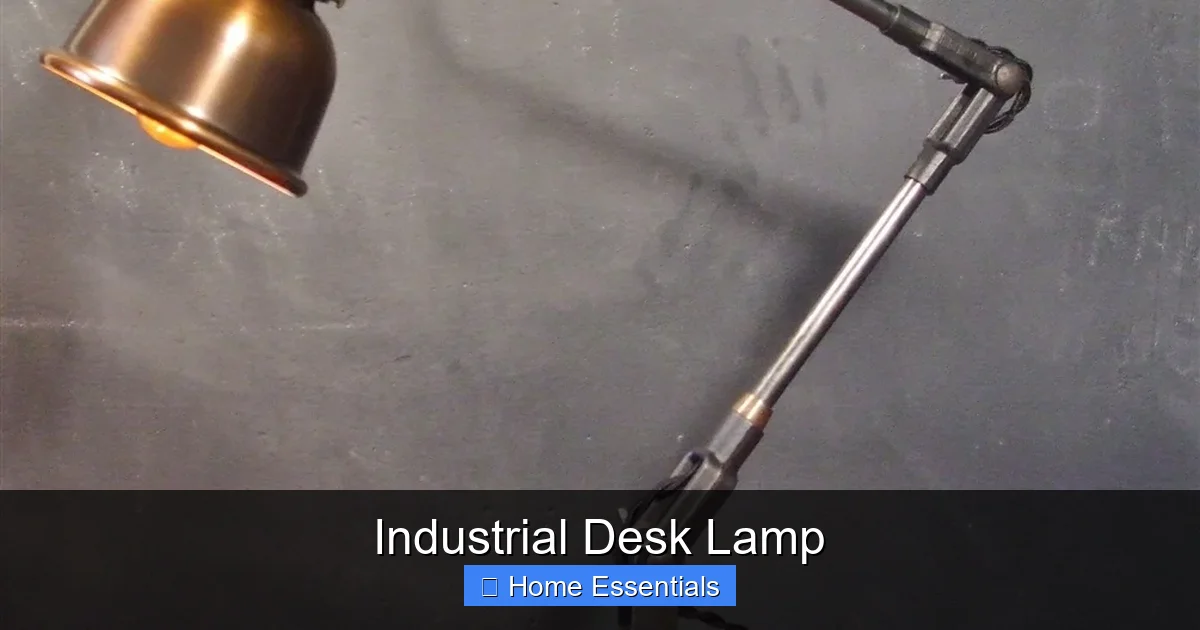
This is the most iconic and recognizable form. It features a heavy, often weighted base, a vertical pole, and one or more hinged arms that culminate in a shade. The classic version has a green glass shade (originally to reduce glare), but modern versions use metal shades in various finishes. This type is the ultimate task lamp. Its unparalleled adjustability means you can position the light exactly where you need it—over a sketch, a keyboard, or a book—without moving the base. It’s ideal for large desks, drafting tables, or any workspace where precision lighting is paramount. Look for models with a smooth, sturdy mechanism that holds its position firmly.
The Swing-Arm or “Library” Lamp
Slightly more streamlined than the multi-joint banker’s lamp, the swing-arm lamp typically has a fixed vertical stem from the base with a single, long horizontal arm that pivots from a point partway up. The head often tilts as well. This design offers a wide arc of light coverage from a relatively small footprint. It’s perfect for smaller desks, bedside tables (as a reading light), or for positioning over a specific corner of a work surface. Its lines are often cleaner and it can feel slightly more “designed” than the purely utilitarian banker’s lamp, while still being highly functional.
The Tripod or “Crane” Lamp
This style uses a tripod base for stability, from which a single, often counter-weighted arm extends. The crane lamp offers a dramatic, sculptural presence. Its stability is excellent, and the counter-weight system allows for easy one-handed adjustment. It’s a great choice for desks against a wall where you don’t want a base that might get pushed, or for corner desks. The tripod base adds a touch of mechanical, engineering-inspired beauty. It’s less common than the other two types but makes a powerful style statement.
The Pendant-Style or “Cage” Lamp
Some industrial desk lamps forgo a traditional base altogether, designed to be hardwired as a pendant or to clamp onto the edge of a desk. These often feature a wire cage or simple metal shade suspended from a cord and a sturdy clamp or hook. This style is minimalist to the extreme, saving valuable desk surface area. It’s excellent for very small desks or for creating a “floating” light effect over a specific work zone. Installation is slightly more involved (requiring a clamp or electrical work for hardwired versions), but the clean look is worth it for the right space.
The Functional Benefits: Why Choose an Industrial Desk Lamp?
Beyond the undeniable style, an industrial desk lamp is a workhorse. Its design is a direct result of solving real problems—providing adjustable, shadow-free light for detailed tasks in large, open-plan industrial spaces. These same benefits translate powerfully to the modern home office.
Visual guide about Industrial Desk Lamp
Image source: room8interiors.co.uk
Superior Task Lighting and Adjustability
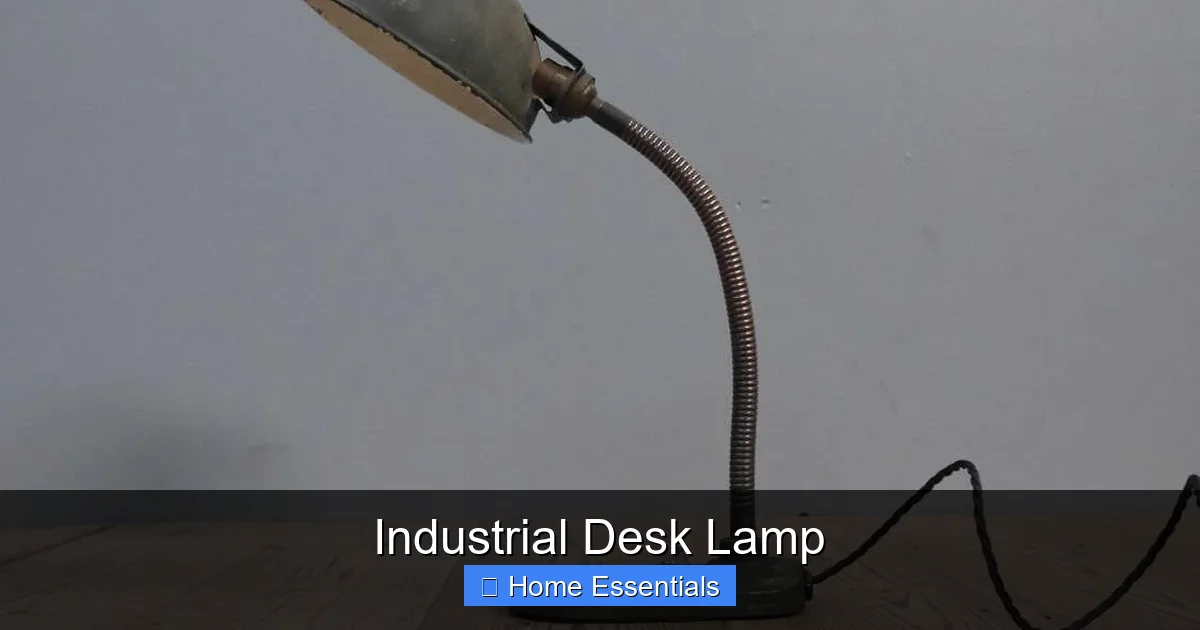
The primary function of any desk lamp is to illuminate your work. Industrial lamps excel here because adjustability is in their DNA. The multiple hinge points on an articulating arm mean you can direct the light beam from any angle. You can raise the shade high for ambient fill or drop it low for intense, focused light on a document. This eliminates the common problem of hand shadows when writing or typing, as you can position the light source to the side and slightly in front of you. For anyone doing detailed work—writing, drawing, electronics, reading fine print—this precise control is a game-changer for eye comfort and reducing strain.
Durability and Longevity
These lamps are built like tanks. Constructed from heavy-gauge steel, iron, or solid brass, they resist tipping, denting, and general wear. The mechanisms (springs, hinges, ratchets) are designed to withstand thousands of adjustments over decades. Unlike plastic lamps that can crack or become unstable, a quality industrial lamp is a one-time purchase that can last a lifetime, and often becomes more attractive with age as the metal develops a soft patina. This makes it an economically and environmentally smart choice.
Heat Management and Bulb Compatibility
Metal shades, while great for directing light, can get hot with old incandescent bulbs. Modern industrial lamps are designed with ventilation in mind—perforations, open cages, or gaps in the shade allow heat to dissipate, especially when paired with cool-running LED bulbs. They are also almost universally compatible with standard bulb bases (E26/E27), giving you complete freedom to choose your bulb’s brightness (lumens) and color temperature (Kelvin). This means you can swap a warm, relaxing bulb for a cool, energizing one depending on the time of day and task, without changing the lamp itself.
How to Choose the Perfect Industrial Desk Lamp for Your Space
With so many styles and options, selecting the right lamp requires considering both practical and aesthetic factors. It’s an investment in your daily comfort and your room’s style. Here’s a practical checklist to guide your decision.
Assess Your Desk and Workflow
First, measure your desk surface. A large, sprawling desk can handle a substantial banker’s lamp with a wide base. A small writing desk might be overwhelmed by it, making a sleek swing-arm or clamp-on style a better fit. Think about your dominant hand. Position the lamp on the opposite side to prevent your writing hand from casting a shadow. Consider your tasks: do you need a broad pool of light for papers and a keyboard, or a very focused beam for intricate work? A shade with a deeper bowl will focus light more narrowly, while a shallower, wider shade will spread light more evenly across a larger area.
Material and Finish: Authenticity vs. Integration
Do you want the lamp to be a bold, contrasting statement piece or a seamless part of the room’s texture? A raw, blackened steel or rusty iron finish will be a dramatic, dark anchor. A brushed brass or copper will add warmth and reflect light, helping to brighten a darker corner. Consider the other metals in your room—door handles, chair legs, frames. A lamp in a complementary metal tone (e.g., brass lamp with brass drawer pulls) creates a cohesive, intentional look. Don’t be afraid to mix metals, but do so thoughtfully; a single unifying element (like all-black accents) can help blend different finishes.
Key Features to Look For: Weight, Mechanism, and Bulb
A heavy, stable base is non-negotiable for safety and ease of use. Test the adjustment mechanism if possible; it should move smoothly but hold its position firmly without constant readjustment. Springs and tension knobs should feel robust. Since you’ll likely use LEDs, ensure the lamp is compatible and, if possible, choose one with a built-in dimmer switch or one that’s compatible with dimmable LED bulbs. A cord management feature—like a clip to hold the excess cord—is a small but appreciated detail for keeping your desk tidy.
Styling Your Industrial Desk Lamp: Blending Form and Function
An industrial desk lamp is a powerful styling tool. Its strong lines and material weight can anchor a space or create dynamic contrast. The key is to let it breathe and to build a harmonious scene around it.
Creating a Cohesive Workspace
The lamp doesn’t exist in a vacuum. Style it with objects that share its ethos of utility and material honesty. Pair it with a desk made of reclaimed wood, concrete, or a simple metal frame. Use organizers made of steel, ceramic, or glass. A vintage notebook with a leather cover, a set of brass drafting tools, or a simple concrete pen holder will reinforce the industrial narrative. The goal is a workspace that feels intentional, functional, and free of clutter—the lamp is the punctuation mark at the end of that sentence.
Mixing Industrial with Other Styles
Don’t be afraid to mix. The industrial lamp’s neutral palette makes it a fantastic bridge. Place it on a light, Scandinavian-style desk (the contrast of warm wood and dark metal is classic). Use it in a room with soft, boho textiles like a chunky knit throw or a woven rug—the hard edges of the lamp will ground the softness. In a ultra-modern, all-white room, a single black industrial lamp adds necessary grit and visual interest, preventing the space from feeling sterile. The rule of thumb is to let the lamp be one of 2-3 dominant material/color stories in the room.
Lighting Layering for Ambiance and Task
A single desk lamp is for task lighting. For a well-rounded room, layer your light sources. Use your industrial lamp for focused work. Add a secondary source—like a floor lamp with a fabric shade in the corner for ambient light, or a small wall sconce for general illumination. The different light temperatures and intensities create depth and warmth. When your task is done, you can turn off the bright desk lamp and rely on the softer ambient light, transforming your workspace into a more relaxed reading nook.
Conclusion: More Than a Lamp, a Legacy Piece
The industrial desk lamp endures because it solves a fundamental human need: to see our work clearly, comfortably, and beautifully. It is the antithesis of the fleeting, disposable trend. It is a tool, an heirloom, and a piece of art all in one. When you bring one into your home, you’re not just buying a light fixture; you’re investing in a object with a story of ingenuity and resilience. You’re choosing a partner for your daily focus that will only become more character-filled with time. Whether you’re a remote worker, a creative hobbyist, or simply someone who appreciates the honest beauty of well-made things, the right industrial desk lamp will illuminate not just your desk, but your entire approach to your personal space. It stands as a testament to the idea that the best design is born from necessity, and that true style never goes out of fashion. It’s a solid, reliable, and handsome companion for every project, every idea, and every moment of quiet concentration in your home.
Frequently Asked Questions
Are industrial desk lamps only suitable for industrial-style decor?
No, their neutral metal finishes and minimalist forms make them incredibly versatile. They add a touch of texture and grounding contrast to modern, rustic, farmhouse, Scandinavian, and even minimalist interiors, acting as a sophisticated anchor piece.
What type of bulb should I use in my industrial desk lamp?
Always use LED bulbs for energy efficiency and low heat. Choose a color temperature based on your task: 2700K-3000K for a warm, relaxing glow ideal for evening reading, or 4000K-5000K for a cool, energizing, daylight-like light perfect for detailed work and daytime focus. Ensure the bulb is dimmable if your lamp supports it.
How do I clean and maintain a metal industrial lamp?
Regularly dust with a soft, dry microfiber cloth. For fingerprints or smudges, dampen the cloth slightly with water or a mild dish soap solution, wipe gently, and dry immediately. Avoid abrasive cleaners. For brass or copper finishes, you can use a specialized metal polish occasionally to maintain shine, or let it develop a natural patina for a vintage look.
Will the lamp get too hot to touch?
Modern industrial lamps designed for LEDs will not get excessively hot, as LEDs produce very little heat compared to old incandescent bulbs. However, the shade and bulb socket may become warm after prolonged use. Always ensure your lamp has adequate ventilation, especially if using a fully enclosed metal shade.
Is an articulating arm lamp worth the extra cost?
For anyone who uses their desk for varied tasks (writing, computer work, reading, crafting), the adjustability of an articulating arm is invaluable. It allows you to position light perfectly, reducing eye strain and shadows. The mechanisms are also built to last, making it a long-term investment in comfort and productivity.
Where is the best place to position my desk lamp?
Place the lamp on the side opposite your dominant hand (e.g., right-handed people put it on the left). This prevents your hand from casting a shadow on your work. The base should be stable and not encroach on your primary desk space. For a clamp-on style, ensure your desk edge is thick and sturdy enough to hold the clamp securely.