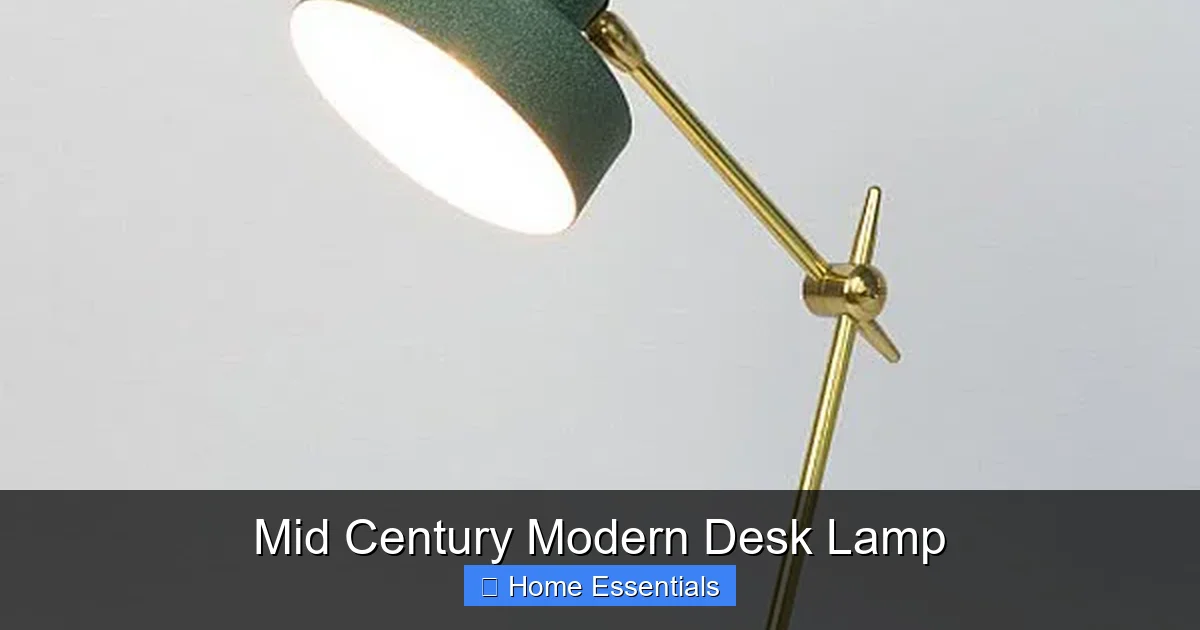
Mid Century Modern Desk Lamp
The Mid Century Modern Desk Lamp is more than just a light source; it’s a sculptural piece of design history that brings timeless elegance and functional artistry to any workspace. Characterized by organic forms, innovative materials like molded plastic and metal, and a “form follows function” ethos, these lamps blend seamlessly into contemporary and classic interiors alike. Whether you’re seeking an authentic vintage piece or a modern reproduction, understanding their key design principles, material quality, and styling potential is essential for choosing a lamp that provides perfect illumination while making a sophisticated statement.
Key Takeaways
- Timeless Design Ethos: MCM desk lamps embody the post-WWII “form follows function” philosophy, merging organic shapes, clean lines, and innovative materials into objects that remain stylish decades later.
- Iconic Designer Legacy: The category is defined by legendary figures like George Nelson, Arne Jacobsen, and Greta von Nessen, whose original creations are highly collectible and widely reproduced.
- Material Innovation: Look for signature materials such as bent plywood, spun aluminum, enameled steel, and early plastics (like Bakelite) that were revolutionary for their time and define the authentic look.
- Adjustability is Key: True MCM functionality is often achieved through clever articulation—think spring-loaded arms, swiveling heads, and balanced counterweights—for precise task lighting.
- Scale and Proportion Matter: These lamps are designed for specific tasks and desk sizes. A proper MCM lamp has a deliberate, often compact, scale that enhances rather than overwhelms your workspace.
- Reproductions Offer Accessibility: High-quality reproductions by brands like Menu, West Elm, and Rejuvenation capture the iconic silhouettes at accessible price points, making the style attainable for most.
- Investment in Quality: An authentic vintage or well-made reproduction is an investment. Superior craftsmanship, solid materials, and durable finishes ensure it will last for decades, both functionally and aesthetically.
📑 Table of Contents
- The Enduring Glow: Why the Mid Century Modern Desk Lamp Captivates
- A Brief History: From Post-War Optimism to Design Icon
- Decoding the Design: What Makes a Lamp “Mid Century Modern”?
- Materials and Craftsmanship: The Soul of the Lamp
- Choosing Your Perfect Lamp: A Practical Guide
- Styling Your MCM Desk Lamp: Beyond the Home Office
- Care, Maintenance, and Longevity
- The Final Word: More Than a Lamp, a Legacy
The Enduring Glow: Why the Mid Century Modern Desk Lamp Captivates
Step into a well-designed home office or a stylish living room corner, and you might just feel it—that certain something. A quiet hum of sophistication, a shape that feels both familiar and utterly fresh. Chances are, a Mid Century Modern desk lamp is casting its warm, intentional glow. It’s not merely a tool to banish shadows from your keyboard; it’s a miniature monument to an era that believed design could change the world. Born from the optimism and technological fervor of the 1940s through the 1960s, the mid-century modern movement rejected ornate excess. Instead, it championed simplicity, functionality, and a harmonious connection with the new, machine-driven age. The humble desk lamp became a perfect canvas for these ideals.
What makes this specific category so compelling? It’s the alchemy of art and engineering. A great MCM desk lamp feels alive. Its arm might spring with a satisfying tension, its shade might tilt with a graceful, weighted ease. You interact with it. It solves the problem of light with a clever, often beautiful, solution. In a world of disposable plastic and anonymous electronics, this tactile, thoughtful quality feels revolutionary. Whether you’re a design aficionado or simply someone who appreciates a beautiful, useful object, understanding the story behind this lamp deepens your appreciation for the object sitting on your desk. It transforms it from a purchase into a piece of curated history.
A Brief History: From Post-War Optimism to Design Icon
To truly grasp the MCM desk lamp, we must travel back in time. The period following World War II was one of immense social and technological change. New materials—like plywood, fiberglass, steel, and early plastics—were being developed for wartime use and suddenly became available for consumer goods. Simultaneously, a design philosophy emerged, primarily in Europe (especially Scandinavia) and the United States, that rejected the heavy, decorative styles of the past. The mantra was “form follows function,” a phrase coined earlier but now put into radical practice.
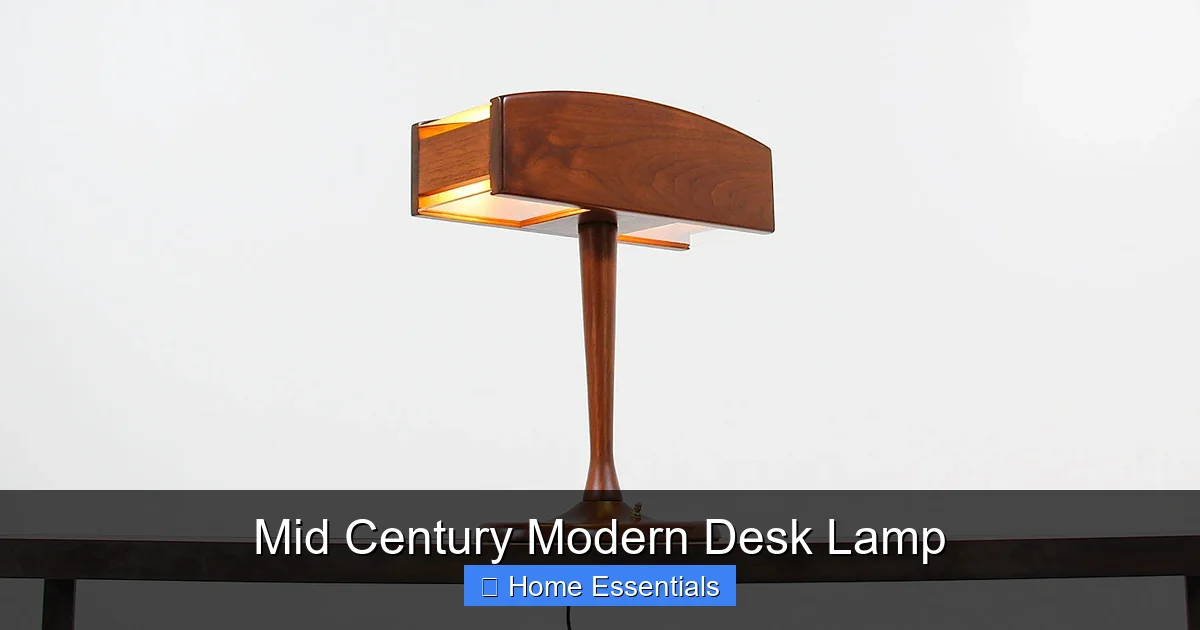
Visual guide about Mid Century Modern Desk Lamp
Image source: dmla-assets.s3-us-west-1.amazonaws.com
The Scandinavian Influence & The American Response
Scandinavian designers like Alvar Aalto in Finland and Arne Jacobsen in Denmark led the charge with their human-centric, organic approach. Aalto’s bent plywood experiments, initially for furniture, soon influenced lighting. His 1936 Paimio Chair was a breakthrough, but the principles of flexible, molded wood found their way into lamps that felt warm and sculptural, a stark contrast to cold industrial metal.
Across the Atlantic, America was experiencing its own design renaissance. The Bauhaus ideals, brought over by émigré designers, merged with a new, space-age optimism. Companies like Herman Miller and Knoll became patrons of cutting-edge design. It was in this fertile ground that some of the most iconic desk lamps were born.
The Titans of Task Lighting: Nelson, Jacobsen, and von Nessen
Three names are practically synonymous with the MCM desk lamp:
- George Nelson (USA): As director of design at Herman Miller, Nelson created a portfolio of lighting that defined an era. His 1947 “Bubble Lamp” series (originally by Howard Miller) used a newly developed, self-webbing plastic to create a soft, glowing orb. While often a pendant, its spirit of innovative material use permeates the era. His Kite Lamp and Action Office series also showcase his playful, structural genius.
- Arne Jacobsen (Denmark): A master of total design, Jacobsen’s 1957 AJ Lamp series, created for his SAS Royal Hotel in Copenhagen, is perhaps the quintessential MCM desk lamp. Its elegant, articulated arm, a conical shade on a slender stem, is a masterclass in functional minimalism. The shade can be angled precisely, the arm extends and retracts, all with a satisfying mechanical precision that feels utterly intentional.
- Greta von Nessen (USA): Her 1951 Anywhere Lamp is a feat of engineering and simplicity. A heavy, cast-iron base supports a slender, flexible arm that holds a conical shade. Its genius lies in its counterbalance system—a simple, clever mechanism that allows the shade to be positioned anywhere and stay put. It’s a lamp that feels both industrial and graceful.
These designers, and others like Ingo Maurer (who brought a poetic, experimental touch) and Poul Henningsen (with his multi-shade PH lamp series, more often ceiling-mounted but influential), created objects that were patented, exhibited in museums like MoMA, and instantly recognizable. Their designs were not just products; they were Manifestos for a new way of living.
Decoding the Design: What Makes a Lamp “Mid Century Modern”?
Not every lamp with a retro vibe qualifies. True Mid Century Modern design adheres to a specific set of principles that you can learn to spot. It’s a visual language built on a few core pillars. When you’re evaluating a lamp—whether at a flea market or on a website—run this checklist in your mind.
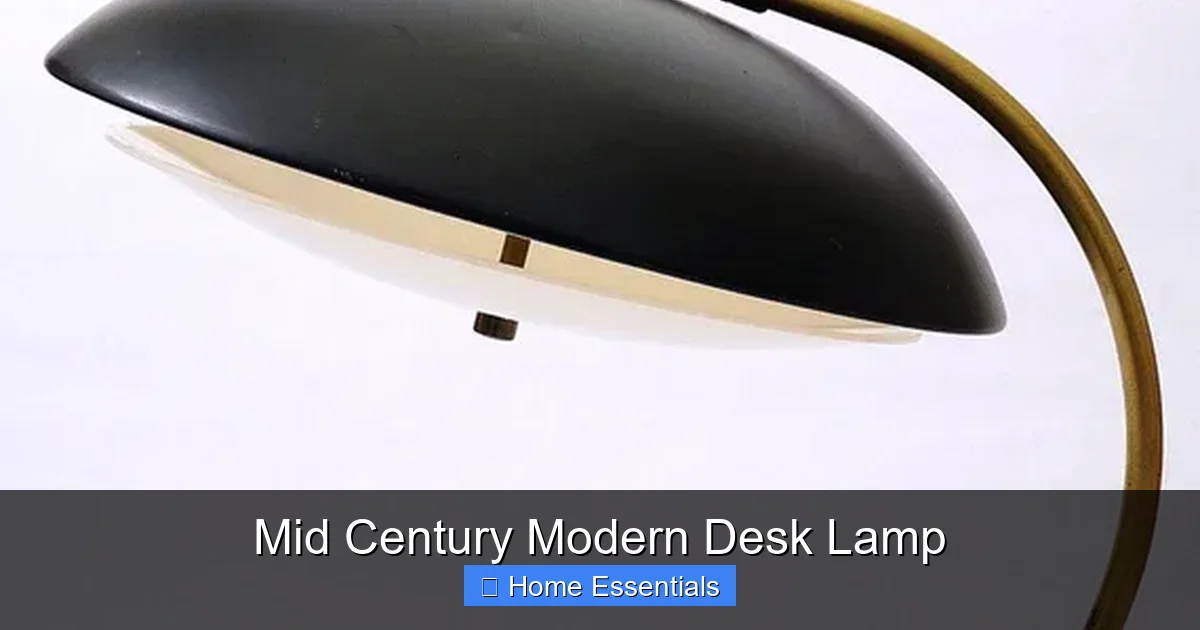
Visual guide about Mid Century Modern Desk Lamp
Image source: img0.etsystatic.com
Organic Geometry and Clean Lines
Forget fussy carvings and heavy ornamentation. MCM design is inspired by nature and abstracted into clean, geometric forms. You’ll see circles, cones, spheres, and cylinders, but they are often simplified, stacked, or combined in surprising ways. The line is paramount: it should be confident, unbroken, and purposeful. Think of the perfect circle of a Nelson Bubble shade or the sharp, tapered cone of an AJ lamp shade. The overall silhouette should feel balanced and harmonious, like a piece of abstract sculpture.
Functionalism and “Humble” Materials
The function of the lamp dictates its form. Every curve, every joint, every shade angle exists for a reason—usually to direct light better or to provide a stable, adjustable base. This is why articulation is so common. The materials are chosen for their inherent qualities and honesty. Wood is often bent plywood, showing its layered edge as a design feature. Metal is brushed, polished, or enameled, not hidden. Plastics are used in their natural, colorful state (like the orange of an original Nelson lamp) or in crisp white. There’s a humility here; the material is what it is, celebrated rather than disguised to look like something else.
The “Less is More” Aesthetic
Minimalism is a buzzword today, but it was a core tenet of MCM. There is no extraneous decoration. The beauty is in the proportions, the material texture, and the purity of the shape. A single, elegant stem supporting a shade is more common than a base festooned with scrollwork. This restraint makes these lamps incredibly versatile; they don’t shout for attention but quietly anchor a space with their confident simplicity.
Iconic, Unmistakable Silhouettes
Finally, the greats have profiles that are etched in design history. The AJ Lamp’s graceful, S-curve arm. The Anywhere Lamp’s stark, industrial tripod base with its single, flexible neck. The Tolomeo Lamp (by Michele De Lucchi for Artemide, 1986, but pure MCM spirit) with its balanced, horizontal arm. If you can draw its outline from memory, it’s likely an icon. This recognizability is a key part of their enduring appeal.
Materials and Craftsmanship: The Soul of the Lamp
The story of Mid Century Modern is, in many ways, the story of material innovation. The war forced incredible advances in chemistry and engineering. After 1945, these new materials flooded the consumer market, and designers embraced them with open arms. Understanding these materials is crucial for identifying quality and authenticity.
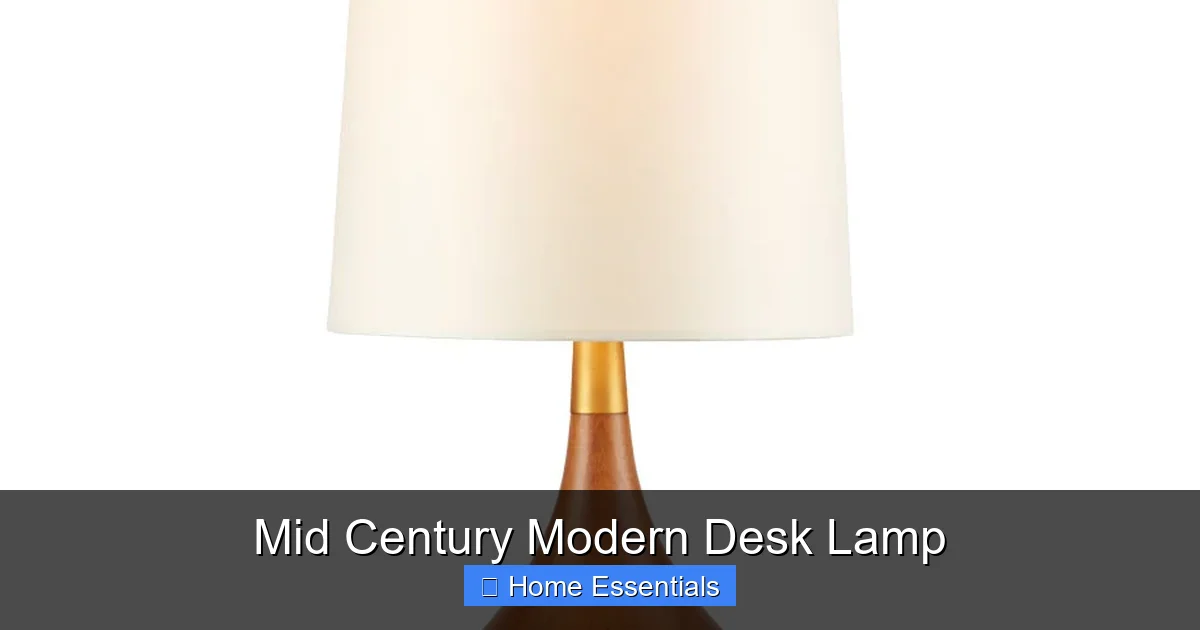
Visual guide about Mid Century Modern Desk Lamp
Image source: warisanlighting.com
The Warmth of Wood: Bent Plywood
No material says “Mid Century” quite like molded plywood. Pioneered by Alvar Aalto and perfected by Charles and Ray Eames, the process involves laminating thin sheets of wood veneer (often birch, oak, or teak) with glue and molding them over forms under heat and pressure. The result is a strong, lightweight, and gracefully curved form. On a desk lamp, you might see a bent plywood base, a curved arm, or a shade. Look for the beautiful, visible wood grain on the edges—this is a hallmark of the technique and a sign of quality. Vintage pieces may show some wear, but the wood should be solid, not flaking or delaminating.
Industrial Chic: Metal and Enamel
Steel, aluminum, and brass were used in ways that celebrated their industrial nature. You’ll find spun aluminum shades (like on some Nelson lamps) with a lovely, reflective patina. Enameled steel bases in bold colors—avocado green, mustard yellow, cherry red—are incredibly common and durable. The finish should be smooth and even on reproductions; vintage pieces may have chips or craze lines, which can add character but also affect value. Cast iron, as seen in the von Nessen Anywhere Lamp base, provides the necessary heft for stability. Metal parts should feel substantial, not flimsy.
The Plastic Revolution: Bakelite and Fiberglass
The invention of early thermoplastics was a revelation. Bakelite (the first synthetic plastic) and later fiberglass allowed for forms impossible in wood or metal. Nelson’s Bubble Lamps used a plastic spray that hardened into a seamless, skin-like shell. These materials allowed for soft, rounded shapes and vibrant, uniform color. Original plastic parts can become brittle with age. On a vintage lamp, check for cracks, yellowing, or brittleness. On new reproductions, the plastic should be flexible and resilient.
Craftsmanship: Joints, Springs, and Movement
This is where functionality meets artistry. A true MCM lamp’s adjustability should feel smooth, precise, and secure. Examine the joints:
- Articulation Points: Are they tight? Does the arm hold its position firmly when adjusted, or does it sag? A well-made spring system (like in the Anywhere Lamp) will have a firm, responsive tension.
- Swivels and Tilters: The head should tilt and rotate smoothly without gritty feeling. The mechanism should be enclosed and elegant, not a clunky afterthought.
- Base Weight: The lamp must be stable. A heavy, well-weighted base is non-negotiable for a task lamp that will be moved and adjusted. A light, tip-prone base is a sign of poor craftsmanship, regardless of how “retro” it looks.
On vintage pieces, look for signs of wear on these moving parts. On reproductions, research the brand. Reputable manufacturers like Menu (with their MJ Lamp), West Elm, and Rejuvenation invest in high-quality mechanisms that mimic the originals. You often get what you pay for here; a $50 “mid-century style” lamp from a big-box store will likely have a wobbly, frustrating base.
Choosing Your Perfect Lamp: A Practical Guide
So you’re sold on the style. Now, how do you choose the right one for *your* desk, *your* tasks, and *your* space? It’s about matching the lamp’s inherent properties to your needs. Let’s break it down.
Assess Your Desk and Task
First, get real about your workspace. Is it a massive wooden executive desk or a narrow, floating wall shelf? Measure the depth and surface area. A large, sculptural lamp like an original AJ Lamp needs room to sprawl. For a small desk, look for a more compact design with a smaller base and a arm that tucks in neatly—perhaps a Tolomeo Mini or a Kandem style lamp with a direct, minimal arm.
What’s your primary task? Detailed drawing or needlework demands focused, adjustable, shadow-free light. A lamp with a small, directional shade on a highly flexible arm (like a von Nessen Anywhere or its modern equivalents) is ideal. For general computer work, reading, or ambient lighting, a lamp with a broader, downward-facing shade that diffuses light more evenly (like a Nelson Bubble or a Grasshopper Lamp replica) is perfect. Consider a lamp with a dimmer switch if you need variable light levels throughout the day.
Authentic Vintage vs. High-Quality Reproduction
This is the biggest decision, driven by budget and passion.
- Authentic Vintage (1940s-1970s): You’re buying a piece of history. Pros: Patina, story, potential investment value, original materials. Cons: Higher cost (often $300-$2000+), possible wear or electrical issues needing professional rewiring, scarcity of specific models. Hunt at reputable dealers, auction houses (like 1stDibs), or specialized vintage lighting shops. Always ask about rewiring and bulb compatibility.
- High-Quality Reproduction (Today): These are licensed or inspired-by pieces made with respect for the original. Pros: Accessible price ($100-$500), modern electrical safety (UL listed), perfect condition, often use updated, energy-efficient materials. Cons: No historical patina, can feel less “special” to some purists. Brands like Menu (MJ Lamp), Fritz Hansen (AJ Lamp), Herman Miller (reissues), and Rejuvenation are excellent. Read reviews specifically about build quality and mechanism smoothness.
- Inspired-By / Affordable Options: Many mainstream furniture and home goods stores (West Elm, CB2, Target’s Project 62) sell lamps with clear MCM DNA. These can be fantastic entry points. Scrutinize the materials (is that “wood” actually solid or veneered particleboard? Is the metal thin?) and the mechanism stability in person if possible.
Bulb Type and Finish: The Details That Matter
Most classic MCM desk lamps use standard medium-base (E26) bulbs, making them easy to outfit. However, consider:
- LED Compatibility: Ensure the lamp’s socket and shade design can handle the heat dissipation of an LED bulb (most can). An LED will save energy and last for years.
- Finish Coordination: Match the lamp’s finish to other elements in your room. A brass or polished aluminum lamp plays well with other warm metals. A black or white enamel base is supremely versatile. A teak or walnut base complements wood furniture. A colored enamel (like a vintage orange or olive) can be a fantastic accent piece.
- Cord and Plug: On a vintage lamp, the cloth-covered cord is part of the charm. On a reproduction, a modern, flat-plug cord is more practical. Some premium reproductions even offer optional cloth cords for authenticity.
Styling Your MCM Desk Lamp: Beyond the Home Office
The beauty of a great Mid Century Modern desk lamp is its versatility. While its name suggests a desk, its sculptural quality makes it a star in many settings.
The Classic Application: Productive Workspaces
Here, function is key. Place the lamp on the opposite side of your writing hand to avoid shadows. If you’re right-handed, put it on the left. Angle the shade so light falls directly on your work surface without glaring on your computer screen. For a dual-monitor setup, a lamp with a wide, diffused shade might be better than a pinpoint spotlight. Keep the cord tidy with a clip or a simple cord cover. The lamp should be the focal point of your desk, complementing a clean, organized workspace.
Living Room Accent: The Unexpected Side Table Lamp
This is where the lamp truly shines as a decorative object. Place a smaller MCM lamp (like a Tolomeo Micro or a cute vintage anglepoise-style) on a side table next to a sofa or armchair. It provides perfect reading light and adds a jolt of design history. Pair it with a mid-century inspired book and a small ceramic vase. The contrast of its geometric form against soft textiles and organic plants is endlessly appealing.
Bedside Companion: Modern Midnight Reading
A wall-mounted MCM swing-arm lamp is the ultimate space-saving, stylish bedside solution. It folds away during the day and provides direct, adjustable light for reading without illuminating the whole room. If you prefer a table lamp, choose a smaller, heavier-base model that won’t be easily knocked over. Look for a shade that directs light downward and outward, not into your eyes.
Mixing Eras and Styles
Don’t be afraid to mix your MCM lamp with other styles. Its clean lines make it incredibly compatible. It looks fantastic on a rustic farmhouse table (the contrast is delicious), a sleek glass desk, or a traditional mahogany writing table. The key is to let the lamp be the “modern” element in a blend. Pair it with contemporary ceramics, woven textiles, or even a touch of bohemian fringe. Its timeless geometry acts as a unifying force, bridging disparate styles with quiet confidence.
Care, Maintenance, and Longevity
You’ve chosen your lamp. Now, how do you keep it glowing beautifully for decades? Proper care is simple but important.
Dusting and Cleaning
Regular dusting is the easiest way to maintain its appearance. Use a soft, dry microfiber cloth. For metal shades or bases, you can occasionally use a damp cloth with a tiny drop of mild dish soap, followed immediately by a dry cloth. Never spray cleaner directly onto the lamp, especially near electrical components. For wood parts, use a wood-specific cleaner or polish sparingly. Avoid silicone-based polishes that can leave a residue. For enamel finishes, a damp cloth is usually sufficient.
Electrical Safety and Bulb Replacement
This is paramount, especially with vintage lamps.
- Vintage Lamps: Have them professionally rewired by an electrician who specializes in antiques. Old wiring insulation becomes brittle and is a fire hazard. Ensure the plug and socket are modern and UL-rated. Use bulbs within the wattage rating printed on the socket.
- Reproductions: These should come with a UL or equivalent certification. Treat them like any modern lamp—don’t exceed the wattage, and ensure the plug is intact.
- LED Bulbs: These are the best choice for MCM lamps. They produce less heat (protecting plastic shades and finishes), use far less energy, and last 15-25 years. Choose a color temperature of 2700K-3000K for a warm, inviting light similar to the original incandescents. A dimmable LED bulb paired with a dimmable switch offers ultimate control.
Addressing Wear and Tear
Over time, finishes can scratch, plastic can yellow, and mechanisms can loosen.
- Scratches on Wood: Minor scratches can often be rubbed out with a furniture touch-up marker or a little wax. Deeper scratches may need professional refinishing.
- Yellowed Plastic: This is a common issue with age. Some people use gentle hydrogen peroxide solutions and UV light to reverse it, but this is risky and should be researched thoroughly or done by a pro. Often, on a vintage piece, it’s considered part of the patina.
- Loose Joints: If an adjustable arm wobbles, it may need a tightened screw or a replaced bushing. This is a fix for a skilled repair person or a lamp restoration specialist.
Think of your lamp as a long-term companion. A little preventative care ensures it remains a functional and beautiful part of your home for generations.
The Final Word: More Than a Lamp, a Legacy
In the end, the allure of the Mid Century Modern desk lamp is profound. It represents a moment in history when designers believed fervently in a better future, built on clean lines, honest materials, and democratic access to good design. These lamps were not meant for museums; they were meant for everyday life, to make the simple act of working or reading a more pleasant, beautiful experience. That democratic spirit lives on in the sea of reproductions that allow almost anyone to own a piece of that dream.
Choosing one is an act of curation. It’s selecting an object that carries a story of innovation, of post-war hope, of a belief that how something looks is inseparable from how it works. It’s a rejection of the disposable, a vote for substance. Whether you opt for a weathered vintage gem with a history you can only imagine or a pristine, factory-fresh reproduction that will build its own history with you, you are bringing a piece of enduring design philosophy into your daily life. You’re not just buying a lamp. You’re investing in a small, glowing piece of optimism—a reminder that good design, like a good idea, is truly timeless. So, find the one that speaks to you, that feels right in your hand and casts the perfect light on your work. Welcome it to your desk. It will serve you well.
Frequently Asked Questions
What defines a “Mid Century Modern” desk lamp versus just a retro lamp?
A true MCM lamp adheres to the specific design principles of the 1940s-1960s movement: organic or geometric forms, functional minimalism, innovative use of materials like bent plywood or enameled steel, and often features adjustable articulation. A “retro” lamp may simply mimic the *look* with modern materials and less thoughtful construction, lacking the original’s design ethos and craftsmanship.
Are vintage MCM desk lamps safe to use today?
They can be, but only after professional rewiring. Original wiring insulation becomes brittle and dangerous over time. Always have a qualified electrician inspect and rewire a vintage lamp with modern, UL-rated components before plugging it in. Never use a vintage lamp with its original cord and socket.
What’s the best bulb for a Mid Century Modern desk lamp?
An LED bulb is ideal. Choose a “vintage-style” or ” Edison bulb” LED with a warm color temperature (2700K-3000K) to mimic the original incandescent glow. LEDs produce minimal heat (protecting plastic shades and finishes), are energy-efficient, and last for years. Ensure the bulb is dimmable if your lamp has a dimmer switch.
How do I choose the right size lamp for my desk?
Consider your desk’s depth and surface area. A large, sculptural lamp needs ample space. For a small or narrow desk, look for compact designs with a small base and a arm that tucks in. The lamp’s height should allow the shade to be positioned just above your work surface when adjusted, typically 14-20 inches tall for a standard desk. Always measure your space before buying.
Are expensive reproductions worth the cost compared to affordable versions?
Often, yes. The price difference usually reflects material quality and mechanism engineering. Premium reproductions from brands like Menu or Herman Miller use solid materials (metal, real wood) and have smooth, durable, adjustable mechanisms that function as beautifully as they look. Affordable versions may use lightweight plastics, thin metals, and clumsy, loose joints that frustrate daily use. It’s an investment in long-term satisfaction.
Can I use a Mid Century Modern desk lamp as a bedside lamp?
Absolutely! In fact, a wall-mounted swing-arm MCM lamp is a quintessential and space-saving bedside solution. For a table, choose a smaller, stable model with a heavier base to prevent tipping. Ensure the shade directs light downward for reading without glaring in your eyes. The adjustable nature of most MCM designs makes them perfectly suited for personalized bedside lighting.