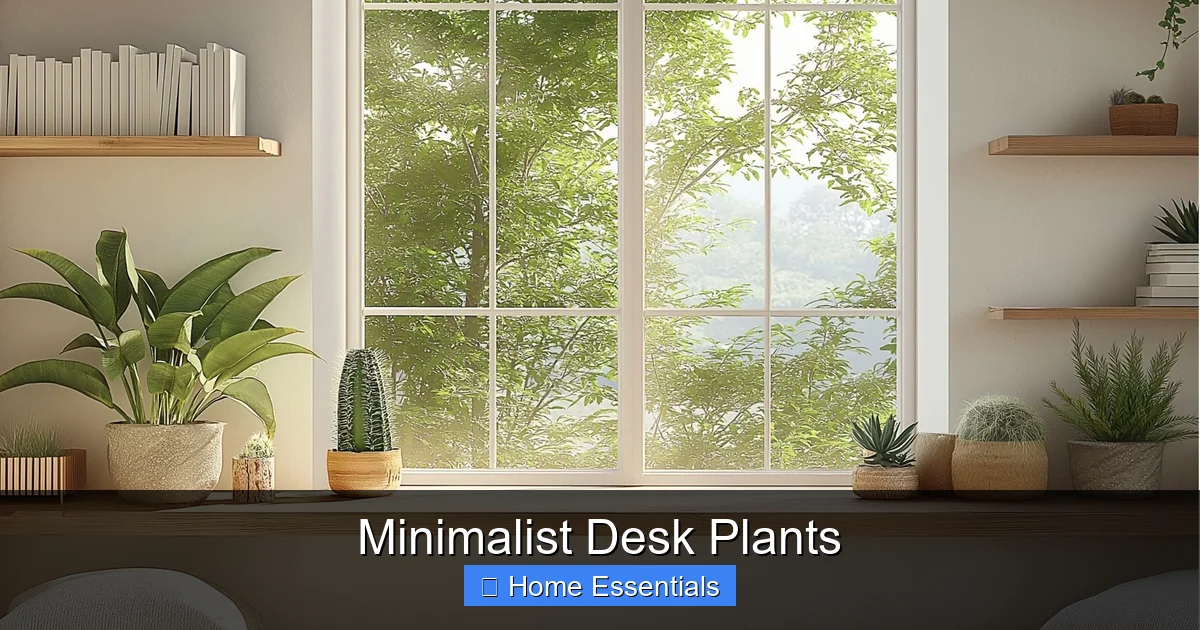
Minimalist Desk Plants
Minimalist desk plants are the perfect fusion of function and form for any modern workspace. They require minimal care while offering maximum benefits, from purifying the air to reducing stress and enhancing focus. Choosing the right low-maintenance varieties and styling them with intention can transform your desk into a serene, productive sanctuary without adding clutter.
Look at your desk. What do you see? A monitor, a keyboard, maybe a coffee cup. Now, imagine adding just one single, elegant plant. A slender snake plant standing at attention. A trailing pothos vine cascading softly off a shelf. That’s the essence of the minimalist desk plant. It’s not about creating a jungle on your workspace. It’s about a deliberate, thoughtful addition that breathes life into the static objects of your daily grind. In a world of digital noise and physical clutter, a minimalist desk plant is your anchor. It’s a living piece of decor that asks for very little but gives back in spades—cleaner air, a calmer mind, and a touch of organic beauty that grounds you in the present moment. This guide is your complete handbook to selecting, caring for, and styling these perfect desk companions. We’ll cut through the noise and focus on what truly works for the busy professional, the home office dweller, and anyone who believes their workspace should inspire peace, not stress.
Key Takeaways
- Benefit-Rich & Low-Effort: Minimalist desk plants significantly improve air quality, boost mood, and increase concentration with very little maintenance required.
- Choose Hardy Species: Opt for truly resilient plants like Snake Plants, ZZ Plants, and Pothos that thrive on neglect and tolerate low office light.
- Mind the Water: Overwatering is the #1 killer of desk plants. Always check soil moisture before watering and ensure pots have drainage.
- Style with Intention: Use simple, neutral pots and consider groupings of one to three plants to maintain a clean, uncluttered aesthetic.
- Light is Key: Even low-light plants need some indirect light. Understand your desk’s light conditions before selecting a plant.
- Avoid Common Pitfalls: Steer clear of high-maintenance, fast-growing, or soil-heavy plants that invite pests and create mess in a small space.
📑 Table of Contents
- The Profound Benefits: Why a Single Plant Matters
- Choosing Your Perfect Minimalist Desk Plant: The “Right Plant, Right Place” Rule
- The Absolute Basics of Care: Water, Soil, and Light Simplified
- Styling Your Minimalist Desk Plant: Less is a Statement
- Common Mistakes & How to Avoid Them
- Cultivating Calm: Your Minimalist Workspace, Complete
The Profound Benefits: Why a Single Plant Matters
You might think, “It’s just a plant. How much of a difference can one small thing make?” The answer, backed by both science and psychology, is “a tremendous amount.” The benefits of introducing greenery to your immediate workspace extend far beyond mere aesthetics. They tap into our fundamental human need to connect with nature, a concept known as biophilia. When we bring a piece of that nature into our artificial work environments, we trigger a cascade of positive effects.
A Natural Air Purifier at Your Fingertips
Indoor air quality is often worse than outdoor air, filled with volatile organic compounds (VOCs) from furniture, cleaning supplies, and electronics. Plants are nature’s air filters. Through the process of photosynthesis and respiration, they absorb carbon dioxide and release oxygen. More importantly, certain species have been shown by NASA’s Clean Air Study to remove toxins like formaldehyde, benzene, and trichloroethylene from the air. Having a plant on your desk means you’re breathing cleaner air in your immediate vicinity, which can reduce headaches, fatigue, and irritation. It’s a passive, beautiful health upgrade working 24/7 right next to your keyboard.
The Science of Focus and Reduced Stress
Numerous studies have demonstrated that the presence of plants in an office setting can increase productivity by up to 15% and significantly reduce stress levels. The theory is that even a brief, unconscious glance at a living thing provides a “micro-rest” for the brain. It offers a break from the intense, directed focus required by screen-based work. This tiny mental reset can prevent burnout and decision fatigue. The color green itself is associated with calmness and efficiency. In a minimalist setup, where there are no other visual distractions, that one plant becomes a powerful focal point for these restorative glances.
A Touch of Tactile Beauty and Personalization
A sterile, generic desk feels impersonal. It’s a temporary station, not a space you own. A minimalist desk plant personalizes your territory in a quiet, sophisticated way. It introduces organic shapes—the curve of a leaf, the gentle drape of a vine—that contrast beautifully with the hard lines of your tech. It adds texture and a sense of life that no plastic or metal object can replicate. This simple act of curating your space signals to your brain that this is *your* area, which can enhance your sense of ownership and satisfaction while you work.
Choosing Your Perfect Minimalist Desk Plant: The “Right Plant, Right Place” Rule
This is the most critical step. The success of your minimalist desk plant hinges entirely on matching the plant’s needs to your specific desk environment. A beautiful, trendy plant that requires bright, direct sun will quickly perish in the dim corner of a home office. The goal is to choose a plant that will *thrive on neglect*. We are looking for champions of low light, irregular watering, and stable temperatures. Forget the fussy Fiddle Leaf Fig. Think survivors.
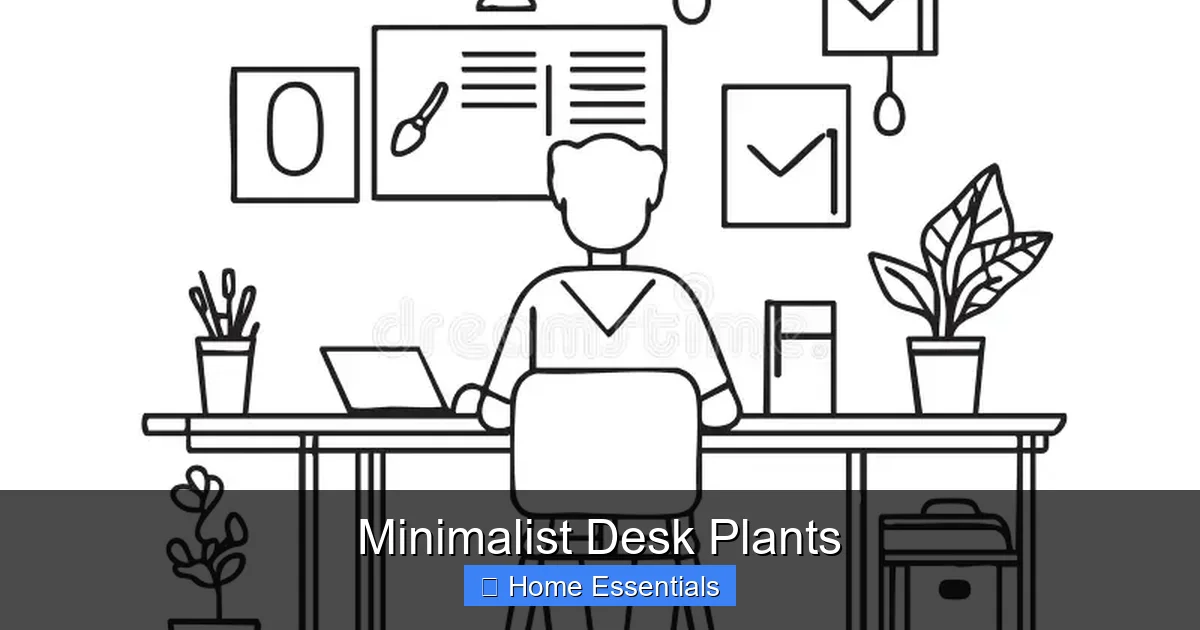
Visual guide about Minimalist Desk Plants
Image source: thumbs.dreamstime.com
The Top Tier: Ultra-Low Maintenance Champions
These plants are practically indestructible and are the gold standard for minimalist desk setups. They are forgiving of occasional forgetfulness and adaptable to less-than-ideal conditions.
- Snake Plant (Sansevieria / Dracaena trifasciata): The undisputed king. It thrives on neglect, tolerates very low light, and can go weeks without water. Its architectural, upright leaves add a strong vertical line to your desk. Varieties like the ‘Laurentii’ (with yellow edges) or the compact ‘Hahnii’ are perfect.
- ZZ Plant (Zamioculcas zamiifolia): Known as the “ZZ” for its almost unpronounceable name, this plant is a tank. Its glossy, dark green leaves grow on graceful, arching stems. It stores water in potato-like rhizomes, meaning it prefers to be underwatered. It’s incredibly tolerant of low light and irregular care.
- Pothos (Epipremnum aureum): The ultimate trailing vine. It grows enthusiastically in a wide range of light conditions, from bright indirect to low light. Its heart-shaped leaves come in classic green or variegated forms (like Golden Pothos or Marble Queen). It’s a great choice if you want a plant that can be trained to climb a small trellis or allowed to trail elegantly off the side of your desk.
- Cast Iron Plant (Aspidistra elatior): Living up to its name, this plant is tough. It has dark, broad, evergreen leaves and was historically popular because it survived the soot and low light of Victorian homes. It’s slow-growing, non-toxic, and incredibly resilient.
Light Assessment: The First Question to Ask
Before you buy anything, do a simple light audit of your desk. Where is your desk located? How many hours of natural light does that spot receive? Is the light direct (sunbeams hitting the surface) or indirect (the room is bright but the sun doesn’t shine directly on the desk)?
- Low Light: No direct sunlight. A north-facing window, or a spot far from any window. Suitable for Snake Plants, ZZ Plants, Cast Iron Plants, and some Pothos varieties.
- Medium Indirect Light: A spot near an east or west-facing window, or a few feet from a south-facing window where light is filtered. Most minimalist desk plants will thrive here, including Philodendron Heartleaf and Spider Plants.
- Avoid: Plants that require bright, direct light (like succulents and cacti) unless your desk is right in a south-facing window with no obstructions. They will etiolate (stretch and weaken) and die in low light.
Size and Scale: Big Impact in Small Packages
For a minimalist desk, size matters. You want a plant that is proportional to your workspace. A giant Monstera will overwhelm a small writing desk. Look for plants that are naturally compact or slow-growing.
- Tabletop Size: Plants that stay under 12-18 inches tall at maturity are ideal. Small Snake Plant varieties (Sansevieria ‘Hahnii’), small ZZ Plants, and young Pothos cuttings fit perfectly.
- Consider the “Maturity”: A plant at the nursery is often small. Research its mature size. A mature Snake Plant can get very tall, but its growth is slow, and you can always prune the tallest leaves or divide the plant later.
- The “One-Statement” Rule: In minimalism, one well-chosen, well-sized plant is more powerful than three small, mismatched ones. Let it be a deliberate accent.
The Absolute Basics of Care: Water, Soil, and Light Simplified
Once your plant is home, the care routine is refreshingly simple for the recommended varieties. The two biggest mistakes are overwatering and using the wrong pot. Let’s demystify the process.
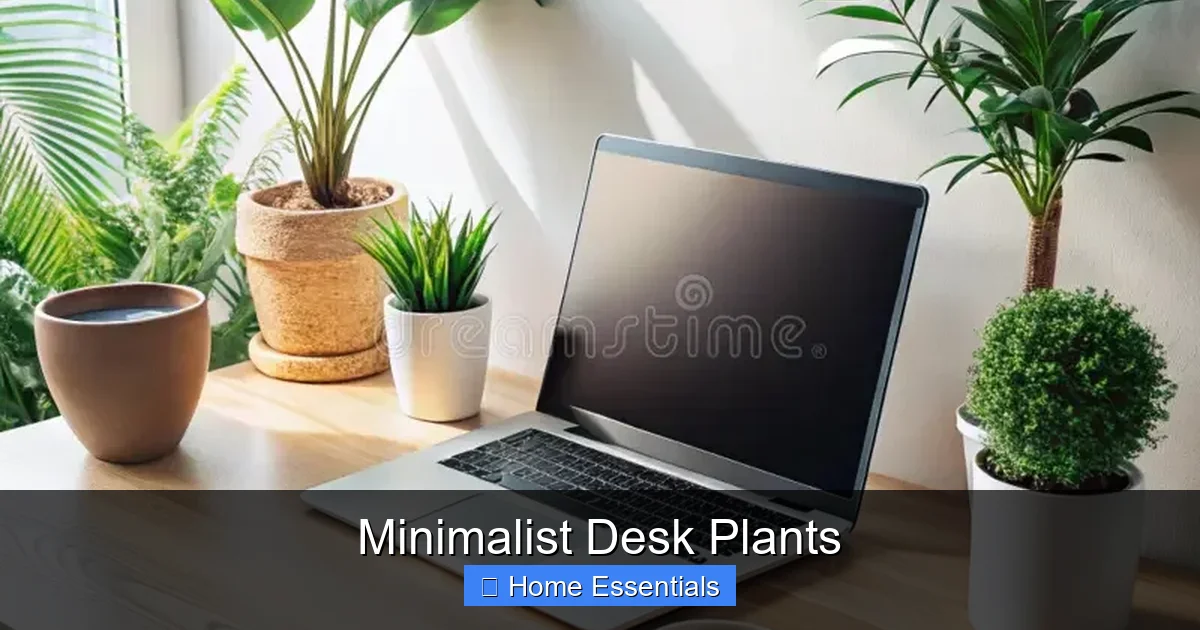
Visual guide about Minimalist Desk Plants
Image source: thumbs.dreamstime.com
Watering: The “Forget to Water” Method
The mantra for minimalist desk plants is: lean towards underwatering. These plants are adapted to periods of drought. Overwatering leads to root rot, the silent killer. Here’s how to get it right:
- Ditch the Schedule: Never water on a set day like “every Monday.” Instead, use the finger test. Stick your index finger about two inches into the soil. If it feels completely dry, it’s time to water. If it’s even slightly damp, wait.
- Water Thoroughly, Then Forget: When you do water, do it completely. Water until it runs out the drainage holes. This ensures the entire root ball is hydrated. Then, tip away any excess water from the saucer and let the soil dry out completely again.
- Seasonal Adjustment: Plants need vastly less water in the winter (when growth slows) than in the summer. Your finger test is your best guide year-round.
Potting 101: Drainage is Non-Negotiable
This is the single most important factor for preventing overwatering. Your pot must have a drainage hole at the bottom. A decorative pot without a hole is a death trap unless you use it as a cachepot (a decorative sleeve) and keep the plant in its plastic nursery pot with holes, removing it to water.
- Material Matters: Terracotta pots are porous and allow soil to dry out faster, which is great for succulents and plants prone to rot. For most minimalist desk plants, ceramic, concrete, or plastic pots with drainage holes work perfectly. Choose a pot only 1-2 inches wider in diameter than the current nursery pot to avoid excess soggy soil.
- Soil is Simple: You don’t need special mixes. A high-quality, well-draining indoor potting mix from any garden center is fine. Do not use garden soil from outside, which is too dense and can contain pests.
Feeding and Fertilizing: Less is More
These are not hungry plants. They grow slowly and need very little fertilizer. Over-fertilizing can burn roots and cause salt buildup.
- When: Only during the active growing season (spring and summer).
- How Much: Use a balanced, water-soluble houseplant fertilizer (like 10-10-10) at half the recommended strength. Apply only once a month, or even every 6-8 weeks. It’s better to under-feed than over-feed.
- When to Stop: Completely stop fertilizing in the fall and winter when growth halts.
Styling Your Minimalist Desk Plant: Less is a Statement
Now for the fun part: making it look intentional and beautiful. The minimalist aesthetic is all about intentionality, clean lines, and a restrained color palette. Your plant is the star; the pot is its supporting actor.
Visual guide about Minimalist Desk Plants
Image source: imgcdn.stablediffusionweb.com
Pot Selection: Neutral, Simple, Textural
Let the plant be the colorful focal point. The pot should recede. Think in terms of neutral tones: white, black, cream, concrete grey, natural terracotta, or muted ceramics. Avoid pots with loud patterns, glitter, or cartoonish designs. Shape is also key. Simple cylinders, cubes, or tapered pots feel modern and clean. Texture can add interest—a rough concrete pot or a smooth, matte ceramic provides tactile contrast to the glossy or waxy leaves of your plant.
The “One or Three” Rule of Arrangement
Odd numbers are more visually dynamic and pleasing to the eye in design.
- The Solo Act: One perfectly sized plant in a beautiful pot is the pinnacle of minimalist styling. It commands attention without competition. Place it in the corner of your desk, or as a counterpoint to your monitor.
- The Trio: If you have a larger surface (like a wide credenza behind your desk), group three plants of varying heights and textures. For example: a Snake Plant (tall and architectural), a ZZ Plant (medium, bushy), and a trailing Pothos (soft and cascading). Keep the pots uniform in color and style to maintain cohesion. The grouping should feel deliberate, not haphazard.
Placement and Proportion: Finding the Sweet Spot
Where you put the plant matters. It should not interfere with your workflow.
- Corner Power: The back corner of your desk, opposite your writing hand, is often the safest spot. It’s out of the way but still visible.
- Monitor Flank: A small plant on one side of your monitor can soften the hard edge of the screen and create a balanced look.
- Vertical Space: Don’t forget the space above your desk! A small shelf or wall-mounted planter can hold a trailing plant, freeing up your desk surface entirely. This is peak minimalist integration—the plant becomes part of the architecture.
- Leave Breathing Room: Ensure the plant isn’t crammed against your keyboard, mouse, or paperwork. Give it a clear zone of its own.
Common Mistakes & How to Avoid Them
Even with the hardiest plants, a few pitfalls can turn your green oasis into a brown, crispy disaster. Awareness is half the battle.
The Overwatering Obsession
This cannot be stressed enough. People kill plants with kindness, meaning too much water. If your plant’s leaves are turning yellow and mushy, especially at the base, or if the soil stays soggy for days, you are almost certainly overwatering. The cure is simple: stop watering. Let the soil dry out completely. If root rot is advanced, you may need to repot the plant, trimming away any black, mushy roots and replanting in fresh, dry soil.
Ignoring Your Actual Light Conditions
Buying a plant based on a pretty picture without checking your desk’s light is a recipe for failure. If your desk is in a dim interior room with no windows, you must choose the most shade-tolerant options (Snake Plant, ZZ Plant). If you have a bright spot but are tempted by a low-light plant, that’s fine—it will just grow even more slowly. But the reverse—putting a sun-lover in the shade—will lead to a weak, leggy, and eventually dying plant.
Choosing the Wrong “Easy” Plants
Not all “easy” plants are created equal for a desk. Avoid:
- Plants that shed heavily: Like some ferns or flowering plants that drop petals or leaves constantly, creating a mess on your keyboard.
- Plants that attract pests: Fungus gnats love consistently moist soil. By underwatering and using well-draining soil/pots, you avoid this.
- Plants that grow too fast or too large: A rapidly growing vine might become unmanageable, and a large palm will quickly outgrow its space. Stick to slow and steady growers.
- Soil-heavy plants: Plants that need very rich, moist soil (like some tropicals) are more prone to issues in a small pot. The plants we recommend are adapted to poorer, drier conditions.
Cultivating Calm: Your Minimalist Workspace, Complete
You’ve chosen your resilient plant. You’ve selected a simple, elegant pot. You’ve placed it with intention on your desk. Now, step back and look. What you’ve done is more than decorate. You’ve introduced a living, breathing element into a space of static productivity. You’ve made a micro-commitment to care, not just for a task, but for a small life. That act alone is profoundly anti-fragile in our busy lives.
The true beauty of the minimalist desk plant is its silent partnership. It doesn’t demand meetings, it doesn’t send notifications, and it doesn’t have deadlines. It simply exists, growing steadily in its corner, purifying the air you breathe, and offering a green oasis for your eyes to rest upon during a long video call or a challenging problem. It is a daily, tangible reminder of growth, resilience, and the natural world—all contained in a simple pot on your desk. This is not just interior design; it’s intentional living. Start with one plant. Nurture it. Watch it thrive. And feel the subtle, cumulative shift in your own well-being as your workspace finally feels like a place that supports not just your work, but your peace.
Frequently Asked Questions
What is the absolute easiest plant for a beginner’s desk?
The Snake Plant (Sansevieria) is the easiest. It tolerates very low light, needs water only every few weeks, and is highly forgiving of neglect. It’s nearly impossible to kill with underwatering.
How often should I really water my minimalist desk plant?
Forget a calendar. Use the finger test: stick your finger 2 inches into the soil. Water only when it feels completely dry. For most recommended plants in typical office conditions, this is often every 2-4 weeks, less in winter.
Can minimalist desk plants survive in a windowless office?
Yes, but only the most shade-tolerant species. A Snake Plant or ZZ Plant can survive in very low light, but their growth will be extremely slow. For best results, place the plant as close to a window as possible, even if it’s indirect light.
Are any minimalist desk plants toxic to pets?
3>Yes. Snake Plants and ZZ Plants are toxic to cats and dogs if ingested, causing oral irritation and nausea. If you have pets that may chew on plants, opt for a non-toxic Spider Plant or Boston Fern, but note these require slightly more moisture.
What type of soil is best for a small desk pot?
A standard, high-quality indoor potting mix is perfect. Do not use heavy garden soil or mixes with added fertilizer (which can burn roots). The key is that the soil is well-draining and the pot has a hole.
How do I know if my plant is getting enough light?
Signs of insufficient light include leggy growth (stems stretching out), slow or no new growth, and leaves losing their vibrant color, turning pale or yellow. If you see these, move the plant to a brighter location, even if it’s just a few feet closer to a window.