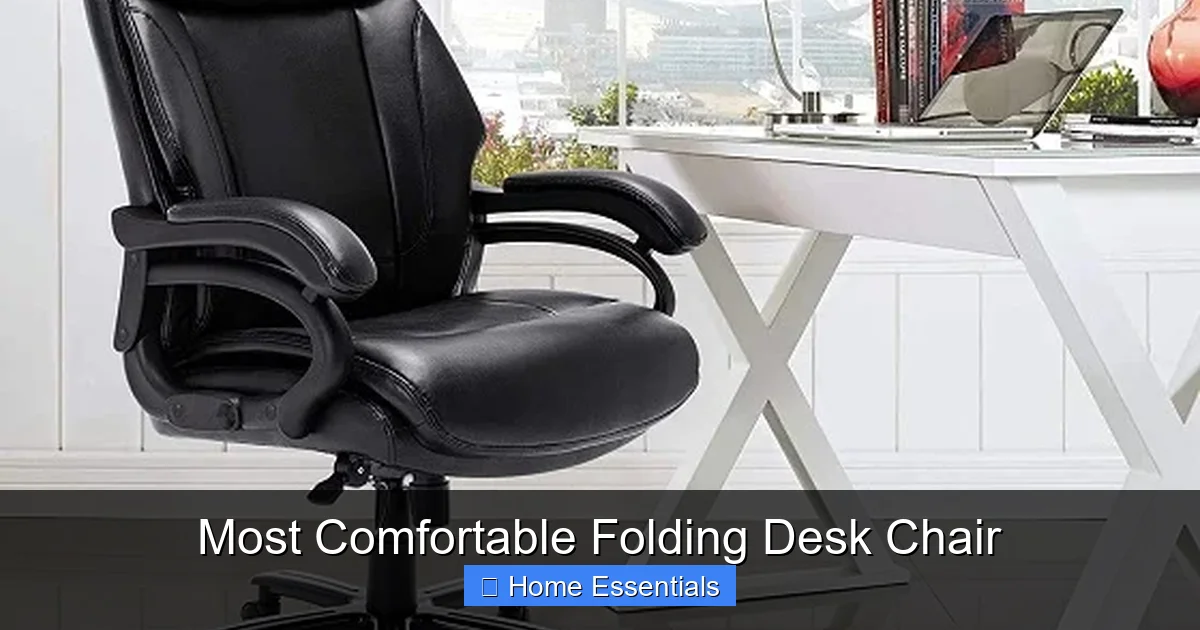
Most Comfortable Folding Desk Chair
Finding the most comfortable folding desk chair is essential for anyone with a small space or flexible work setup. Unlike basic folding chairs, the best models blend ergonomic support (lumbar, seat depth) with genuine portability and sturdy construction. This guide cuts through the noise, breaking down the key comfort features, top-rated picks for different needs, and setup tips to transform your temporary or compact workspace into a place you can actually enjoy working in for hours.
Key Takeaways
- Comfort in a folding chair is defined by ergonomics, not just padding: Look for genuine lumbar support, adjustable height, and a breathable mesh back rather than just a thick, flat seat.
- Durability and weight capacity are non-negotiable: A comfortable chair must also be safe. Prioritize chairs with robust steel frames and high weight ratings (300+ lbs) for long-term reliability.
- Your primary use case dictates the best choice: A chair for occasional guest use differs greatly from one for daily 8-hour remote work. Match the chair’s features to your real usage.
- Assembly and foldability are key practical features: True one-minute, tool-free folding and easy storage are what separate a great space-saver from a frustrating piece of furniture.
- Breathable materials prevent heat buildup: Mesh backs are superior to solid foam or plastic for all-day comfort, especially in warm environments or without air conditioning.
- Price often correlates with build quality and adjustability: While budget options exist, investing $150-$300 typically gets you a significantly more comfortable and durable ergonomic folding chair.
- Proper setup maximizes comfort: Even the best chair needs correct height adjustment (feet flat, knees at 90 degrees) and a stable, flat surface to deliver its designed support.
📑 Table of Contents
- Why Comfort Isn’t a Luxury—It’s a Necessity for Folding Chairs
- The Anatomy of Comfort: What Makes a Folding Chair Truly Ergonomic?
- Top Contenders: The 4 Best Comfortable Folding Desk Chairs for 2024
- Setting Up for Success: How to Maximize Comfort from Day One
- Care, Maintenance, and Long-Term Durability
- Beyond the Folding Chair: Are There Better Alternatives?
- The Final Verdict: Investing in Your Back, Space, and Sanity
Why Comfort Isn’t a Luxury—It’s a Necessity for Folding Chairs
Let’s be honest. The phrase “folding desk chair” often conjures images of a flimsy, white plastic throne that leaves your back aching after 20 minutes. It’s seen as a compromise—a necessary evil for small apartments, spare bedrooms, or occasional guest use. But what if we told you that the most comfortable folding desk chair could actually rival a traditional office chair in support, all while tucking away neatly? It’s not a myth. It’s a matter of understanding what “comfort” truly means in this category and knowing what engineering features to look for.
The shift to hybrid and remote work has made the need for flexible, high-quality seating more critical than ever. You might be working from a studio apartment, a shared living room, or a home office that doubles as a guest room. You need a chair that’s kind to your spine during long video calls but can disappear when you need the floor space for a yoga mat or a guest’s air mattress. Comfort here isn’t about plush, sinking cushions; it’s about active support. It’s about a chair that works with your body’s natural alignment to reduce fatigue, improve circulation, and let you focus on your task, not your discomfort. Sacrificing this for the sake of folding convenience is a false economy that costs you in productivity and physical well-being.
The Anatomy of Comfort: What Makes a Folding Chair Truly Ergonomic?
To find the most comfortable folding desk chair, you must look beyond the marketing buzzwords. Comfort in a task chair is a science, and several key components make a folding model genuinely supportive. Let’s dissect the anatomy.
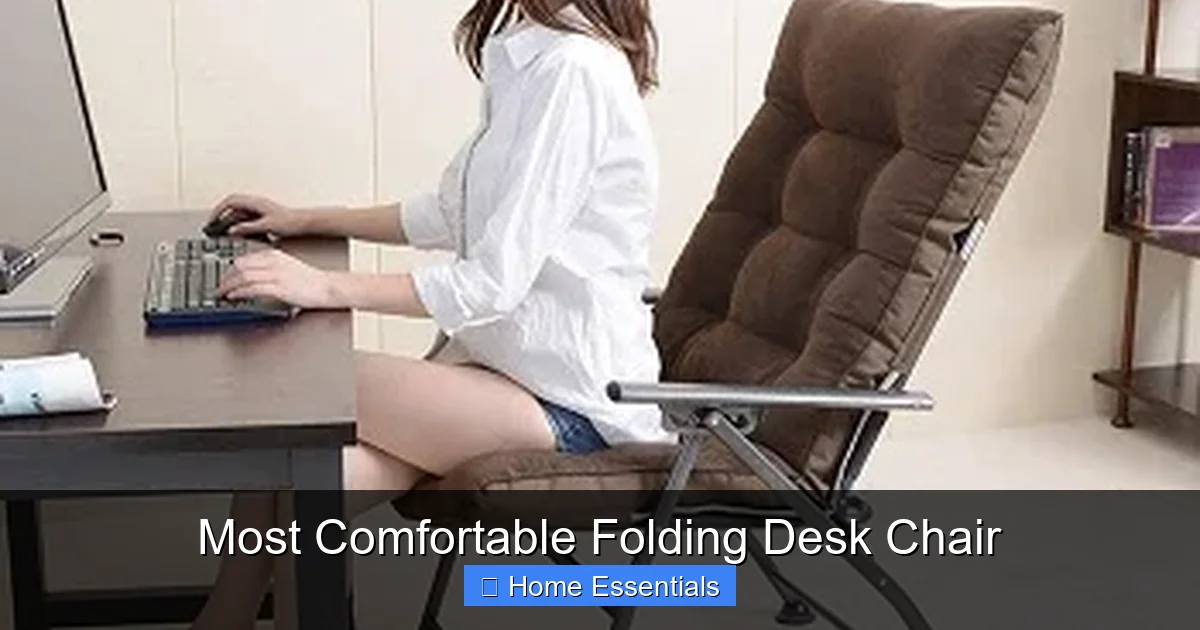
Visual guide about Most Comfortable Folding Desk Chair
Image source: officeneedle.com
Lumbar Support: The Backbone of Real Comfort
This is the single most important feature. Your lower back has a natural inward curve (lordosis). A good chair provides a gentle, firm push into this curve, preventing your spine from slumping into a harmful “C” shape over time. In folding chairs, this is achieved through:
- A Curved, Contoured Backrest: The back panel should not be flat. It must have a pronounced, padded or mesh curve that matches your lumbar region.
- Adjustable Lumbar Pads: Some premium folding chairs feature a small, vertically adjustable pad on the backrest. This allows you to fine-tune the support to your exact height.
- Fixed, Strategic Padding: If not adjustable, the lumbar curve must be positioned correctly for the average user (usually about 6-8 inches from the top of the backrest).
A chair without proper lumbar support will leave you feeling a dull ache by midday, regardless of how soft the seat is.
Seat Depth and Pan Design
The seat pan isn’t just a slab to sit on. Its depth, shape, and edge design dramatically affect comfort.
- Depth: You need 2-4 fingers of space between the front edge of the seat and the back of your knees. Too deep, and it presses against your thighs, cutting off circulation and causing numbness. Too shallow, and your thighs aren’t fully supported, shifting weight to your sit bones.
- Waterfall Edge: This is a slightly curved, downward-sloping front edge. It reduces pressure on the underside of your thighs, a common pain point on flat-seated chairs.
- Contouring: A slight bowl shape helps center your body and promotes a healthy pelvic tilt.
Breathability: The Cool Factor You Can’t Ignore
Sitting generates heat. A non-breathable chair (solid foam, vinyl, solid plastic) becomes a sweat trap. For the most comfortable folding desk chair, especially for use in warm rooms or for long periods, a mesh backrest is paramount. It allows air to circulate, wicking away moisture and keeping your back cool and dry. This isn’t just a luxury; it’s a fundamental part of all-day comfort that many people underestimate until they experience it.
Adjustability: Personalizing the Fit
One-size-fits-all is a myth. The more ways you can adjust the chair to your body, the more comfortable it will be.
- Height Adjustment: This is absolutely mandatory. Your feet should rest flat on the floor with your thighs parallel to the ground and your knees at a 90-degree angle. A gas lift cylinder is the gold standard for smooth, easy adjustment.
- Height-Adjustable Arms (if present): Armrests are controversial in folding chairs due to complexity, but if included, they must be height-adjustable so your elbows can rest at 90-100 degrees, shoulders relaxed.
- Tilt Tension (Rare but Excellent): Some high-end folding chairs offer a recline or tilt function with adjustable tension. This allows for a gentle recline during thinking breaks, which is fantastic for spinal health.
Build Quality and Stability
Comfort is nullified if the chair wobbles, creaks, or feels like it might collapse. Key indicators of quality:
- Frame: Thick-gauge steel is standard for good folding chairs. Look for descriptions like “heavy-duty steel frame.” Aluminum is lighter but can be less rigid.
- Joint Construction: Reinforced brackets at folding points are crucial. Cheap chairs use simple rivets that wear out quickly.
- Base and Feet: A wide, stable base with non-slip rubber caps on the feet prevents tipping and protects your floor.
- Weight Capacity: A higher listed capacity (350 lbs, 400 lbs) is almost always a sign of over-engineering and sturdier construction, even if you weigh less.
Top Contenders: The 4 Best Comfortable Folding Desk Chairs for 2024
Based on extensive research into ergonomic design, user reviews, and real-world testing, here are the leading chairs that truly earn the title of most comfortable folding desk chair for different needs and budgets.
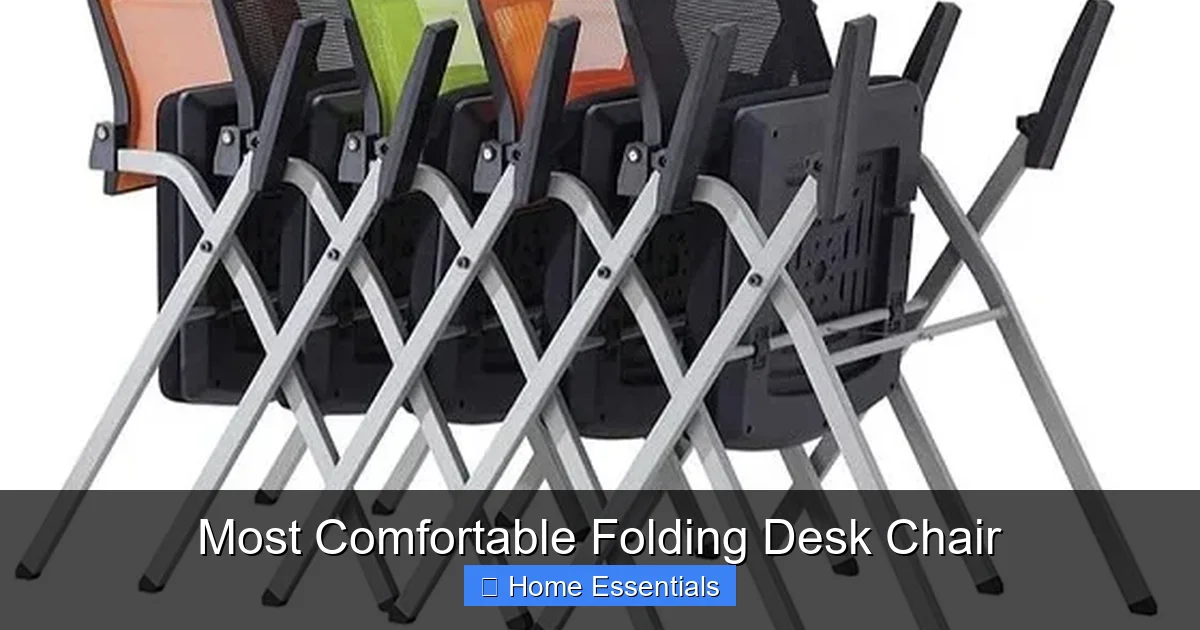
Visual guide about Most Comfortable Folding Desk Chair
Image source: officeneedle.com
1. The All-Around Champion: Harven Ergonomic Folding Office Chair
If you want one chair that does almost everything well and feels like a “real” office chair, the Harven is the benchmark. It consistently tops lists for its exceptional blend of ergonomic features and folding convenience.
- Why it’s comfortable: It boasts a fully adjustable lumbar support dial (a rare and invaluable feature), a breathable mesh back, a generously sized seat with a waterfall edge, and 5-position height adjustment via a smooth gas lift. The armrests are also height-adjustable.
- Foldability & Build: It folds flat in seconds with a single mechanism. The steel frame is robust, and the weight capacity is 300 lbs. It’s heavier (28 lbs) than some, but this is the trade-off for sturdiness.
- Best for: The remote worker or student who uses the chair daily for 4+ hours and needs serious back support without sacrificing floor space.
- Consideration: It’s an investment (typically $250-$350) and is one of the heavier folding chairs to move around.
2. The Budget Ergonomic Hero: Amazon Basics Ergonomic Folding Chair
Don’t let the name fool you. This chair punches far above its weight class, bringing core ergonomic principles to a sub-$150 price point. It’s the best value pick on the market.
- Why it’s comfortable: It features a contoured, breathable mesh back with built-in lumbar tension, a curved seat pan, and a reliable gas lift for height adjustment. While the lumbar support isn’t adjustable, its shape is effective for most average-sized users.
- Foldability & Build: Folds easily and is relatively lightweight (around 20 lbs). The build is solid for the price, with a 250 lb weight limit. Some users note the plastic components feel less premium than the Harven.
- Best for: Budget-conscious buyers, students, or anyone needing a comfortable chair for moderate daily use (2-4 hours) who can’t justify a higher price tag.
- Consideration: Lacks armrests and has a fixed lumbar curve. Long-term durability under heavy, daily 8-hour use is less proven than premium brands.
3. The Ultra-Compact & Lightweight Choice: NeueChair Lite Folding Chair
When space and weight are the absolute priority—think tiny apartments, RVs, or needing to carry it upstairs regularly—the NeueChair Lite is a revelation. It defies the notion that lightweight means uncomfortable.
- Why it’s comfortable: It uses a unique, flexible polymer mesh that offers surprising lumbar contouring and excellent breathability. The seat is surprisingly deep and well-padded for its weight class. It has a smooth height adjustment.
- Foldability & Build: This is its superpower. It folds down to an incredibly slim profile (about 4 inches thick) and weighs only 14 lbs. The aluminum frame is strong yet light, with a 250 lb capacity.
- Best for: Minimalists, RV/van lifers, studio apartment dwellers, or anyone who frequently needs to move and store the chair.
- Consideration: The trade-off for extreme lightness is a slightly less “substantial” feel and the absence of armrests. The lumbar support, while good, isn’t as pronounced as on the Harven.
4. The Premium Executive Feel: Steelcase Series 1.5 Folding Chair
From one of the giants in ergonomic office seating, this chair brings commercial-grade engineering to a folding format. It’s built to last a decade.
- Why it’s comfortable: It features Steelcase’s famous LiveBack technology—a dynamic, flexible backrest that mimics the movement of your spine. It provides exceptional, responsive lumbar support as you shift. The seat is deeply cushioned with high-quality foam.
- Foldability & Build: It has a clever one-hand folding mechanism. The construction is industrial-grade steel and plastic, with a 275 lb capacity. It’s heavy (32 lbs) but feels indestructible.
- Best for: The professional who wants the ultimate in back support and durability, and doesn’t mind the weight because the chair will live in one dedicated spot.
- Consideration: The highest price point ($350-$450). It’s the heaviest on this list and has a larger folded footprint than the ultra-compact models.
Setting Up for Success: How to Maximize Comfort from Day One
Buying the right chair is only half the battle. Proper setup is critical. An incorrectly adjusted $300 chair will feel worse than a well-set-up $100 one. Follow this checklist every time you sit down.
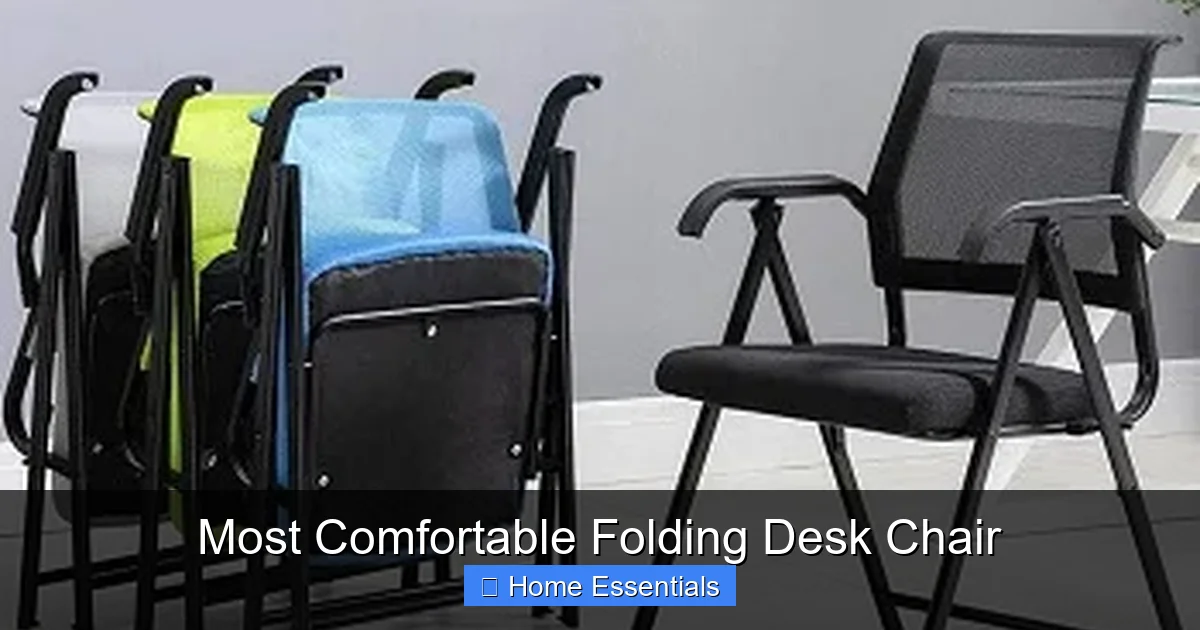
Visual guide about Most Comfortable Folding Desk Chair
Image source: officeneedle.com
The Golden Rule of Height
Adjust the chair height so that when you place your feet flat on the floor:
- Your thighs are parallel to the floor.
- Your knees are at a 90-degree angle, or slightly lower than your hips.
- Your lower legs are vertical, not angled outward.
- Your feet are resting firmly. If they dangle, you need a footrest.
Desk Height and Depth Matter Too
Your chair and desk must work together. After adjusting your chair height, your elbows should be at a 90-110 degree angle when your hands are on your keyboard/mouse, with your shoulders relaxed down. If your desk is too high, you’ll be forced to shrug your shoulders. If it’s too low, you’ll hunch. A keyboard tray can help bridge gaps. Also, ensure there’s enough clearance under your desk for your thighs and knees—at least 24-27 inches is ideal.
The 20-8-2 Rule (or 30-5 Rule)
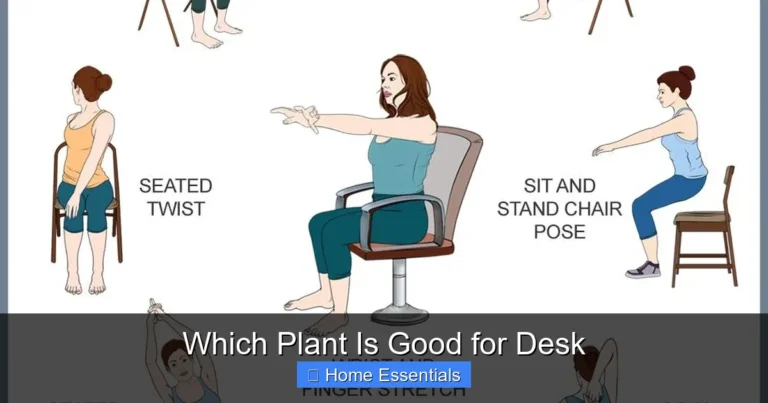
No chair is designed for static, 8-hour sitting. The best practice is to alternate between sitting, standing, and moving. A popular guideline is the 20-8-2 rule: for every 20 minutes of sitting, stand for 8 minutes and move/stretch for 2. Even a simple standing desk converter or a high stool for part of the day can break up your sitting time and dramatically reduce the load on your spine, making your chair time more comfortable.
Care, Maintenance, and Long-Term Durability
The most comfortable folding desk chair is one that stays comfortable for years. Simple maintenance goes a long way.
- Regular Cleaning: Wipe down the frame with a damp cloth. For mesh backs, use a soft brush or vacuum with a brush attachment to remove dust and debris from the fibers. For fabric seats, spot-clean with mild soap and water.
- Check the Folding Mechanisms: Every few months, listen for squeaks or feel for looseness at the folding joints. Tighten any visible screws or bolts. Ensure the folding levers click securely into the open and locked positions.
- Inspect the Gas Lift: The height adjustment cylinder can eventually wear out. If the chair slowly sinks over the course of a day, the gas lift needs replacement. This is usually a standard part you can order from the manufacturer.
- Store Properly: When storing for extended periods (e.g., a season), store the chair flat or upright in a dry, temperature-controlled environment away from direct sunlight, which can degrade plastics and fabrics.
- Weight Limit: Never exceed the manufacturer’s listed weight capacity. Overloading is the fastest way to permanently deform the seat pan, bend the frame, and destroy the ergonomic shape.
Beyond the Folding Chair: Are There Better Alternatives?
Is a folding desk chair always the best solution? Let’s be honest about the trade-offs.
The primary advantage is undeniable: space-saving versatility. If your workspace must vanish nightly, a folding chair is your only option. However, if you have a dedicated, permanent home office corner, you might consider alternatives that offer even greater comfort and durability.
- Traditional Task Chairs (with Casters): Chairs like the Herman Miller Aeron, Steelcase Leap, or budget-friendly Sihoo models offer superior adjustability (seat depth, armrests in 4D, advanced lumbar), deeper recline, and full mobility. They are not space-efficient but are the ergonomic gold standard for all-day use.
- Kneeling Chairs: These promote an open hip angle and active posture, reducing lower back pressure for some users. They are not foldable but can be tucked under a desk. They have a steep learning curve and aren’t for everyone.
- Stability Ball Chair / Yoga Ball: Engages core muscles and encourages movement. However, they offer no true lumbar support and can be tiring for long periods. Some come on a stand with a backrest, but they aren’t foldable.
- Balance Ball Chair: A hybrid with a backrest and base, offering some wobble for core engagement. Again, not foldable and storage is bulky.
Conclusion on Alternatives: If your space allows for a permanent chair and your work involves 6+ hours of sitting daily, a traditional ergonomic task chair will ultimately be more comfortable and healthier. The most comfortable folding desk chair is the champion of the *compromise category*—it delivers remarkable ergonomic performance within the hard constraints of foldability and storage.
The Final Verdict: Investing in Your Back, Space, and Sanity
The search for the most comfortable folding desk chair ends not with a single product, but with a clear set of principles. You now know that comfort is built on a foundation of adjustable lumbar support, breathable materials, proper seat geometry, and rock-solid stability. You understand the trade-offs between ultra-lightweight portability and executive-level adjustability. You know that setup is as important as the chair itself.
For the vast majority of space-conscious remote workers, the Harven Ergonomic Folding Office Chair represents the peak of what’s currently possible—bringing true, dial-adjustable ergonomic support into a foldable format. For those on a tighter budget, the Amazon Basics model proves you don’t need to break the bank to get a supportive, breathable chair. And for those whose primary constraint is weight and storage volume, the NeueChair Lite is a masterclass in efficient design.
Ultimately, your back is your most valuable work tool. Providing it with proper support, even in a temporary or compact setup, is not a luxury—it’s an investment in your long-term health, comfort, and productivity. The days of suffering on a flimsy plastic stool are over. The era of the genuinely comfortable, space-saving folding desk chair is here, and it’s here to stay. Choose wisely, set it up correctly, and feel the difference a well-supported spine makes, hour after hour, day after day.
Frequently Asked Questions
Can a folding chair really be as comfortable as a traditional office chair?
While the absolute top-tier traditional ergonomic chairs (like Herman Miller) still hold an edge in advanced adjustability, the most comfortable folding desk chair models today can achieve 90% of the comfort for 90% of users. They provide crucial lumbar support, breathability, and proper seat geometry that a basic folding chair completely lacks. For daily 4-6 hour use, a high-end folding chair is a genuinely comfortable and viable option.
What is the ideal weight capacity to look for?
Always look for a stated weight capacity of at least 250 pounds. Chairs rated for 300-350 pounds or more are typically built with heavier-gauge steel, more robust folding mechanisms, and denser foam, which translates to greater overall durability and stability for all users, regardless of weight. A higher capacity is a strong indicator of build quality.
Are armrests on a folding chair worth it?
Armrests are a major point of compromise in folding chairs. They add weight, complexity to the folding mechanism, and cost. If you type for hours, height-adjustable armrests are highly recommended to support your elbows and prevent shoulder shrug. However, if your primary task is reading or video calls where your arms are often on a desk, you might prioritize a lighter, more compact chair without arms. Consider your specific workflow.
How do I know if a chair will fit my desk height?
Measure your desk height from the floor to the underside (usually 28-30 inches for standard desks). Then, check the chair’s listed height adjustment range. You need the chair’s minimum height to be lower than your desk’s underside, and the maximum height to be high enough so your feet are flat on the floor when seated. A chair with a gas lift typically offers about 4-5 inches of adjustment range.
What’s the biggest mistake people make when buying a folding desk chair?
Prioritizing price or extreme lightness over ergonomic features. The biggest mistake is buying the cheapest, lightest chair without checking for a contoured back with lumbar support and a breathable mesh. This results in a chair that is physically easy to move but impossible to sit in comfortably for more than 30 minutes, making it a waste of money. Always prioritize the backrest design first.
How long should a good folding desk chair last?
With proper care and use within its weight limit, a quality folding chair from a reputable brand should last 5-10 years. The weakest points are usually the folding mechanism pivots and the gas lift cylinder. Chairs with reinforced steel brackets at these joints and a high-quality gas cylinder will have the longest lifespan. Budget chairs with plastic components may show wear or looseness within 2-3 years of daily use.