Wall Mounted Folding Desk Ideas
Struggling with limited space? Wall mounted folding desks are your ultimate solution. These ingenious units fold flat against the wall when not in use, freeing up valuable floor space. Perfect for tiny apartments, RVs, or any room where square footage is precious. They come in various styles—from minimalist shelves to full workstation combos—and installation is often a simple DIY project. Beyond saving space, they promote better posture by allowing you to set your ideal height. Whether you need a temporary homework station or a permanent office nook, a folding wall desk adapts to your needs without permanent renovation. Discover how these versatile pieces can transform your home’s functionality without compromising on style.
Have you ever felt your home quietly shrinking around you? Maybe your kids need a spot for homework, you’re working from the couch, or your hobby supplies are taking over the dining table. You’re not alone. In today’s world of compact living and flexible workspaces, finding furniture that adapts is no longer a luxury—it’s a necessity. Enter the brilliant world of wall mounted folding desk ideas. These clever space-savers are revolutionizing how we think about home offices and study nooks, offering a blend of functionality, style, and pure practicality that freestanding desks simply can’t match.
Imagine a desk that appears only when you need it, then vanishes seamlessly back into the wall, leaving your room open and airy. That’s the magic we’re talking about. Whether you’re in a studio apartment, a cozy cottage, or just a busy family home, a folding wall desk can be your secret weapon against clutter. Let’s dive into the myriad ways you can incorporate one of these smart solutions into your life.
Key Takeaways
- Space Efficiency: Folding desks mount to the wall and fold up, reclaiming floor space for other activities when not in use.
- Ergonomic Flexibility: Many models allow you to adjust the height, promoting better posture and reducing strain during long work sessions.
- Versatile Placement: They can be installed in virtually any room—living room, bedroom, hallway, or kitchen—serving multiple functions.
- DIY-Friendly Installation: Most units come with hardware and clear instructions, making them achievable for beginner DIYers with basic tools.
- Design Variety: Available in numerous materials like wood, metal, and laminate, with options including shelves, drawers, and cable management.
- Cost-Effective Solution: They are typically more affordable than building a permanent built-in desk and require no major renovation.
📑 Table of Contents
- The Unbeatable Benefits of Wall-Mounted Folding Desks
- Exploring Different Types of Wall-Mounted Folding Desks
- Installation Made Easy: What You Need to Know
- Creative Design Ideas for Every Room
- Choosing the Right Wall-Mounted Folding Desk for You
- Maintenance and Longevity Tips
- Conclusion: Your Space, Your Solution
The Unbeatable Benefits of Wall-Mounted Folding Desks
Before we get into specific styles and designs, let’s talk about why these desks are such a game-changer. The benefits extend far beyond just saving a few square feet.
Space-Saving Superhero
This is the most obvious and powerful advantage. A traditional desk, even a small one, claims its territory 24/7. It’s a permanent fixture in your room’s landscape. A folding wall desk, however, is a temporary guest. When you’re done working, crafting, or studying, you simply fold it up against the wall. That floor area is instantly freed up for yoga, playing with kids, vacuuming, or just enjoying an unobstructed view. In tight hallways, tiny bedrooms, or multi-purpose living rooms, this ability to make space disappear is transformative. It’s the difference between a room feeling cramped and one feeling flexible and open.
Ergonomic Advantages
Many people don’t realize that folding desks can be ergonomic champions. Unlike many fixed-height desks, a significant number of wall-mounted models are designed with adjustability in mind. You can often set them at your perfect seated or standing height during installation. Some even offer crank or pneumatic mechanisms for easy height adjustment on the fly. This means you can tailor your workspace to your body, not the other way around, which is crucial for preventing back pain and wrist strain during long hours of work or study.
Versatility and Multi-Functionality
A folding desk doesn’t have to be just a desk. Many designs integrate shelves, drawers, or even small cabinets above or below the work surface. This turns your unit into a compact storage solution for office supplies, books, or craft materials. You can place it in a hallway to serve as a command center for mail and keys, in a kitchen for a dedicated recipe station, or in a bedroom as a vanity that doubles as a makeup station and a laptop desk. The possibilities are only limited by your imagination and the specific design you choose.
Exploring Different Types of Wall-Mounted Folding Desks
Not all folding desks are created equal. The mechanism and style you choose will drastically change its look, feel, and functionality. Here’s a breakdown of the most common types you’ll encounter.
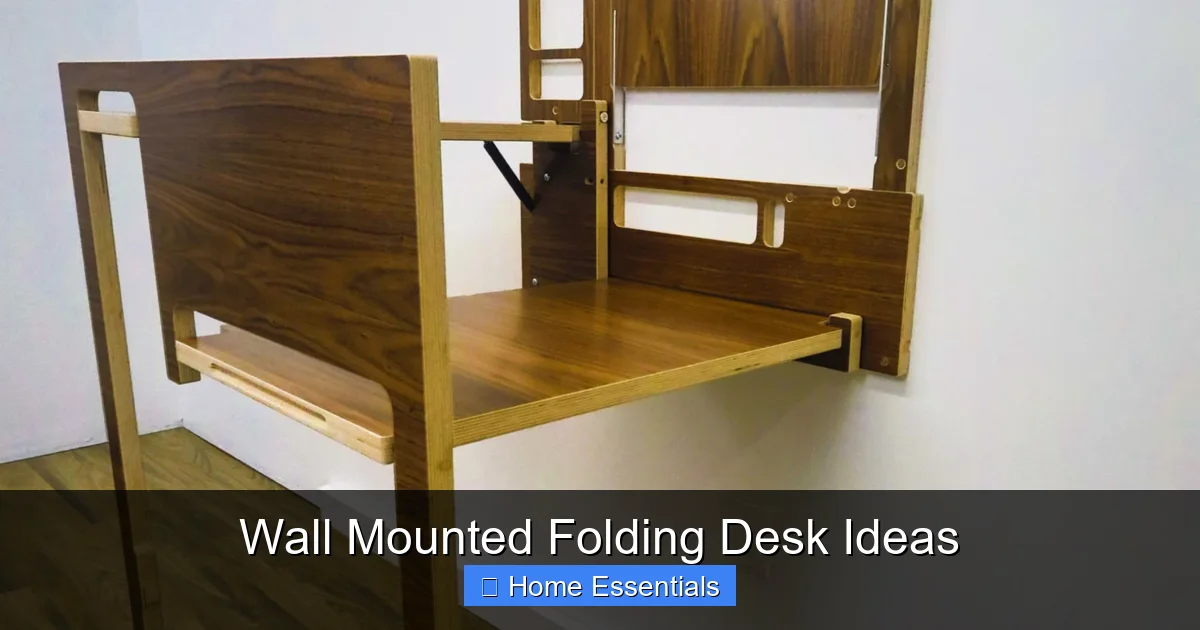
Visual guide about Wall Mounted Folding Desk Ideas
Image source: theawesomer.com
Drop-Leaf Models
These are the classic, simplest form. They feature a desktop attached to a hinge on one side (or sometimes two) that folds down flat against the wall. Support is typically provided by a leg or bracket that swings out from the bottom or folds down from the desktop itself. They are incredibly space-efficient when folded and often the most affordable. However, they usually require a bit of floor space in front for the support leg to deploy, so they’re best for spots where you have a clear area in front of the wall.
Swing-Arm and Pivot Desks
These are the sleek, modern cousins. The desk surface is attached to a robust arm that swings out from the wall, often with a smooth, fluid motion. The entire unit—desktop and support arm—folds parallel to the wall when not in use. This design is fantastic because it doesn’t require a leg to swing down into the room; the support is integrated into the arm. They look incredibly clean when folded and are perfect for very narrow spaces where a drop-leaf leg might protrude into a walkway.
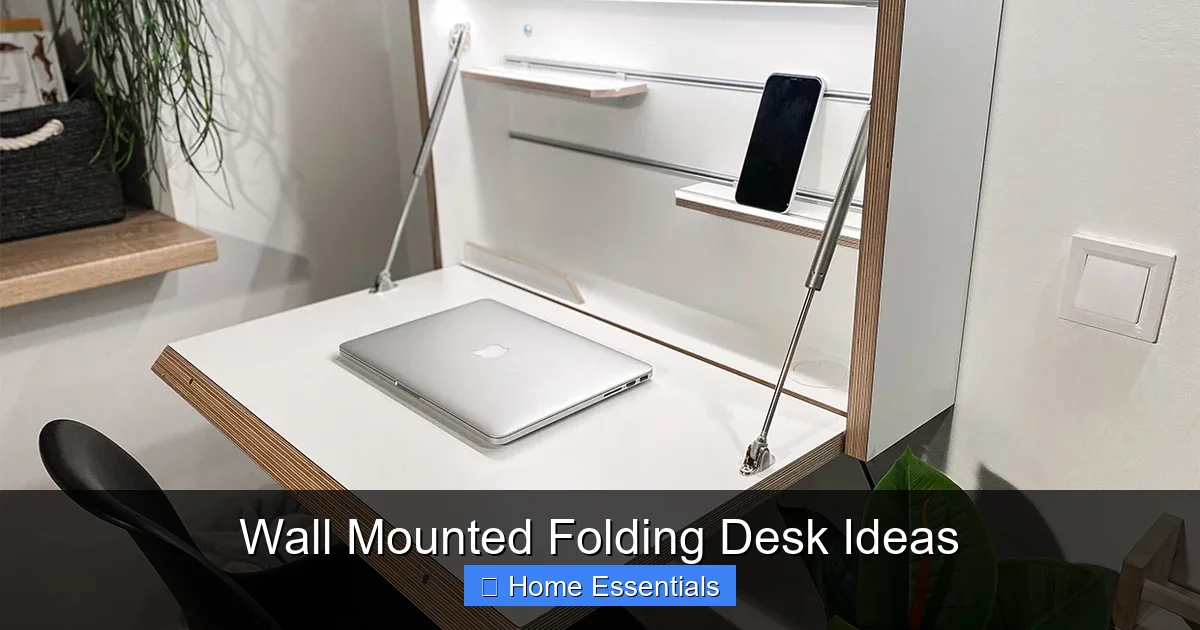
Built-in Shelving Combo Units
This is where functionality meets storage. These units combine a folding desk with a full shelf or cabinet system above and/or below the work surface. When the desk is folded up, it often becomes a door or panel for the shelving unit, creating a seamless, built-in look. These are ideal for creating a dedicated office nook in a living room or bedroom, as they provide abundant storage for books, decor, and supplies while still disappearing completely when not in use.
Installation Made Easy: What You Need to Know
The idea of installing something onto your wall can be daunting, but don’t worry. Most wall-mounted folding desks are designed with the DIYer in mind. A little knowledge goes a long way in ensuring your desk is safe, sturdy, and perfectly positioned.
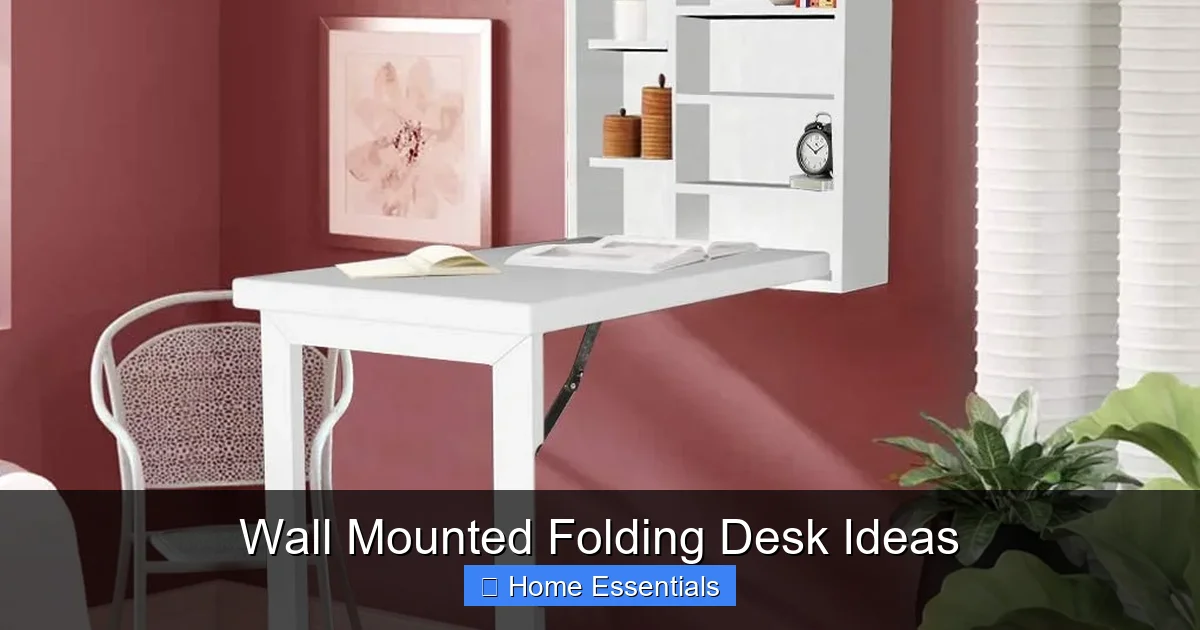
Visual guide about Wall Mounted Folding Desk Ideas
Image source: storables.com
Wall Types and Mounting Considerations
This is the most critical step. Your wall must be able to support the weight of the desk plus whatever you put on it. Solid walls like concrete or brick are the strongest. Stud walls (the most common in modern homes) require you to mount the desk’s brackets directly into the wooden or metal studs behind the drywall. Use a stud finder—this is non-negotiable for safety. If you cannot locate studs at your desired height, you’ll need heavy-duty wall anchors rated for the desk’s weight capacity. Never guess; always mount into solid support. For tile or glass walls, consult a professional, as special fixings are required.
Tools and Hardware Requirements
Typically, your desk will come with the specific bolts and screws needed for the frame. However, you’ll need your own toolkit. essentials include: a stud finder, a drill/driver with appropriate bits (often Phillips and sometimes hex), a level (crucial for a flat surface), a tape measure, a pencil for marking, and possibly a hammer for anchors. Always read the manufacturer’s instructions first, as they will specify the exact hardware needed and any special requirements.
DIY vs. Professional Installation
For the average homeowner with basic tools and a comfortable understanding of their home’s wall structure, DIY installation is very achievable for most standard models. It’s a satisfying project that can be completed in an hour or two. However, consider calling a professional if: your wall is an unusual material (e.g., old plaster, stone), the desk is exceptionally large or heavy (like a combo unit with lots of storage), you are uncomfortable working at height or with power tools, or your local building codes have specific requirements for wall-mounted furniture. The cost of a pro is small insurance for a job done safely and correctly.
Creative Design Ideas for Every Room
Now for the fun part! Where can you put one of these desks, and how can you style it? Here are some inspiring ideas to spark your creativity.
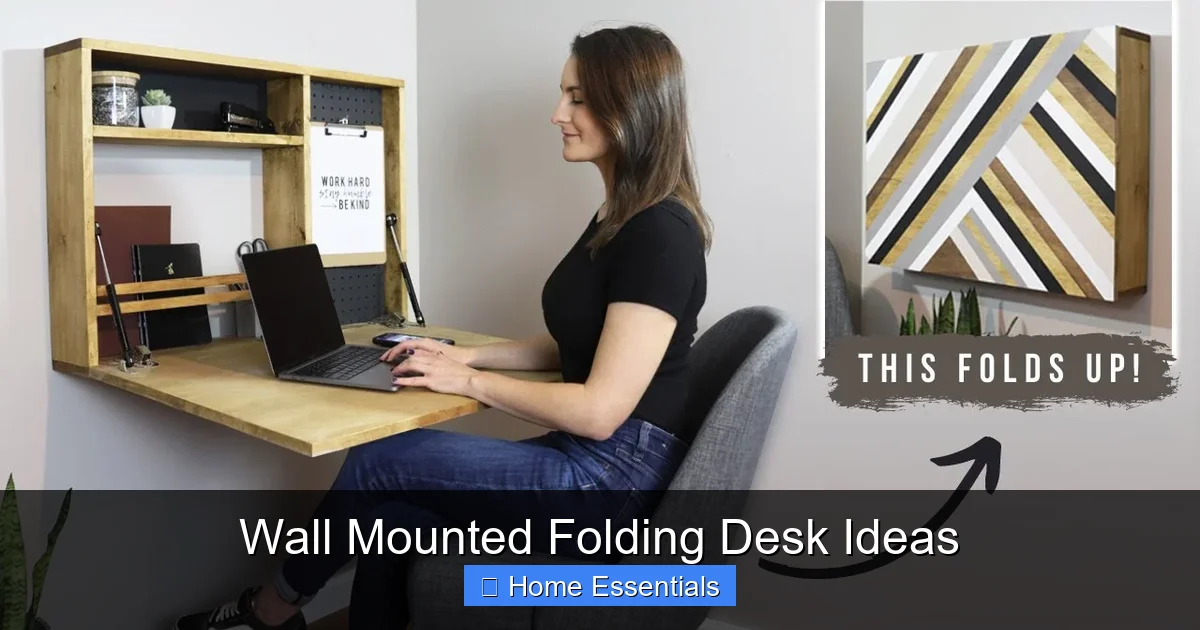
Visual guide about Wall Mounted Folding Desk Ideas
Image source: i.ytimg.com
The Living Room Command Center
In a small open-plan living area, a wall-mounted folding desk can tuck neatly beside the TV or between two windows. Choose a design with integrated shelves above to store media devices, books, and display items. When folded up, it becomes a subtle part of the wall decor. This creates a dedicated spot for paying bills, planning meals, or quickly answering work emails without a bulky desk dominating the social space. Pair it with a small stool that slides under the shelving when not in use.
Bedroom Productivity Nook
Not everyone wants a full desk in their sanctuary. A folding desk mounted at a comfortable height on a bedroom wall—perhaps behind the door or in an awkward corner—creates the perfect tiny office. Opt for a sleek, minimalist design in a finish that matches your other furniture. Add a small wall-mounted lamp above it for task lighting. When you’re off the clock, fold it up, and your bedroom returns to a peaceful retreat. This is ideal for students or anyone who needs a private spot for late-night work.
Kitchen or Dining Area Workstation
This is a brilliant solution for homes without a separate dining room. Mount a sturdy folding desk on a wall in your kitchen or dining area. It can serve as a spot for recipe books, tablet viewing while cooking, or a quick breakfast nook. When dinner guests arrive, fold it up and move the chairs to the main table. Look for models with easy-to-clean surfaces like laminate or metal, and consider one with a small integrated shelf for storing cooking utensils or a knife block. For more space-saving kitchen gadget inspiration, you might explore affordable immersion blender gift ideas, which offer another layer of compact functionality in the heart of the home.
Choosing the Right Wall-Mounted Folding Desk for You
With so many options, how do you pick the perfect one? Focus on these key factors.
Size and Weight Capacity
Measure your available wall space meticulously—both the width you have and the height from the floor to any obstructions above. Consider the unfolded depth you need for your monitor, keyboard, and writing space (typically 20-30 inches is comfortable). Also, check the manufacturer’s stated weight capacity. This isn’t just about your body weight; it’s the combined weight of your computer, monitor, books, and any other items. Err on the side of caution and choose a model with a higher capacity than you think you’ll need.
Material and Aesthetic Choices
Desks come in a range of materials. Solid wood offers beauty and durability but is heavier and more expensive. Engineered wood/MDF with a laminate finish is very common, affordable, and comes in countless colors and textures (from wood grain to high-gloss white). Metal frames with wood or composite tops provide an industrial, sturdy feel. Think about the room’s existing decor. A warm oak finish suits a traditional study, while a matte black metal frame might be perfect for a modern loft.
Budget-Friendly vs. Premium Options
You can find excellent folding desks from $100 to $500+. Budget models often have simpler mechanisms (like a basic drop-leaf with a leg) and are made from MDF. They are perfectly functional for light use. Premium models feature smoother gas-piston or counterbalanced swing arms, higher-quality hardwoods or steel, integrated cable management trays, and more storage configurations. Determine your primary use—occasional paperwork versus full-time remote work—and invest accordingly. Remember, a well-made desk is a long-term investment in your productivity and comfort.
Maintenance and Longevity Tips
Your folding desk is a piece of moving machinery. A little care will keep it functioning smoothly for years.
Regular Cleaning and Care
Dust the desktop and mechanisms regularly with a soft, dry cloth. For spills or sticky residues, use a damp cloth with a mild cleaner, avoiding harsh abrasives that can damage laminates or finishes. Pay special attention to the hinges, pivots, and any moving joints. Occasionally wipe these areas down and ensure no debris (like paper clips or crumbs) is jamming the mechanism.
Inspecting Hardware and Stability
Every 6-12 months, do a quick check. Ensure all mounting screws and bolts are tight. Vibration and daily use can slowly loosen them. Gently test the folding action—does it move smoothly without grinding or excessive wobble? If it feels stiff, a tiny drop of silicone lubricant on the pivot points can help (avoid oil-based lubricants that can attract dust). Also, check that the desk is still level and securely anchored to the wall.
Adapting to Changing Needs
The beauty of these desks is their adaptability. As your needs change, you can often modify them. Add small magnetic or adhesive organizers to the underside of the desktop for pens and notes. Use stackable, shallow bins on the shelves. If you find you need more surface area, some models allow you to purchase additional side extensions. Think of your folding desk as a flexible foundation you can build upon over time.
Conclusion: Your Space, Your Solution
Wall mounted folding desk ideas represent more than just a piece of furniture; they represent a mindset of intentional, flexible living. In a world where our homes must do more with less, these desks offer a brilliant compromise: a full, functional workspace when you need it, and complete freedom of space when you don’t. They cater to the remote worker, the student, the hobbyist, and the small-space dweller with equal grace. From the simplicity of a drop-leaf model to the integrated storage of a combo unit, there’s a configuration that will fit your specific wall, your style, and your budget. The installation, while requiring care, is a manageable project that yields immense rewards. By choosing a folding wall desk, you’re not just buying a table; you’re investing in a more organized, adaptable, and spacious-feeling home. So, measure that awkward corner, envision your perfect nook, and take the first step toward transforming your space. Your future, less-cluttered self will thank you. And if you’re looking for the perfect companion gift for someone setting up their first small apartment, a folding desk paired with other compact, multifunctional tools—like those found in portable immersion blender gift ideas or professional immersion blender gift ideas—makes for an incredibly thoughtful and practical housewarming package.
Frequently Asked Questions
How much weight can a wall-mounted folding desk typically hold?
Weight capacities vary widely by model and installation quality. Most standard residential desks are rated for 50-100 lbs, while heavy-duty commercial models can hold 150 lbs or more. Always check the manufacturer’s specifications and ensure you mount it into wall studs or with appropriate heavy-duty anchors to achieve the stated capacity.
Can I install a folding desk on drywall without studs?
While it’s technically possible using high-capacity toggle bolts or other heavy-duty anchors, it is strongly discouraged for anything beyond very light loads. For safety and stability, the mounting brackets should always be secured into the wooden or metal studs behind the drywall. Use a reliable stud finder to locate them accurately.
What is the best material for a folding desk?
There is no single “best” material; it depends on your needs and budget. Solid wood is durable and attractive but heavy. Laminate over MDF is affordable, easy to clean, and comes in many finishes. Steel frames offer superior strength and a modern look. For a child’s room or high-moisture area like a kitchen, consider a moisture-resistant laminate or metal surface.
How do I manage cables with a wall-mounted desk?
Look for desks that include a built-in cable management tray or grommet holes. You can also add adhesive cable clips to the underside of the desktop or the wall to route cords neatly. A simple fabric cable sleeve can bundle multiple wires together, keeping your folded desktop area tidy and clutter-free.
Can a wall-mounted folding desk be used as a standing desk?
Some models are designed with height adjustability, either via a crank or a pneumatic gas lift, allowing you to switch between sitting and standing. However, many fixed-height models are installed at a single, seated height. If standing is a priority, you must specifically search for “height-adjustable wall-mounted desks” and verify the adjustment mechanism and range.
Are folding desks safe for children to use?
They can be, with precautions. Choose a model with a smooth, controlled folding mechanism (avoid those that drop suddenly) and a weight capacity well above the expected load. Install it at a height appropriate for the child. Teach them to always lower or raise the desk slowly and never to climb or hang on it. Supervision is recommended for younger children.