What Is a Phase 1 Desk Study
A Phase 1 Desk Study is a non-intrusive environmental assessment conducted before buying, selling, or developing a property. Its primary goal is to identify any potential contamination or environmental risks on or near the land, protecting you from future financial and legal liability. It involves detailed research of historical records, maps, and databases, followed by a visual inspection of the site and surrounding area.
So, you’re buying a house or a piece of land. You’ve arranged the mortgage, instructed a solicitor, and booked a standard building survey. But have you considered what might be lurking in the soil beneath your future home? This is where a Phase 1 Desk Study comes in. It sounds technical, maybe even a bit daunting, but it’s one of the most important due diligence checks you can make, especially if you’re purchasing a commercial property or a site for development. Think of it as an environmental detective story, all done from a desk (and a walk around the site), piecing together the past to protect your future.
In simple terms, a Phase 1 Desk Study is a preliminary environmental assessment. Its job is to answer one critical question: Is there a reasonable possibility that the land is contaminated? It does this without drilling holes or taking samples—that comes later if needed. Instead, it’s a deep dive into historical and current records. You might wonder why this matters for a residential home. Well, a garden could sit on top of an old landfill, or a former garage site might have hidden fuel tanks. For a business, the stakes are even higher, with potential for massive cleanup costs and legal action. This study is your first and best line of defence.
Key Takeaways
- It’s a Risk Identification Tool: A Phase 1 Desk Study is not a full cleanup or detailed investigation. It’s the first, essential step to identify if there are any red flags—like former gas works, dry cleaners, or fuel spills—that could mean contaminated land.
- It Follows a Strict Standard: In the UK and many other countries, it must adhere to the “BSI PAS 128:2014” standard, ensuring a consistent, thorough, and legally recognized process.
- It’s Often a Legal Requirement: Lenders, developers, and solicitors routinely require a Phase 1 study as part of their due diligence for commercial property and sometimes residential transactions, especially for redevelopment.
- It Can Trigger a Phase 2: If the desk study identifies potential risks, it will recommend a more invasive Phase 2 Intrusive Investigation, which involves soil and groundwater sampling.
- It Provides Legal Defence: Completing a Phase 1 study is a key part of demonstrating “appropriate enquiries” under environmental law, offering a defence against future liability for contamination you didn’t cause.
- It’s About the Past and Present: The study meticulously researches the site’s history (e.g., old maps, trade directories) and current uses to assess contamination pathways.
- It’s a Snapshot in Time: The report is valid for a specific period (often 12 months) as environmental regulations and knowledge evolve. An outdated study may not be accepted by a lender or buyer.
[FEATURED_IMAGE_PLACEHOLDER]
📑 Table of Contents
- The Core Purpose: Why You Absolutely Need One
- What Exactly Happens During a Phase 1 Desk Study?
- Understanding the Report: What You’re Actually Reading
- Common Findings and What They Mean for You
- What Happens Next? The Phase 2 Intrusive Investigation
- Practical Tips for Homebuyers, Sellers, and Developers
- The Bottom Line: Your Essential Environmental Due Diligence
The Core Purpose: Why You Absolutely Need One
Let’s be clear: a Phase 1 Desk Study isn’t about scaring you. It’s about providing certainty and managing risk. In the world of property, “caveat emptor” or “buyer beware” still applies strongly to environmental issues. If you buy land that’s contaminated, you could be held liable for the immense cost of remediation, even if you didn’t cause the pollution. Lenders are acutely aware of this risk. They will often refuse to grant a mortgage or will demand a significant price reduction if the environmental status is unclear. A clean Phase 1 report, or one that leads to a clear path forward (like a Phase 2 that shows no significant issues), provides peace of mind and satisfies the requirements of banks, investors, and local authorities.
The Legal Shield: Part 1A of the Environmental Protection Act 1990
In the UK, the legal framework is the Environmental Protection Act 1990 (EPA 1990). It defines contaminated land and sets out who is responsible for cleaning it up. The key defence for a new owner or developer is proving they did not cause or knowingly permit the contamination and that they carried out “appropriate enquiries” before acquiring the land. A Phase 1 Desk Study, conducted to the PAS 128 standard, is the gold-standard evidence of those appropriate enquiries. It shows you took a reasonable, professional step to uncover any hidden dangers. Without it, you have little defence if the Environment Agency or a local authority later designates your land as contaminated.
Protecting Your Investment and Future Plans
Beyond the legalities, it’s about your investment and your plans. Imagine buying a beautiful old warehouse to convert into flats, only to discover during renovation that the ground is saturated with solvents from a previous manufacturing use. The project would halt, costs would skyrocket, and your dream could turn into a financial nightmare. The Phase 1 study would have flagged that historical use as a potential risk, allowing you to walk away, negotiate the price, or plan for a Phase 2 investigation upfront. For a homeowner, it’s about ensuring your family’s health and your property’s long-term value isn’t undermined by unseen hazards like asbestos in soil or ground gas from a nearby landfill.
What Exactly Happens During a Phase 1 Desk Study?
The process is methodical and follows a clear, staged approach. It’s a combination of archival research and a physical reconnaissance mission. The “desk” part involves poring over old maps, trade directories, and environmental databases. The “study” part culminates in a site walkover. A qualified environmental consultant coordinates all of this. Here’s a breakdown of the typical stages, all leading to the final report.
Visual guide about What Is a Phase 1 Desk Study
Image source: groundconsultants.co.uk
Stage 1: The Detailed Desk-Based Research
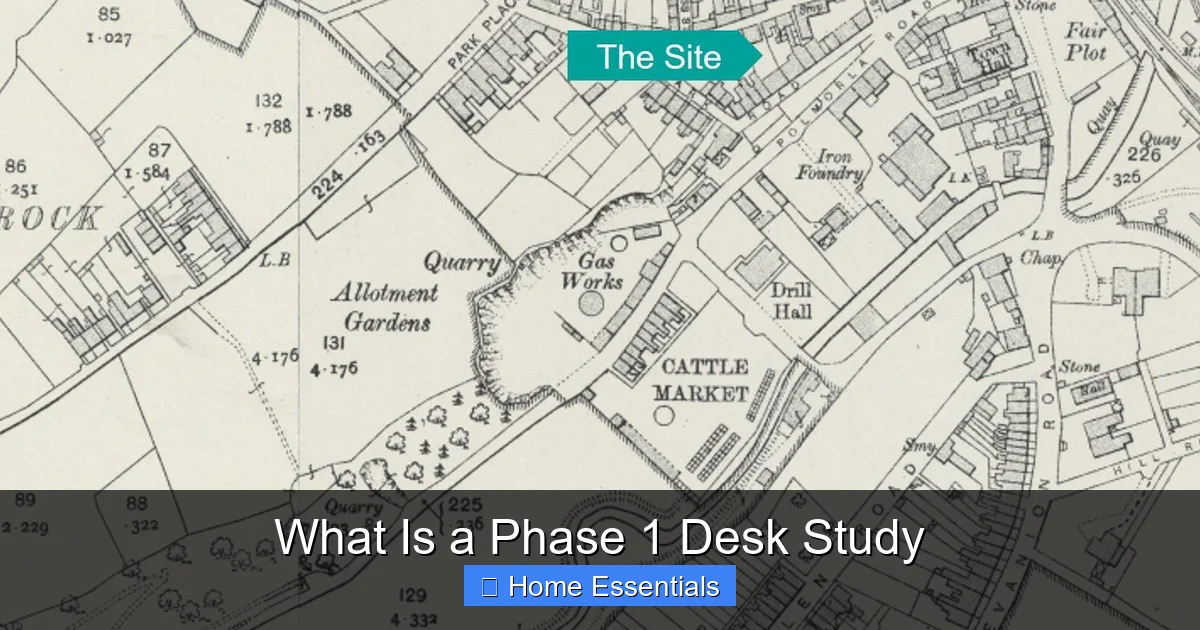
This is the heart of the investigation. The consultant will gather and analyse a wealth of historical information. They’ll look at old Ordnance Survey maps from the past 150+ years to see how the site and its immediate neighbours have changed. Was it ever a farm with pesticide storage? A gasworks? A garage with underground fuel tanks? A factory? They’ll also search historical trade directories to identify past businesses operating on the site. Furthermore, they consult specialised environmental databases, like the UK’s “GeoIndex” or “National Underground Asset Register,” which record known contamination incidents, landfill sites, and groundwater abstractions. This research builds a timeline of past and present land uses, identifying any “contaminative uses” that could have left a legacy.
Stage 2: The Site Walkover (Reconnaissance Visit)
You can’t do a proper study without seeing the place. The consultant will visit the site to conduct a visual inspection. They’re looking for evidence that supports or contradicts the historical research. They’ll note the current condition and use of the property and surrounding land. Are there any stained patches of ground, unusual smells, dead vegetation, or old, rusty containers? They’ll check for evidence of underground storage tanks (like old filler caps or vent pipes), asbestos-containing materials on the site, and the condition of any existing buildings. They’ll also assess the surrounding area—what’s next door? Is there a busy road with potential for hydrocarbon fallout? Is there a river that could carry contamination? This visit is crucial for verifying records and spotting obvious, present-day risks.
Stage 3: The Report Compilation and Risk Assessment
All the information is synthesised into the final Phase 1 Desk Study Report. This isn’t just a dossier of old maps; it’s a professional assessment. The consultant will identify “potential contaminant sources” (e.g., a former coal store), “pathways” (e.g., contaminated soil leaching into groundwater), and “receptors” (e.g., future site users, nearby gardens, groundwater). This is known as a Source-Pathway-Receptor (SPR) assessment. If a complete SPR linkage is possible—meaning a pollutant could get from its source to a person or the environment—then the site is considered “contaminated” for the purposes of the report. The conclusion will be one of three things: 1) No further action required, 2) Potential for contamination – Phase 2 Intrusive Investigation recommended, or 3) Contamination known or highly likely – immediate Phase 2 required.
Understanding the Report: What You’re Actually Reading
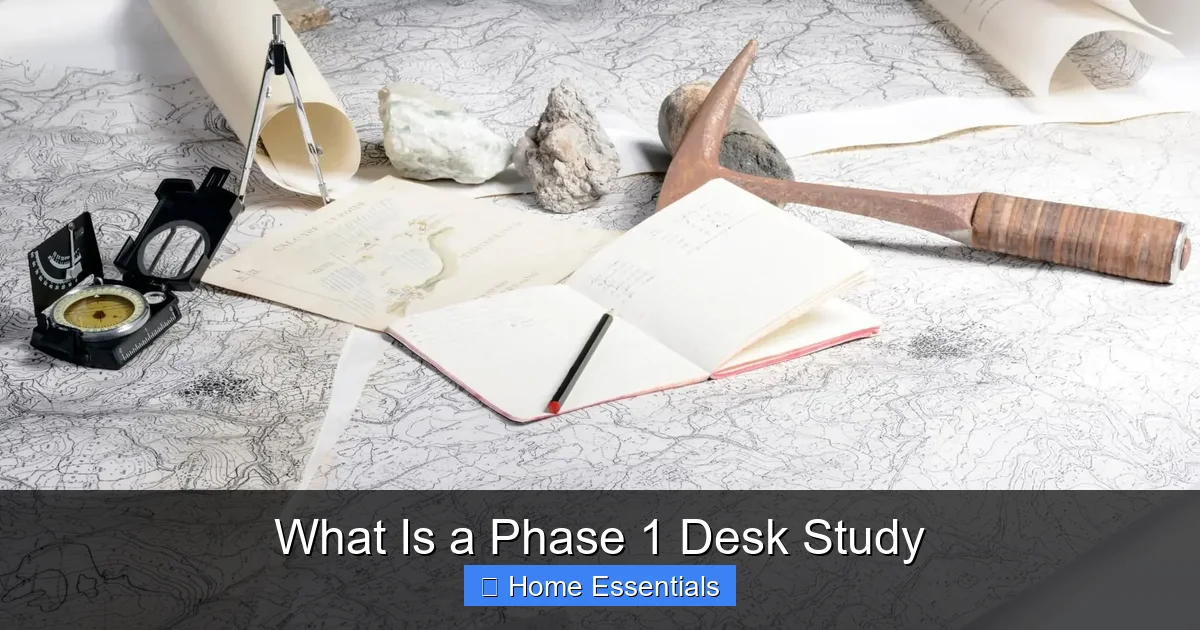
When you get your hands on the final document, it can look intimidating. It’s often 50-100+ pages of maps, tables, and technical jargon. Don’t panic. Understanding its structure helps. The report will typically include an executive summary, the historical research, walkover findings, a risk assessment, and clear conclusions with recommendations. The key is to focus on the conclusion and the recommendations section. That’s where you’ll find the plain-English answer to your question: “Is this land clean enough for my plans?”
Visual guide about What Is a Phase 1 Desk Study
Image source: abbeydalegeo.com
The Critical Sections: Executive Summary and Conclusion
Always start with the Executive Summary. This is a 1-2 page overview written for non-experts. It will state the site address, the purpose of the assessment, and the main findings. The Conclusion will explicitly state whether a Phase 2 investigation is recommended and why. If it says “no further action,” that’s fantastic news, but you should still understand the basis for that opinion. If it recommends Phase 2, don’t despair—it’s a standard, expected outcome for many sites with a long history. It simply means “we found a question mark; we need to drill a few holes to get an answer.” The recommendation will often outline what the Phase 2 should target—for example, “investigate for petroleum hydrocarbons beneath the former garage area.”
Decoding the Jargon: Source, Pathway, Receptor
This is the holy trinity of contaminated land assessment. You’ll see it throughout the report. A Source is the contaminant itself, like old fuel in a tank, asbestos in soil, or chemicals in a landfill. A Pathway is how that contaminant could move—through soil, groundwater, dust, or even as gas. A Receptor is who or what could be harmed—future workers on the site, residents in nearby homes, wildlife, or groundwater used for drinking. The consultant’s job is to see if all three connect. If there’s no viable pathway (e.g., the contaminated soil is sealed under a thick concrete slab with no way for gases to enter a building), then the risk might be considered low, even with a source present. This is why a professional assessment is vital.
Common Findings and What They Mean for You
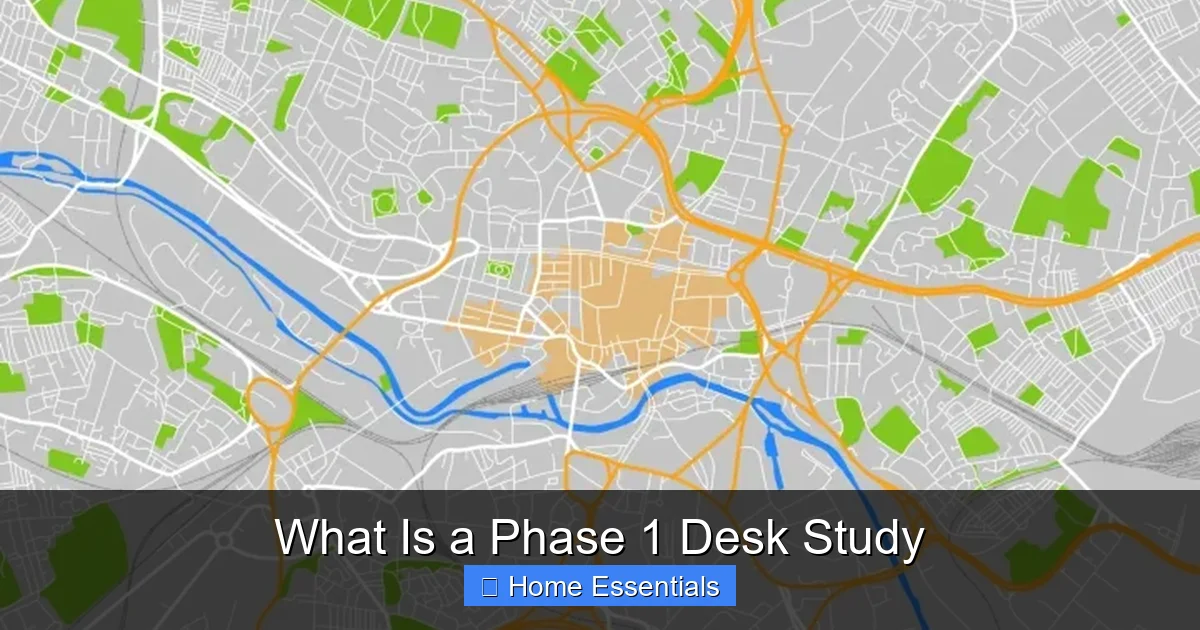
Not all findings are equal. Some are minor notes, while others are major red flags. Understanding the spectrum of common findings helps you gauge the seriousness. A report might list dozens of historical land uses; the key is evaluating their potential impact. A site that was once a farm with a small pesticide store presents a different risk profile than a site that was a metal plating works for 50 years. The consultant weighs the type of contaminant, its likely volume, and its proximity to sensitive receptors.
Visual guide about What Is a Phase 1 Desk Study
Image source: abbeydalegeo.com
Typical “Low-Risk” or Historical Findings
Many sites have a long history. You might see references to agricultural use (pesticides), small coal stores, or old residential properties with coal cellars. These are common and often considered low risk, especially if they are historical and the site has been redeveloped. The report might note them but conclude that the risk is negligible due to the age, the small scale, or the presence of an intact building foundation acting as a barrier. Similarly, the presence of a building with asbestos-containing materials (ACMs) is noted, but the risk is usually managed by the building’s condition—intact, sealed ACMs are a management issue, not necessarily a land contamination issue. The report will distinguish between land contamination and hazardous materials in buildings.
Significant Red Flags: When a Phase 2 is Almost Certain
Certain keywords in the historical research should make you sit up straight. These include: gasworks, landfill, dry cleaner (perc contamination), electroplating/metal finishing, petroleum storage tanks (especially underground), chemical works, or any heavy industrial use. If the site itself or an immediately adjacent neighbour had such a use, a Phase 2 is highly likely. The report will detail these uses and explain the specific contaminants of concern—like polycyclic aromatic hydrocarbons (PAHs) from gasworks, chlorinated solvents from dry cleaners, or heavy metals from industrial processes. The walkover findings also matter. If the consultant sees staining, stressed vegetation, or suspects an underground tank, that’s direct evidence supporting the historical records and strengthening the case for intrusive investigation.
What Happens Next? The Phase 2 Intrusive Investigation
So, your Phase 1 report has recommended a Phase 2. What now? This is the “intrusive” phase. It involves physically investigating the ground. A specialist contractor will drill boreholes or dig trial pits to examine the soil and, if relevant, install groundwater monitoring wells. They will take physical samples (soil, water, soil gas) from specific depths and locations, targeting the areas of concern identified in the Phase 1. These samples are sent to a UKAS-accredited laboratory for chemical analysis to check for the specific contaminants flagged earlier. The results are compared against “trigger concentrations” or screening values set by regulators (like the CL:AIRE “Category 1 Screening Levels”).
The Phase 2 report will state whether contamination is present and, if so, at what concentrations and depths. It might confirm the site is clean (a “clearance” report), identify some low-level contamination that can be managed in situ, or reveal significant pollution requiring a full remediation plan (Phase 3). This report is what you take to your lender to secure financing and to your solicitor to satisfy the sale contract. It transforms the unknowns identified in the Phase 1 into hard data and a clear path to either a clean bill of health or a defined cleanup strategy. The cost of a Phase 2 varies significantly based on the number of boreholes and analyses required but is an essential investment in de-risking your project.
Practical Tips for Homebuyers, Sellers, and Developers
Navigating environmental assessments can be smooth if you’re prepared. Whether you’re a first-time buyer, a seller looking to expedite a sale, or a developer planning a major project, here’s how to handle the Phase 1 Desk Study effectively.
For the Buyer: Making the Report Work for You
If you’re purchasing, a Phase 1 is a powerful tool. Don’t just file it away. Read the conclusion carefully. If it’s clean, use it to reassure your lender and as a selling point later. If it recommends Phase 2, you have options. You can use the report to negotiate the purchase price down to cover the cost of the next investigation and any potential cleanup. You can make the completion of the sale conditional on a satisfactory Phase 2 (this is common and advised). Or, if the risk seems too high, you can walk away without penalty, having done your due diligence. Always commission the Phase 1 through a reputable, independent environmental consultancy, not through your estate agent or the vendor’s chosen firm, to ensure impartiality.
For the Seller: Proactive Disclosure and Smooth Transactions
If you’re selling a commercial property or a development site, having a recent, clean Phase 1 Desk Study is a major advantage. It speeds up the conveyancing process, builds buyer confidence, and can prevent a sale from falling through at the last minute due to lender concerns. If you have an old study, consider commissioning a new one before putting the property on the market. It’s a cost of doing business that can pay for itself in a smoother, faster sale. If the Phase 1 identifies potential issues, being upfront about them and having a Phase 2 already commissioned (or even completed) demonstrates transparency and good faith, making you a more attractive seller than one who hides problems.
For the Developer: The Essential First Step in the Planning Journey
For a developer, a Phase 1 is non-negotiable. It’s typically one of the first tasks after acquiring a site, often even before final purchase. Local planning authorities will expect to see evidence of contaminated land assessment as part of a planning application, especially for sensitive end-uses like housing or schools. The Phase 1 informs the entire project’s budget and programme. A significant contamination finding can alter foundation designs, require special waste disposal, and add months to the schedule. Integrating the Phase 1 early allows for “risk-based” design, where you can adapt your plans to avoid the most contaminated areas, potentially saving vast sums. It’s the foundation of responsible and financially viable development.
A Note on Residential Properties: When Is It Needed?
While most common for commercial transactions, a Phase 1 can be prudent for residential buyers too, particularly for properties with specific histories. This includes former garages, petrol stations, industrial units, or properties with large gardens in old industrial towns. It’s also wise if you plan major excavations for an extension, basement, or swimming pool, as this could disturb previously unknown contaminants. While not always a lender requirement for a standard house, the cost of a Phase 1 (typically £500-£1500) is minimal compared to the potential cost of dealing with contamination discovered during renovation. It’s a classic case of “better safe than sorry.”
The Bottom Line: Your Essential Environmental Due Diligence
A Phase 1 Desk Study is more than just a box-ticking exercise. It’s a fundamental component of smart property ownership and development. It transforms the invisible risks buried in the ground into a clear, documented understanding. For a buyer, it’s a shield against inheriting a multi-million-pound problem. For a seller, it’s a mark of credibility and a facilitator of a smooth sale. For a developer, it’s the first and most crucial input into the project’s feasibility, design, and budget. Skipping this step is like buying a car without checking its service history—you might get lucky, but you have no real idea of the hidden problems waiting to surface. By commissioning a Phase 1 Desk Study to the appropriate standard, you are not just complying with legal expectations; you are making a prudent, informed decision that protects your financial investment and your peace of mind for years to come.
Remember, knowledge is power in property transactions. Understanding the environmental story of your land empowers you to negotiate effectively, plan accurately, and sleep soundly, knowing that the ground beneath your feet is as safe and secure as the structure above it.
Frequently Asked Questions
Is a Phase 1 Desk Study legally required?
Not for every single property purchase. However, it is a legal requirement under Part 2A of the Environmental Protection Act 1990 to carry out “appropriate enquiries” to avoid liability for contaminated land. For commercial transactions and developments, lenders and planning authorities virtually always mandate it. For residential purchases, it’s not compulsory but is highly recommended for properties with a high-risk history.
How much does a Phase 1 Desk Study cost?
The cost varies based on the site’s size, complexity, and location. For a standard commercial unit or small development site, you can expect to pay between £500 and £2,000 + VAT. Larger, more complex industrial sites with extensive histories will cost more. This fee covers the research, the site visit, report compilation, and the consultant’s professional opinion.
How long is a Phase 1 Desk Study valid for?
There is no fixed legal expiry date. However, the report is a “snapshot” of information available at the time of writing. Environmental regulations, data sources, and our understanding of contaminants evolve. Most lenders, solicitors, and planning authorities consider a report to be “current” for 12 months. After that, they will typically require an updated review to confirm no new information has come to light.
What’s the difference between a Phase 1 and a Phase 2?
A Phase 1 Desk Study is non-intrusive and based on research and a visual inspection. Its goal is to identify *potential* risks. A Phase 2 Intrusive Investigation is physical—it involves drilling, digging, and taking soil/water samples for laboratory analysis. Its goal is to *quantify* and confirm the presence, nature, and extent of any contamination identified in Phase 1. Phase 2 provides the hard data needed to decide on cleanup (Phase 3).
Can a Phase 1 Desk Study guarantee the land is completely clean?
No. Because it is non-intrusive, it cannot physically see beneath the surface. It provides a *reasonable* assessment of risk based on available records. A “no further action” conclusion means no significant risks were identified that warrant intrusive investigation. It does not constitute a guarantee against all future contamination discoveries, but it is the strongest possible defence against liability for pre-existing pollution.
Who should commission the Phase 1 Desk Study?
The party with the most to lose—typically the purchaser or developer—should commission it directly through an independent, qualified environmental consultancy. This ensures the report is unbiased and for your benefit. While a vendor might have an old study, commissioning your own fresh assessment puts you in control and ensures the investigation meets your specific needs and lender’s requirements.