What Is the Standard Height of a Study Desk
The standard height for a study desk is typically between 28 and 30 inches (71-76 cm) for adults, but true ergonomic comfort depends on your individual body measurements and chair height. This height range works for most people when paired with an adjustable chair, but many benefit from an adjustable-height desk to prevent strain. Ultimately, the perfect desk height allows your elbows to rest at a 90-degree angle with your feet flat on the floor or on a footrest.
Key Takeaways
- Standard Range: The common fixed desk height for adults is 28-30 inches (71-76 cm), designed for an average seated height.
- Ergonomics First: Your ideal desk height is determined by your elbow height when seated, not a one-size-fits-all number.
- Adjustable is Optimal: Sit-stand or height-adjustable desks offer the best solution for long-term health and comfort throughout the day.
- Chair Partnership: Desk height must work in tandem with your chair height; you may need a footrest if your chair is high.
- Special Populations: Children, very tall, or very short individuals will almost always need non-standard desk heights for proper posture.
- Workspace Harmony: Proper desk height affects monitor placement, keyboard angle, and overall posture, reducing neck and back pain.
- Lighting & Clutter: A well-lit, clean desk (consider a smart light bulb for task lighting and a microfiber cloth for dusting) complements an ergonomic setup.
📑 Table of Contents
- Why Desk Height Isn’t a “One-Size-Fits-All” Matter
- The Industry Standard: Where the 28-30 Inch Number Comes From
- Ergonomics 101: How to Calculate *Your* Perfect Desk Height
- Adjustable Height Desks: The Gold Standard Solution
- Special Considerations: Not Everyone Fits the “Average”
- It’s Not Just the Desk: The Ecosystem of Ergonomic Setup
- Making Your Decision: Buying the Right Desk for You
- Conclusion: Your Health is Worth the Extra Inch
Why Desk Height Isn’t a “One-Size-Fits-All” Matter
You’ve probably sat at a desk that felt just right. Your shoulders relaxed, your forearms parallel to the floor, and your eyes comfortably at screen level. Then, there was the other one—the one that left you with a stiff neck, aching shoulders, or that numb tingling in your wrists by 3 PM. The difference often comes down to a few inches. The question “What is the standard height of a study desk?” seems simple, but the real answer is deeply personal. It’s about your body, your chair, and how you work.
We spend countless hours at our desks, whether for remote work, online study, or personal projects. Yet, many of us accept whatever height our furniture offers without questioning if it’s actually right for us. This can lead to chronic discomfort, repetitive strain injuries, and a serious drop in productivity. Understanding the standard, and more importantly, how to customize it for your own ergonomics, is one of the easiest and most impactful upgrades you can make to your home office or study nook. Let’s break it down from the factory standard to the perfect, personalized fit.
The Industry Standard: Where the 28-30 Inch Number Comes From
If you walk into any big-box furniture store or browse online for a “standard desk,” you’ll see heights listed as 28″, 29″, or 30″. This range has become the de facto standard in North America and many other regions. But why?
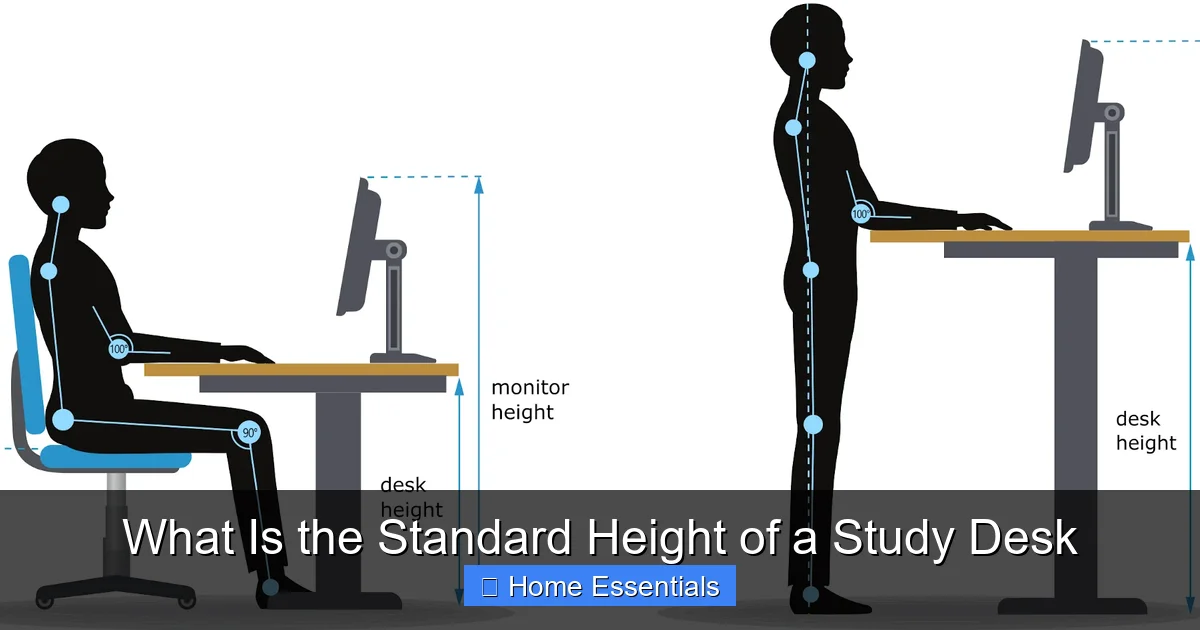
Visual guide about What Is the Standard Height of a Study Desk
Image source: inchcalculator.com
The Origins of the Standard
This measurement is largely based on anthropometric data—the study of human body measurements—from the mid-20th century. It was designed to fit the “average” seated adult male from that era, with an average seated elbow height. Manufacturing simplicity also plays a huge role. It’s cheaper to mass-produce desks at a few fixed heights than to offer a wide range of sizes. The standard desk height is typically designed to be used with a standard task chair, which usually has a seat height adjustment range of about 16″ to 21″. The idea is that you adjust the chair to fit the desk, not the other way around.
Global Variations
It’s important to note that standards can vary. In many parts of Europe and Asia, the common desk height is slightly lower, often around 27-28 inches (68-71 cm). This is because the average body stature in those populations can be different, and cultural preferences for posture (e.g., a more upright seated position) can influence design. If you’re importing furniture, always double-check the dimensions.
Ergonomics 101: How to Calculate *Your* Perfect Desk Height
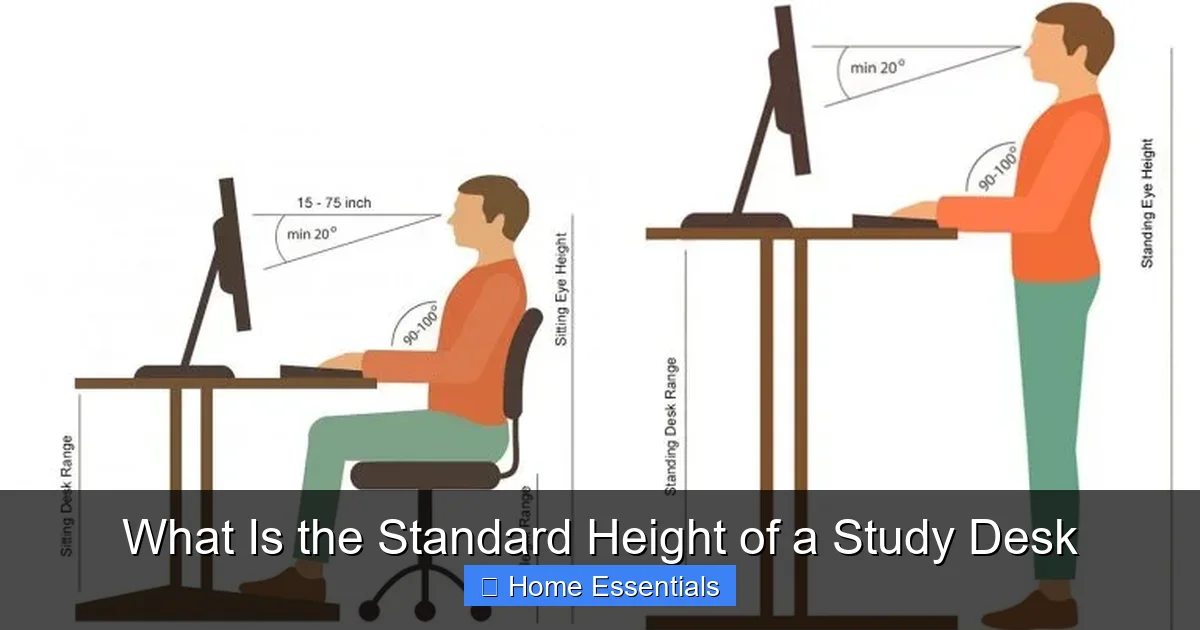
Here’s the golden rule: your desk height should allow your elbows to be at a 90-110 degree angle when your forearms are resting on the desk surface, with your shoulders relaxed and down. Your feet should be flat on the floor or on a footrest. The standard desk height is a starting point, but your body is the final authority.

Visual guide about What Is the Standard Height of a Study Desk
Image source: ueeshop.ly200-cdn.com
The Simple Measurement Technique
You don’t need fancy tools. Follow these steps:
- Sit in your chair: Adjust it so your knees are bent at roughly 90 degrees and your feet are flat.
- Let your arms hang naturally: Relax your shoulders and let your forearms dangle straight down.
- Measure from the floor to the underside of your forearm: This is your ideal desk height. The desktop should be at or just slightly below this point. It’s often 1-2 inches lower than your elbow height to allow your forearms to rest comfortably on the surface without your shoulders hunching up.
For most people, this personal calculation will land somewhere between 26 and 32 inches. If your calculated height is significantly below 28″ or above 30″, the standard desk will force you into a poor posture—either hunching over or raising your shoulders.
Adjustable Height Desks: The Gold Standard Solution
Given the variability in human body types, the best investment for long-term health is a desk with an adjustable height. These come in two main forms: manual crank desks and electric (motorized) desks.
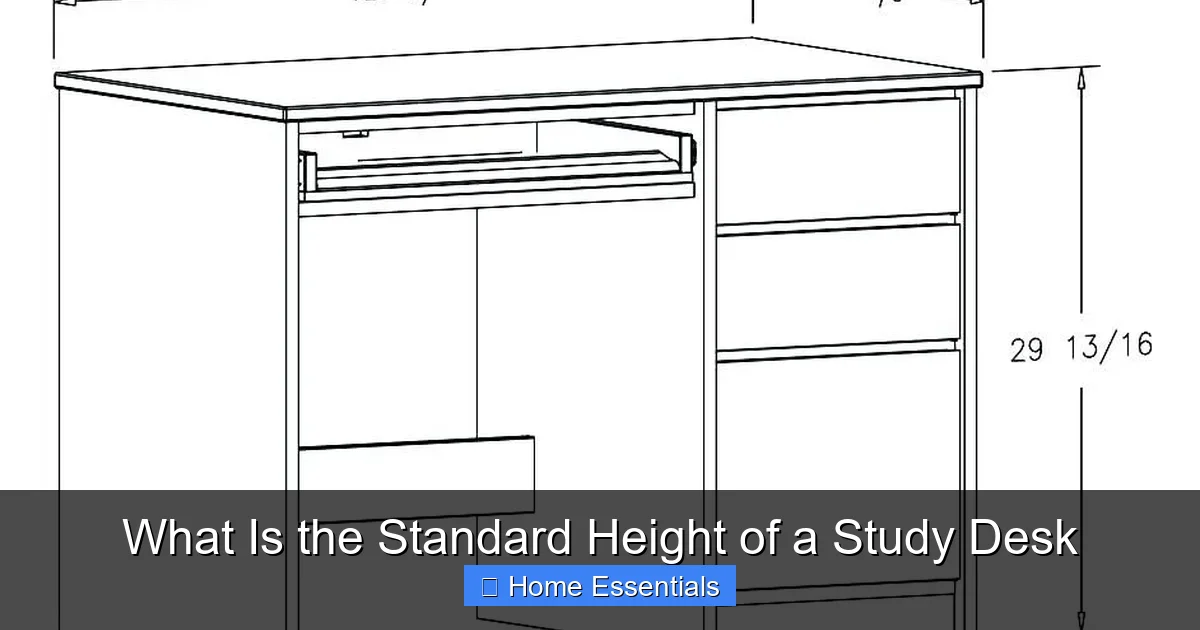
Visual guide about What Is the Standard Height of a Study Desk
Image source: i.pinimg.com
Benefits of Going Adjustable
An adjustable desk isn’t just for standing. Its primary benefit is the ability to fine-tune your seated height to match your exact elbow measurement. Furthermore, it allows you to alternate between sitting and standing throughout the day, which is a major ergonomic recommendation. Prolonged sitting is linked to numerous health issues, and a sit-stand desk makes it effortless to switch positions, improving circulation, reducing back pressure, and boosting energy levels. You can set the perfect seated height for deep-focus work and raise it for a standing video call or to combat an afternoon slump.
Choosing an Adjustable Desk
Look for a desk with a broad height range (e.g., 22″ to 48″ or more) to accommodate both your ideal seated position and a comfortable standing position. Consider the weight capacity if you have multiple monitors and heavy equipment. Electric desks offer smooth, one-touch adjustment, while manual cranks are more affordable but require physical effort. For a dedicated study space, an electric model is often worth the investment for daily convenience.
Special Considerations: Not Everyone Fits the “Average”
Certain groups will almost certainly find the standard 28-30″ range unsuitable.
For Children and Teens
Kids grow quickly. A fixed-height desk is a poor investment for a child’s bedroom or study area. Their ideal desk height will change every year or two. Look for desks specifically designed for children, which are lower (often starting around 22″) and have adjustable chairs. Some innovative designs even have adjustable desktop heights. The priority is ensuring their feet are flat on the floor (or a footrest) and their elbows are at 90 degrees to prevent developing poor posture habits early on.
For Very Tall or Short Adults
If you are over 6’3″ or under 5’4″, the standard desk is likely wrong for you. A tall person will need a desk 31″ or higher to avoid excessive forward lean. A shorter person will need one 26″ or lower to prevent their arms from being suspended in the air, causing shoulder strain. In these cases, an adjustable desk is not a luxury; it’s a necessity. Alternatively, you can look for “tall” or “short” desk variants from specialty ergonomic furniture companies, but these are less common and often more expensive than a standard adjustable model.
Shared Workspaces
If a desk is used by multiple people of different heights (like in a family office or a hot-desking setup), a fixed-height desk will inevitably be wrong for at least one user. This is the perfect scenario for an adjustable desk, ensuring everyone can set it to their personal ideal.
It’s Not Just the Desk: The Ecosystem of Ergonomic Setup
Desk height is the foundation, but it doesn’t exist in a vacuum. Your entire workstation must work in harmony.
The Chair: Your Most Important Partner
Your chair must be adjustable. Seat height is the primary adjustment. When you set your desk height, your chair height should be the variable you change to achieve that perfect 90-degree elbow angle. If your desk is fixed and too high, you might be tempted to raise your chair, but then your feet may not touch the floor. This is where a footrest becomes essential. If your feet dangle, it puts pressure on the underside of your thighs, restricting blood flow and causing discomfort. A simple footrest can solve this problem when you’re stuck with a high desk.
Monitor Placement and Eye Level
Once your desk and chair are set, your monitor should be an arm’s length away, with the top of the screen at or slightly below eye level. This prevents you from tilting your head up or down, which strains the neck. A monitor arm is a fantastic accessory that lets you position the screen perfectly, independent of your desk surface. This is especially important if you use a laptop; a separate keyboard and mouse on the desk, with the laptop screen elevated on a stand, is crucial for neutral wrist and neck posture.
Lighting and a Clean Surface
Proper task lighting reduces eye strain, which can indirectly affect your posture as you lean in to see. Consider upgrading to a smart light bulb in your desk lamp for adjustable brightness and color temperature. A cluttered desk forces you into awkward reaching and twisting motions. Keep the surface clear. Keep a microfiber cloth handy for quick dusting—dust on your keyboard and screen can cause eye fatigue, making you squint and lean forward. A clean, well-lit workspace is a more comfortable and productive one.
Making Your Decision: Buying the Right Desk for You
Armed with your personal measurements and an understanding of the options, how do you choose?
Ask Yourself These Questions
- What is my calculated ideal desk height? If it’s within the 28-30″ range, a standard desk might suffice if you have a highly adjustable chair. If it’s outside that range, prioritize an adjustable desk.
- What is my budget? Fixed-height desks are cheapest. Basic manual crank adjustable desks start at a moderate price point. Electric sit-stand desks with good features are a significant investment but pay off in health and longevity.
- How much space do I have? Adjustable desks often have a slightly thicker leg mechanism. Measure your space carefully, including clearance for the legs when raising/lowering.
- What is my primary use? For intense, long-haul studying or working, the ergonomic benefits of an adjustable desk are highest. For occasional use in a guest room, a standard desk may be acceptable.
Don’t Forget the Practicalities
Consider the desk’s depth (minimum 24″ for monitor + keyboard), width, material for durability, and cable management solutions. A messy cable nest under your desk can be a tripping hazard and looks terrible. Look for desks with grommets (holes with covers) for routing cables neatly to your power strip.
Conclusion: Your Health is Worth the Extra Inch
The “standard” height of a study desk is a useful benchmark—28 to 30 inches—but it is not a universal truth. It’s an average, a starting point for a conversation with your own body. The real standard is your standard: the height that allows your elbows to rest comfortably, your shoulders to stay relaxed, and your feet to be supported. For most, achieving this means investing in a height-adjustable desk, which offers unparalleled flexibility for both sitting and standing throughout the day. Pair that perfect desk height with an adjustable chair, proper monitor placement, good lighting (maybe with a smart bulb you can control by voice), and a clutter-free surface kept clean with a microfiber duster, and you’ve built a foundation for a healthy, productive, and pain-free study or work life. Don’t suffer through another day of backache. Measure, adjust, and create a workspace that truly works for you.
Frequently Asked Questions
Is a 30-inch desk too high for most people?
For many, a 30-inch desk is on the higher end of the standard range. It can work well for taller individuals (over 6’2″) when paired with a chair that allows their feet to rest flat. For average-height or shorter people, it may cause shoulder elevation unless the chair is raised significantly, potentially leaving feet dangling. Using a footrest can mitigate this.
What if my desk is too low? Can I raise it?
Yes, you can raise a fixed-height desk. The most common solution is to add sturdy, stable desk risers or blocks under the legs. Ensure they are designed for furniture and won’t slip. For a more permanent and adjustable solution, replacing the desk with an adjustable-height model is the best long-term option.
What is the ideal desk height for a 5’2″ person?
As a general guideline, a person around 5’2″ (157 cm) will likely have an ideal desk height between 24 and 27 inches. A standard 28-30 inch desk would almost certainly be too high, forcing them to raise their chair and likely leave their feet unsupported. They should strongly consider a low-height desk or an adjustable one set to this lower range.
Should my keyboard tray be higher or lower than the desk surface?
Your keyboard should be at the same height as your elbow when your arms are at your sides and bent at 90 degrees. If your desk height is correct, your keyboard tray (if used) should be level with the desk surface or only slightly lower (1-2 inches). A tray that is too low causes wrist extension (bending up), while one that is too high causes wrist flexion (bending down), both of which can lead to strain.
Is a standing desk better than a standard desk for posture?
A sit-stand desk is not inherently “better” for posture; it’s a tool for variation. The key is using it correctly. You still need to set the *standing* height correctly (elbows at 90 degrees, monitor at eye level). The major benefit is breaking up long periods of static sitting, which is worse for the body than either sitting or standing alone. The best practice is to alternate between sitting and standing every 30-60 minutes.
How do I measure my ideal desk height at home?
Sit in your chair with your back against the backrest and your feet flat (or on a footrest). Let your forearms hang naturally by your sides, palms facing up. Measure the vertical distance from the floor to the underside of your forearm. Your desk surface should be at this height or 1-2 inches lower to allow your forearms to rest comfortably on the desktop without lifting your shoulders.