When Were Desk Lamps Invented
The desk lamp, as we know it today, emerged in the late 19th century with the advent of safe, practical electric lighting. Its invention wasn’t a single “Eureka!” moment but a gradual evolution from dangerous gas and oil lamps through early electric experiments to the iconic, designer-focused fixtures of the 20th century. Understanding this history reveals how our need for focused, personal light shaped this essential home and office tool.
Think about your own workspace. That pool of focused light on your notebook, keyboard, or sketchpad? It’s likely coming from a desk lamp. It’s such a fundamental, almost invisible part of our daily lives that we rarely stop to wonder: when were desk lamps invented? The answer is more complex and fascinating than a simple year. It’s a story spanning millennia, woven from threads of dangerous open flames, groundbreaking electrical science, industrial manufacturing, and iconic design. It’s the story of how humanity’s quest to see better, work longer, and create safer environments gave us this humble yet essential tool.
Key Takeaways
- The core need for task lighting is ancient, but the modern electric desk lamp is a product of the 1880s-1890s. Before electricity, oil and gas lamps provided dangerous, dim light for desks.
- Thomas Edison’s incandescent bulb (1879) was the critical catalyst. Without a safe, centralized power source, a practical desk lamp couldn’t exist.
- Early electric lamps were often “clip-on” or “articulated” to direct light. The iconic adjustable arm design was invented to solve the problem of glare and shadow.
- The 20th century saw desk lamps become design icons. Designers like George Carwardine (Anglepoise, 1930s) and Christian Dell (Bauhaus-influenced) created timeless, functional art.
- The late 20th/21st century brought LED and smart technology. This revolutionized efficiency, control, and integration, making lamps more adaptable and connected than ever.
- The desk lamp’s evolution mirrors broader technological and design shifts. It’s a story of safety, ergonomics, personalization, and the move from purely utilitarian objects to expressive design elements.
📑 Table of Contents
- The Pre-Electric Age: Light Before the Bulb
- The Electric Catalyst: Edison’s Bulb and the Birth of a Possibility
- The Golden Age of Design: Articulation and Iconic Forms (1900-1940)
- The Plastic and Halogen Revolution (1950s-1990s)
- The LED and Smart Era (2000s-Present)
- Choosing Your Lamp: A Historical Perspective on Modern Needs
- Conclusion: More Than Just a Light
The Pre-Electric Age: Light Before the Bulb
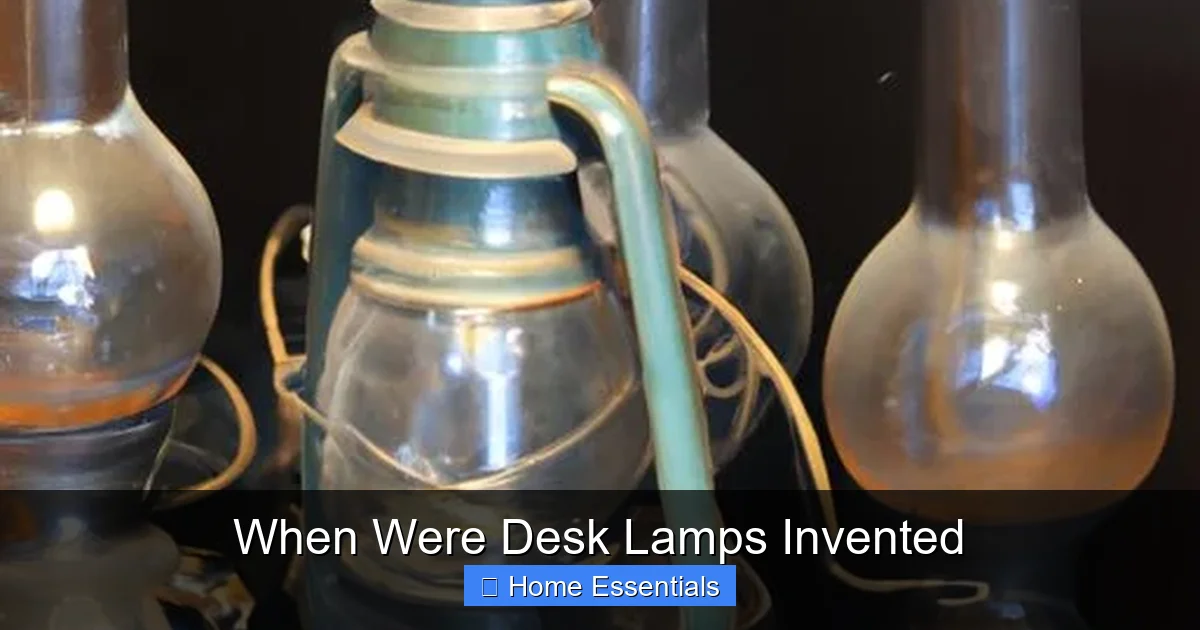
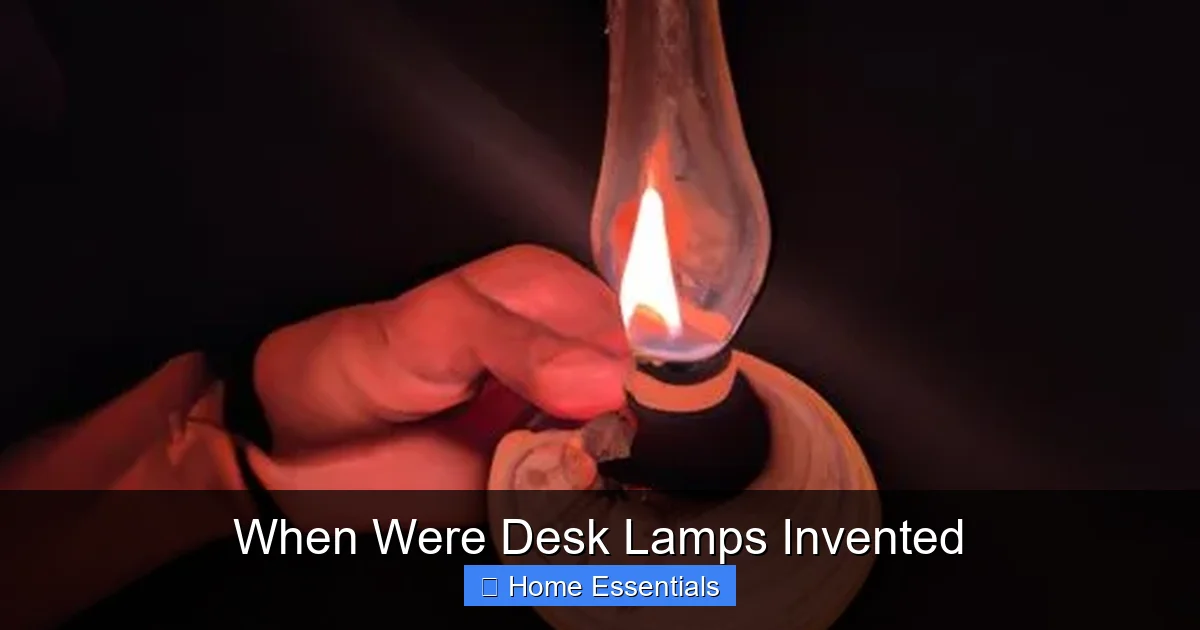
To understand the desk lamp’s origin, we must first appreciate what came before. For all of human history until the late 19th century, “desk lighting” meant one thing: an open flame. This could be a candle, an oil lamp, or, for the affluent in the 19th century, a small gas lamp.
The Dangers of the Open Flame
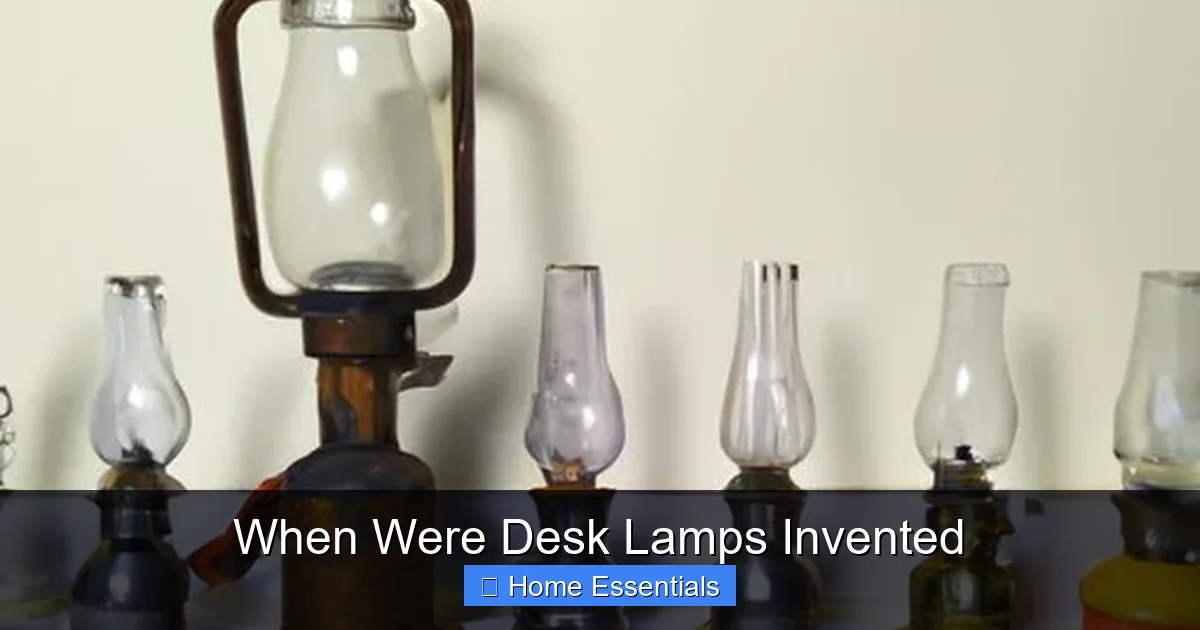
These solutions were profoundly inadequate and hazardous. Candles provided a tiny, flickering, and incredibly hot light source. They were a constant fire risk, especially around piles of paper, books, and wooden furniture. Oil lamps, using whale oil or later kerosene, were brighter but still emitted soot, smoke, and a terrible smell. They required constant wick trimming and refilling. The heat they generated was intense and could be uncomfortable in a small study. The light they cast was often poor for detailed work, creating harsh shadows and a yellow, uneven glow. There was no such thing as a “personal” lamp you could turn on and off at your desk; these were room-filling light sources with all their attendant risks.
The First “Task” Lights
Even so, the desire for focused light led to early adaptations. Wealthy scholars and artists might use a “reading stand” or “book stand” with a built-in candle holder. These were often heavy, ornate, and still perilously close to flammable materials. The concept of an adjustable arm to direct light existed in some primitive forms for candles and oil lamps, but they were clunky, unstable, and offered limited movement. The fundamental barrier was the fuel source itself. Until a safe, contained, and controllable source of light could be developed, the dream of a truly practical, personal desk lamp remained just that—a dream.
The Electric Catalyst: Edison’s Bulb and the Birth of a Possibility
Everything changed on December 31, 1879. That’s when Thomas Edison publicly demonstrated his incandescent light bulb—a carbon filament in a high-vacuum glass bulb that glowed without exploding. It wasn’t the first light bulb, but it was the first practical, long-lasting one. This invention didn’t just invent a new product; it invented an entirely new infrastructure: the need for electrical generators, wiring, switches, and sockets.
Visual guide about When Were Desk Lamps Invented
Image source: lihpao.com
From Ceiling to Desk: The First Electric Lamps
The earliest electric lights were simply bulbs mounted on ceilings or walls, providing general room illumination. The next logical step was to make them portable. The first “desk lamps” of the 1880s were crude and often dangerous by today’s standards. They were essentially light bulbs with a wire cage, mounted on a heavy base and connected by a flexible cord to a wall outlet or a ceiling-mounted “drop cord.” These were often called “cluster lamps” or “articulated lamps.” They featured the first attempts at adjustability—usually a weighted, counterbalanced arm or a series of hinged segments that could be positioned but were often stiff and unstable.
These early models were a revelation. No more fumes, no more fire risk from an open flame, and instant on/off capability. But they were far from perfect. The bulbs were dim by modern standards. The wiring was often exposed and a shock hazard. The designs were purely functional, mimicking the forms of gas lamps or industrial equipment. There was little thought given to aesthetics or true ergonomics. The light was still often too harsh and glaring, shining directly into the user’s eyes. The problem of controlling the light’s direction and intensity remained largely unsolved.
The Golden Age of Design: Articulation and Iconic Forms (1900-1940)
The turn of the century brought a surge of innovation as electricity became more common in homes and offices. The real breakthrough in desk lamp design came from a simple but brilliant insight: the lamp should not just hold a bulb; it should control the light. This led to the golden age of the articulated desk lamp.
Visual guide about When Were Desk Lamps Invented
Image source: lihpao.com
The Anglepoise Revolution (1934)
The undisputed king of this era is the Anglepoise lamp, patented in 1934 by British automotive engineer George Carwardine. He wasn’t a lamp designer; he was solving a problem of balance. He applied the principles of a four-parallel-spring mechanism (similar to car suspension) to create a lamp with incredible, effortless adjustability. You could position the lamp head anywhere and it would stay put. This was a quantum leap. It meant the light could be positioned perfectly over a page or work surface without glare, and the user’s hands were free. The iconic silhouette—a heavy base, a spring-loaded central arm, and a shade—became a symbol of efficient, focused work. Its success was immediate and it remains in production today, a testament to its genius design.
Bauhaus and the Modernist Aesthetic
While Carwardine solved the mechanics, other designers tackled the form. In Germany, the Bauhaus school championed “form follows function.” Designer Christian Dell created a series of desk lamps in the 1920s and 30s that were radically modern. Using bent steel tubing and geometric shades, his lamps looked like industrial sculptures. They were devoid of ornament, emphasizing clean lines and pure functionality. This aesthetic profoundly influenced 20th-century design, proving that a desk lamp could be a work of art, not just a tool. Other notable designs from this period include the “Tizio” by Richard Sapper (1962, though later, it embodies the same minimalist, balanced principle) and numerous streamlined designs from the Art Deco period that used Bakelite and chrome.
This era established the archetype: a weighted base, one or more articulated arms, and a directional shade. The materials were metal (steel, brass), with finishes like nickel, chrome, or black enamel. The goal was perfect light control with minimal visual clutter.
The Plastic and Halogen Revolution (1950s-1990s)
Post-World War II, new materials and technologies changed the desk lamp landscape once again.

Visual guide about When Were Desk Lamps Invented
Image source: tffn.net
The Age of Plastic
The explosion of cheap, versatile plastics like ABS and polycarbonate in the 1950s and 60s allowed for mass production of affordable, colorful, and innovative designs. Lamps were no longer the domain of metalworkers alone. Companies like Tulip and Luxo (famous for their architect’s lamps) produced durable, functional lamps in a rainbow of colors. The classic “anglepoise” mechanism was now cloned and adapted in plastic, making adjustable task lighting accessible to everyone. This period also saw the rise of the “student lamp”—a simple, inexpensive, often single-arm clamp-on lamp that became ubiquitous in dorm rooms and home offices.
The Halogen Spotlight
In the 1970s and 80s, halogen bulbs entered the scene. These were small, quartz-halogen incandescent bulbs that produced a much brighter, whiter, and more focused light than standard bulbs. They were perfect for task lighting. This led to the popularity of the halogen desk lamp—often a sleek, minimalist design with a small, powerful bulb housed in a metal reflector and shade. The light was intensely bright and could be focused on a very small spot, excellent for detailed work but also creating significant heat and a risk of fire if flammable materials got too close. Their intense, clinical light defined the look of high-end desks and artist studios for decades.
During this long period, the fundamental mechanism—the articulated arm—remained king. The changes were in materials, color, and light bulb technology. The core user need for a directed, shadow-minimizing, adjustable light was being met, but efficiency and heat were still major drawbacks.
The LED and Smart Era (2000s-Present)
The 21st century has brought the most profound shift since Edison’s bulb: the LED revolution. This isn’t just about a new bulb type; it’s about a complete rethinking of what a desk lamp can be.
LED: Efficiency and Design Freedom
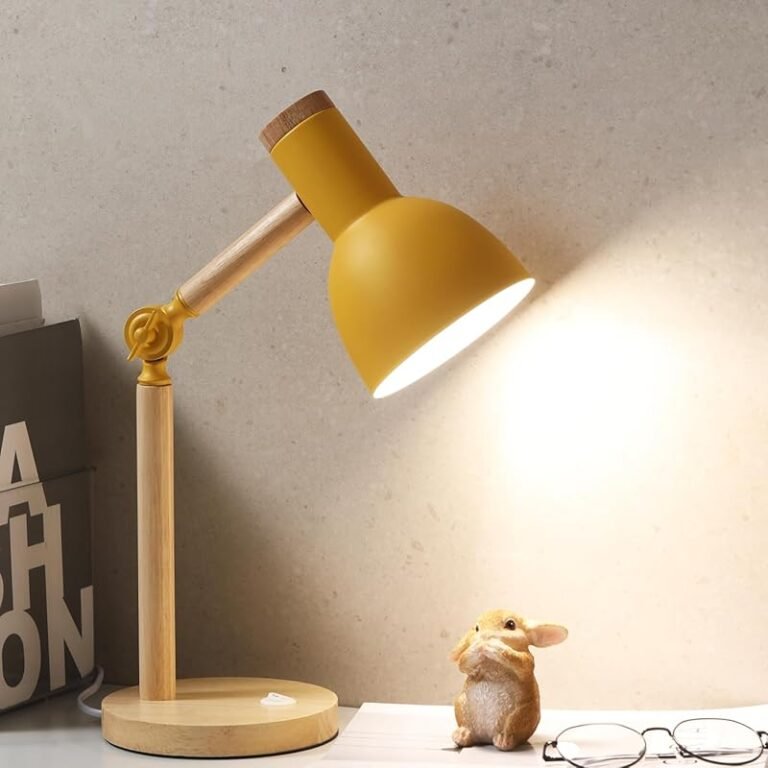
Light Emitting Diodes (LEDs) are semiconductor devices that produce light when current flows through them. Their advantages are staggering: they use a fraction of the energy of incandescent or halogen bulbs, generate very little heat, and last for tens of thousands of hours. For desk lamp design, this is transformative. Because LEDs produce so little heat, lamp shades can be made of materials that would melt with a halogen bulb—paper, fabric, thin plastics. This opens up a world of aesthetic possibilities, from soft fabric drum shades to intricate papercraft designs. The low energy consumption also makes features like built-in USB charging ports feasible without worrying about power drain.
The Rise of “Smart” Desk Lamps
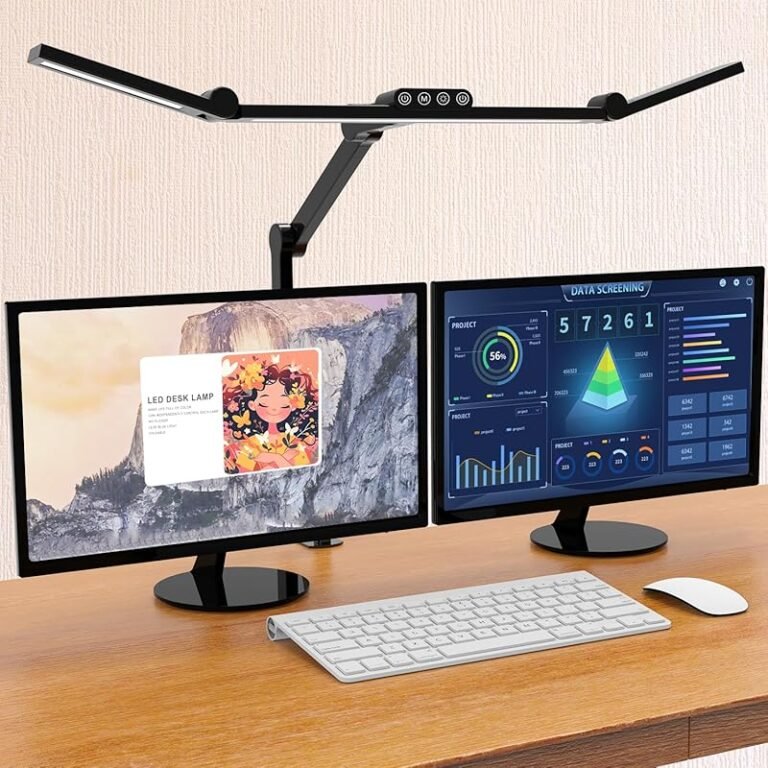
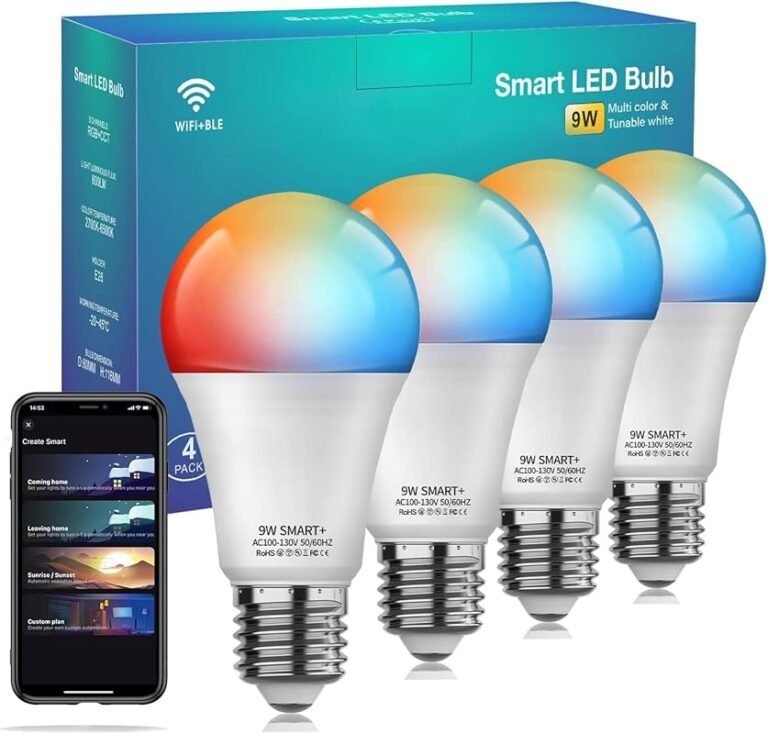
The next logical step was connectivity. Just as smart light bulbs revolutionized home lighting, they entered the desk lamp. Modern smart desk lamps integrate LEDs with Wi-Fi or Bluetooth connectivity. This allows for unprecedented control. You can adjust brightness (dimming) and color temperature (from warm, yellow light to cool, blue-ish light) via an app or voice command (Amazon Alexa, Google Assistant). This “circadian rhythm lighting” can help reduce eye strain and improve sleep by matching the light to the time of day. Some lamps include features like timers, schedules, and even built-in wireless phone chargers. When did smart bulbs come out for general consumers? Around 2012-2013, and the technology quickly migrated to integrated fixtures like desk lamps. The desk lamp is no longer just a passive tool; it’s an interactive, responsive part of a connected workspace or smart home.
Minimalism and New Forms
Alongside smart tech, minimalist design continues to thrive. Think of the simple, elegant “piano hinge” lamps with a single, graceful arm or the ultra-thin, sculptural LED panel lamps. The focus is on reducing visual noise and maximizing light quality. The iconic articulated arm is still popular, but now powered by silent, friction-based joints and housing efficient LED strips. The history of the desk lamp has come full circle: from a dangerous flame, to a complex mechanical balancing act, to a sleek, intelligent, and almost invisible source of perfect light.
Choosing Your Lamp: A Historical Perspective on Modern Needs
Understanding this history isn’t just trivia; it’s a practical guide to choosing the right lamp for you today. Each era solved a different problem.
For Pure Adjustability: Look to the Anglepoise Legacy
If you need maximum, effortless positioning—perhaps for multiple monitors, a drawing tablet, and paper books—seek out a lamp with a true multi-spring articulated arm. The mechanism is the same principle as Carwardine’s 1934 patent. It’s the gold standard for flexibility. Does smart bulb consume electricity when off? For traditional lamps, no. But for smart lamps, a tiny amount for the radio chip, which is negligible compared to the bulb’s draw.
For Heat and Efficiency: LED is Non-Negotiable
Forget halogen. For long work sessions, a cool-to-the-touch LED lamp is essential. It’s safer around papers and fabrics and won’t heat up your workspace. Look for high Lumens (brightness) and a high CRI (Color Rendering Index, >90 is excellent for accuracy).
For Eye Comfort: Embrace Tunable White Light
The harsh, blue-rich light of early LEDs was straining. Modern tunable white LEDs let you shift from a warm 2700K (like an incandescent bulb, relaxing) to a cool 5000K+ (like daylight, energizing and good for focus). Use warmer light in the evening and cooler light during the day to support your natural circadian rhythm.
For the Modern Minimalist Desk: Integrated Design
If your desk is a clean slate, consider a lamp that’s an integrated part of the desk itself—a thin LED strip mounted under a shelf, or a minimalist arm that clamps discreetly. The history of the desk lamp shows a constant trend toward reducing its physical and visual footprint while increasing its utility.
Conclusion: More Than Just a Light
So, when were desk lamps invented? The fully realized, safe, adjustable electric desk lamp was born in the 1890s and came into its own as a design icon in the 1930s. But its lineage stretches back through the smoke and flame of oil lamps and the crackle of early electrical experiments. The desk lamp is a silent witness to our work, our studies, and our late-night thoughts. It evolved from a hazardous necessity to a celebrated piece of industrial design, and now to a smart, adaptive fixture. Its journey mirrors our own: from struggling against the darkness to thoughtfully crafting the light that shapes our modern lives. The next time you switch on your lamp, take a second to appreciate that beam of light—it’s the product of over a century of human ingenuity, a small, personal monument to our enduring desire to see clearly.
Frequently Asked Questions
Who invented the first practical electric desk lamp?
There is no single inventor. The first practical electric desk lamps emerged in the 1880s-1890s as a direct result of Thomas Edison’s incandescent bulb and the spread of electrical wiring. Early versions were simply bulbs on flexible cords. The first major design innovation was the articulated arm, perfected by George Carwardine with the Anglepoise in 1934.
What was used for desk lighting before electricity?
Before electricity, desk lighting relied on open flames: candles, oil lamps (using whale or kerosene oil), and for some offices and wealthy homes in the late 19th century, small gas lamps. These were dangerous, produced soot and heat, and gave poor, uneven light for detailed tasks.
Why did the articulated desk lamp become so popular?
The articulated arm, especially in designs like the Anglepoise, solved the core problems of early desk lighting: glare, shadows, and immobility. It allowed the user to precisely position the light source directly over their work without the lamp head getting in the way, and it would stay in that position. This adjustability dramatically improved comfort and productivity.
What are the main benefits of an LED desk lamp over a halogen one?
LED desk lamps are vastly superior in efficiency (using ~80% less energy), generate very little heat (making them safer and more comfortable), and last for 25,000+ hours compared to 2,000-4,000 for halogen. They also offer better dimming capabilities and can be engineered for superior color quality without the heat-related degradation of halogen bulbs.
When did smart features become common in desk lamps?
3>Smart features like app control, voice activation, and tunable color temperature became mainstream in desk lamps in the late 2010s, following the consumer adoption of smart bulbs around 2012-2013. These features are now common in mid-to-high-end LED desk lamps.
How do I choose between a clamp-on, a weighted base, or a freestanding lamp?
It depends on your desk setup. A clamp-on saves desk space but requires a thick, stable edge. A weighted base is versatile and stable on any surface but takes up footprint. A freestanding with a large base is very stable and can be positioned anywhere but occupies the most space. Consider your desk material, available space, and how often you move the lamp.