Where to Buy Desk Lamps
Finding the perfect desk lamp involves more than just picking a style. You need to know the best places to shop, the key features that matter for your tasks, and how to balance budget with quality. This guide breaks down online vs. in-store shopping, top retailers, and essential considerations like brightness and adjustability. By the end, you’ll have a clear action plan to buy a desk lamp that boosts your productivity and fits your space perfectly.
Key Takeaways
- Define your primary use: Whether for detailed work, ambient lighting, or style, your task dictates the lamp type, brightness, and features you need.
- Online offers vast selection and deals; in-store lets you test quality: Weigh convenience and tactile experience against each other based on your priority.
- Prioritize adjustable brightness and color temperature: Look for lamps with multiple settings or smart compatibility to customize light for day or night.
- Check the bulb type and compatibility: LED is efficient and long-lasting, but ensure the base (e.g., E26, GU10) matches your preference or that the bulb is integrated.
- ergonomics and stability are crucial: A wobbly base or stiff adjustment will lead to frustration. Read reviews focusing on build quality and ease of positioning.
- Set a realistic budget and explore value: Great lamps exist at every price point; focus on core features rather than brand names for the best value.
- Maintenance is simple but important: Regular dusting with a soft cloth, like a microfiber cloth for dusting, keeps your lamp looking and functioning its best.
📑 Table of Contents
- Why the Right Desk Lamp Matters More Than You Think
- Decoding Desk Lamp Types: Find Your Perfect Match
- The Great Debate: Where to Buy Desk Lamps (Online vs. In-Store)
- Essential Features Checklist: Don’t Buy Without These
- Top Destinations: Where to Buy Desk Lamps for Every Need
- Budgeting Smartly: Getting Great Value at Any Price Point
- Caring for Your Investment: Simple Maintenance for Longevity
- Conclusion: Your Perfect Light Awaits
Why the Right Desk Lamp Matters More Than You Think
Let’s be honest. When you think of upgrading your workspace, a desk lamp might not be the first thing that springs to mind. You’re probably focused on the chair, the desk, or your computer monitor. But lighting? That’s the silent hero of your productivity and comfort. A poor light source can cause eye strain, headaches, and fatigue, turning a simple task into a chore. The right lamp, however, can brighten your mood, sharpen your focus, and even make your desk look intentionally designed. So, before we dive into where to buy desk lamps, we need to understand what to buy and why. It’s not just about a bulb on a stick; it’s about engineering light to serve your specific needs.
The journey to the perfect lamp starts with self-reflection. What do you actually do at your desk? Are you an architect drawing precise lines, a writer staring at a screen for hours, a crafter working with small beads, or a gamer seeking immersive ambiance? Each of these scenarios demands a different kind of light. A crafter needs bright, shadow-free, color-accurate light—think high CRI (Color Rendering Index) and adjustable arms. A gamer might want RGB smart lamps that sync with their setup. A reader simply needs a warm, focused pool of light that doesn’t glare on their page. Your primary activity is the North Star guiding all your subsequent decisions.
Decoding Desk Lamp Types: Find Your Perfect Match
Walking into a store or browsing online, you’ll be met with a dizzying array of shapes and styles. It’s easy to get lost. But most desk lamps fall into a few key categories, each with its own strengths and ideal use cases. Knowing these types is the first step to filtering the noise and finding your champion.

Visual guide about Where to Buy Desk Lamps
Image source: orientelectric.com
The Classic Swing Arm & Adjustable Workhorse
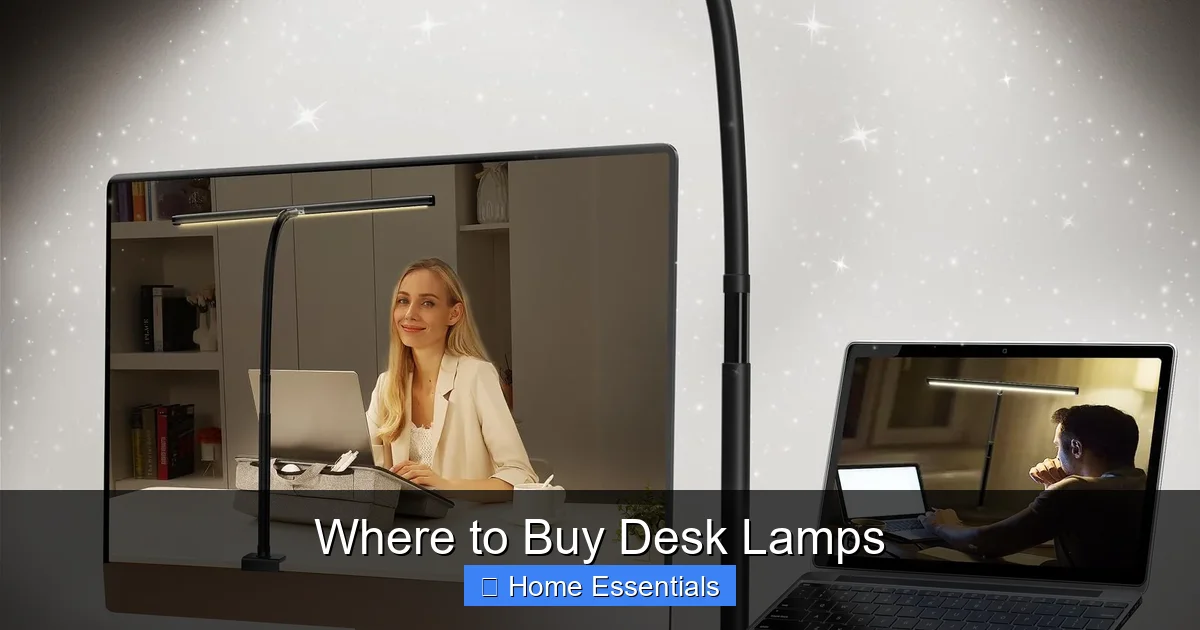
This is probably the image that comes to mind: a weighted base, a vertical pole, and one or two arms that swing and pivot. These are the Swiss Army knives of desk lighting. Their massive advantage is unparalleled adjustability. You can position the light head exactly where you need it—over a keyboard, beside a book, or down onto a sketchpad—and lock it in place. They are ideal for tasks that require you to shift focus frequently. Look for models with spring-loaded mechanisms for smooth, one-handed adjustment. Brands like BenQ and TaoTronics have mastered this form factor for task lighting.
The Modern Task Lamp with a Single Arm
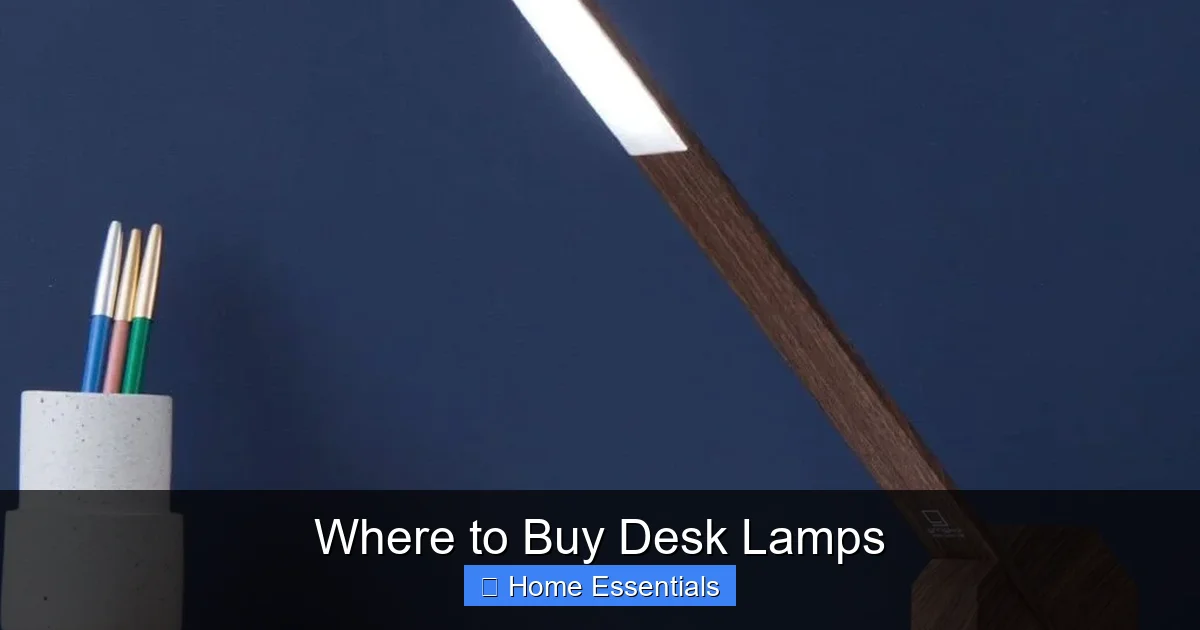
Sleeker and more minimalist, these lamps often have a single, articulated arm that offers a surprising range of motion in a more compact footprint. They are perfect for smaller desks where a bulky swing arm would feel overwhelming. The design is clean, contemporary, and often integrates the cord within the arm itself for a tidier look. While sometimes offering less horizontal reach than a dual-arm model, their simplicity and aesthetic appeal make them a favorite for modern home offices and writing desks.
Clip-On and Edge-Mounted Saviors
Do you have a tiny desk? A shared space? Or maybe you just hate clutter? Clip-on lamps are your solution. These nifty devices clamp directly onto the edge of your desk or even a shelf, freeing up every square inch of surface area. They are incredibly versatile for small spaces, dorm rooms, or for adding light to a specific spot on a larger desk without a dedicated lamp base. Ensure your desk edge is within the clamp’s capacity—usually around 1.5 inches thick.
The Statement Piece: Architectural & Designer Lamps
Here, form is as important as function. These are the lamps that become a centerpiece of your room’s decor. Think iconic designs from brands like Anglepoise, Artemide, or Fritz Hansen. They often use high-quality materials like brass, marble, or opal glass. While they provide excellent light, their primary value is in their sculptural beauty. You’re buying a piece of art that also illuminates. The adjustability might be more limited or more ingeniously engineered, but the price point reflects the design pedigree and materials.
Smart Lamps: Lighting That Thinks for Itself
The newest category is exploding. Smart desk lamps connect to your Wi-Fi or Bluetooth and are controlled via an app or voice assistant (like Alexa or Google Assistant). Their superpowers go beyond simple on/off. You can schedule timers, set circadian rhythms that mimic the sun’s color temperature throughout the day, dim with precision, and even have them react to your music or computer usage (like BenQ’s ScreenBar series, which illuminates only the desk, not the screen). If you love tech and want lighting that actively supports your health and workflow, this is the category to explore.
The Great Debate: Where to Buy Desk Lamps (Online vs. In-Store)
This is the core of your quest: the point of purchase. The “where” dramatically influences your experience, selection, and even satisfaction with the final product. Both online and brick-and-mortar shopping have powerful, legitimate arguments in their favor. Let’s dissect them.

Visual guide about Where to Buy Desk Lamps
Image source: orientelectric.com
The Online Universe: Selection, Deals, and Reviews
Pros: The internet is your global marketplace. You are no longer limited to what’s in the local big-box store. You can buy direct from innovative brands, access niche designers, and compare thousands of models side-by-side on aggregator sites like Amazon. The deal-hunting potential is immense—you can find seasonal sales, lightning deals, and refurbished units. Crucially, you have access to a universe of user reviews. You can read detailed, long-term experiences from people who have used the lamp for months. Did the spring mechanism fail? Does the LED dim evenly? These are the questions reviews answer. You can also often return items easily, especially from large retailers.
Cons: You can’t touch it. You can’t feel the weight of the base, test the smoothness of the arm’s movement, or see the true color of the light with your own eyes. Colors on a screen can be misleading. Shipping can be a hassle—boxes are large, and there’s always a risk of damage in transit (though good retailers pack well). Returns are more of a process than simply driving back to a store.
The Physical Store: Tactile Confidence and Instant Gratification
Pros: You get to interact with the product. You can wiggle the arm, assess the build quality, and—most importantly—turn it on. Seeing the light quality in person, especially in a store’s mixed lighting, gives you a much better sense of its true color temperature and diffusion. You can compare size and heft directly. There’s no waiting for shipping; you buy it and take it home. For complex lamps with many adjustments, in-store testing is invaluable.
Cons: Selection is limited by floor space. You’ll mostly see mainstream brands and bestsellers. Prices are often fixed (though some big-box stores price-match). Sales staff may not be experts on the nuanced differences between models. The experience can be overwhelming or, in smaller stores, unhelpful.
The Hybrid Strategy: The smartest shoppers use both. Go to a physical store (like an IKEA, Apple Store for their lamps, or a high-end lighting showroom) to handle a few models you’re interested in. Test the mechanics. Then, go home and find that exact model or a similar one online, often for a better price, and read the reviews to confirm your tactile impression.
Essential Features Checklist: Don’t Buy Without These
Now that you know the types and where to look, let’s talk specs. A beautiful lamp that doesn’t perform is a frustrating paperweight. Here’s your non-negotiable checklist.
Visual guide about Where to Buy Desk Lamps
Image source: home-designing.com
Brightness & Lumens
This is measured in lumens. For a desk lamp, you generally want between 300 and 500 lumens for focused task lighting. Less than 300 might be too dim for detailed work; more than 500 could be glaring. The best lamps offer adjustable brightness, so you can have a soft glow for ambient mood or a punch of light for precision work.
Color Temperature & CRI
Measured in Kelvin (K), this is the “warmth” or “coolness” of the white light. 2700K-3000K is warm, cozy, and relaxing (good for evening reading). 4000K-5000K is cool, white, and alerting—ideal for daytime work and study as it mimics daylight and suppresses melatonin. 5000K+ is very cool/blueish, which can be harsh. A high CRI (Color Rendering Index) of 80+ or 90+ is vital if you work with color (art, design, photography, makeup). It means the light accurately reveals true colors.
Adjustability & Range of Motion
Look at the joints. Can the head tilt, swivel, and raise? Can the arm extend and pivot? The best designs use a combination of friction joints and spring-loaded mechanisms. Test (in-store or via video reviews) how easily it stays in place. A lamp that droops after 10 minutes is useless.
Bulb Type & Base
Integrated LED: The bulb is built-in and non-replaceable (though the whole unit is). Pros: ultra-efficient, slim designs, often dimmable and color-temperature adjustable. Cons: if the LED fails (after 10-25 years), you replace the whole lamp. This is now the standard for modern task lamps.
Replaceable Bulb: Uses a standard bulb base (E26/E27, GU10, etc.). Pros: you can choose your own bulb’s wattage, color temp, and smart features. You can replace it if it burns out. Cons: slightly bulkier design, you have to manage bulb compatibility. If you want ultimate control over your light spectrum, this is the way.
Stability & Base Weight
A light, flimsy base is a recipe for disaster. A heavy, wide base (often metal or filled with sand/gravel) provides a low center of gravity, preventing the lamp from tipping when you adjust the arm. For clip-ons, check the clamp’s grip strength and padding to protect your desk surface.
Smart Features & Connectivity
If you’re tech-inclined, consider Wi-Fi/Bluetooth connectivity, app control, voice assistant compatibility, and features like auto-dimming based on ambient light or schedules. Some even have productivity timers (Pomodoro technique) or USB charging ports built into the base—a nice bonus.
Top Destinations: Where to Buy Desk Lamps for Every Need
Armed with your feature checklist, let’s map the retail landscape. We’ll categorize them by their specialty.
For Maximum Selection & Convenience: Amazon & Wayfair
These are the titans. You will find every lamp type mentioned above, from $15 clip-ons to $500 designer pieces. The filtering tools (by brightness, color temp, style) are powerful. The user review volume is enormous, giving you statistically significant data on quality and longevity. Amazon’s “Amazon’s Choice” and “Best Sellers” lists are a good starting point, but always read the negative reviews to spot recurring flaws. Wayfair often has better visuals and more curated collections for home decor styles. Prime shipping on Amazon is a huge plus for quick delivery and easy returns.
For Cutting-Edge Tech & Task Lighting: Brand Direct & Specialty Retailers
If you want a smart lamp or a high-performance task light, go straight to the source. Brands like BenQ (ScreenBar series), Philips Hue (smart ecosystem), Xiaomi (affordable smart ecosystem), Lumens (high-end), and Anglepoise (iconic design) sell directly or through authorized dealers. You get the full product lineup, detailed specs, and often better customer support. Specialty lighting retailers like YLighting or Lamps Plus also excel here, with expert staff (online chat or phone) who can guide you.
For Hands-On Testing & Immediate Needs: IKEA, Target, & Home Depot
These are your go-to for seeing and touching. IKEA is famous for its minimalist, affordable, and surprisingly functional designs (like the RIGGAD or JULSKÄR series). You can test the adjustability right there on the showroom floor. Target offers stylish, mid-range options, often with good seasonal sales. Home Depot and Lowe’s have a practical selection focused on utility and durability, often with a good range of work-light style lamps. This is the best route if you are unsure about size, weight, or light quality and want to eliminate doubt before buying.
For the Design-Conscious & High-End: Design Showrooms & DTC Brands
If your lamp is a statement piece, you’ll be looking at design stores (local or online like Design Within Reach), museum shops, or direct-to-consumer (DTC) brands like Muuto, Menu, or HAY. These offer iconic designs, premium materials, and often a more sustainable story. Prices are high, but you are paying for lasting design and build quality. This is an investment purchase.
Budgeting Smartly: Getting Great Value at Any Price Point
You don’t need to break the bank for a great lamp. The key is allocating your budget to the features that matter most for your use case.
- Under $30: This is the entry zone. You’ll find basic clip-ons, simple swing arms with replaceable bulbs, and small LED task lights. Focus on stability and a flexible neck. Brands like TaoTronics and basic IKEA models often shine here. Expect plastic construction and basic on/off switches.
- $30 – $100: The sweet spot for most people. This is where you get excellent build quality (metal bases, better mechanisms), integrated LEDs with brightness/dimming controls, and sometimes smart features or USB ports. Brands like BenQ (entry-level ScreenBars), Philips, and Anker fall here. You get a perfect balance of performance and value.
- $100 – $300: The premium tier. Here you see superior materials (brass, glass, fabric cords), exceptional engineering (silky-smooth arms), high-CRI LEDs, and advanced smart integrations. Design brands like Anglepoise (entry models) and specialized task lighting from Lumens live here.
- $300+: The designer/investment tier. This is for architectural pieces from brands like Artemide, Flos, or Fritz Hansen. You are paying for iconic design, museum-quality materials, and heirloom construction. The light performance is, of course, excellent, but the object itself is the primary value.
Pro Tip: Don’t overpay for a brand name alone. A $150 lamp from an unknown brand with a metal base, 500-lumen adjustable LED, and 5-star reviews on all key points is a better buy than a $200 lamp from a famous name with a plastic base and stiff joints. Let features and reviews guide you.
Caring for Your Investment: Simple Maintenance for Longevity
You’ve bought your perfect lamp. Now, keep it shining bright for years with minimal effort. The biggest enemy is dust. Dust buildup on the LED surface or inside the shade can reduce light output over time and make the lamp look dingy.
Always unplug the lamp before cleaning. For routine dusting, use a soft, dry microfiber cloth. Its fine fibers are excellent at trapping dust without scratching surfaces. For the base and arm, a damp microfiber cloth followed by a dry one is sufficient. For lamps with electronic components or sensors, it’s crucial to use proper techniques. Learn how to clean electronics with a microfiber cloth to avoid moisture damage. If your lamp has a fabric shade, use a lint roller or a vacuum with a soft brush attachment. For glass or acrylic shades, use a glass cleaner sprayed onto the cloth (not directly on the lamp) to avoid seeping into joints. A quick weekly wipe-down will prevent grime from building up. If your lamp has a replaceable bulb, keep a spare on hand that matches the original specs. For integrated LED units, you likely won’t need to worry for a decade or more.
Conclusion: Your Perfect Light Awaits
Choosing where to buy desk lamps is the final step in a thoughtful process. It starts with understanding your personal needs, moves through evaluating lamp types and essential features, and culminates in selecting the right retailer for your shopping style and budget. Remember, the best lamp is the one that seamlessly integrates into your workflow, provides comfortable, adjustable light, and brings you a little bit of joy every time you turn it on. Don’t rush. Use the hybrid shopping strategy: research and compare online with deep dives into reviews, then validate your top choices in a physical store if possible. Whether you buy a $25 clip-on from Amazon or a $500 designer piece from a specialty showroom, the principles of good light—appropriate brightness, color, and adjustability—remain the same. Now, go illuminate your workspace the right way.
Frequently Asked Questions
What is the best color temperature for a desk lamp?
For most task work during the day, a color temperature between 4000K and 5000K (cool white) is ideal as it promotes alertness and mimics daylight. For evening use or to create a cozy atmosphere, 2700K-3000K (warm white) is better. Lamps with adjustable color temperature are the most versatile.
Should I buy a lamp with an integrated LED or a replaceable bulb?
Integrated LEDs allow for slimmer, more modern designs and often include advanced dimming and color controls. However, if the LED fails, you replace the entire lamp. Replaceable bulb lamps offer more flexibility—you can choose any bulb type and easily swap it out. For long-term peace of mind and maximum customization, a replaceable bulb is better. For cutting-edge tech and sleek design, integrated LED is the standard.
How bright should my desk lamp be?
For general desk tasks, aim for a lamp that provides 300-500 lumens at your work surface. This is sufficient for reading, writing, and computer work without causing glare. Lamps with adjustable brightness settings are highly recommended so you can tailor the output to the specific task and time of day.
Are expensive designer desk lamps worth the price?
They can be, if your priorities are heirloom build quality, iconic design, and premium materials like solid brass or hand-blown glass. You are paying for the object as much as the light. However, many lamps in the $50-$150 range from reputable brands offer excellent performance, durability, and modern features. Focus on your must-have features rather than brand prestige for the best value.
Can I use a desk lamp for more than just my desk?
Absolutely! A good adjustable arm lamp can be repurposed as a reading light by a chair, a craft light for a sewing table, or a piano light. Clip-on lamps are perfect for kitchen counters, shelves, or as a temporary light source in a closet. Consider the lamp’s reach and base size for other potential spots in your home.
What should I do if my new lamp feels wobbly or unstable?
A certain amount of movement is normal when adjusting a flexible arm lamp. However, if the base rocks or the lamp feels like it might tip over with a slight bump, it’s likely a design flaw or a damaged unit. First, ensure all locking mechanisms (knobs, tension rings) are tightened. If it’s still unstable, contact the retailer or manufacturer for an exchange or return, as stability is a fundamental safety and functionality issue.