Will a Desk Lamp Work as a Grow Light
Yes, a desk lamp can work as a grow light for certain plants under very specific conditions, but it’s generally not an ideal or efficient long-term solution. Its success depends entirely on using the correct bulb (like a high-wattage LED or CFL), maintaining the precise distance from the plant, and providing the right light duration. For most serious indoor gardening, especially for flowering or fruiting plants, a dedicated grow light is far more effective and reliable.
Ever stared at a sad-looking seedling on your windowsill and thought, “I have a bright desk lamp right here… could that work?” It’s a clever, tempting idea. After all, plants need light, and a lamp provides light. Why not combine functions? The short answer is: sometimes, for a little while, with a lot of caveats. The long answer is a fascinating dive into plant biology, light physics, and the very specific design of grow lights. Let’s unpack whether your trusty desk lamp can transform into a budding botanist’s best friend.
Key Takeaways
- Bulb type is everything: An incandescent desk lamp bulb is virtually useless for plants. You must use a full-spectrum LED or CFL bulb with sufficient wattage (at least 40W equivalent) to have any chance of success.
- Intensity and distance are critical: Desk lamps provide a very narrow, focused beam. The plant must be placed mere inches from the bulb (often 6-12 inches) to receive enough light intensity (PPFD), which risks heat damage with the wrong bulb.
- It’s only suitable for low-light plants: This method might keep lettuce, herbs, or seedlings alive, but it will fail for light-hungry plants like tomatoes, peppers, or anything that flowers or fruits.
- Heat is a major hazard: Clamp-style desk lamps can get dangerously hot, especially with incandescent bulbs, posing a fire risk and scorching plant leaves. Always use cool-running LED bulbs.
- It’s a temporary hack, not a solution: Using a desk lamp is a useful experiment or stopgap for a few small seedlings, but it is not energy-efficient or scalable for a productive indoor garden.
- Smart bulbs offer limited flexibility: While some smart bulbs can change color temperature, they rarely provide the specific full-spectrum light (including crucial red/far-red wavelengths) that plants need for robust growth.
[FEATURED_IMAGE_PLACEHOLDER]
📑 Table of Contents
- The Science of Light: What Plants Actually Need
- Desk Lamp Design: Built for Tasks, Not Plants
- The Heart of the Matter: Bulb Selection
- Making It Work: A Practical Guide to the Desk Lamp Hack
- Warning Signs: Your Desk Lamp Setup Is Failing
- The Inevitable Question: When to Buy a Real Grow Light
- Conclusion: A Useful Trick, Not a Lasting Solution
The Science of Light: What Plants Actually Need
Before we talk lamps, we need to talk photosynthesis. It’s not just about “bright light.” Plants are picky about the *type* of light they use. They absorb specific wavelengths (colors) of light primarily through two pigments: chlorophyll A and B. These pigments are most efficient at absorbing blue and red light. Blue light (around 400-500nm) drives vegetative growth—strong stems and healthy leaves. Red light (around 600-700nm) is crucial for flowering and fruiting.
Photosynthetically Active Radiation (PAR)
Not all light is created equal. The portion of sunlight that plants can use for photosynthesis is called Photosynthetically Active Radiation (PAR). It’s measured in PPFD (Photosynthetic Photon Flux Density), which tells us how many usable light particles (photons) hit a square meter per second. A good grow light provides a high, uniform PPFD across the plant canopy. Your average desk lamp? It provides a tiny, intense spot of light that falls off dramatically in just a few inches. It’s like trying to water a garden with a fire hose held at one point—only a tiny area gets soaked, and the rest is parched.
The Importance of Full Spectrum
Natural sunlight is “full spectrum,” meaning it contains all colors of the visible spectrum. Modern LED grow lights are engineered to mimic this, often with a heavy emphasis on blue and red peaks, plus some green and yellow to fill in the gaps. This full spectrum supports all growth stages. Standard “daylight” or “cool white” LED bulbs are better than warm white, but they still lack the balanced, intense output of a true horticultural fixture.
Desk Lamp Design: Built for Tasks, Not Plants
Now, let’s look at the tool itself. A desk lamp is ergonomic for *you*, not for a photosynthesizing organism.
Visual guide about Will a Desk Lamp Work as a Grow Light
Image source: flexiblegooseneck.com
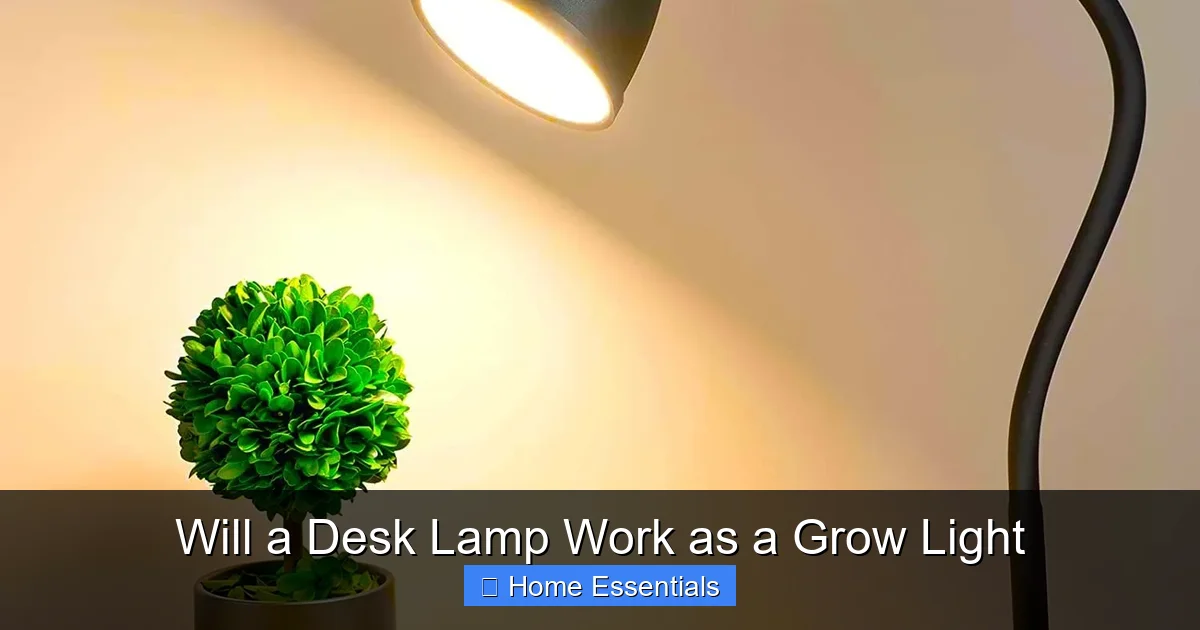
The Focused Beam Problem
Desk lamps have one job: to illuminate a small area (your keyboard, book, or desk) without wasting light elsewhere. They use reflectors and shades to create a tight, directional beam. This is the opposite of what a plant needs. A plant’s leaves spread out. You need to bathe the entire plant in light, not just spotlight one leaf. That focused beam creates a severe gradient—the leaf closest to the bulb might get too much light (and heat), while the outer leaves get almost nothing. The result is uneven, leggy growth as the plant strains toward the light source.
Heat Management (Or Lack Thereof)
This is the biggest danger. Traditional desk lamps, especially clamp styles with gooseneck arms, are designed for short-term use. They often trap heat. If you use an old incandescent or halogen bulb, that lamp head can become a miniature oven. You could easily cook your plant’s leaves before you even see signs of growth. Even some older LED bulbs can generate noticeable heat in a confined lamp housing. A proper grow light fixture is designed with heat sinks and airflow to manage the thermal output of high-power LEDs.
Adjustability and Coverage
Desk lamps offer adjustability in height and angle, which is good. But they lack horizontal coverage. To cover a 12-inch pot, you’d need multiple lamps positioned awkwardly, creating a tripping hazard and a messy look. A single, wide-coverage panel grow light does the job cleaner and more effectively.
The Heart of the Matter: Bulb Selection
If you’re going to try this, the bulb is non-negotiable. This is where most attempts fail. The lamp itself is just a socket and a shade; the bulb does the work.
Visual guide about Will a Desk Lamp Work as a Grow Light
Image source: m.media-amazon.com
Incandescent & Halogen: The Worst Choice
These are terrible for plants. They emit only about 10% of their energy as usable light; the rest is waste heat. They are inefficient, run extremely hot, and their light spectrum is heavily weighted towards yellow and red, with very little blue. They might keep a plant alive for a bit, but they will burn it if too close and won’t promote strong growth. Never use these.
Fluorescent (CFL/T5): A Decent, Outdated Option
Compact Fluorescent Lamps (CFLs) and T5 tubes are a step up. They are cooler, more efficient, and offer a better spectrum. A high-wattage (23W+ actual) CFL in a reflector-style desk lamp *can* work for seedlings or low-light herbs. However, they are bulky, contain mercury, and their light output degrades over time. They also lack the intensity and spectrum precision of modern LEDs.
LED: The Only Viable Path
This is your only realistic option. You need a high-quality, full-spectrum LED bulb designed for high output. Look for bulbs labeled “horticultural,” “grow,” or “full spectrum” with a high actual wattage (not just equivalent). A standard 10W “daylight” LED bulb from the hardware store will not cut it. You need something in the 40W-100W actual wattage range to generate enough PPFD at a safe distance.
What about smart bulbs? This is a common question. Most smart bulbs are designed for ambiance, not plant growth. Their spectra are optimized for human comfort (warm white, cool white, color-changing for parties). While a few brands now offer “grow” smart bulbs, they are typically low-wattage and not powerful enough for anything beyond very young seedlings. You can learn more about the specific capabilities and limitations of using smart bulbs as grow lights. For a desk lamp hack, you’d be better off buying a dedicated, non-smart high-wattage full-spectrum LED bulb from a hydroponics or garden supply store.
Making It Work: A Practical Guide to the Desk Lamp Hack
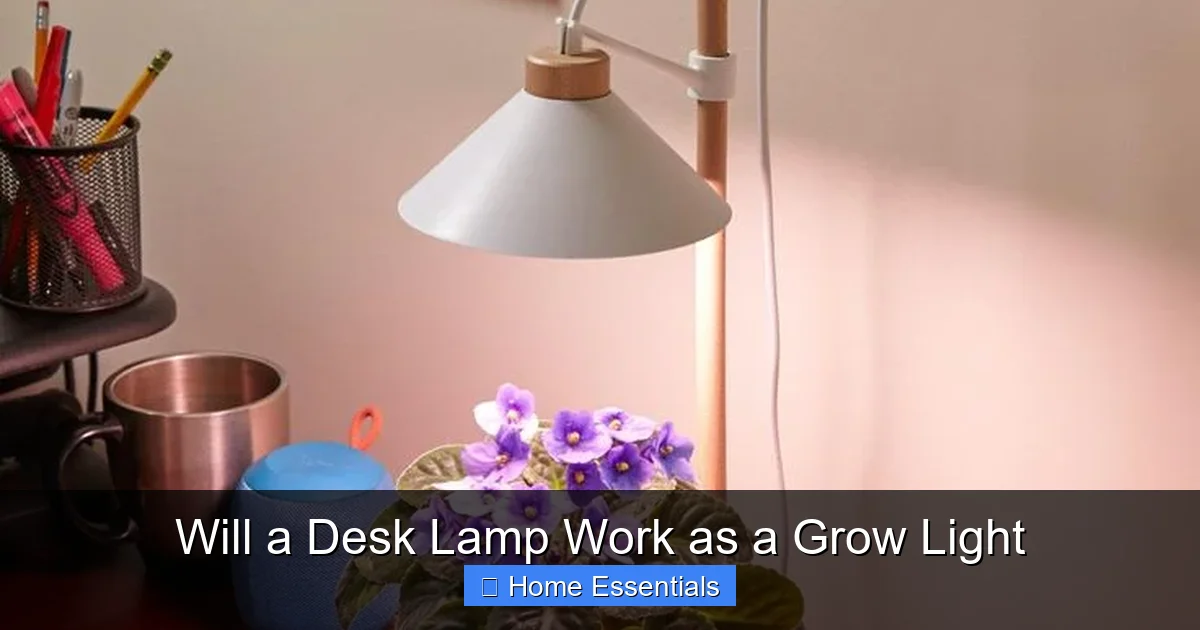
If you understand the limitations and want to try for a small, temporary project (like starting a few lettuce seeds for a salad), here’s how to maximize your chances.
Visual guide about Will a Desk Lamp Work as a Grow Light
Image source: i.pinimg.com
Plant Selection is Key
Forget about tomatoes or cannabis. Think Lactuca sativa (lettuce), Ocimum basilicum (basil), Petroselinum crispum (parsley), or microgreens. These are low-light, fast-growing leafy greens that have relatively modest light requirements. Seedlings of any plant are also a good candidate for the first 2-3 weeks of life.
The Golden Rules: Distance, Duration, and Bulb
- Bulb: Use a 50W+ actual full-spectrum LED bulb. Check the manufacturer’s specs for PPFD at distance if available.
- Distance: Start with the lamp 12 inches above the plant canopy. If the plant shows signs of light stress (bleaching, leaves curling under), raise it. If it becomes leggy (long, weak stems), lower it slightly. The goal is to have the lamp as close as possible without causing heat or light burn. For high-power LEDs, this might be 6-8 inches.
- Duration: Plants need a “photoperiod.” For vegetative growth (lettuce, herbs, seedlings), provide 14-18 hours of light per day. Use a simple outlet timer. Never leave it on 24/7; plants need a dark period for respiration and growth regulation.
DIY Reflectors and Setup
To combat the narrow beam, create a simple reflector. Cut a piece of cardboard or rigid foam board into a curve that fits around the back of your lamp, lining the inside with aluminum foil (shiny side out). This will bounce some of the escaped light back towards your plant. Position your lamp so it’s centered over a single pot or a small tray of seeds. For multiple plants, you’ll need multiple lamps, which quickly becomes impractical and unsafe from a wiring/overload perspective.
Warning Signs: Your Desk Lamp Setup Is Failing
How do you know it’s not working? Plants are great communicators if you know what to look for.
Leggy, Weak Growth
This is the #1 sign of insufficient light. Stems become long, thin, and spindly, with large gaps between leaves. The plant is etiolating—stretching desperately to find more light. If your lettuce looks like it’s trying to climb a ladder, your light is too weak, too far away, or both.
Leaf Discoloration and Deformation
Bleaching or yellowing: Leaves turn white or pale yellow, especially on the parts closest to the bulb. This is photoinhibition—the light is so intense it’s damaging the chlorophyll. Raise the lamp immediately.
Curling, cupping, or crispy edges: This can be a sign of heat stress or excessive light intensity. Check the temperature at the leaf surface. If it’s hot to the touch, the lamp is too close or the bulb is too hot. Switch to a cooler LED bulb.
No Flowering or Fruiting
Even if your lettuce looks okay, a desk lamp will almost never trigger flowering in plants like peppers or strawberries. They require a specific intensity and duration of red light, plus often a change in photoperiod (e.g., 12 hours of light, 12 hours of dark for short-day plants). A weak, narrow-spectrum desk bulb cannot provide this.
The Inevitable Question: When to Buy a Real Grow Light
At some point, the desk lamp hack reaches its limit. Here’s when to make the leap.
Scalability and Efficiency
Want to grow more than a few herbs? A single 50W LED panel grow light can cover a 2×2 ft area efficiently. It uses about 50-60 watts of actual power to do the job of multiple desk lamps using 150+ watts total. You’ll save money on your electric bill and get vastly better results. The upfront cost of a $50-$100 grow light pays for itself in yield and reliability.
Spectrum and Intensity You Can Trust
Reputable grow light manufacturers (like Spider Farmer, Mars Hydro, VIPARSPECTRA) design their spectra based on plant science research. They provide PPFD maps so you know exactly how much light is hitting every square inch of your garden. This predictability is impossible with a repurposed desk lamp. You’re guessing and hoping.
Safety and Peace of Mind
Grow lights are built for the job. They have proper certifications (UL, ETL), effective heat management, and are designed to run 12-18 hours a day, every day, for years. A cheap clamp lamp with a high-wattage bulb is a potential fire hazard, especially if placed near curtains or left unattended. Is saving $30 worth the risk?
Conclusion: A Useful Trick, Not a Lasting Solution
So, will a desk lamp work as a grow light? The honest answer is: it’s a fun experiment for a seedling or two, but it’s not a sustainable method for serious indoor gardening. It highlights the core principles of plant lighting—spectrum, intensity, and coverage—but fails to deliver them in a practical, safe, or efficient package. The lamp’s design is its downfall. That beautiful, focused beam that’s perfect for reading is a prison for a plant trying to grow in all directions. If you’re serious about growing food or flowers indoors, do yourself and your plants a favor. Invest in a proper, full-spectrum LED grow panel. Your future harvest will thank you. For now, enjoy your desk lamp for its intended purpose—illuminating your journal—and save the gardening for tools built for the job.
Frequently Asked Questions
Can I use any LED bulb in my desk lamp for plants?
No. You must use a high-wattage, full-spectrum LED bulb specifically designed for horticulture. Standard “daylight” or smart LED bulbs lack the necessary light intensity (PPFD) and the correct balance of blue and red wavelengths for strong plant growth.
How close should the desk lamp be to my plants?
This depends entirely on your bulb’s wattage and heat output. With a powerful (50W+ actual) full-spectrum LED, start at 12 inches above the plant. Watch for signs of stress. You may need to lower it to 6-8 inches for seedlings, but always ensure the leaf surface does not get hot. If you can comfortably hold your hand at leaf level without feeling warmth, the heat risk is low.
What plants can I actually grow with a desk lamp?
Only very low-light, fast-growing leafy greens and herbs. Think lettuce, spinach, basil, cilantro, parsley, and microgreens (radish, broccoli). You can also use it for the first 2-3 weeks of life for any seedling before upgrading to stronger light. It will not work for flowering, fruiting, or large plants.
Is it safe to leave a desk lamp on as a grow light all day?
It is safe only if you use a cool-running LED bulb and the lamp itself is in good condition, placed away from flammable materials. However, you should not leave it on 24/7. Plants need a dark period (6-10 hours) for proper growth. Use a simple outlet timer to provide 14-18 hours of light per day for vegetative plants.
Are “grow” smart bulbs a good alternative for a desk lamp?
Generally, no. Most smart bulbs are not powerful enough. Their spectra are designed for human vision, not plant photosynthesis. While a few brands offer “grow” smart bulbs, they are typically low-wattage and best suited for very small seedlings or as supplemental light. They are not a primary light source.
Is using a desk lamp as a grow light cheaper than buying a real one?
No, in the long run it is not cheaper. A high-wattage full-spectrum LED bulb for this purpose costs $20-$40 and will still be inefficient due to the lamp’s poor design. A proper $60-$100 LED panel grow light will cover more plants, use less electricity per unit of usable light, last longer, and produce a much better harvest. You get what you pay for.