How to Check the Transmission Fluid on a 2019 Nissan Altima
The 2019 Nissan Altima transmission fluid check is a quick DIY task that helps you spot problems early. Knowing how to check the transmission fluid on a 2019 Nissan Altima can save you from expensive repairs and keep shifts smooth. This guide walks you through every step, from preparation to interpreting fluid condition, so you can confidently maintain your car.
Your 2019 Nissan Altima is a reliable sedan, but like any car, it needs regular care to keep running smoothly. One of the most overlooked maintenance tasks is checking the transmission fluid. Many drivers forget about it until something goes wrong. A simple 2019 Nissan Altima transmission fluid check takes just minutes and can prevent big problems down the road. In this guide, I will show you exactly how to do it yourself. You will learn what tools you need, where to find the dipstick, and how to read the fluid condition. By the end, you will feel confident tackling this job in your own driveway.
Transmission fluid is the lifeblood of your car’s gearbox. It lubricates the gears, keeps the transmission cool, and ensures smooth shifts. The 2019 Altima uses a continuously variable transmission (CVT), which relies on the right fluid to operate properly. Over time, fluid breaks down and loses its effectiveness. Checking it regularly helps you catch issues early. You will notice if the fluid is dirty, burnt, or low. Catching these signs early can save you hundreds of dollars in repairs. So let’s dive into the step-by-step process.
Key Takeaways
- Check the fluid when the engine is warm: A proper 2019 Nissan Altima transmission fluid check requires the engine to be at operating temperature for an accurate reading.
- Use only Nissan CVT Fluid NS-3: The wrong fluid can damage the continuously variable transmission. Always choose the OEM-recommended fluid.
- Look for pink or red color and a sweet smell: Healthy fluid should not be brown or smell burnt. Dark fluid means it is time for a change.
- Low fluid can cause slipping and rough shifts: If your Altima hesitates or slips, check the level first. Topping up often solves minor issues.
- Park on a level surface and use the dipstick: The 2019 Altima has a transmission dipstick. Follow the exact steps to get a true level.
- Change the fluid every 30,000 to 60,000 miles: Regular fluid changes extend transmission life and keep the CVT running strong.
- Burnt smell or metal particles mean immediate service: These are signs of serious internal wear. Do not ignore them.
📑 Table of Contents
- Why Checking Your 2019 Nissan Altima Transmission Fluid Matters
- Tools and Preparation You Will Need
- Step-by-Step Guide to Check the Transmission Fluid
- What the Right Transmission Fluid Looks Like
- Common Mistakes to Avoid
- When to Change the Transmission Fluid
- Quick Tips for Maintaining Your 2019 Nissan Altima Transmission
- Expert Insights
- Conclusion
Why Checking Your 2019 Nissan Altima Transmission Fluid Matters
Some people think transmission fluid checks are only for older cars. That is not true. Even new Altimas benefit from regular fluid inspections. The CVT in the 2019 Altima is sensitive to fluid quality. If the fluid gets too low or too dirty, the transmission can slip, hesitate, or even fail. Here are a few reasons why this simple check matters:
- Prevents expensive repairs: A small fluid top-off costs nothing. A new transmission can cost thousands.
- Keeps shifts smooth: Clean fluid helps the CVT shift seamlessly. You will notice better acceleration and responsiveness.
- Extends transmission life: Regular maintenance is the best way to avoid premature wear.
- Spot leaks early: Checking fluid level can reveal leaks before they become serious.
- Improves fuel economy: A well-maintained transmission runs more efficiently, which can save gas.
When you perform a 2019 Nissan Altima transmission fluid check, you are taking an active role in your car’s health. It is one of the easiest things you can do as a car owner. Do not wait for warning lights or strange noises. Make it part of your routine.
Tools and Preparation You Will Need
Gather Your Supplies
Before you start, make sure you have everything ready. You do not want to stop halfway through. Here is a short list of what you need:
- A clean rag or paper towel
- Nissan CVT Fluid NS-3 (the correct fluid for your Altima)
- A funnel (optional, for topping off)
- Gloves to keep your hands clean
- A level surface to park on
You can find the correct fluid at most auto parts stores or online. Always look for Nissan Matic S or CVT Fluid NS-3 on the label. Using the wrong fluid can void your warranty and damage the transmission. The 2019 Altima does not require any special tools beyond a rag and the fluid itself. If you do not have the exact fluid, you can still check the level and condition. Just do not add anything until you have the right fluid.
Find a Safe Workspace
Park your Altima on a flat, level surface. Turn off the engine and let it cool slightly. You will need to open the hood, so make sure the car is in park and the parking brake is engaged. Safety first. Working on a level ground ensures the fluid reads correctly in the dipstick tube. If you check it on a slope, the reading will be inaccurate.
Step-by-Step Guide to Check the Transmission Fluid
Now for the fun part. Follow these steps carefully to get an accurate reading. This process works for the 2019 Nissan Altima with the CVT transmission.
Step 1: Warm Up the Engine
Start the engine and let it idle for about 5 to 10 minutes. The fluid needs to be warm to flow properly and give an accurate level. Do not rev the engine. Just let it sit at a normal idle. In cold weather, give it a little extra time. The transmission fluid heats up as the engine runs. A warm engine also expands the fluid, which helps it settle at the correct level. This is the most important part of a 2019 Nissan Altima transmission fluid check. Skipping this step is the number one mistake people make.
Step 2: Park on a Level Surface
Keep the car in park. Make sure you are on a flat surface. If you are on a driveway that slopes, the fluid will pool to one side and give a false reading. A garage floor or flat street works best. Apply the parking brake for extra safety. Take a moment to look under the car for any fresh fluid drips. A small puddle of reddish liquid could mean a leak.
Step 3: Locate the Transmission Dipstick
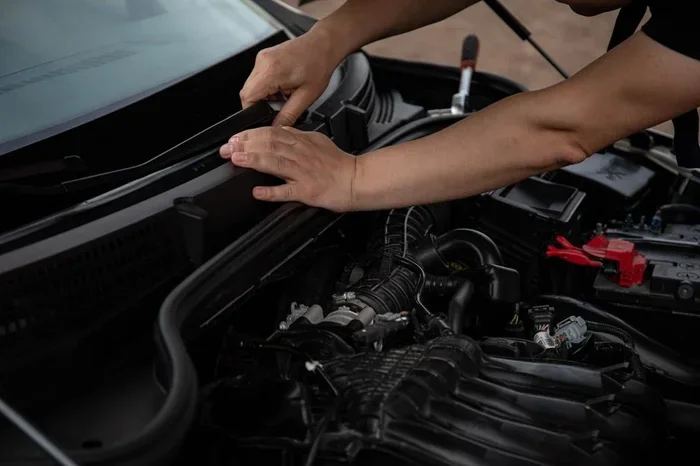
Open the hood and look for the transmission dipstick. On the 2019 Altima, it is usually located near the back of the engine bay, close to the firewall. The handle is often yellow or red, but it may be a simple loop. If you are not sure, consult your owner’s manual. The dipstick is separate from the engine oil dipstick. It is typically shorter and has a different handle. The fill port for the transmission is nearby, but you will use the dipstick to check the level, not to pour fluid directly.
Step 4: Pull the Dipstick and Wipe It
Pull the dipstick out completely. Wipe it clean with a rag. This removes any old fluid clinging to the stick. Hold the rag flat and pull the dipstick through it gently. You want a clean stick for an accurate reading. Reinsert the dipstick all the way back into its tube. Make sure it seats fully. If you do not push it all the way in, the next reading will be wrong.
Step 5: Pull It Out Again and Read the Level
Now pull the dipstick out again. Look at the fluid level on the end of the stick. You will see two marks: a full line and a low line (or holes). The fluid should be between these marks. If it is at or below the low mark, you need to add fluid. If it is at or near the full mark, you are good. Do not overfill. Overfilling can cause foaming and pressure issues in the CVT. Use the dipstick as your check stick and trust the marks. If you are between the lines, you are perfect.
Step 6: Check the Fluid Condition
While the dipstick is out, look at the fluid itself. Healthy transmission fluid is usually pink, red, or translucent. It should feel slick and have a slightly sweet smell. If the fluid is dark brown or black, it is old and needs changing. A burnt smell is a red flag. If you see metal particles or the fluid looks gritty, the transmission may have internal damage. In these cases, a simple top-off is not enough. You will need a professional inspection. The fluid condition tells you as much as the level does.
Step 7: Top Off if Needed
If the fluid is low, use a funnel to add small amounts of Nissan CVT Fluid NS-3. Pour slowly and check the level frequently. Overfilling is just as bad as underfilling. Add a little, reinsert the dipstick, pull it out, and check again. Stop when the fluid is right at the full mark. Once you are done, replace the dipstick securely and close the hood. Wipe up any spills immediately. Clean fluid on the engine bay is easier to spot when you are looking for leaks later.
What the Right Transmission Fluid Looks Like
Understanding fluid condition is just as important as checking the level. The color and smell tell you a lot about the health of your transmission. Here is a quick guide to help you interpret what you see.
Transmission Fluid Condition Guide
| Fluid Condition | Color | Smell | What It Means |
|---|---|---|---|
| Healthy | Pink or Red | Sweet or Mild | Fluid is fresh and working properly. |
| Slightly Old | Light Brown | Mild | Fluid is still okay but nearing change interval. |
| Old and Dirty | Dark Brown or Black | Slightly Burnt | Fluid is degraded. Schedule a change soon. |
| Severely Damaged | Very Dark or Black | Strong Burnt Smell | Transmission may be failing. Seek immediate service. |
| Contaminated | Pink with Metal Flakes | None or Metallic | Internal wear. Do not drive; get a tow. |
Use this table as a quick reference when you check your fluid. If your fluid looks like the last two rows, do not just add more fluid. You need a full fluid and filter change. The 2019 Nissan Altima transmission fluid check is not just about the level; it is also about the quality. A dipstick gives you two pieces of information: how much fluid you have, and how healthy it is.
Common Mistakes to Avoid
Even a simple task can go wrong if you are not careful. Here are some common mistakes people make when checking transmission fluid:
- Checking the fluid when the engine is cold: This gives a false low reading. Always warm up the engine first.
- Using the wrong fluid type: Never use regular automatic transmission fluid (ATF) in a CVT. The 2019 Altima needs Nissan CVT Fluid NS-3.
- Overfilling the transmission: Too much fluid causes foaming and pressure buildup. This can damage seals and lead to leaks.
- Not checking on a level surface: A sloped ground makes the reading inaccurate. Always park on flat concrete or asphalt.
- Ignoring the fluid smell: A sweet or burnt smell is a clear indicator. Do not just look at the color; smell it too.
- Waiting for warning signs: By the time you feel slipping or rough shifts, the problem may already be serious. Check the fluid regularly.
Avoiding these mistakes will help you get accurate results and protect your transmission. A little care goes a long way. Many drivers skip the 2019 Nissan Altima transmission fluid check because they think it is complicated. It is not. The hardest part is remembering to do it.
When to Change the Transmission Fluid
Checking the fluid is not enough. You also need to know when to replace it. The 2019 Nissan Altima owner’s manual recommends changing the CVT fluid every 30,000 to 60,000 miles, depending on driving conditions. If you drive in heavy traffic, tow a trailer, or experience extreme temperatures, you may need to change it more often. Here are some signs that it is time for a fluid change:
- The fluid is dark brown or black, even after a top-off.
- You notice a burnt smell when you check the dipstick.
- Shifts feel rough or delayed, even after topping up the fluid.
- You have driven over 60,000 miles since the last change.
- The transmission makes whining or grinding noises.
A professional transmission fluid change involves draining the old fluid, replacing the filter if applicable, and refilling with fresh Nissan CVT Fluid NS-3. You can do this yourself if you are comfortable, or you can visit a trusted mechanic. Regular changes keep the CVT running smoothly and can prevent the need for a major overhaul. Think of it as an investment in your car’s future.
Quick Tips for Maintaining Your 2019 Nissan Altima Transmission
Here are some extra tips to keep your transmission in top shape between checks:
- Check the fluid every month: Make it a habit. It only takes a few minutes.
- Keep a log: Write down the date and mileage each time you check. This helps you track changes over time.
- Watch for leaks: If you see fluid spots under your car, inspect the transmission area. CVT fluid is reddish and has a slightly oily feel.
- Avoid aggressive driving: Hard acceleration and sudden stops put extra stress on the CVT. Smooth driving extends fluid life.
- Use genuine Nissan parts: When in doubt, stick with OEM fluids and filters. They are designed specifically for your Altima.
- Check the fill port cap: Make sure the cap is tight after any fluid work. A loose cap can cause leaks and contamination.
These small habits add up to big savings. Your transmission will thank you with years of reliable service. A 2019 Nissan Altima transmission fluid check is one of those rare maintenance tasks that is both easy and incredibly valuable.
Expert Insights
According to Nissan service advisors, the most common cause of premature CVT wear is neglected fluid maintenance. Many drivers wait until the transmission starts slipping before they think about the fluid. By then, the damage may already be done. A 2019 Nissan Altima transmission fluid check is a proactive step that takes almost no time. It gives you peace of mind and helps you catch small issues before they become big ones. If you are ever unsure about the fluid condition, do not hesitate to ask a professional. A quick inspection at a Nissan dealer or independent shop can save you a lot of money in the long run. Trust your senses: if the fluid looks or smells wrong, take action immediately.
Conclusion
Checking the transmission fluid on your 2019 Nissan Altima is one of the simplest and most important things you can do as a car owner. It takes just a few minutes, requires no special tools, and can save you from costly repairs. I have walked you through the entire process, from warming up the engine to reading the dipstick and assessing fluid condition. Remember to use the correct Nissan CVT Fluid NS-3, check on a level surface, and never ignore warning signs like a burnt smell or dark color. A little attention now keeps your Altima shifting smoothly for years to come. Make the 2019 Nissan Altima transmission fluid check part of your regular maintenance routine, and your car will reward you with reliable performance every time you hit the road.
Frequently Asked Questions
How often should I check the transmission fluid on my 2019 Nissan Altima?
You should check the transmission fluid at least once a month, or before any long road trip. The 2019 Nissan Altima transmission fluid check is a quick visual inspection that takes only a few minutes. Regular checks help you catch leaks or degraded fluid early.
Can I use regular automatic transmission fluid in my 2019 Altima?
No, the 2019 Altima uses a CVT transmission and requires Nissan CVT Fluid NS-3. Using regular ATF can cause severe damage and void your warranty. Always refer to the owner’s manual for the correct fluid specification.
What does low transmission fluid feel like while driving?
Low fluid often causes the transmission to slip, hesitate, or shift roughly. You might notice a delay when moving from park to drive, or the engine may rev higher than usual without a corresponding increase in speed. If you experience these symptoms, check the fluid level immediately.
Is it normal for transmission fluid to be dark after a few months?
Some darkening is normal over time, but it should not be black or have a burnt smell. If the fluid turns very dark quickly, it could indicate overheating or contamination. In that case, a fluid change is recommended.
Can I check the transmission fluid with the engine off?
For an accurate reading on the 2019 Nissan Altima, the engine should be warm and idling. Checking with the engine off gives a false low reading because the fluid has not fully circulated through the transmission. Always warm up the engine first.
What should I do if I notice metal particles in the fluid?
Metal particles are a sign of internal transmission wear. Stop driving the vehicle and have it towed to a qualified mechanic. Ignoring this can lead to catastrophic transmission failure and very expensive repairs.