Toyota Camry Wont Start but Has Power Common Causes
A Toyota Camry that won’t start but has power is a frustrating but common issue. Usually, the problem lies in the starter motor, ignition switch, fuel pump, or a weak key fob battery. This guide walks you through every likely cause, how to diagnose it yourself, and what fixes actually work. You’ll learn simple checks you can do at home and when it is time to see a mechanic.
There is nothing worse than turning the key or pressing the start button on your Toyota Camry and hearing nothing but silence — or worse, a single click. Your dashboard lights are on. The radio works. The power windows roll up and down. But the engine just will not turn over.
This exact situation happens to Camry owners more often than you might think. The good news is that Toyota Camry won’t start but has power problems usually have a clear cause and a straightforward fix. You do not need to be a mechanic to figure out what is going on.
In this article, we will break down every common reason your Camry has electrical power but refuses to start the engine. We will cover what to listen for, what to check, and exactly how to solve the problem. Whether you are dealing with a dead key fob or a failing starter motor, we have you covered.
Key Takeaways
- Power but no start usually means: the starter, ignition switch, fuel system, or immobilizer is the culprit.
- You can test several causes at home with basic tools and no mechanic skills.
- A dead key fob battery is one of the easiest and most overlooked fixes.
- Replacing a faulty starter motor typically costs between $200 and $400.
- Ignoring the problem can lead to bigger repairs, so early diagnosis saves money.
- Regular maintenance like battery checks and fuel filter changes prevents most starting issues.
📑 Table of Contents
Why Does Your Toyota Camry Have Power But Won’t Start?
When we say your Camry “has power,” we mean the electrical systems are working. The battery is alive enough to run your lights, dashboard, and infotainment screen. But the engine itself is not cranking or firing up.
This distinction is important because it tells you where the problem is not. Your battery is not completely dead. The charging system is likely fine. The issue is somewhere in the starting system, the fuel delivery system, or the immobilizer security system.
Understanding this simple fact will help you narrow down the cause quickly. Instead of guessing, you can follow a logical checklist and find the answer faster.
The Difference Between “No Crank” and “Cranks But Won’t Start”
Before diving into causes, it helps to know exactly what your Camry is doing — or not doing — when you turn the key.
No crank: You hear nothing. The engine does not turn at all. This usually points to the starter motor, ignition switch, or neutral safety switch.
Cranks but won’t start: You hear the engine spinning but it will not fire up. This often means a fuel pump problem, spark plug issue, or a clogged fuel filter.
Both situations fall under the umbrella of “Toyota Camry won’t start but has power,” but the fix is very different for each one.
Common Causes When Your Camry Won’t Turn Over
Let us get into the specific reasons your Camry has electrical power but will not start the engine. These are the most common culprits we see in Camry models from 2007 to 2024.
1. Faulty Starter Motor
The starter motor is the electric motor that cranks your engine when you turn the key. When it fails, you might hear a single click or nothing at all — even though your dashboard lights are bright.
Signs of a bad starter motor include:
- A single loud click when you turn the key
- No sound at all from the engine
- Intermittent starting problems that come and go
- Grinding noises when the engine does eventually turn
Starter motors wear out over time, especially in higher-mileage Camrys. Replacing one is a common repair that most mechanics can handle in an hour or two.
2. Ignition Switch Problems
The ignition switch is the component that sends electrical signals from your key to the engine. When it goes bad, your Camry gets power but the signal to start the engine never reaches the starter.
Watch for these signs:
- The key feels loose or wiggles in the ignition
- Your dashboard flickers when you turn the key
- The Camry starts sometimes but not every time
- Accessories work but the engine will not crank
Ignition switch failures are more common in older Camry models with higher mileage. The good news is that replacing the switch is a relatively affordable repair.
3. Dead or Weak Key Fob Battery
If your Camry uses a push-button start, a weak key fob battery can prevent the engine from starting — even though everything else works perfectly. The car recognizes the fob has low power and refuses to allow starting.
This is one of the easiest fixes on this entire list. Simply replace the battery in your key fob with a new CR2032 coin cell battery. It costs about $3 and takes 30 seconds.
Tip: Keep a spare key fob battery in your glove box. You never know when you will need it.
4. Fuel Pump Failure
The fuel pump sends gasoline from the tank to the engine. When it fails, the engine cranks but will not start because it is not getting fuel. This is a classic cranks but no start scenario.
Signs of a failing fuel pump include:
- The engine cranks for a long time before starting (or never starts)
- You hear a faint humming sound from the back of the car when you turn the key to “on”
- The Camry stalls randomly while driving
- Loss of power when driving uphill or under load
Fuel pumps can fail due to age, contaminated fuel, or running the tank too low too often. Replacing a fuel pump is more expensive than other fixes, typically costing between $400 and $700 for parts and labor.
5. Immobilizer or Anti-Theft System Malfunction
Modern Toyota Camrys have an immobilizer system that prevents the engine from starting unless it recognizes the correct key or key fob. When this system malfunctions, your Camry has power but will not start.
Common triggers for immobilizer issues include:
- A damaged or unprogrammed key fob
- A faulty antenna ring around the ignition cylinder
- An error in the powertrain control module
- Water damage to the key fob or antenna
If the security light flashes on your dashboard when you try to start the Camry, the immobilizer is likely the cause.
6. Neutral Safety Switch Failure
The neutral safety switch prevents the Camry from starting unless the transmission is in Park or Neutral. When this switch fails, the car has power but the engine will not crank — even if the key turns.
You can test this by wiggling the gear shifter while turning the key. If the Camry starts when you move the shifter slightly, the neutral safety switch is your problem.
This is a simple and inexpensive fix that most auto shops can complete quickly.
How to Diagnose the Problem Yourself
You do not need to be a professional mechanic to figure out why your Toyota Camry won’t start but has power. With a few basic tools and some patience, you can narrow down the cause in under 30 minutes.
Step 1: Listen Carefully
When you turn the key or press the start button, what do you hear? A single click? Nothing at all? A rapid clicking sound? The sound tells you a lot about what is going wrong.
A single click often means a bad starter motor. Rapid clicking usually means a weak battery. Silence with working dashboard lights points to the ignition switch or neutral safety switch.
Step 2: Check the Key Fob Battery
If your Camry has push-button start, try the mechanical backup key that is hidden inside your fob. Use it to start the car directly. If the Camry starts with the backup key, your fob battery is dead and needs replacement.
Step 3: Inspect the Battery Terminals
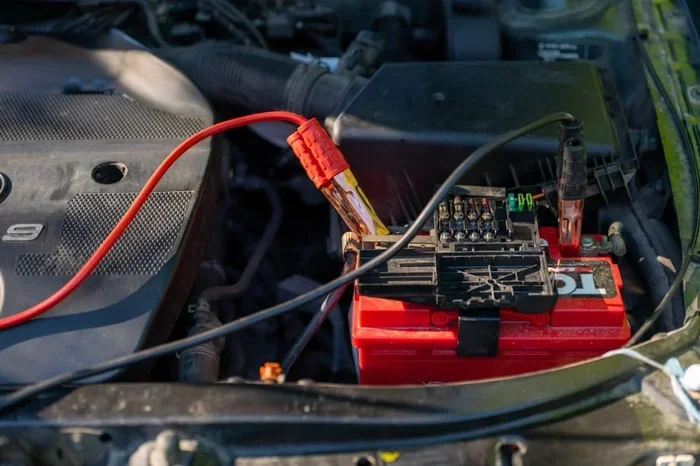
Even if your dashboard lights work, corroded battery terminals can prevent enough current from reaching the starter motor. Look at the positive and negative terminals on your battery. If you see white or greenish buildup, clean it off with a wire brush and baking soda solution.
Step 4: Test the Fuel Pump
Turn the key to the “on” position without starting the engine. Listen for a brief humming sound coming from the back of the car, near the fuel tank. If you hear nothing, the fuel pump may have failed.
Step 5: Check the Fuse Box
A blown fuse in the starter circuit can cause all the symptoms we have been discussing. Check the fuse box under your hood and look for any blown fuses related to the starter or ignition system.
Fixing the Most Common Culprits
Once you have identified the cause, the next step is fixing it. Here is a quick look at what each repair involves.
| Problem | Typical Cost | Difficulty | DIY Friendly? |
|---|---|---|---|
| Dead key fob battery | $3 – $10 | Very Easy | Yes |
| Corroded battery terminals | $0 – $15 | Easy | Yes |
| Neutral safety switch | $100 – $200 | Moderate | With experience |
| Ignition switch | $150 – $300 | Moderate | With experience |
| Starter motor | $200 – $450 | Moderate to Hard | With help |
| Fuel pump | $400 – $700 | Hard | No |
| Immobilizer issue | $100 – $500 | Varies | Depends on cause |
If you are not comfortable doing any of these repairs yourself, take your Camry to a trusted mechanic. The diagnostic fee is usually worth it because it saves you from buying parts you do not need.
When to Call a Professional Mechanic
Some starting problems are simple enough to handle at home. But others require professional tools and expertise. You should call a mechanic if:
- You have checked all the simple causes and the Camry still will not start
- The check engine light is also on
- You suspect the powertrain control module has failed
- You need to reprogram or replace a key fob
- The car starts sometimes and not others, making diagnosis difficult
A professional mechanic has diagnostic scanners that can read error codes from your Camry’s computer. These codes often point directly to the problem, saving you time and money in the long run.
Preventing Future Starting Problems
The best way to deal with a Toyota Camry that won’t start is to prevent the problem from happening in the first place. Here are some simple habits that keep your Camry starting reliably for years to come.
- Replace your key fob battery every 2 to 3 years before it dies unexpectedly
- Keep your fuel tank above a quarter full to protect the fuel pump from overheating
- Inspect battery terminals every 6 months for corrosion
- Change your fuel filter according to Toyota’s recommended schedule
- Avoid turning the key to “start” for more than 5 seconds at a time to protect the starter motor
- Have your Camry’s starting system inspected during every regular oil change
These small habits add up to big savings. A well-maintained Camry will start reliably for well over 200,000 miles when you take care of it properly.
Final Thoughts on Toyota Camry Won’t Start But Has Power
A Toyota Camry that won’t start but has power is almost always caused by one of the issues we covered in this guide. Whether it is a dead key fob battery, a failing starter motor, or a broken fuel pump, the problem is almost always fixable.
Start with the simplest and cheapest fixes first. Check the key fob battery. Inspect the battery terminals. Test the fuel pump hum. You might solve the problem in five minutes without spending a dime.
If the problem is more serious, now you know exactly what to look for and what to expect in terms of repair costs. The most important thing is to act quickly. Ignoring a starting problem can lead to being stranded or causing additional damage to your Camry.
Keep this guide bookmarked. The next time your Toyota Camry won’t start but has power, you will know exactly what to do.
Frequently Asked Questions
Why does my Toyota Camry have power but won’t start?
The most common reasons are a faulty starter motor, a bad ignition switch, a dead key fob battery, or a failed fuel pump. Since the electrical systems work, the battery itself is usually fine. The problem is in the starting or fuel delivery system.
How do I know if my starter motor is bad?
You will usually hear a single click when you turn the key, or nothing at all. The dashboard lights will be bright, but the engine will not crank. A mechanic can test the starter with a multimeter to confirm the diagnosis.
Can a dead key fob battery cause a Camry not to start?
Yes, absolutely. Camrys with push-button start rely on the key fob to communicate with the car. A weak fob battery prevents that communication, so the engine will not start even though the car has full electrical power.
How much does it cost to fix a Toyota Camry that won’t start?
Costs range from about $3 for a key fob battery to $700 for a fuel pump replacement. Most common fixes like a starter motor or ignition switch fall between $150 and $450 including parts and labor.
Is it safe to drive a Camry that has starting problems?
It depends on the cause. If the car sometimes starts and sometimes does not, it can leave you stranded. It is best to diagnose and fix the problem as soon as possible rather than risking getting stuck somewhere.
Can a blown fuse cause a Toyota Camry not to start?
Yes, a blown fuse in the starter or ignition circuit can prevent the engine from cranking even though the car has electrical power. Checking the fuse box is one of the first and easiest diagnostic steps you can take.
=== CONCLUSION ===
A Toyota Camry won’t start but has power situation is more common than most people realize, and the fix is usually simpler than you expect. From a dead key fob battery to a failing starter motor, the causes range from free to a few hundred dollars in repair costs.
The key is to work through the list systematically. Start with the easiest checks and work your way toward more complex possibilities. You will save time, money, and a lot of frustration along the way.
Keep your Camry well-maintained, pay attention to warning signs, and you will keep that engine turning over reliably for years to come.