Why Do Desk Lamps Have Green Shades
Green shades on vintage desk lamps, especially the iconic “green banker’s lamp,” served a crucial purpose beyond style. They filtered harsh yellow gaslight and early electric light, reducing eye strain by providing a cooler, more natural light spectrum that mimicked daylight. This practical design, born in the 19th century, leveraged color science to improve visual comfort and focus for detailed work like reading and accounting. While modern LEDs offer different solutions, the green shade remains a beloved symbol of thoughtful, ergonomic design.
Walk into any antique shop, a classic library, or a film noir detective’s office, and you’ll likely spot them: those beautiful, heavy glass desk lamps with a deep, rich green shade. They hum with history, casting a distinctive, soft glow. But why green? It’s not just a quirky vintage fashion choice. The green shade was a brilliant piece of practical engineering, a solution to a very real problem faced by readers, writers, and bankers over a century ago. It’s a story of light, color, and human comfort.
To understand the “why,” we must travel back to an era before soft-white LEDs and adjustable color temperatures. We need to picture the light of the late 1800s and early 1900s. The dominant light sources were gas flames and the first generation of electric incandescent bulbs. These lights weren’t the clean, white light we aim for today. They emitted a strong, warm, yellow-orange hue. For someone hunched over a ledger, a letter, or a set of blueprints, this light was problematic. It caused glare, made it hard to distinguish between similar-colored inks or pencil marks, and led to rapid eye fatigue. The green shade was the elegant, effective answer to this problem.
Key Takeaways
- Understanding Why Do Desk Lamps Have Green Shades: Provides essential knowledge
📑 Table of Contents
The Historical Origins: From Gaslight to the Iconic Banker’s Lamp
The story of the green desk lamp shade is intrinsically linked to the history of artificial light itself. Before electricity, offices and homes were lit by gas jets. Gaslight produced a luminous flame rich in yellow and red wavelengths. This light was bright but visually harsh and uneven. The solution? Shades and globes made from opal or colored glass. These didn’t just diffuse the light; they could alter its color quality.
The Emergence of the “OSG” and Banker’s Lamp
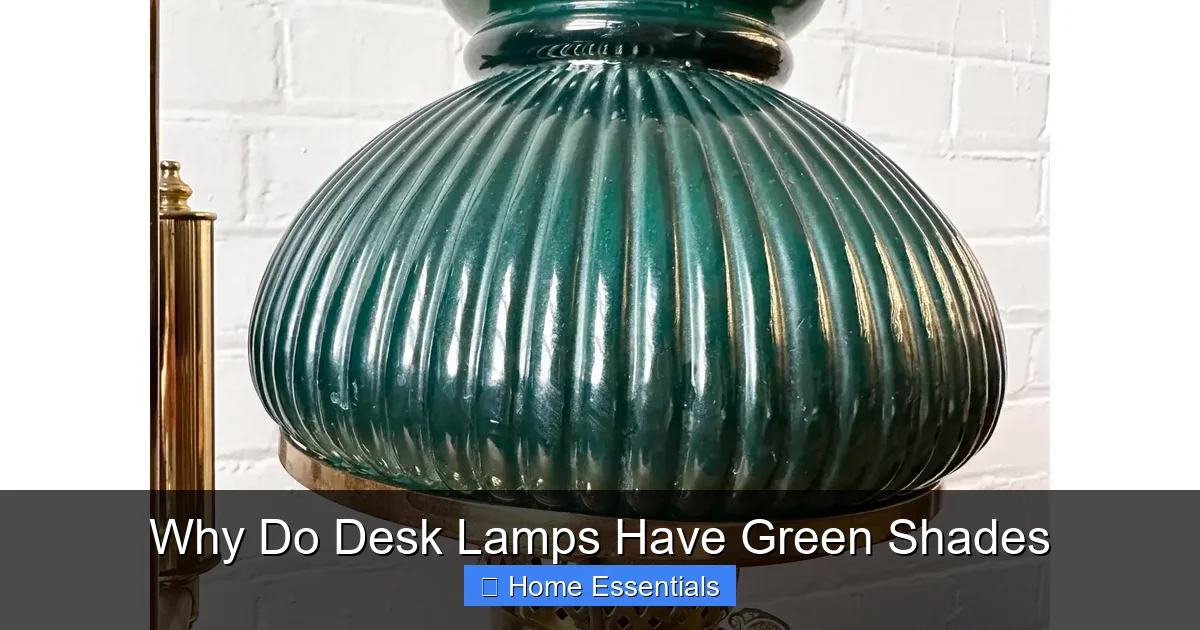
The most famous iteration is undoubtedly the “OSG” lamp, a trademarked name that became generic. OSG stood for “Ocular Spectrum Glass.” The company, originating in the UK, produced shades with a specific green tint. This wasn’t a random color choice. It was scientifically formulated to counteract the dominant warm hues of gas and early electric light. The shade absorbed the “bad” red and yellow rays and transmitted a cooler, more balanced light that was easier on the eyes for extended periods. The classic design—a heavy, weighted base, a slender adjustable arm, and that unmistakable green glass shade with a pull-chain switch—became known as the banker’s lamp. It was the standard issue for bank tellers, accountants, lawyers, and scholars. Its association with professionalism, precision, and meticulous work was cemented.
When electric light became widespread, the same principle applied. Early incandescent bulbs, while an improvement over gas, still had a warm color temperature (around 2700K-3000K), similar to today’s “warm white” bulbs. The green shade continued its vital work, filtering this yellow-heavy light. Modern smart bulbs can now mimic this color adjustment digitally, but for decades, physical glass was the only way to achieve it. The green shade wasn’t a decoration; it was a tool, as essential to the professional’s desk as a fountain pen or ledger book.
The Science of Green: Color Theory and Eye Comfort
Why green specifically? The answer lies in basic color theory and human physiology. Our eyes have three types of cone cells sensitive to red, green, and blue light. The discomfort from artificial light isn’t just about brightness; it’s about spectral imbalance.
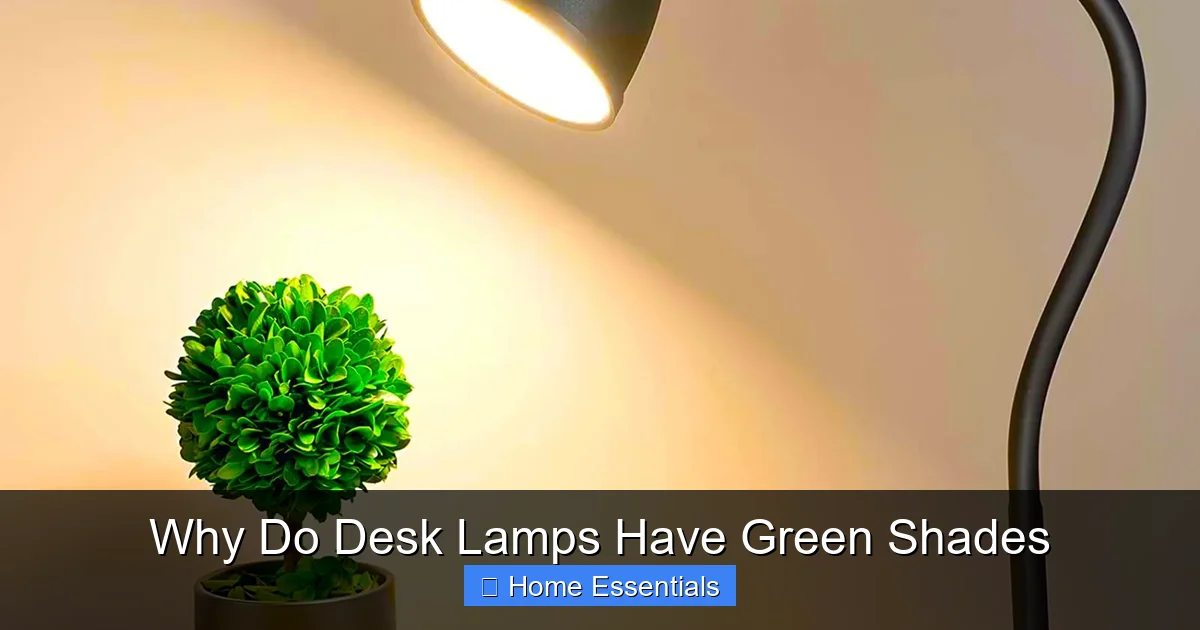
Visual guide about Why Do Desk Lamps Have Green Shades
Image source: m.media-amazon.com
Neutralizing the “Warm” Spectrum
Early light sources were deficient in blue and green wavelengths and overly rich in red and yellow. This imbalance causes several issues:
- Increased Glare: Short-wavelength blue light scatters more in the eye, contributing to glare. A green filter reduces the overall intensity of the warmer, longer wavelengths that also contribute to a harsh, scattering effect.
- Reduced Contrast: For tasks involving black ink on off-white paper (very common then), the yellow light lowers the contrast between the ink and paper, making it harder to see fine details clearly.
- Eye Muscle Fatigue: To focus, the eye’s ciliary muscle adjusts the lens. Imbalanced light can cause this muscle to work harder and tire more quickly.
A green filter works because green is the complementary color to red. On the color wheel, they are opposites. By placing a green filter over a light source rich in red/yellow, the filter absorbs those dominant wavelengths and transmits green and some blue. The result is a light that appears cooler, whiter, and more balanced to our eyes. This “neutralized” light provides better definition between colors (like blue ink on yellow paper), reduces overall glare, and allows the eye’s focusing muscle to relax. It essentially creates a more natural, daylight-like spectrum at the desk, which is precisely what the human visual system evolved to handle. This principle is why modern task lamps often offer “daylight” or “cool white” settings around 5000K—they are chasing the same visual clarity our ancestors achieved with a piece of green glass.
Design and Ergonomics: More Than Just a Color
The green shade’s effectiveness was amplified by the physical design of the banker’s lamp itself. It wasn’t just a colored cover; it was part of a carefully considered system.
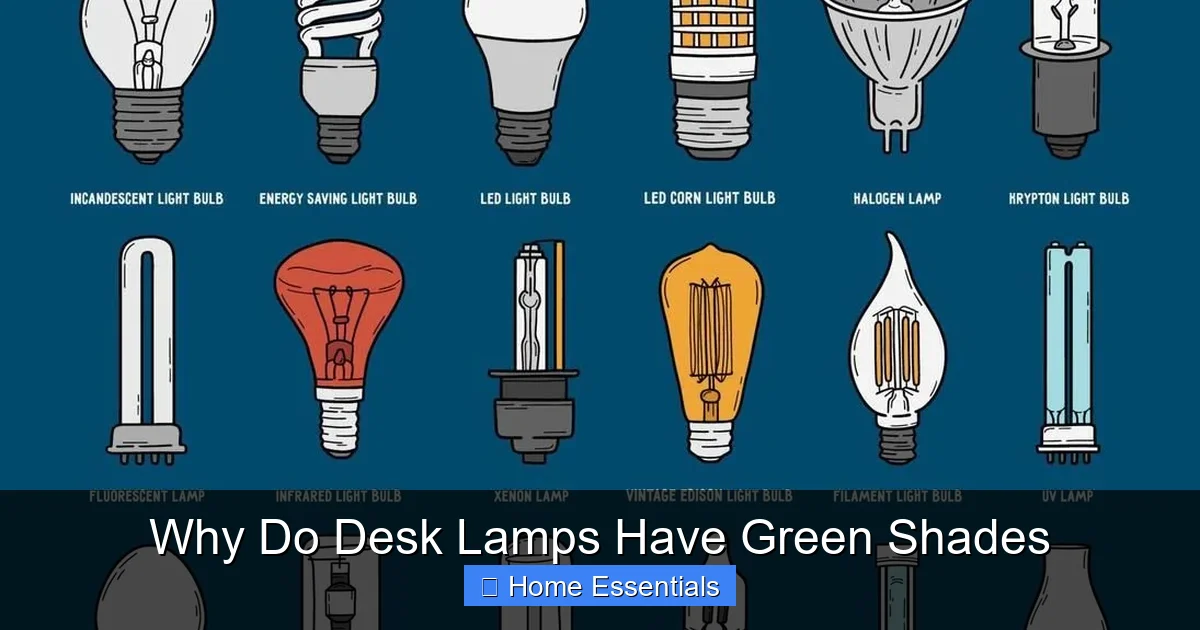
Visual guide about Why Do Desk Lamps Have Green Shades
Image source: i.pinimg.com
Shape, Material, and Function
The classic shade shape is a wide, shallow dome or bell. This shape is crucial:
- Wide Aperture: It casts a broad, even pool of light across the work surface, minimizing harsh shadows.
- Shallow Depth: It directs light downward and outward without creating a deep, cavernous shadow directly under the lamp.
- Glass Material: Unlike fabric or paper shades, the solid glass completely contains the bulb. This prevents any direct, un-diffused glare from the bare bulb filament, which is a major source of eye strain. The glass itself, often ribbed or textured, further diffuses the light through refraction, softening it even before the green tint is applied.
The heavy, stable base and the flexible arm (originally made of counterweighted brass) allowed for precise positioning. You could angle the light exactly where you needed it—onto an open book, a specific column in a ledger—without the lamp tipping over. This adjustability, combined with the non-glare, color-corrected light, created an ergonomic workstation long before the term “ergonomic” was coined. It was a complete system for visual comfort. For anyone setting up a traditional study or writing nook today, cleaning and maintaining that thick glass shade properly is key to preserving this function; smudges and dirt will scatter light and undo the careful diffusion.
The Green Shade in the Modern Context
So, do we still need green shades? With the advent of LEDs and smart lighting, the technical imperative has faded, but the lamp’s legacy is stronger than ever.
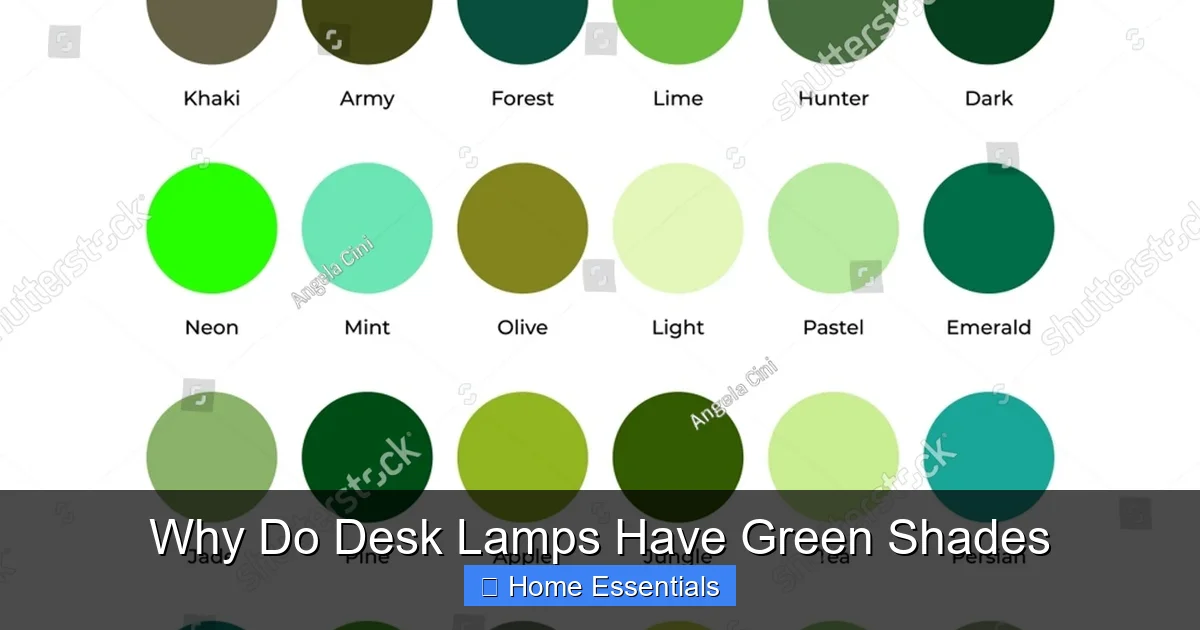
Visual guide about Why Do Desk Lamps Have Green Shades
Image source: shutterstock.com
Aesthetic and Psychological Appeal
Today, the green banker’s lamp is cherished primarily for its iconic aesthetic. It symbolizes:
- Nostalgia & Craftsmanship: It represents a pre-digital era of tangible work, quality materials (heavy brass, hand-blown glass), and built-to-last products.
- Stability & Trust: Its association with banks and law offices gives it an air of seriousness, reliability, and permanence.
- Warm, Ambient Glow: Even without its original functional purpose, the green glass creates a uniquely warm, intimate, and focused atmosphere that a plain white LED bulb cannot replicate. It’s a design statement.
However, the core principle of color-corrected task lighting is absolutely alive. Modern smart bulbs and dedicated task lamps achieve the same goal—reducing eye strain—through different means. They offer adjustable color temperatures (CCT), allowing you to set a cool, blue-enriched “daylight” mode (5000K-6500K) for concentration and a warm, relaxing mode for evening use. Some even have “circadian rhythm” settings that automatically shift color temperature throughout the day. The green shade was a passive, fixed filter. Modern tech is an active, programmable solution. But the *why* is identical: to provide the right light for the task and protect the user’s vision.
Choosing and Caring for a Vintage Green Shade Lamp
If you’re drawn to these classic lamps, here’s what you need to know to choose and care for one properly.
What to Look For When Buying
- Authenticity: True OSG-style shades are made from thick, heavy glass, often with a slight greenish tint when held up to the light but appearing a deep, opaque green when lit. They may have a textured or ribbed exterior. Very light, thin glass shades are likely reproductions or from a different maker.
- Condition: Check for cracks, chips (especially around the rim where it screws in), and heavy mineral deposits or etching inside from years of bulb heat. Minor wear is expected; major damage affects both safety and value.
- Wiring & Safety: This is critical. Vintage wiring is often cloth-covered and unsafe by modern standards. Always have the lamp rewired by a qualified electrician before plugging it in. Replace the old socket with a modern, UL-listed one rated for the bulb wattage you plan to use.
- Bulb Choice: Use an LED bulb that mimics the warm light the shade was designed for, or a vintage-style carbon filament bulb for authenticity. Never exceed the wattage rating on the socket. A 40-60 watt equivalent LED is usually plenty.
Cleaning and Maintenance
The thick glass can accumulate dust and, over decades, a faint film from bulb heat and environmental oils. Cleaning requires care:
- Ensure the lamp is COLD and unplugged.
- Remove the shade carefully. It will be heavy.
- Use a soft microfiber cloth. This is ideal because it won’t scratch the glass and is highly effective at trapping dust. If your microfiber cloth is leaving streaks, it may be dirty or overloaded with detergent residue from washing; rinse it thoroughly with clean water and air-dry.
- For general dusting, a dry microfiber cloth is sufficient.
- For grime, dampen the cloth slightly with a solution of mild dish soap and water. Wring it out thoroughly so it’s only slightly damp. Gently wipe the exterior and interior.
- Immediately dry with a clean, dry microfiber cloth to prevent water spots.
- Never use abrasive cleaners, ammonia, vinegar, or window sprays directly on the glass, as they can damage the historic patina and coloring.
By respecting its construction and cleaning it gently, your green shade lamp will continue to cast its beautiful, functional glow for another century.
Conclusion: A Legacy of Practical Design
The green shade on a vintage desk lamp is far more than a retro aesthetic. It is a testament to a time when design was driven by a direct, physical need to solve a human problem: eye strain under poor-quality artificial light. Through a simple, elegant application of color theory, craftsmen created a tool that made intellectual and financial labor more sustainable. The “banker’s lamp” became iconic because it worked brilliantly. While we no longer need green glass to filter our light—our bulbs and smart systems can adjust color temperature at the touch of a button—we should remember the lesson. Good design, at its core, is about improving human experience. The next time you see that deep green glow, you’ll know it’s the warm light of history, filtered through science, and dedicated to the simple, profound goal of letting us see better and work longer without pain. It’s a reminder that the best innovations are often the ones we don’t even notice because they work so perfectly.
Frequently Asked Questions
Are green desk lamp shades still functional for reducing eye strain today?
They can still reduce glare from warm bulbs, but their fixed green tint isn’t the optimal solution for modern lighting. Today, adjustable “daylight” or high-CRI LEDs are more effective and versatile for eye comfort during detailed work.
What is the proper name for the classic green banker’s lamp shade?
It’s most famously known as an “OSG” shade, which stood for “Ocular Spectrum Glass,” a trademarked name that became generic. It’s also commonly referred to as a “banker’s lamp shade” or “green glass shade.”
Can I put a modern LED bulb in my vintage green shade lamp?
Yes, and it’s highly recommended. Use a warm white LED (2700K-3000K) to complement the green filter, or a cool white (5000K) to maximize the color-correcting effect. Ensure the bulb’s wattage equivalent is within the lamp’s rated limit, and have the wiring inspected by an electrician for safety.
Why does the green shade sometimes look almost black when the lamp is off?
The glass is heavily doped with metal oxides (like cobalt or copper) to create the deep green color. This makes it highly opaque, so it appears very dark, almost black, when unlit because it absorbs most visible light rather than transmitting it.
Is the green color in the shade just a surface coating or is it in the glass itself?
For authentic vintage shades, the color is integral to the glass. The coloring agents are mixed into the molten glass, so the color is throughout the material. This is why scratches or wear don’t easily reveal a clear layer underneath; the color is permanent and part of the glass’s structure.
Do other colors of vintage glass shades exist for desk lamps?
Yes, but they are far less common. You can find shades in amber, blue, red, and milk glass (opaque white). The green shade was the most popular because its color-correcting properties were scientifically validated for the light sources of the era. Other colors were more decorative or used for specific atmospheric effects.