Adjustable Monitor Stand for Desk
An adjustable monitor stand for desk is a simple upgrade that dramatically improves your comfort and productivity. It elevates your screen to the perfect eye level, reducing neck strain and back pain. These stands also free up valuable desk real estate underneath for storage and include smart cable management to tidy your setup. Choosing the right one involves considering height range, weight capacity, and build quality to match your specific monitor and desk.
Key Takeaways
- Ergonomic Health is Primary: The core benefit is achieving proper screen height and angle to maintain a neutral neck position, preventing chronic pain and discomfort.
- Space Reclamation is Instant: Lifting your monitor creates a significant “void” underneath, perfect for stashing keyboards, notebooks, or peripheral devices.
- Cable Management is Key: Most quality stands feature built-in channels or clips to route cables neatly, eliminating visual clutter and dust traps.
- Compatibility is Crucial: Always check your monitor’s VESA mounting pattern (if using a clamp) and its total weight against the stand’s specifications.
- Material Dictates Durability: Stands range from lightweight plastic to heavy-duty steel; choose based on your monitor’s weight and desired stability.
- Adjustability Varies Widely: Consider if you need simple height adjustment, full articulation (tilt, swivel, pivot), or gas spring lift for effortless movement.
- Clamp vs. Grommet Mount: Clamp mounts are universal but require desk edge thickness specs; grommet mounts need a hole in your desk but offer a cleaner, integrated look.
[FEATURED_IMAGE_PLACEHOLDER]
📑 Table of Contents
- Why Your Desk Desperately Needs an Adjustable Monitor Stand
- The Health Imperative: Ergonomics Made Simple
- Space Optimization: Unlock Your Desk’s True Potential
- Choosing Your Stand: A Buyer’s Guide to Features
- Assembly, Installation, and Daily Use
- Beyond the Basics: Advanced Features and Setups
- Maintaining a Clean and Organized Workspace
- Conclusion: Your Upgrade Awaits
Why Your Desk Desperately Needs an Adjustable Monitor Stand
Let’s be honest. That stack of books or old cardboard box propping up your computer monitor? It’s not doing you any favors. It’s a temporary fix that leads to sore necks, tired eyes, and a desk that feels perpetually cluttered. An adjustable monitor stand for desk is one of the most cost-effective, high-impact upgrades you can make to your home office or gaming setup. It’s not just about lifting a screen; it’s about engineering a healthier, more organized, and more efficient workspace tailored entirely to your body’s needs.
The modern desk is a command center. It holds our computer, our tools, our coffee, and often far too many scraps of paper. Real estate is precious. When your monitor sits directly on the desk surface, it commandeers the most central, valuable territory. By elevating it, you unlock that space. Suddenly, you have room for a proper keyboard tray, a notepad, or even just a clear area to spread out a project. But the real magic is in the adjustment. No two people are built the same, and no two desks are identical. A fixed stand or a wobbly stack of books forces you to contort yourself to the equipment. An adjustable stand does the opposite—it allows you to position your screen with precision, creating a personalized ergonomic sanctuary.
The Health Imperative: Ergonomics Made Simple
If you spend more than a couple of hours a day at your desk, ergonomics isn’t a luxury; it’s a necessity. Poor monitor placement is a leading cause of “tech neck,” a modern ailment characterized by chronic stiffness, headaches, and upper back pain. The solution is beautifully straightforward: your eyes should look slightly downward at the center of your screen when your head is in a neutral, upright position. This typically means the top of your monitor should be at or just below eye level.
Visual guide about Adjustable Monitor Stand for Desk
Image source: m.media-amazon.com
Finding Your Perfect Viewing Angle
An adjustable monitor stand empowers you to find this sweet spot. Start by sitting in your usual working posture, feet flat on the floor, arms at a 90-degree angle to your keyboard. Now, look straight ahead. That’s your horizontal eye line. Your monitor’s center should be 15-20 degrees below this line. Use the stand’s height adjustment to raise or lower the screen until it’s perfect. Don’t forget tilt! A slight backward tilt (top of screen tilted away from you) can help align the screen perpendicular to your line of sight, reducing glare and squinting. Some stands even offer swivel and pivot (rotation to portrait mode), which is invaluable for programmers, writers, or anyone who works with long documents or code.
The Ripple Effect on Your Body
When your monitor is too low, you compensate by jutting your chin forward and hunching your shoulders. This puts immense strain on the suboccipital muscles at the base of your skull (hello, tension headaches!) and the trapezius muscles in your upper back. Over time, this becomes a habitually poor posture that’s hard to correct. By setting a correct, neutral starting position with an adjustable stand, you make it easy and natural to sit up straight. Your head is supported by your spine, not your neck muscles. Your shoulders relax. The benefits cascade: less fatigue, fewer headaches, and more sustained focus throughout the day. It’s a passive form of physical therapy for your workspace.
Space Optimization: Unlock Your Desk’s True Potential
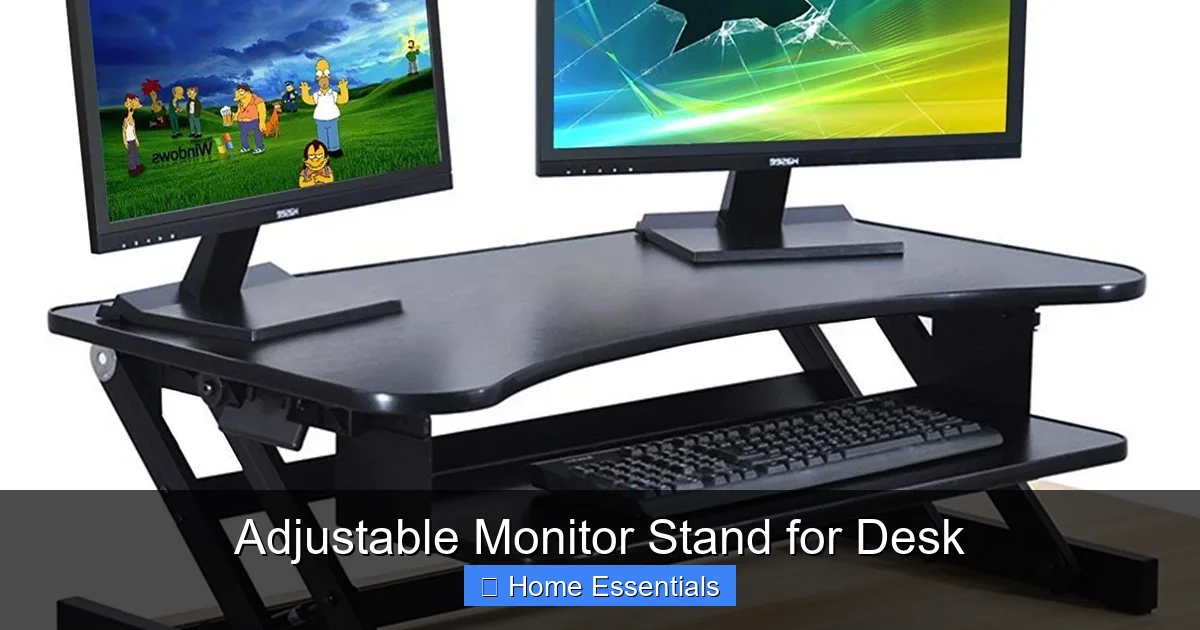
That space under your monitor isn’t just dead volume; it’s prime real estate. An adjustable monitor stand for desk acts as an instant, multi-story expansion for your workspace. Think about what currently clutters your desk surface: a keyboard when not in use, a notebook, a tablet, a webcam, a ring light, a cup of pens. All of these can find a new, organized home beneath your elevated screen.
Visual guide about Adjustable Monitor Stand for Desk
Image source: corporatearmor.com
Strategic Storage Solutions
Many stands go beyond simple elevation. Look for models with built-in storage shelves or a secondary platform. This is perfect for placing your keyboard when you’re not typing (freeing up the main desk surface for writing or drawing), housing a laptop on a riser, or keeping frequently used accessories like headphones or a second monitor’s base within easy reach but out of the main work zone. This vertical organization strategy makes your desk feel larger and more intentional. It’s not about hiding things away in a drawer; it’s about giving every item a designated, accessible spot on your desk ecosystem.
The Keyboard Tray Revelation
One of the most transformative outcomes of using a monitor stand is the seamless integration of a keyboard tray. With the monitor lifted, you can slide a full-sized keyboard and mouse completely under the stand when not in use. This creates a completely clear desk surface for activities that require physical space—like sketching, reading large documents, or even just enjoying a clean, minimalist look. For gamers, it means effortless transition between gaming and browsing. For hybrid workers, it means a swift switch from computer work to a analog task like journaling or planning. This flexibility is a game-changer for productivity and mental clarity.
Choosing Your Stand: A Buyer’s Guide to Features
Not all adjustable monitor stands are created equal. The market is full of options, from budget-friendly basic risers to high-end, fully articulating arms. Making the right choice depends on understanding your specific needs, your monitor’s specs, and your desk’s construction. Rushing this decision can lead to a wobbly, frustrating setup.
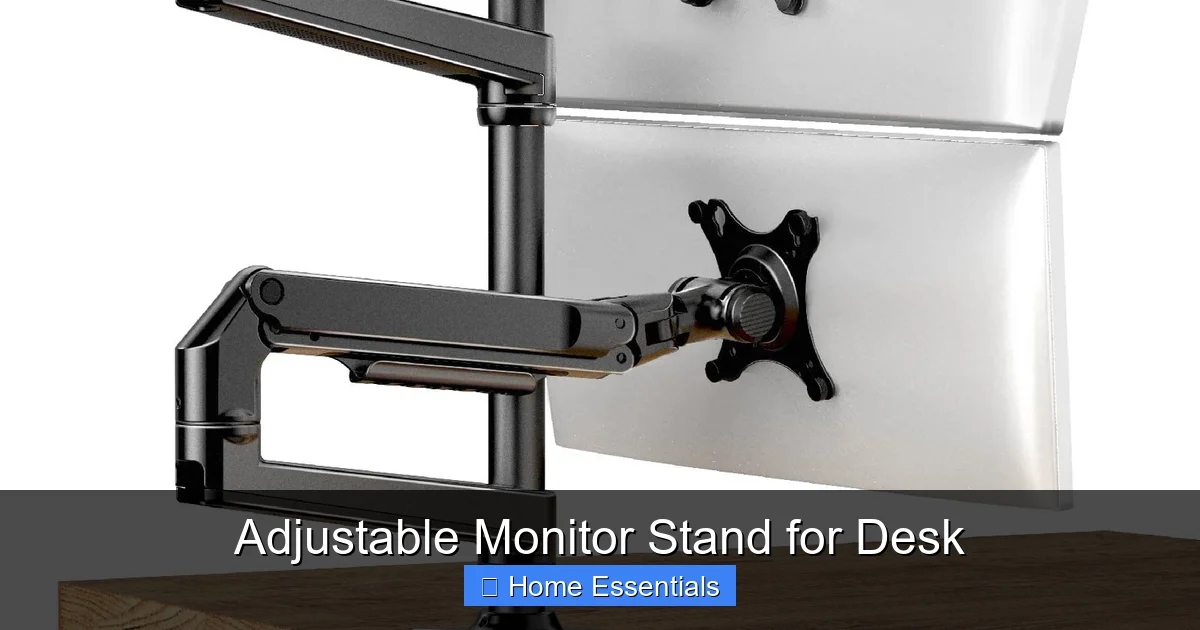
Visual guide about Adjustable Monitor Stand for Desk
Image source: m.media-amazon.com
Mounting Methods: Clamp vs. Grommet vs. Freestanding
This is your first and most critical decision. A clamp mount attaches to the edge of your desk. It’s the most common and versatile, working on most standard desks. However, you must check the clamp’s opening range—it needs to fit your desk’s edge thickness (usually 0.5″ to 3.5″). A grommet mount requires a hole (typically 1.5″-3″ in diameter) drilled through your desk surface. It creates a much cleaner, integrated look with no clamp visible from the side, but it’s a permanent modification. Freestanding stands sit on the desk surface and have a weighted base. They are the simplest to set up but often take up more footprint and can be less stable for very large or heavy monitors, especially if you apply pressure to the screen.
Weight Capacity and VESA Compatibility
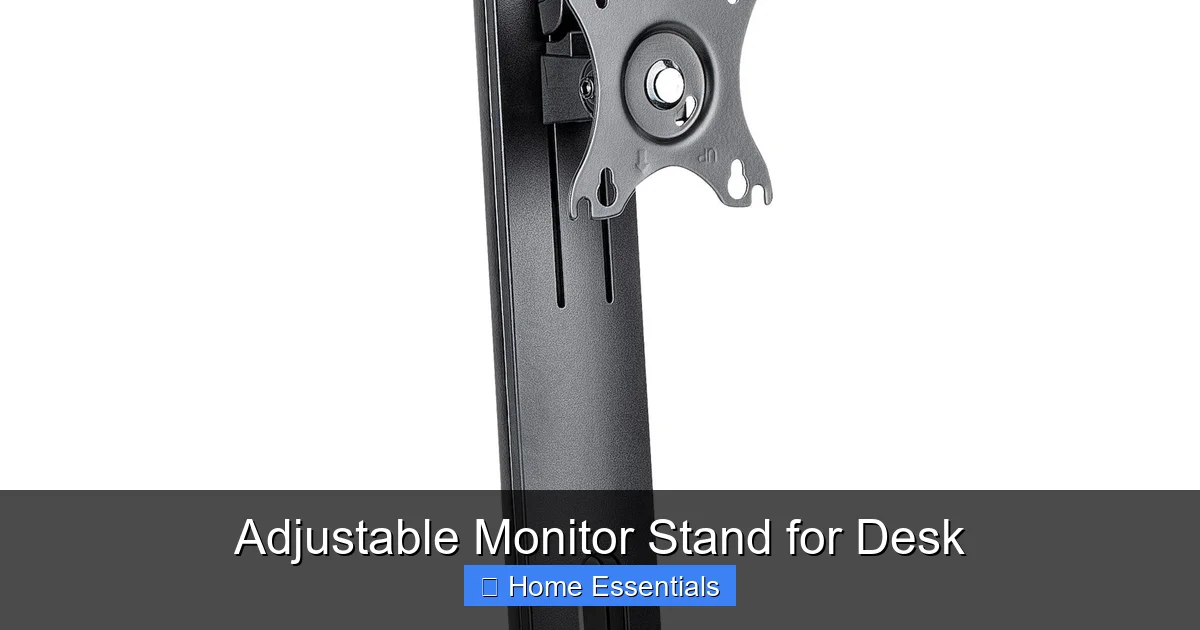
Every monitor has a weight. Every stand has a maximum weight capacity. Never exceed this. Overloading a stand risks catastrophic failure and damage to your expensive monitor. Check your monitor’s spec sheet for its weight. Next, understand VESA mounting. This is the standardized hole pattern on the back of your monitor (e.g., 75x75mm, 100x100mm). Your stand’s mount must be compatible with this pattern. Most modern monitors use VESA, but some ultra-thin or all-in-one models do not and may require a specific adapter or a different style of stand that uses the monitor’s own base. When in doubt, measure the distance between the mounting holes on your monitor’s back.
The Spectrum of Adjustability
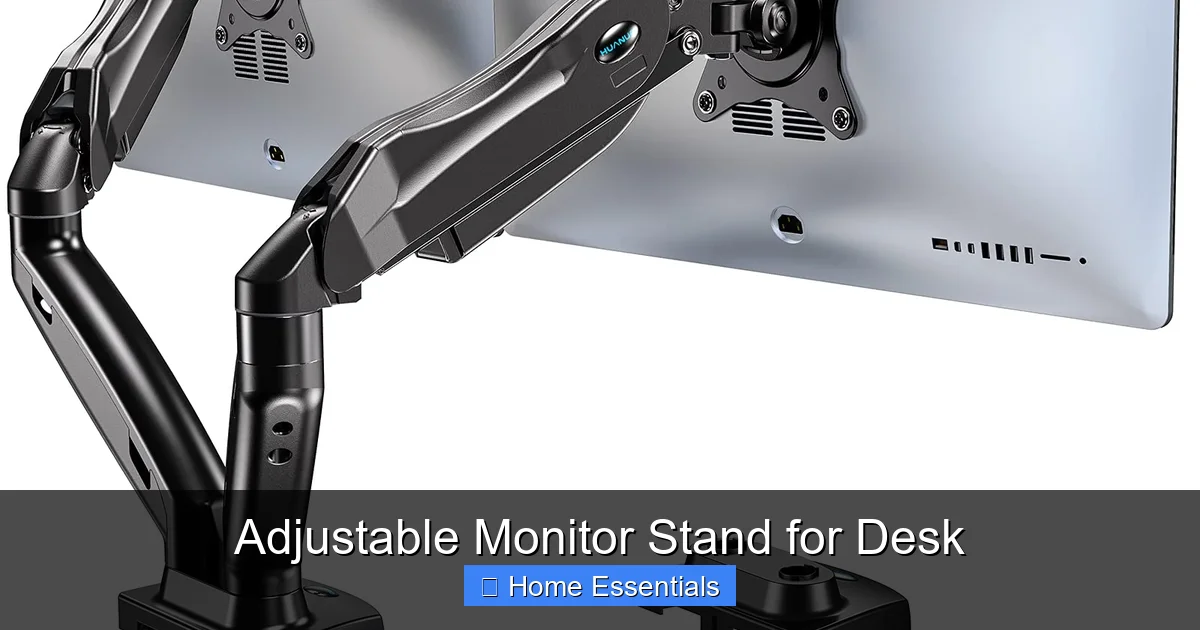
How much movement do you need? Static risers simply lift the monitor to a fixed height. They are cheap but offer no fine-tuning. Height-adjustable stands (often with a gas spring or manual crank) let you easily raise and lower the screen, which is the single most important adjustment for ergonomics. Full motion arms offer the complete package: effortless height adjustment, tilt, swivel (left/right rotation), and often pivot (rotation to portrait). These are ideal for users who share a desk, have multiple monitors, or need extreme flexibility for different tasks (like coding in portrait mode). They also maximize desk space by allowing you to push the monitor completely out of the way when needed.
Assembly, Installation, and Daily Use
The promise of an adjustable stand is great, but a difficult installation can sour the experience. Most stands require some assembly, typically attaching the mounting plate to the stand post and then securing your monitor to the plate. This process should be straightforward with included tools and clear instructions.
Step-by-Step Installation Tips
First, clear your desk completely. This gives you room to work and prevents scratches. Lay out all parts and hardware. Identify your monitor’s VESA pattern and attach the appropriate mounting plate or adapter to the back of the monitor. This is often the trickiest part—ensure it’s tightened securely but don’t over-tighten and crack the monitor’s casing. Next, attach the plate to the stand arm. If using a clamp, open it fully and position it on the back edge of your desk (the side opposite you) for maximum stability. Tighten all clamps and bolts firmly. Finally, mount your monitor onto the stand arm, often by sliding it on and securing with a locking knob or lever. Before letting go, support the monitor with one hand! Once mounted, use the adjustments to position it perfectly. Route all cables through the stand’s management channels and secure with the included clips or ties. A final wipe-down with a microfiber duster for electronics will remove any installation fingerprints and keep your new setup pristine.
Living with Your Stand: Daily Adjustments and Care
Once installed, your stand should be a silent partner. Gas spring models offer one-handed, effortless height adjustment—perfect for switching between sitting and standing positions if you use a standing desk converter. Manual screw-based stands require a bit more effort but hold position firmly. Make small tweaks throughout the day if you feel any strain. A half-inch adjustment in height or a few degrees of tilt can make a world of difference. Regularly check the tightness of all bolts, especially if you move the stand frequently. Dust can accumulate in the joints and cable channels. Use a soft brush or a microfiber cloth for dusting to keep it clean. Avoid harsh chemical cleaners that could damage the finish or lubricants that might degrade plastic components.
Beyond the Basics: Advanced Features and Setups
Once you’ve mastered the single-monitor ergonomic setup, the world of advanced monitor arms opens up. For power users, creatives, and multi-taskers, the right stand can be the centerpiece of an incredibly efficient workstation.
Dual and Triple Monitor Stands
If you live in multiple browser tabs, code windows, or design applications, a single monitor might not cut it. Dual monitor arms allow you to position two screens side-by-side at matching heights and angles, creating a seamless panoramic view. More advanced models offer independent articulation for each arm, letting you set one screen straight on and the other angled for a specific task. Triple monitor stands are the holy grail for sim racers, video editors, and stock traders, providing an immersive, surround-view experience. When choosing a multi-monitor setup, pay extreme attention to the combined weight capacity and the arm’s range of motion to ensure your screens can be positioned without fighting each other.
Integration with Standing Desks
If you use a sit-stand desk, an adjustable monitor arm is not just helpful—it’s essential. As you raise your desk, your monitor must rise with you to maintain the correct ergonomic relationship. A stand with a tall enough height range or, even better, a gas spring arm, allows you to smoothly transition between sitting and standing without having to readjust your monitor’s height manually every time. The arm compensates for the desk’s movement, keeping your screen at the perfect eye level whether you’re sitting or standing. This synergy between a standing desk and a quality monitor arm is the pinnacle of a dynamic, health-focused workspace.
Maintaining a Clean and Organized Workspace
You’ve invested in a great stand and achieved perfect ergonomic alignment. Now, protect that investment and maintain the serene, focused environment you’ve created. A clean desk is a productive desk, and your monitor stand is both a tool for organization and a feature that needs its own maintenance.
The Cable Management Lifeline
The built-in cable management on your stand is your best friend. Don’t just stuff cables in; route them deliberately. Use the provided clips or channels to separate power, video, and peripheral cables. This prevents them from becoming a tangled, dusty mess behind your monitor. For extra neatness, consider using braided fabric sleeves or simple zip ties (but don’t overtighten). A clean cable run not only looks professional but also makes troubleshooting or upgrading components infinitely easier. It also reduces the amount of dust that settles in hard-to-reach nooks, which you can then easily tackle with a microfiber duster for ceiling fans extended to your desk setup.
Dust Prevention and Regular Cleaning
Desks accumulate dust, and your monitor stand, especially its joints and undercarriage, can become a trap. Make it a weekly habit to give your entire workstation a light dusting. Use a soft, dry microfiber cloth for the stand’s surfaces. For crevices and the base where dust bunnies love to gather, use a small, soft-bristled brush or the corner of your microfiber cloth. Avoid spraying liquids directly onto the stand; spray onto the cloth first. If you have a glass or acrylic surface on your stand, use a appropriate cleaner. Keeping your stand clean isn’t just about aesthetics; dust can infiltrate moving parts over time, affecting smooth adjustment. A little regular care ensures your stand operates flawlessly for years.
Conclusion: Your Upgrade Awaits
An adjustable monitor stand for desk transcends its classification as a simple accessory. It is a foundational ergonomic tool, a space-saving miracle worker, and a cornerstone of an organized, professional workstation. The journey from a hunched-over, cluttered desk to a clean, aligned, and spacious command center is remarkably short and affordable. By prioritizing your health with proper screen positioning, reclaiming precious desk real estate, and choosing a stand with the right features for your unique setup, you make a direct investment in your daily comfort and long-term well-being. The research and installation take less than an afternoon, but the benefits—reduced pain, enhanced focus, and a genuinely enjoyable workspace—pay dividends every single day. Stop compromising. Elevate your monitor, and in doing so, elevate your entire work experience.
Frequently Asked Questions
Will an adjustable monitor stand work with my curved ultrawide monitor?
Yes, absolutely. The key factor is the monitor’s weight and VESA mounting pattern, not its shape. Ensure the stand’s weight capacity exceeds your ultrawide’s weight. For very large curved monitors (34″ or larger), look for heavy-duty stands or full-motion arms with robust gas springs to handle the extended leverage and prevent sagging.
Can I install a grommet mount stand on a glass desk?
Generally, no. Drilling a hole in a glass desk is extremely risky and likely to cause cracks or shattering. For glass desks, a high-quality clamp mount is your safest and only recommended option. Ensure the clamp has protective rubber pads to prevent scratching the glass surface.
How high should my monitor be when using a standing desk?
The same rule applies: the top of your monitor should be at or slightly below eye level when standing upright. Your elbows should still be at a 90-degree angle to your keyboard. Because your eye level is higher when standing, you’ll need a monitor stand with sufficient height range or, ideally, a gas spring arm to easily raise the screen as your desk goes up.
Are cheap plastic stands worth it?
For very light monitors (under 5 lbs) on a stable desk, a basic plastic riser can provide a fixed height increase and some under-desk storage. However, they offer no adjustability, minimal weight capacity, and can feel unstable. For any monitor over 10 lbs or for anyone serious about ergonomics, investing in a metal stand with a gas spring is strongly recommended for safety and longevity.
What’s the biggest mistake people make when installing a monitor stand?
The most common mistake is not tightening all bolts and clamps sufficiently. A monitor that wobbles with a slight touch is not only annoying but also a safety hazard. After initial installation, apply gentle pressure from different angles (forward, side-to-side) to test stability. Re-tighten all fasteners after 24 hours, as they can settle. Also, failing to properly route and secure cables can cause them to pull on the monitor or get caught in moving parts.
Do I need a separate keyboard tray if I get a monitor stand?
Not necessarily. Many adjustable monitor stands include a built-in keyboard tray or have enough clearance underneath for you to slide your keyboard. If your chosen stand doesn’t have this and you want a completely clear desk surface when not typing, you can purchase a separate, under-desk keyboard tray that mounts to the underside of your desk, working in tandem with your elevated monitor.